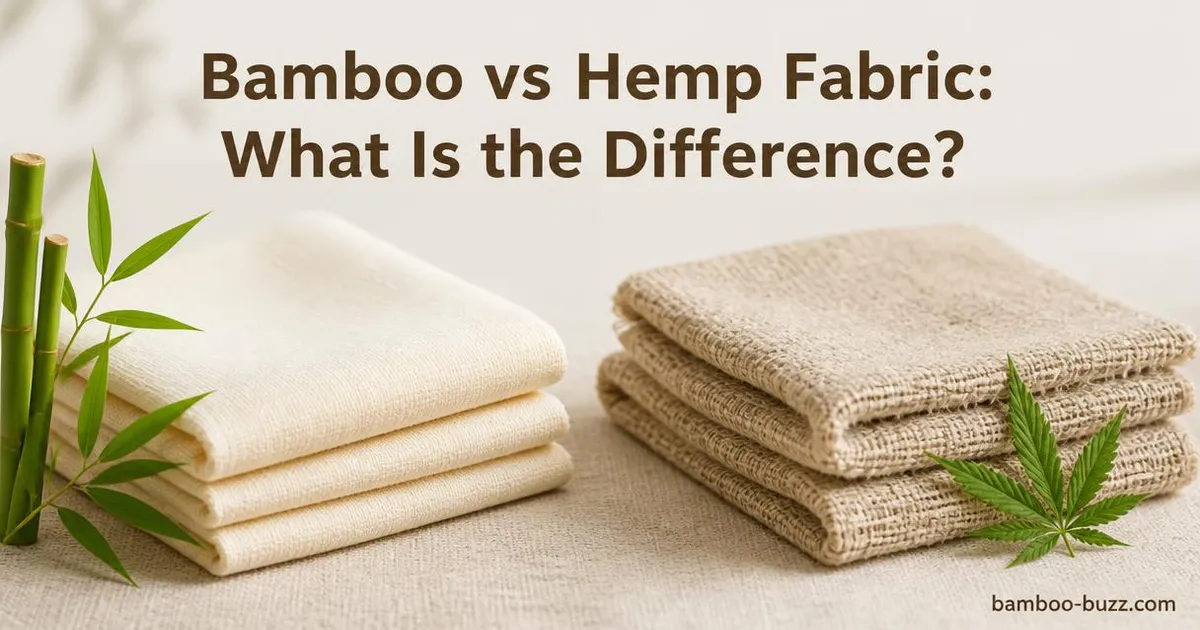
Bamboo vs Hemp Fabric: What Is the Difference?
Most bamboo fabric isn’t actually bamboo fiber – it’s bamboo rayon, made by dissolving the plant in chemical solvents and reconstituting it into thread. Hemp fabric, on the other hand, uses the bast fiber from the plant stalk with minimal chemical processing. That processing difference explains why one feels like silk and the other feels like linen, and why the sustainability conversation gets more complicated than just comparing two crops.
If you’re choosing between bamboo and hemp for clothing, absorbent inserts, or home goods, the raw plant matters less than what happens to it afterward. Both can be grown without pesticides or heavy irrigation, but bamboo usually goes through the same rayon process as wood pulp, while hemp can be spun directly into yarn. The right choice depends on whether you prioritize soft drape or rugged durability, and whether rayon processing concerns you.
Key Takeaways
- Both bamboo and hemp are plant-based fibers used for clothing, absorbent layers, and textiles, but most bamboo fabric is bamboo rayon made through chemical processing, while hemp uses bast fiber spun directly from the plant stalk.
- Some sources suggest both textiles bring high absorbency, so absorbency alone rarely decides the winner – construction, weave, and layering matter more than fiber choice.
- Bamboo rayon raises questions about microplastics and safety because people confuse it with synthetic polyester, though rayon is technically a semi-synthetic cellulose fiber, not plastic.
- Hemp’s historical decline came from legal restrictions and competition with synthetic fibers, not from any shortcoming in the fiber itself.
- For shirts and everyday clothing, bamboo rayon offers soft drape while hemp delivers durability – blended fabrics combine both properties in one textile.
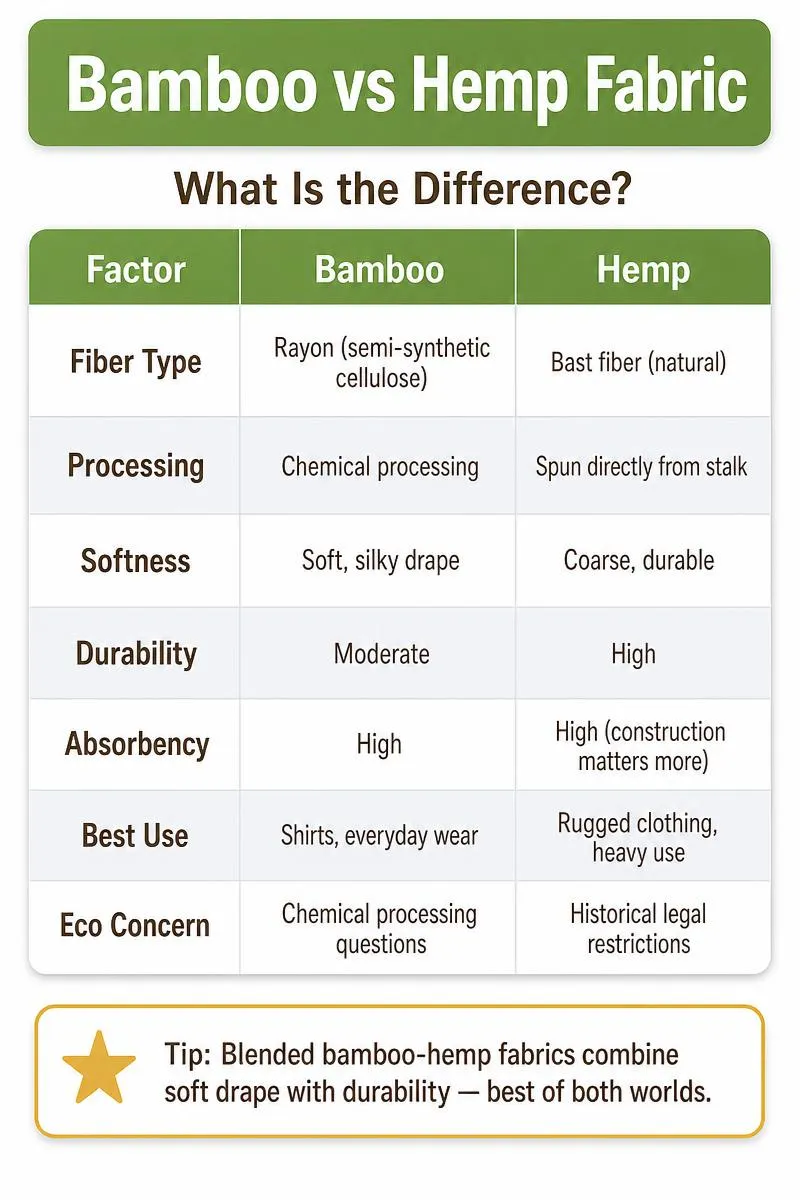
Bamboo Vs Hemp at a Glance
| Factor | Bamboo | Hemp |
|---|---|---|
| Fiber Type | Rayon (semi-synthetic) | Bast fiber (natural) |
| Processing | Chemical processing | Spun from stalk |
| Softness | Soft, silky drape | Coarse, durable |
| Durability | Moderate | High |
| Absorbency | High | High — construction matters |
| Best Use | Shirts, everyday wear | Rugged clothing, heavy use |
| Eco Concern | Chemical processing questions | Historical legal restrictions |
What Is Bamboo?
Bamboo is a fast-growing grass that regenerates without replanting after harvest. Most bamboo fabric sold today is bamboo rayon or bamboo viscose, made by dissolving bamboo pulp in chemical solvents, then extruding it through a spinneret to form soft, silky fibers. Mechanical processing to create bamboo linen exists but remains rare in commercial apparel.
Bamboo rayon works best for T-shirts, underwear, soft garments, and absorbent inserts where drape and smooth hand feel matter. The viscose process creates a textile that feels closer to silk than to the original grass stalk. You’ll also find it blended with cotton or spandex in activewear and everyday clothing.
Rapid growth gives bamboo an advantage in raw material availability – some species grow visibly taller day to day during peak growing season. Wide availability in apparel markets means more color options, price points, and garment styles than hemp currently offers. High absorbency in textile form makes bamboo rayon popular for cloth diaper inserts and towels.
Heavy chemical processing for most fabric grades remains the main weakness. Consumer confusion over whether bamboo rayon counts as plastic or synthetic drives many of the safety and microplastic questions that come up when people compare bamboo to natural fibers like hemp.
Also Worth Checking Out
A focused comparison of bamboo and cotton underwear covering softness, breathability, and care.
What Is Hemp?
Hemp is a bast fiber extracted from the outer layer of the hemp plant stalk. Processors separate the fiber through retting – a process where moisture and bacteria break down the binding materials. Once separated, the bast fibers can be spun into yarn and woven into fabric without the chemical dissolution required for bamboo rayon.
Hemp fabric suits durable textiles, absorbent layers, and heavy-use items like work pants, canvas bags, and upholstery that see regular wear. The fiber structure creates a textile closer to linen in texture – slightly coarse when new, softer with repeated washing. You’ll find hemp in rope, canvas, and in modern clothing blends that soften the fiber with bamboo or cotton.
Dense agricultural growth allows hemp to produce a dense fiber crop. Strong fiber gives hemp textiles a reputation for lasting through years of use and frequent laundering. Historical versatility across industrial and textile applications means hemp served as sailcloth, paper, and everyday fabric before synthetic fibers took over.
Past legal restrictions in many countries limited hemp farming and processing infrastructure, leaving fewer options for soft apparel categories compared to bamboo. Industrial barriers meant that even after legalization, rebuilding supply chains and developing softer hemp textiles took time.
Bamboo vs Hemp: Sustainability and Ecology
Bamboo grows faster than hemp, and bamboo takes years to reach harvest while hemp grows from seed to harvest in a single season. Both crops regenerate quickly compared to trees or cotton, but bamboo’s perennial root system eliminates replanting while hemp requires annual seeding.
Land use efficiency favors hemp for fiber yield per acre. Both crops grow without pesticides in most climates and require minimal irrigation compared to cotton. Water use during cultivation stays low for both, but bamboo’s chemical processing into rayon consumes significant water and generates chemical waste unless facilities use closed-loop systems that recycle solvents.
Farming impact depends on local practices – bamboo grown in monoculture plantations raises different ecological questions than hemp rotated with other crops. Manufacturing impact separates them more clearly, with hemp’s mechanical processing requiring less chemical input than bamboo’s viscose conversion. If agricultural hardiness matters most, hemp wins. If rapid regeneration without replanting is the priority, bamboo takes it.
Bamboo vs Hemp: Fabric Processing and Safety
Bamboo textiles are usually bamboo rayon or bamboo viscose because the grass stalk contains short, brittle fibers that don’t spin well without chemical processing. The viscose process dissolves bamboo pulp in sodium hydroxide, adds carbon disulfide to create a viscous solution, then forces it through a spinneret into an acid bath where it solidifies into continuous filaments. This process transforms the plant cellulose into a regenerated fiber chemically identical to rayon made from wood pulp.
People ask whether bamboo rayon is plastic because it goes through industrial processing and comes out feeling synthetic. Rayon is a semi-synthetic cellulose fiber, not a petroleum-based plastic like polyester. It biodegrades faster than polyester and doesn’t shed the same persistent microplastic particles. Safety concerns focus on residual processing chemicals rather than the fiber itself, so certifications like OEKO-TEX Standard 100 indicate testing for harmful substances.
Hemp fiber preparation uses retting and mechanical separation to extract bast fibers from the plant stalk. Processors soak hemp stalks in water or spread them in fields where dew and bacteria break down the pectin binding the fibers. Once separated, the fibers are cleaned, combed, and spun into yarn without chemical dissolution. Some hemp fabrics receive softening treatments, but the base fiber remains chemically unaltered.
If you’re avoiding rayon, hemp delivers a fiber that stays closer to its original plant form. If you prioritize soft drape and don’t mind semi-synthetic processing, bamboo rayon offers that texture advantage.
Related Reading
A closer look at how different bamboo-derived fabrics are made and how they compare in safety and performance.
Bamboo vs Hemp: Absorbency
Some sources suggest hemp is more absorbent than bamboo for cloth diaper inserts and absorbent layers, while others rate them similarly. Both textiles can offer high absorbency depending on weave, fabric weight, and how many layers you stack. Bamboo rayon’s smooth fibers wick moisture quickly, while hemp’s bast fiber structure holds liquid in the fiber itself.
Absorbency testing varies by product construction – a tightly woven hemp fabric may absorb less per square inch than a fluffy bamboo terry, even though hemp fiber can hold more moisture by weight. Layering matters more than fiber choice when stacking inserts, since doubling thickness increases total capacity regardless of whether you use bamboo or hemp.
For general absorbency, this comparison ends in a tie. Choose based on specific product construction and read reviews for the actual insert or towel you’re considering.
Bamboo vs Hemp: Versatility and Clothing Use
Bamboo rayon suits T-shirts, underwear, activewear, and any garment where soft drape and smooth hand feel matter. The viscose process creates a textile that flows like silk and feels cool against skin, making it popular for warm-weather clothing and base layers. You’ll find bamboo in everything from casual shirts to dress socks, often blended with cotton or spandex for added stretch or structure.
Hemp works better for rugged, long-wearing pieces like work pants, outerwear, and canvas bags that need to withstand abrasion and repeated laundering. Modern hemp textiles include shirts and lighter garments, but the fabric maintains a structured hand feel rather than the fluid drape of bamboo rayon.
Hemp-bamboo blended fabrics combine both fibers, using hemp for durability and structure while bamboo rayon adds softness and drape. These blends show up in shirts, hoodies, and everyday clothing where you want balanced benefits – the strength of hemp with the comfort of bamboo.
For soft apparel, bamboo rayon delivers the texture most people expect from clothing. For items that take a beating, hemp outlasts softer plant fibers like cotton or bamboo rayon. For a middle ground, look for blends that list both fibers on the label.
Which Should You Choose?
Choose bamboo if you want soft T-shirts and everyday clothing with smooth drape. Bamboo rayon feels silky against skin and works well for garments where comfort matters more than ruggedness. The viscose processing creates a textile that competes with cotton in softness while staying cooler in warm weather.
Choose hemp if you prefer durable textiles and want to avoid rayon-associated processing questions. Hemp fabric comes from mechanical processing of the plant’s bast fiber, skipping the chemical dissolution that raises concerns about microplastics and residual solvents. It suits workwear, outerwear, and items that need to last through heavy use.
Choose either for absorbent inserts, since both can perform well depending on construction. Bamboo rayon wicks quickly while hemp holds moisture in the fiber itself, but weave and layering matter more than fiber type for actual capacity.
Choose hemp-bamboo blends if you want combined properties in a single shirt or fabric. Blends balance hemp’s durability with bamboo’s softness, giving you a textile that feels comfortable but holds up better than pure bamboo rayon.
Choose hemp if minimizing plastic or microplastic concerns is your top priority. Hemp stays closer to its original plant form and doesn’t go through the chemical reconstitution that makes people question whether bamboo rayon counts as synthetic.
You Might Also Like
Direct comparisons of bamboo and cotton towels, including absorbency, drying time, and durability.
FAQs About Bamboo and Hemp
Is hemp or bamboo better overall?
Neither fiber is universally better – bamboo rayon suits soft apparel while hemp suits durable, rugged use. The right choice depends on whether you prioritize drape or durability, and whether you’re comfortable with rayon processing.
Is hemp more absorbent than bamboo?
Some sources suggest hemp holds more moisture by weight, but both textiles can offer high absorbency depending on weave and layering. Construction matters more than fiber type, so test the specific product rather than assuming superiority.
Which fabric is better for a T-shirt, bamboo or hemp?
Bamboo rayon feels softer and drapes more smoothly, making it the more common choice for T-shirts. Hemp creates a sturdier, more structured shirt – closer to linen than cotton in texture.
What are the downsides of bamboo fabric?
Most bamboo fabric is bamboo rayon, made through chemical processing that dissolves the plant pulp and reconstitutes it into fiber. This raises questions about environmental impact from solvent use, though closed-loop systems recycle most chemicals. Consumer confusion about whether it’s plastic or synthetic also drives safety concerns.
What are the downsides of hemp fabric?
Limited availability in soft apparel categories means fewer color options and garment styles compared to bamboo, a result of past legal restrictions that slowed supply chain development.
Why did we stop using hemp?
Legal restrictions in the mid-twentieth century banned or heavily regulated hemp farming in many countries, often lumping it with marijuana despite negligible THC content. Industrial competition from synthetic fibers like nylon and polyester also replaced hemp in rope, canvas, and textiles. Those restrictions lasted decades, leaving hemp with less infrastructure even after legalization.
Is bamboo fabric basically plastic, and does it release microplastics?
Bamboo rayon is a semi-synthetic cellulose fiber, not a petroleum-based plastic like polyester. It goes through chemical processing but remains plant cellulose, so it biodegrades faster than polyester and doesn’t shed the same persistent microplastic particles. Rayon breaks down into cellulose fragments that decompose more readily than plastic polymers.
Is rayon from bamboo safe to wear?
Yes, for most people. Main exception: sensitive skin reacting to residual processing chemicals – look for OEKO-TEX Standard 100 certification if that’s a concern.
Final Verdict
Neither fiber wins across all categories – bamboo rayon offers soft drape for everyday clothing, while hemp delivers durability and skips the chemical reconstitution that raises processing questions. If you need maximum absorbency, test the specific insert or layer rather than assuming fiber superiority, since construction and weave often matter more than the raw material.
Check product labels to confirm whether bamboo items are bamboo rayon before buying, especially if you’re choosing based on processing method rather than just the crop itself.
External References
- OEKO-TEX® STANDARD 100 – OEKO-TEX
- Is Bamboo Fabric Safe? Viscose vs Lyocell Ranked (2026) – Fibercheck
- Natural fibers in sustainable materials: extraction technologies … – NIH (NCBI)
- Biodegradability of cellulose fibers, films, and particles – NCSU (.edu)
- If not viscose for a sustainable fabric, then what? Peter … – Lampoonmagazine