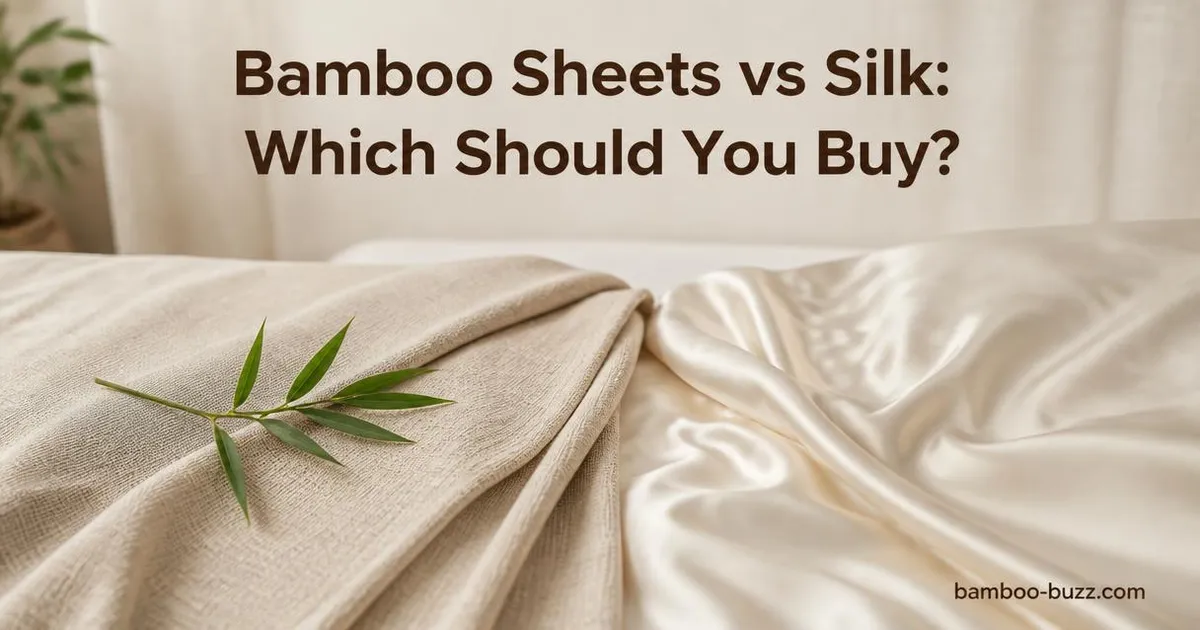
Bamboo Sheets vs Silk: Which Should You Buy?
Bamboo and silk sheets both get marketed as premium, skin-friendly bedding – but they solve completely different problems. One keeps you cool. The other keeps your hair from frizzing.
The real comparison comes down to four things: temperature, friction, care requirements, and how each fabric is produced. Both materials can feel luxurious against your skin, but they get there through entirely different processes.
Key Takeaways
- Bamboo sheets usually sleep cooler and handle moisture better than silk
- Silk creates less friction against hair and skin, which matters for frizzy or damaged hair
- Bamboo is generally easier to wash and maintain over time
- Both fabrics can work for sensitive skin, but through different mechanisms
- Some sources suggest the chemical processing behind bamboo viscose raises different concerns than silk production
Keep Reading
A direct comparison of bamboo and eucalyptus sheets covering breathability, feel, and sustainability.
Quick Comparison: Bamboo Sheets Vs Silk
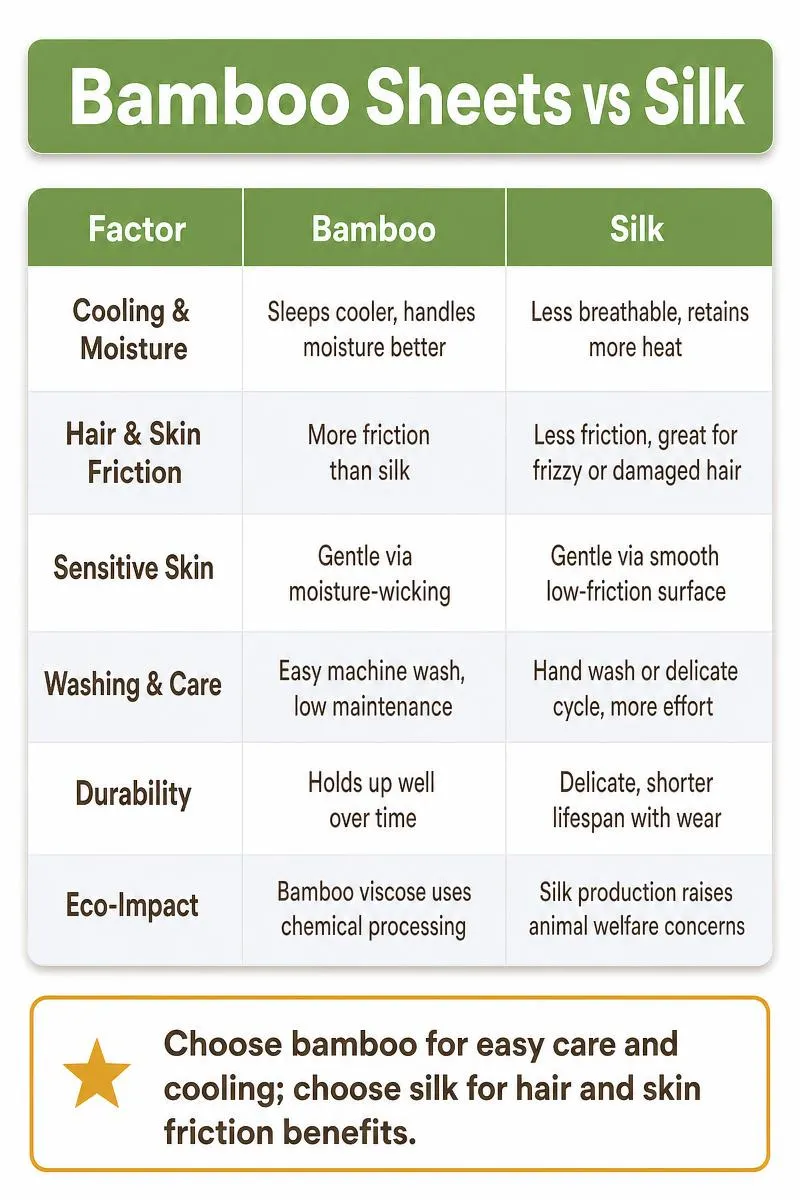
| Factor | Bamboo | Silk |
|---|---|---|
| Cooling & Moisture | Sleeps cooler; handles moisture better | Less breathable; retains more heat |
| Hair & Skin Friction | More friction than silk | Less friction; good for frizzy/damaged hair |
| Sensitive Skin | Gentle via moisture-wicking | Gentle via smooth, low-friction surface |
| Washing & Care | Machine washable; low maintenance | Hand wash or delicate cycle; more effort |
| Durability | Holds up well over time | Delicate; shorter lifespan with wear |
| Eco-Impact | Uses chemical processing (viscose) | Raises animal welfare concerns |
What Is Bamboo Sheets?
Bamboo sheets are soft bedding woven from fibers derived from the bamboo plant. The bamboo stalk gets crushed and dissolved, then extruded into fibers that get spun into yarn and woven into fabric.
Best use cases: hot sleepers, humid climates, and anyone wanting easy-care bedding that doesn’t require special laundering.
Core strengths: bamboo fabric is breathable, moisture-wicking, and temperature regulating. The fiber structure allows air to pass through and pulls moisture away from your skin, which helps you stay cooler through the night.
Main weaknesses: most bamboo sheets rely on a chemical viscose process to turn raw bamboo stalks into soft fiber. Durability varies depending on the weave and the specific fiber type – bamboo lyocell tends to hold up better than conventional bamboo viscose.
What Is Silk Sheets?
Silk sheets are bedding woven from natural silk fibers, most commonly mulberry silk. Silkworms spin cocoons from a continuous protein filament, and those filaments get unwound, combined, and woven into fabric.
Best use cases: reducing friction on hair and skin, and creating a smooth, gliding sleep surface.
Core strengths: silk has very low friction, meaning hair glides over the surface instead of catching and pulling. Silk also retains moisture rather than pulling moisture away from your skin, which can help keep dry skin from getting drier overnight.
Main weaknesses: silk requires delicate care – usually hand washing, delicate machine cycles, or dry cleaning. Silk can also trap heat, which makes silk sheets less suited to very hot sleepers or warm climates.
Bamboo Sheets vs Silk Sheets: Sleep, Hair, and Skin Benefits
Silk wins on friction reduction. If you wake up with bedhead, tangles, or hair breakage, silk lets hair slide across the surface instead of grabbing and pulling. For curly, frizzy, or chemically damaged hair, that friction difference is the whole point.
Bamboo wins on moisture management. Bamboo viscose pulls moisture off your skin and keeps the sleep surface drier. Silk does the opposite – silk holds moisture in, which is great for dry skin but less helpful if you sweat at night.
Sensitive Skin
Both fabrics work for sensitive skin, but through different mechanisms. Silk is smoother and less abrasive against the skin surface, which reduces irritation from rubbing. Bamboo resists dust-mite buildup better than silk, which matters if dust mites trigger your skin reactions.
Winner by Condition
Silk is the better pick for frizzy or damaged hair. Bamboo is the better pick for hot sleepers with sensitive skin.
Also Worth Checking Out
Explains how bamboo stacks up against hemp for bedding – durability, temperature regulation, and eco-impact.
Bamboo Sheets vs Silk Sheets: Comfort and Temperature Regulation
Silk feels smooth and slightly cool to the touch, with a draping weight that settles against your body. Bamboo feels soft and airy – lighter and more breathable against the skin.
1. Breathability
Bamboo generally sleeps cooler and allows more airflow than silk. The fiber structure in bamboo viscose lets air pass through more freely, while silk holds warmth close to your body.
2. Temperature Regulation
Bamboo wicks moisture away from your skin and spreads the moisture across the fabric surface to evaporate. Silk retains moisture rather than wicking the moisture away, which means silk holds warmth and humidity against your body.
Bamboo wins for hot sleepers and night sweats. Silk wins for those who want a weightier, more enveloping feel.
Bamboo Sheets vs Silk Sheets: Durability and Care
The gap between bamboo and silk is widest in everyday maintenance. One goes in the washer; the other needs a gentler touch.
1. Washing
Most bamboo sheets are machine washable on gentle or regular cycles with mild detergent. Silk usually requires delicate cycles with silk-specific detergent, or dry cleaning. Hand washing silk is the safest option but also the most time-consuming.
2. Longevity
Silk can weaken with repeated washing, especially if silk gets exposed to enzymes or harsh detergents. Bamboo holds up better to regular laundering, though weave quality matters – tighter weaves last longer than looser ones.
Bamboo wins for low-maintenance households. Silk wins for those willing to trade extra care time for the specific feel silk provides.
Bamboo Sheets vs Silk Sheets: Construction and Processing
Both fabrics start as natural materials, but silk is a protein fiber unwound from silkworm cocoons, while most bamboo fabric is cellulose dissolved in a chemical bath and re-spun into fiber.
1. Silk Production
Silk comes from silkworm cocoons – specifically, the continuous protein filament Bombyx mori silkworms spin around themselves. Harvesting silk involves unwinding those cocoons, which is a natural process with minimal chemical treatment. The main ethical concern is that conventional silk production kills the silkworm inside the cocoon during harvesting.
2. Bamboo Production
Mechanical bamboo processing – crushing the stalk and combing out fibers naturally – is rare and expensive. Most bamboo sheets use a chemical viscose or rayon process: the bamboo cellulose gets dissolved in chemical solvents, then extruded into fibers. Bamboo lyocell is a less chemical-intensive alternative that uses a closed-loop system to recover and reuse most of the solvent.
3. Consideration for Eco-Conscious Buyers
Conventional bamboo viscose involves more chemical processing than silk production. Bamboo lyocell and peace silk – harvested after the silkworm leaves the cocoon – both shift the balance, but in different directions.
There’s no clear winner here. The decision depends on which processing method you’re more comfortable supporting.
You Might Also Like
Looks at bamboo versus cotton in baby bedding, with notes on softness and sensitivity that are useful for sheet buyers.
Which Should You Choose?
- Sleep hot or sweat at night: choose bamboo. The moisture-wicking and airflow will do more for your comfort than silk’s smooth surface.
- Curly or frizzy hair, or hair that’s been chemically damaged: choose silk. The low-friction surface is the single biggest thing silk does better than bamboo.
- Want the lowest-maintenance bedding you can find: choose bamboo. Machine washable, no special detergent, no dry cleaning.
- Sensitive or dry skin and want a friction-free surface: choose silk. Silk’s smoothness reduces rubbing, and silk’s moisture retention helps dry skin stay hydrated.
- Prefer an airy, lightweight feel rather than a draped one: choose bamboo. Silk has a weightier drape; bamboo feels lighter and more breathable.
FAQs About Bamboo Sheets and Silk Sheets
What are the downsides of bamboo sheets?
Most bamboo sheets are made through a chemical viscose process that dissolves bamboo cellulose in solvents – the same method used to produce rayon. Bamboo lyocell uses a closed-loop process that recovers most of the solvent, but lyocell bamboo sheets are harder to find and tend to cost more.
Durability also varies depending on weave quality and fiber type. Bamboo viscose may break down faster than bamboo lyocell with repeated washing.
Is bamboo or silk better for skin?
Both work, but differently. Silk is smoother and less abrasive, which helps if your skin reacts to friction. Bamboo resists dust mites better, which helps if dust mites trigger your skin.
Silk also retains moisture, which can benefit dry skin; bamboo wicks moisture away, which is better if you sweat at night.
Is bamboo fabric really just rayon?
Most bamboo fabric is bamboo viscose rayon – the bamboo cellulose gets dissolved in chemicals and extruded into fiber, which is essentially the rayon process using bamboo instead of wood pulp. Bamboo lyocell is a different process that’s less chemically intensive, but lyocell represents a smaller share of the market.
How often should I replace silk versus bamboo sheets?
Silk degrades faster with repeated washing and may show thinning or fading sooner than bamboo. Bamboo holds up better to regular laundering, so bamboo sheets typically last longer with normal use – though weave quality matters more than fiber type for longevity.
Replace either set when you notice thinning, fading, or a rougher feel against your skin.
Will silk sheets make my hair greasy?
Silk itself doesn’t cause greasiness – silk doesn’t absorb oils the way cotton does, so oils stay on your hair and skin rather than transferring to the pillowcase. If your hair tends toward oiliness, that can actually help preserve your style overnight.
Can either fabric help reduce allergies?
Bamboo resists dust-mite buildup better than silk or cotton, which can help if dust mites are an allergy trigger. Neither fabric is hypoallergenic in a clinical sense, but both are less hospitable to dust mites than cotton.
Are bamboo sheets actually made from bamboo?
Yes, but with a catch. The cellulose comes from bamboo plants, but the fibers are chemically manufactured – the raw material is bamboo, but the finished fiber isn’t something you could get by just spinning bamboo stalks.
What is the downside of silk?
Silk requires careful washing – usually by hand or on delicate cycles with special detergent – and degrades with repeated laundering. The fabric also traps heat, which makes silk sheets a poor choice for hot sleepers or warm bedrooms. Conventional silk production kills the silkworm during harvest, which matters to some buyers.
Final Thoughts
Pick bamboo if temperature control and easy care are your priorities. Pick silk if reducing friction on your hair and skin is the main reason you’re shopping.
If you sleep hot but also care about hair breakage, use bamboo sheets with a silk pillowcase. You get bamboo’s cooling and moisture management for your body, and silk’s low-friction surface for your hair and face.
Buy one set that matches your primary need and sleep on the set for a few weeks before committing further. Your skin and hair will tell you whether you made the right call.
External References
- Is Bamboo Fabric Sustainable? Processing Truth vs. … – Deadsoxy
- an experimental study toward eco-friendly bamboo fiber … – UA – UA (.edu)
- The Sleep Science Behind Your Bedding: What Research … – LuxClub – Luxclub
- Effective preparation of bamboo cellulose fibers in quaternary … – NCSU (.edu)
- On Hair Care Physicochemistry: From Structure and … – PMC – NIH (NCBI)