Bamboo Socks vs Cotton: Which Is Better?
Introduction
People assume bamboo socks are just a softer, greener version of cotton socks. Bamboo socks are made from bamboo viscose – a fiber created by dissolving bamboo pulp in chemical solvents – while cotton socks come from spinning raw cotton fibers into yarn. Each material handles moisture, wear, and processing differently.
The right pick depends on what your feet actually need. Comfort, sweat, odor, budget, how hard you wear your socks, and how much the manufacturing process matters to you all change the answer.
Comparing the Top Bamboo Socks Vs Cotton
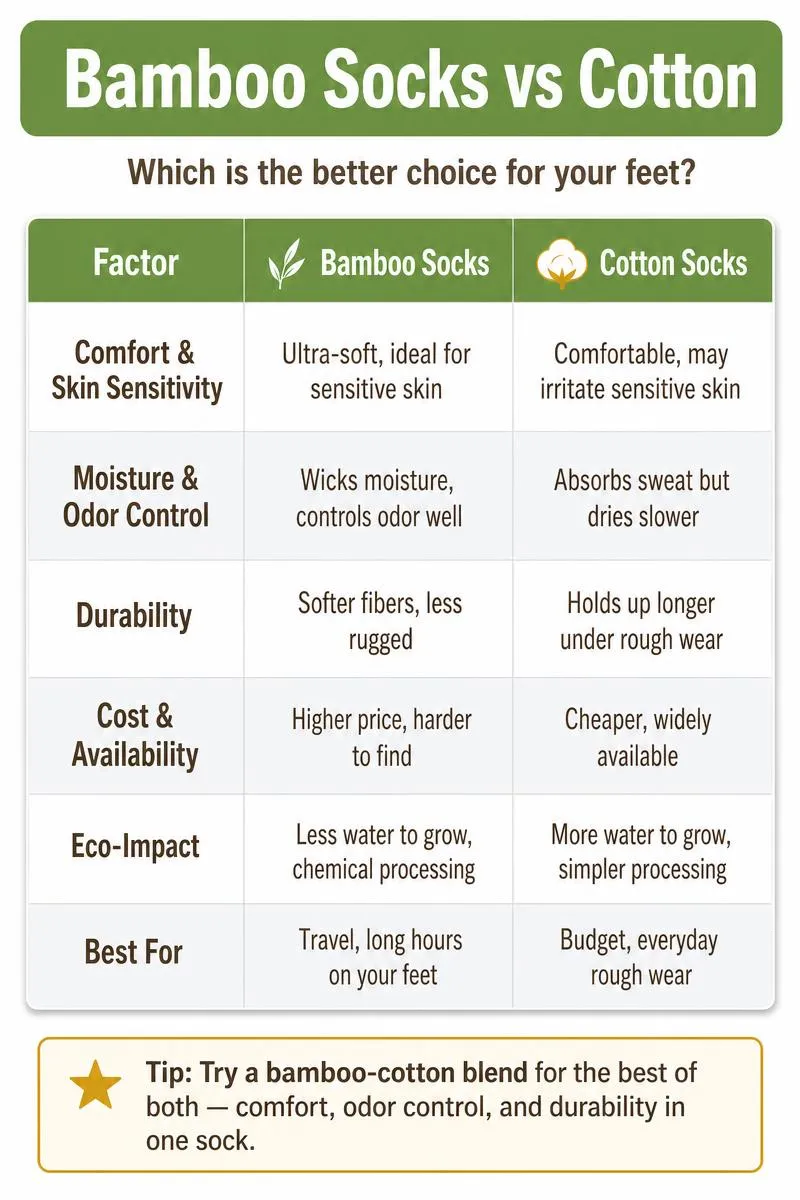
| Factor | Bamboo Socks | Cotton Socks |
|---|---|---|
| Comfort & Skin Sensitivity | Ultra-soft; ideal for sensitive skin | Comfortable; may irritate sensitive skin |
| Moisture & Odor Control | Wicks moisture; controls odor well | Absorbs sweat; dries slower |
| Durability | Softer fibers; less rugged | Holds up longer under rough wear |
| Cost & Availability | Higher price; harder to find | Cheaper; widely available |
| Eco-Impact | Less water to grow; chemical processing | More water to grow; simpler processing |
| Best For | Travel; long hours on your feet | Budget; everyday rough wear |
Key Takeaways
- Bamboo socks feel softer and work better for sensitive skin and hot weather than standard cotton.
- Cotton socks are cheaper, easier to find, and hold up longer under rough daily wear.
- Bamboo manages moisture and odor better than standard cotton, which absorbs sweat but dries slower.
- Some sources suggest bamboo grows with less water than cotton, but turning bamboo into viscose involves chemical processing – the sustainability picture is mixed.
- For balanced performance on travel days or long hours on your feet, bamboo has the edge; for cost and durability, cotton wins.
- A bamboo-cotton blend is a practical middle ground if you don’t want to commit to one.
Keep Reading
A detailed pros-and-cons list for bamboo socks covering comfort, odor control, durability, and care advice.
What Are Bamboo Socks?
Bamboo socks are made from bamboo viscose, a semi-synthetic fiber derived from bamboo pulp. The process breaks down bamboo cellulose and extrudes it into fine threads that feel silky against the skin.
Best Use Cases
Bamboo socks shine in warm climates, during travel, on long workdays, and for anyone dealing with foot odor or sensitive skin. The smooth fiber surface reduces friction, and bamboo viscose absorbs moisture well.
Strengths
The standout quality is softness – bamboo viscose feels smoother and silkier than standard cotton against bare skin. Bamboo viscose breathes well and pulls moisture away from the foot.
Some sources suggest that bamboo contains a compound called bamboo kun with mild antibacterial properties, though most of it does not survive the viscose process most bamboo fabric goes through.
Weaknesses
Bamboo socks may wear faster than cotton, especially at high-friction points like the heel and toe. They often require gentle washing – cold water and air drying – to avoid thinning and pilling. The viscose production process uses chemical solvents such as sodium hydroxide and carbon disulfide, which raises environmental concerns depending on whether the manufacturer uses closed-loop processing.
What Are Cotton Socks?
Cotton socks are made from natural cotton fibers spun into yarn – the longstanding everyday standard for hosiery. Cotton has been the default sock material for decades because it is cheap, abundant, and durable.
Best Use Cases
Cotton socks suit general daily wear, budget shopping, heavy-duty use, and anyone who wants easy replacement. If you wear socks hard – boots, work shoes, repeated hot washing – cotton handles the abuse better than bamboo.
Strengths
Cotton is affordable and widely available in nearly every style, thickness, and price range. The woven structure of cotton yarn holds up to repeated washing and drying without thinning as quickly as bamboo viscose. Cotton socks also tolerate hot water washing, which matters if you want to sanitize them or deal with heavy soil.
Weaknesses
Cotton holds moisture longer than bamboo viscose. When cotton socks get wet from sweat or rain, they can feel stiff and heavy against the skin.
Standard cotton offers minimal odor resistance – bacteria thrive in the damp environment cotton holds against your foot, which is why cotton socks can smell after a long day.
Bamboo Socks vs Cotton Socks: Comfort and Skin Sensitivity
Softness is where bamboo and cotton diverge most noticeably. Bamboo viscose fibers are round and smooth at a microscopic level, which makes the fabric glide against skin rather than catching on it. Cotton fibers have a slightly rougher surface texture that some people find crisp and familiar, while others find it less comfortable against sensitive skin.
Friction matters more than most people realize. Smoother fibers reduce the rubbing that causes blisters during long walks or repetitive movement. Bamboo viscose creates less friction against skin than standard cotton, which is why bamboo socks are popular among buyers with eczema, psoriasis, or general skin sensitivity.
Cotton socks offer a breathable, familiar feel that most people are used to. The texture is firmer – not scratchy, but distinctly different from the silky drape of bamboo. Some people simply prefer that classic cotton feel over the softer, almost slippery texture of bamboo viscose.
Winner: Bamboo for sensitive skin and reduced friction. Cotton for those who prefer a crisp, classic texture.
A side-by-side comparison of bamboo vs cotton for close-to-skin garments that highlights comfort and skin sensitivity…
Bamboo Socks vs Cotton Socks: Moisture and Odor Control
How a sock handles sweat determines whether your feet stay dry or turn into a swamp. Bamboo viscose absorbs moisture into the fiber structure and releases it relatively quickly, pulling perspiration away from the skin surface. Cotton also absorbs moisture – in fact, cotton can hold a lot of water – but cotton dries noticeably slower than bamboo viscose.
Odor buildup follows from moisture. Bacteria grow in damp, warm environments, and damp cotton against your foot creates exactly that. Bamboo socks manage odor better than standard cotton, partly because the fiber dries faster and partly because some residual bamboo kun may survive processing in trace amounts. The difference is real but not dramatic – bamboo socks still smell after enough wear, just less and later than cotton.
During exercise, travel, or warm weather, moisture management becomes critical. A sock that stays damp for hours leads to blistering, fungal issues, and general discomfort. Bamboo socks perform better in these conditions because the fiber releases moisture faster. Cotton socks work fine for low-activity days in moderate temperatures, but in heat or during sustained activity, the slower drying time works against you.
Winner: Bamboo for moisture wicking and odor resistance. Cotton absorbs sweat well but dries slower, which gives bacteria more time to multiply.
Bamboo Socks vs Cotton Socks: Durability and Care
Durability is where cotton pulls ahead. Cotton yarn is tougher than bamboo viscose and resists thinning at high-friction areas like the heel, toe, and ball of the foot. Over months of regular wear, cotton socks tend to maintain their structure better. Bamboo socks are more prone to pilling, thinning, and developing holes at wear points, especially if washed in warm or hot water.
Washing and drying methods affect bamboo socks more than cotton. Bamboo viscose degrades faster under heat, so cold washing and air drying extend the life of bamboo socks significantly. Cotton socks tolerate hot water and machine drying without much issue – convenient if you do not want to baby your laundry.
Cost per wear tells the fuller story. Cotton socks are cheaper upfront and last longer under hard wear, so the cost per wear is lower. Bamboo socks cost more per pair and may need replacing sooner, though gentle care narrows the gap. If you wear socks hard – work boots, long walks, repeated washing – cotton gives you more wears per dollar.
Winner: Cotton for longevity under rough daily wear. Bamboo lasts longer with cold washing and air drying, but requires more careful maintenance.
Bamboo Socks vs Cotton Socks: Eco-Impact and Processing
The environmental comparison between bamboo and cotton is more complicated than marketing suggests. On the raw crop side, bamboo grows fast, requires less water than cotton, and does not need pesticides to thrive. Cotton farming is water-intensive and typically relies on pesticides and synthetic fertilizers, especially conventional rather than organic cotton.
But the manufacturing story flips some of that advantage. Turning bamboo stalks into viscose requires chemical solvents – sodium hydroxide and carbon disulfide – and the process generates wastewater that can pollute if not managed. Some manufacturers use closed-loop viscose processing that recaptures and reuses solvents, but not all do. Cotton spinning skips the chemical dissolution step, though conventional cotton processing still involves bleaching, dyeing, and finishing chemicals.
Both fibers are biodegradable under the right conditions. Bamboo viscose and cotton both break down in compost or landfill over time, though bamboo viscose may take longer due to the chemical processing the fibers undergo. Neither fiber releases microplastics, since both are cellulose-based rather than petroleum-based – though some socks blend in synthetic fibers like nylon or elastane for stretch, which do.
Winner: Bamboo on water use and growth speed. The overall picture is mixed depending on farming practices and whether the manufacturer uses closed-loop viscose processing.
Keep Reading
A deep dive into environmental impacts and processing differences between bamboo and organic cotton.
Which Should You Choose?
The decision comes down to what your feet deal with day to day.
- Sensitive skin or foot odor: Bamboo. The smooth fiber reduces friction and irritation, and bamboo socks manage moisture and odor better than standard cotton.
- Lowest price and longest wear for rough use: Cotton. Cotton socks are cheaper, more durable under hard wear, and tolerate aggressive washing.
- Hot weather, travel, or long hours on your feet: Bamboo. Faster drying and better moisture wicking keep feet more comfortable during extended wear.
- Easy care and wide style selection: Cotton. No special washing instructions, available everywhere, in every style.
- A compromise: Look for a bamboo-cotton blend. You get some of the softness and moisture management of bamboo with the durability and lower cost of cotton.
FAQs About Bamboo Socks and Cotton Socks
Is bamboo really better than cotton for socks?
For comfort, moisture management, and odor control – yes, bamboo socks outperform standard cotton. Cotton wins on price, durability, and easy care.
Do bamboo socks last as long as cotton socks?
Generally no, bamboo viscose is softer but less durable than cotton yarn under repeated wear and washing. Cold washing and air drying extend bamboo sock life, but cotton still holds up longer under rough use.
Are bamboo socks good for sensitive skin?
Yes, bamboo viscose fibers are smoother and rounder than cotton fibers, which reduces friction against skin. Main exception: some people react to residual processing chemicals in bamboo viscose. Look for OEKO-TEX certified bamboo socks if that is a concern.
What are the downsides of bamboo socks?
Bamboo socks cost more than cotton, wear out faster at friction points, and need gentler washing. The viscose production process also uses chemical solvents, which raises environmental questions depending on the manufacturer.
How much water does bamboo use, and is it more sustainable than cotton?
Bamboo requires significantly less water than cotton to grow and does not need pesticides or irrigation in most growing conditions. However, processing bamboo into viscose uses chemical solvents. The overall sustainability depends on whether the manufacturer uses closed-loop processing. Conventional cotton farming uses heavy irrigation and pesticides, so the raw crop comparison favors bamboo.
Does bamboo fabric contain plastic or release microplastics?
Bamboo viscose itself does not contain plastic or release microplastics – it is a cellulose fiber. However, many bamboo socks blend in nylon or elastane for stretch and structure, which are synthetic fibers that do shed microplastics. Check the fiber content label if microplastics concern you.
Which is healthier for your feet, bamboo or cotton?
Bamboo socks are healthier for feet prone to sweating, blistering, or fungal issues because the fiber dries faster and reduces friction. Cotton socks are fine for normal, low-activity wear. If you have specific skin sensitivities, the smoother surface of bamboo viscose is less likely to irritate.
What socks should you wear in summer versus winter?
In summer, bamboo socks are the better choice because the fiber wicks moisture and dries faster in heat. In winter, thicker cotton socks or wool socks provide better insulation. Bamboo socks also work well in winter for indoor wear, but cotton offers more warmth for cold-weather outdoor use.
Is bamboo 100% biodegradable?
Bamboo viscose is biodegradable because it is cellulose-based, but it is not 100% biodegradable in all conditions. The chemical processing the fibers undergo can slow decomposition, and any synthetic blend fibers (nylon, elastane) in the sock will not biodegrade. Pure bamboo viscose socks without synthetic blends break down in compost or landfill.
Can you wear the same socks multiple days in a row?
Not recommended for either material. Bamboo socks resist odor better than cotton, so they may smell less after a second day, but moisture and bacteria still accumulate. Cotton socks should be changed daily, especially in warm weather or during activity. Fresh socks every day is the hygiene standard regardless of fiber.
Final Verdict
For most people, bamboo socks are the better upgrade if comfort, moisture management, and odor control are your priorities. Cotton remains the practical default for budget buyers, heavy-duty wear, and anyone who values easy care and wide availability.
If you are concerned about chemical processing in bamboo viscose, look for mechanically processed bamboo (sometimes called bamboo linen) or certified organic cotton as alternatives. Both avoid the solvent-based viscose process.
Buy one pair of each and wear them during a typical workweek.
External References
- Biodegradability of Textiles Made from Natural Fibers … – MDPI
- Resistance of natural bamboo fiber to microorganisms and … – NCSU (.edu)
- Cotton vs. Hemp & Bamboo: Water Footprint Comparison … – Sarkengg
- Comparative study of water requirements and water footprints … – Agrimetassociation
- The Ongoing History of Harm Caused and Hidden by … – PMC – NIH (NCBI)