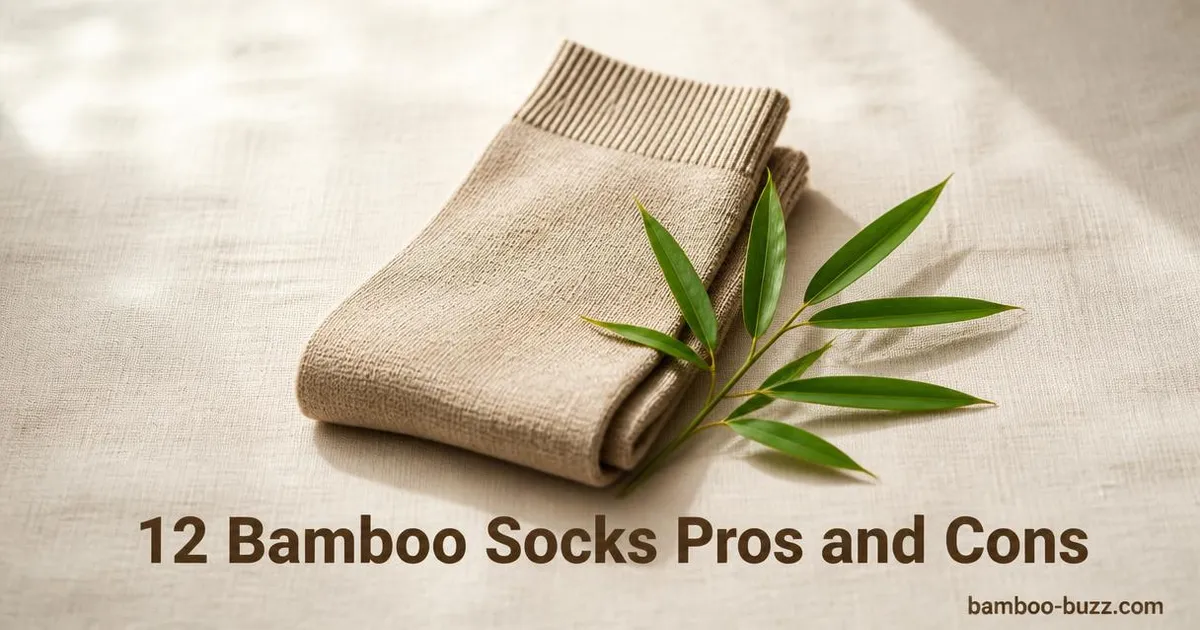
12 Bamboo Socks Pros and Cons
Bamboo socks feel softer than most cotton pairs right out of the package, and they do manage moisture better – but the marketing around them oversells a few things. The antibacterial claims, for instance, don’t hold up once you look at how the fabric is actually made.
Below are 12 specific trade-offs covering comfort, durability, care, and cost. Some of the benefits are genuinely fiber-level advantages. Others are overstated or depend heavily on how well you follow care instructions.
Key Takeaways
- Bamboo fiber’s micro-gaps allow real airflow and moisture movement, giving it an edge over standard cotton for breathability and keeping feet dry.
- Odor resistance comes from moisture control, not from bamboo fabric killing bacteria. The antibacterial marketing is mostly myth.
- Most bamboo socks are made from chemically processed rayon or viscose, which narrows the sustainability gap between bamboo and conventional fabrics.
- Heat and harsh washing damage the fibers, causing shrinkage and loss of shape. Cold wash and air drying are typically necessary.
- Upfront cost runs higher than basic cotton. Longevity depends heavily on following proper care.
- Ideal for sensitive skin, allergies, or diabetes. Less suitable if you need heavy-duty durability or zero-maintenance laundry.
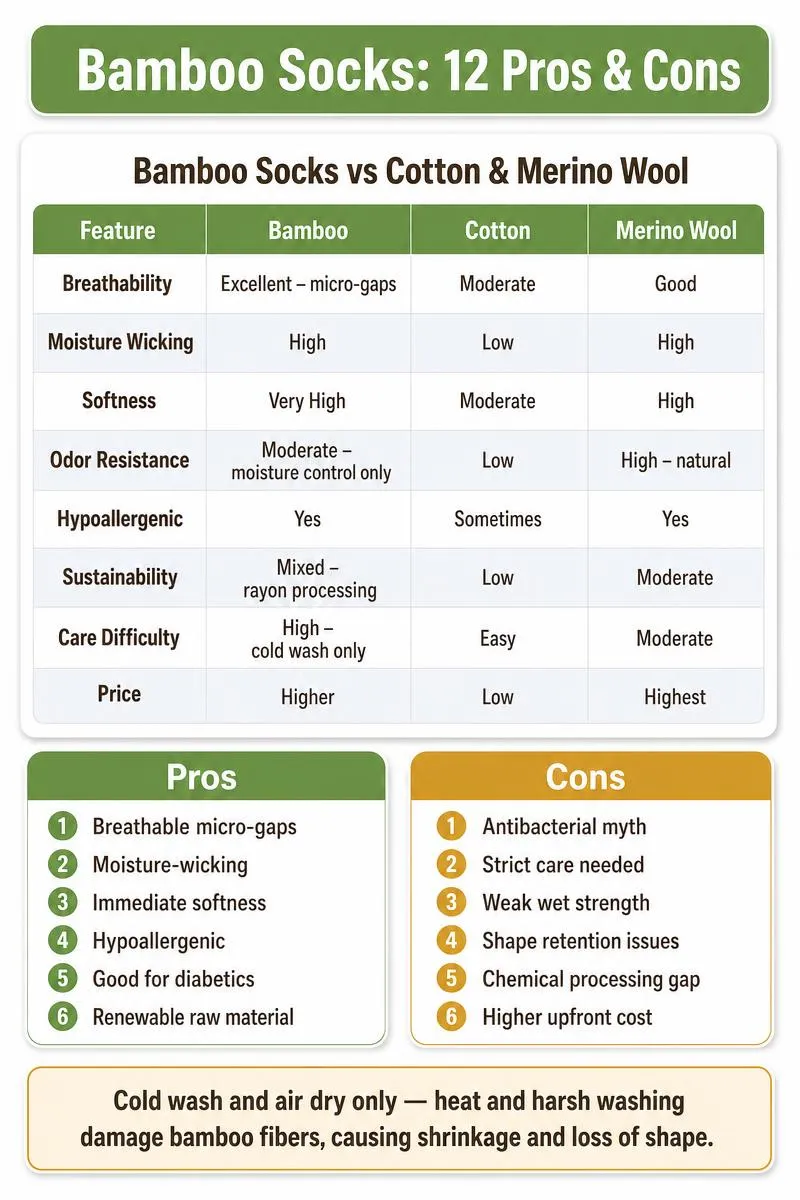
Bamboo Socks Pros And Cons Compared
| Feature | Bamboo | Cotton | Merino Wool |
|---|---|---|---|
| Breathability | Excellent (micro-gaps) | Moderate | Good |
| Moisture wicking | High | Low | High |
| Softness | Very high | Moderate | High |
| Odor resistance | Moderate (moisture control) | Low | High (natural) |
| Hypoallergenic | Yes | Sometimes | Yes |
| Sustainability | Mixed (rayon processing) | Low | Moderate |
| Care difficulty | High (cold wash) | Easy | Moderate |
| Price | Higher | Low | Highest |
Bamboo Socks vs Cotton and Merino Wool
- Breathability and moisture: Bamboo wicks moisture away from skin faster than cotton. Merino wool handles temperature regulation across a wider range.
- Immediate softness: Bamboo feels softer immediately, often described as cashmere-like. Cotton softens over time but starts stiffer. Merino wool is soft but not as smooth as bamboo viscose.
- Wet strength and durability: Cotton holds up better when wet and tolerates hot washing. Merino wool is more durable overall. Bamboo fibers weaken when wet and are prone to pilling.
- Upfront cost: Cotton wins on price. Bamboo costs more upfront. Merino wool is typically the most expensive of the three.
- Hypoallergenic comfort: Bamboo has lower irritation risk for allergy-prone skin due to smooth fiber surfaces and reduced friction.
Keep Reading
A focused, sock-specific comparison of bamboo vs cotton covering breathability, fit, and durability that readers will…
12 Pros and Cons of Bamboo Socks
The twelve points below split into real advantages backed by fiber structure and overstated marketing claims that don’t survive close inspection.
1. Breathability Built Into the Fiber
Bamboo fiber has natural micro-gaps in its structure that allow airflow through the material. This is a fiber-level feature, not a weave or thickness trick. The breathability matters most in warm weather and during active wear, where trapped heat turns into sweat and friction.
2. Moisture-Wicking Performance
Bamboo viscose pulls moisture away from the skin faster than standard cotton does. That means feet stay drier through long shifts, in closed shoes, or during moderate activity. The wicking comes from the fiber’s cross-section, which has micro-gaps that create capillary action.
3. Softness You Can Feel Immediately
Bamboo socks often get described as cashmere-like in feel. Unlike cotton, which softens gradually with washing, bamboo viscose starts soft from the first wear. This matters most if you have sensitive skin or if you wear socks for long stretches and friction becomes an issue.
4. Hypoallergenic Properties
Bamboo viscose fibers are smooth and round at the microscopic level, which reduces friction against skin. Lower friction means lower irritation risk for allergy-prone skin and fewer hot spots that can turn into blisters. Cotton fibers, by comparison, have rougher surfaces that can irritate sensitive skin over a long day.
5. Benefits for Diabetic Users
Softness and moisture control matter for diabetic foot care because both reduce friction and the infection risk that follows from broken skin. Dry feet are less prone to fungal infections, and smooth fibers reduce the shear that causes abrasions. Some sources suggest bamboo socks are recommended for diabetic foot care, though anyone with diabetes should prioritize seamless construction and non-binding tops alongside material choice.
6. Odor Resistance (With an Honest Caveat)
Bamboo socks do reduce odor – but the mechanism is moisture control, not germ-killing fiber action. By pulling sweat away from the skin and allowing it to evaporate, bamboo viscose removes the damp environment bacteria need to multiply. Less moisture means fewer bacteria, which means less smell.
7. Sustainability of the Raw Material
Bamboo grows rapidly, requires minimal water, and needs minimal pesticides. The raw crop is renewable in a way cotton is not – cotton is a thirsty, pesticide-heavy crop. If you’re choosing based on the raw crop and not the manufacturing, bamboo has a real advantage in resource use.
8. The Antibacterial Myth
Marketing claims often say bamboo fabric has natural antibacterial properties from a compound called bamboo kun, which exists in the living plant. The problem is that most bamboo socks are made from viscose or rayon, a chemical process that dissolves the bamboo cellulose and reconstitutes it into fibers. There is no reliable evidence that bamboo kun survives that process in meaningful amounts, or that the finished fabric kills bacteria on its own.
9. Strict Care Requirements
Bamboo viscose requires cold wash on a gentle cycle, and you should avoid bleach and fabric softeners. Heat is the bigger enemy – hot water and high-heat drying damage fiber integrity and cause shrinkage. That means more laundry effort than standard cotton, which tolerates hot washing and machine drying without issue. The full routine is in the care section below.
10. Wet Strength and Shape Retention
Bamboo viscose fibers weaken when wet, more so than cotton or wool. That means socks are prone to stretching out of shape during washing, and the loss of elasticity accumulates over time. Pilling is also a known issue, especially in high-friction areas like the heel and ball of the foot. Proper care slows this down but doesn’t eliminate it.
11. The Processing Sustainability Gap
The raw bamboo crop is sustainable, but the manufacturing usually isn’t. Most bamboo socks use viscose or rayon processing, which involves dissolving bamboo cellulose in chemical solvents like sodium hydroxide and carbon disulfide. Truly eco-friendly mechanical processing exists but is rare and expensive – it crushes bamboo into fibers without chemicals, but the resulting fabric is coarser and costs significantly more.
12. Price-Per-Wear Considerations
Bamboo socks cost more upfront than basic cotton. Whether that higher price pays off depends entirely on whether you follow the care instructions. Washed correctly and air-dried, bamboo socks can last long enough to justify the cost. Washed hot and tumble-dried, they shrink, lose shape, and wear out faster than cheaper cotton would.
How to Care for Bamboo Socks
Wash bamboo socks in cold water on a gentle cycle. Use a mild detergent and skip bleach entirely – bleach breaks down the cellulose fibers that give bamboo viscose its structure. Fabric softeners coat the fibers and block the micro-gaps that handle moisture wicking, so skip those too.
Air drying is the safest option. If you use a dryer, set it to the lowest heat or tumble dry with no heat.
High heat damages the fiber integrity of bamboo viscose, causing the material to shrink and lose its shape. The elastic in the cuffs also degrades faster under heat, so low-temperature drying extends both the fabric and the fit.
Worth Reading Next
A performance-oriented comparison of bamboo and merino wool that helps readers evaluate moisture-wicking, odor control,…
FAQs About Bamboo Socks
What are the downsides of wearing bamboo socks?
The main downsides are strict care requirements, weaker wet strength, and higher cost than basic cotton. Bamboo viscose shrinks under heat, stretches when wet, and pills in high-friction areas. You also need to wash cold and air dry to get reasonable lifespan out of them.
Which is better, cotton or bamboo socks?
Depends on what you need. Cotton wins on price, wet strength, and easy care – you can wash it hot and dry it hot without much damage. Bamboo wins on immediate softness, moisture-wicking speed, and hypoallergenic comfort. If you have sensitive skin or want drier feet, bamboo is the better pick. If you want low-maintenance socks that take a beating, cotton is the safer choice.
Which is better, merino wool or bamboo socks?
Merino wool wins on temperature regulation and durability. Merino keeps feet warm in cold weather and cool in warm weather, and the fibers hold up better over time. Bamboo is softer against the skin and wicks moisture faster, but it doesn’t regulate temperature as well and degrades sooner. For active outdoor use across seasons, merino is the stronger option. For everyday comfort with sensitive skin, bamboo is worth trying.
Is bamboo fabric basically plastic, and does it release microplastics?
No, bamboo viscose is not plastic. It’s a regenerated cellulose fiber made from plant material, not a petroleum-based synthetic like polyester or nylon. Bamboo viscose does release some fibers during washing, but those are cellulose-based, not microplastics. The environmental concern with bamboo viscose is the chemical processing, not microplastic shedding.
What does bamboo do to the body?
Bamboo viscose is smooth and non-irritating against the skin, which reduces friction and the blister risk that follows. The fiber’s moisture-wicking keeps skin drier, which lowers the risk of fungal infections and chafing. There’s no evidence that bamboo fabric has active health effects beyond physical comfort and moisture management.
What are the healthiest socks to wear?
For general foot health, socks that keep feet dry and reduce friction are the best choice. Bamboo viscose, merino wool, and high-quality moisture-wicking cotton all fit that criteria. The healthiest sock for you depends on your skin sensitivity, activity level, and whether you have conditions like diabetes that require seamless, non-binding designs.
Are bamboo socks good for diabetics?
Yes, for most diabetic users. Bamboo viscose’s softness and moisture control reduce friction and keep feet dry, both of which lower infection risk. Look for non-binding tops that don’t dig into the calf and flat or hand-linked seams alongside the bamboo material, since those features matter as much as the fiber choice for diabetic foot care.
Explains differences between bamboo and modal fabrics-useful for readers weighing softness, durability, and…
Final Thoughts
Bamboo socks deliver real comfort and moisture benefits for sensitive feet, but only if you accept the care limitations and the honest processing realities. The softness and breathability are genuine fiber-level advantages, not marketing spin. The antibacterial claims and sustainability halo are overstated.
Try one pair first. Wash it cold, air dry it, and see whether the softness and drier feet justify the extra laundry attention in your daily routine.
External References
- Investigating the Antibacterial Characteristics of Japanese … – NIH (NCBI)
- Antimicrobial Properties of Bamboo Fibres – Biomedres
- Carbon Disulfide Emission Control Options – EPA
- Bamboo as a Sustainable Fabric: Pros, Cons, and Its … – Sustainabilityaward
- Carbon disulfide exposure assessment in a Chinese … – ACADEMIA (.edu)
- Bamboo Fabric: Is it actually sustainable? – Bamboou