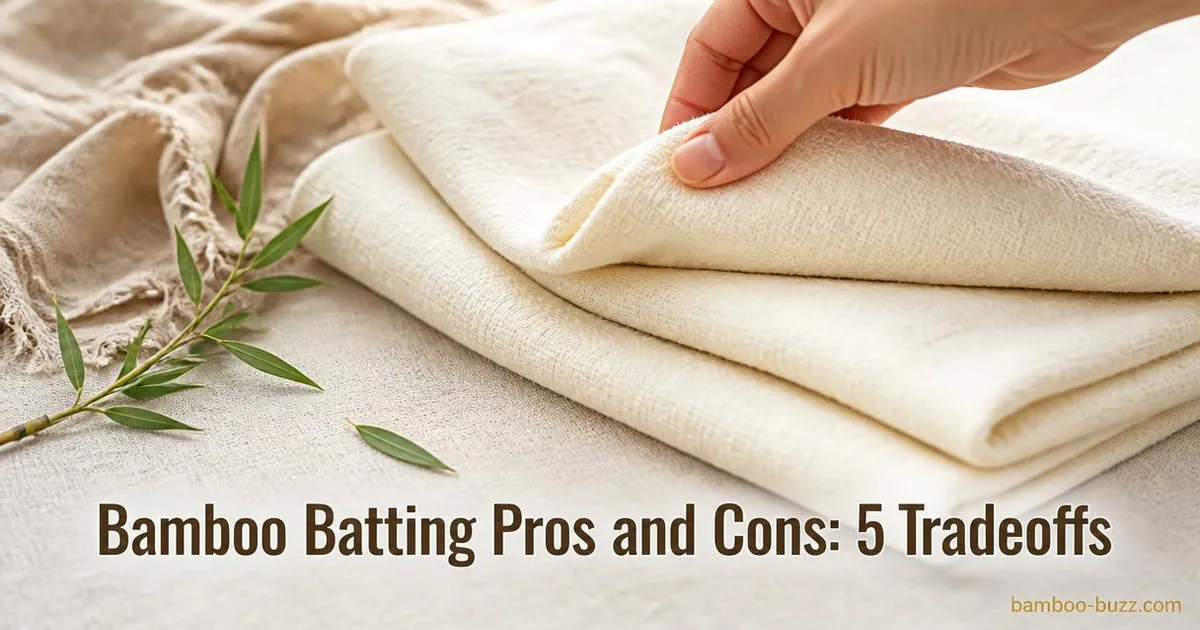
Bamboo Batting Pros and Cons: 5 Tradeoffs
Bamboo batting sounds like a dream for quilters who want something soft and breathable – and in some ways, it delivers. But bamboo fiber behaves differently from cotton in the wash, on the longarm, and on the bolt. If you commit to a full roll without knowing the tradeoffs, you might end up with a quilt that shrinks more than expected or a batting you can’t source again easily.
This article walks through five specific bamboo batting pros and cons, compares bamboo to cotton and 80/20 blends, and helps you match the batting to your next project instead of the other way around.
Key Takeaways
- Bamboo batting is lighter and more breathable than standard cotton, which makes it a frequent pick for summer quilts and warm-weather projects.
- Shrinkage is a genuine concern – some sources suggest planning for a crinkled finish or pre-washing before use.
- The hand and drape are typically softer than stiffer blends, though loft and durability vary by manufacturer.
- Fewer brands and stockists carry pure bamboo batting compared to cotton or 80/20 options, so availability can shape your choice.
- Bamboo suits throws and seasonal quilts that get gentle use; choose 80/20 for quilts that will be washed often.
Related Reading
Pros and cons of bamboo sheets
A concise breakdown of comfort, breathability, and care tradeoffs for bamboo sheets that readers can apply to batting…
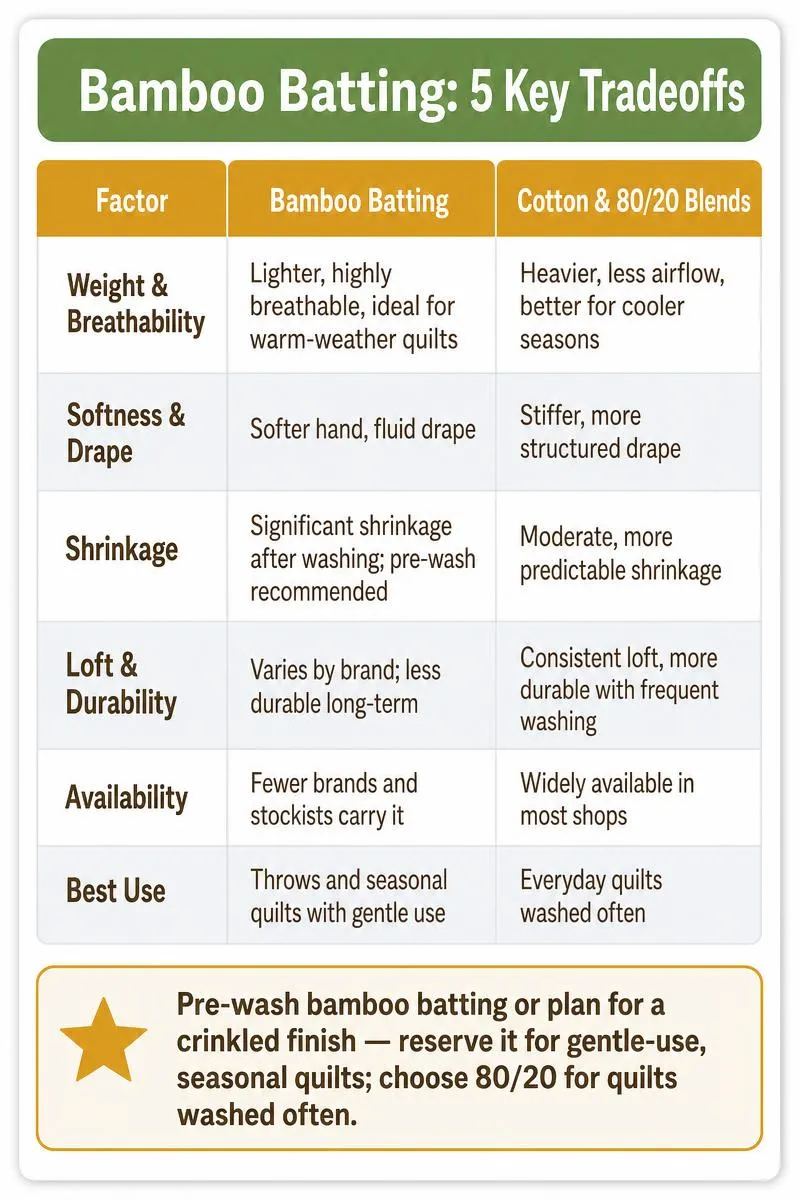
Quick Comparison: Bamboo Batting Pros And Cons
| Factor | Bamboo batting | Cotton & 80/20 blends |
|---|---|---|
| Weight & breathability | Lighter, highly breathable | Heavier, less airflow |
| Softness & drape | Softer hand, fluid drape | Stiffer, more structured |
| Shrinkage | Significant; pre-wash recommended | Moderate, more predictable |
| Loft & durability | Varies by brand; less durable | Consistent loft; more durable |
| Availability | Fewer brands and stockists | Widely available |
| Best use | Throws and seasonal quilts | Everyday quilts washed often |
Bamboo Batting vs Cotton and 80/20 Blends
Pure bamboo batting is made from bamboo viscose fibers processed into a nonwoven sheet, while cotton batting is made from cleaned, carded cotton fibers, and 80/20 blends combine cotton with a synthetic binder – usually polyester – for added structure. The way each fiber is constructed changes how the batting feels, how much it weighs, and how well it holds up over time.
Softness, Loft, and Durability
Bamboo batting generally has a softer hand than cotton, meaning it drapes more fluidly and feels less stiff between your fingers. Cotton batting tends to have a flatter, denser feel with a crisp drape that holds shape – useful for structured quilts where you want crisp stitch definition.
80/20 blends sit somewhere in the middle: the cotton provides body while the polyester adds resilience and reduces shrinkage. Loft – the thickness and puff of the batting – is typically low to moderate for bamboo, comparable to cotton but with a slightly silkier surface.
Durability is where bamboo gets more complicated. Pure bamboo fibers can break down faster than cotton-poly blends under repeated washing and heavy use, so for a bed quilt that gets laundered monthly, an 80/20 blend may hold up longer.
Longarm Quilting Considerations
Bamboo batting handles well on a longarm when properly loaded, but its softer drape means it can stretch slightly under tension if you pull too hard on the take-up roller. Cotton and 80/20 blends resist stretching better because their fiber structure is more rigid. If you are quilting a large bamboo-batted quilt on a longarm, keep tension moderate and check that the batting feeds evenly without sagging on the frame.
How to Choose Bamboo Batting for Your Project
Bamboo suits light, draped pieces like summer quilts and throws; structured projects like wall hangings are where its weaknesses show – match the project before you buy the roll.
Matching Weight and Breathability to Your Project
Summer quilts, lightweight throws, and quilted table runners are projects where bamboo batting’s light weight and breathability matter most. The fiber’s open structure allows air to pass through more easily than denser cotton batting, so a bamboo-batted quilt feels cooler in warm climates or during seasonal transitions. That said, table runners need a batting that lies flat and holds its shape, so bamboo’s softer drape can work against you – the edges may look less crisp than with cotton or an 80/20 blend.
For wall hangings where breathability does not matter, bamboo’s soft drape can actually work against you – the quilt may sag rather than hang flat.
Drape and Density for Home and Longarm Quilting
Drape refers to how fluidly the finished quilt hangs, and bamboo batting produces a looser, more relaxed drape than cotton or blends. That drape is a plus for bed quilts and throws that you want to cuddle under, but it can make a table runner or wall hanging look less crisp. Density is lower than cotton, which means the quilt feels lighter on the body but also has less structure for quilting designs that rely on dense stitching patterns.
For home machine quilting, the lighter density of bamboo batting means it feeds through your machine easily and reduces drag. For longarm work, the same low density means less resistance on the frame, but keep frame tension moderate.
Swatch-Testing for Shrinkage
If you are a beginner working with bamboo batting for the first time, cut a swatch big enough to measure accurately before and after washing – and wash and dry it the same way you plan to wash the finished quilt. Measure the swatch before and after washing to see how much it shrinks. Some bamboo battings shrink noticeably, and knowing your swatch’s behavior lets you adjust your quilt size or decide whether to pre-wash the full batting before layering.
You Might Also Like
A side-by-side comparison of bamboo fiber and cotton covering durability, absorbency, and feel – key factors when…
5 Pros and Cons of Bamboo Batting
Each point below pairs a benefit with its cost – lightness gives up insulation, softness gives up structure, and warm-weather comfort trades against sourcing effort.
1. Lightweight and Cool for Warm-Weather Quilts
Bamboo batting is among the lightest batting options available. For summer quilts and quilts used in warm climates, that light weight and breathability translate to a quilt that feels comfortable rather than stifling.
The tradeoff is that the same lightness means less insulation, so a bamboo-batted quilt will not keep you warm in cold weather the way a wool or thick cotton batting would.
2. Soft Drape and Hand
The hand of bamboo batting – how it feels when you hold and manipulate it – is softer and silkier than most cotton battings. That softness carries through to the finished quilt, giving it a flowing, relaxed drape that hugs the body rather than sitting stiff. Quilters who want a vintage, well-loved feel from the start often prefer bamboo for that reason.
The con is that the softness means less body and structure, so designs that rely on crisp stitch definition or a flat finish may look less defined.
3. Shrinkage After Washing
Bamboo batting can shrink after washing, and the amount varies by manufacturer and whether the batting has been needle-punched or resin-bonded. Some sources suggest bamboo shrinks more than cotton, while others report similar shrinkage rates – the inconsistency itself is the issue. If your project requires a precise finished size, such as a bed quilt that needs to hit a specific drop length, shrinkage becomes a real planning factor.
4. Loft and Durability Compared to Cotton Blends
Over repeated washing, pure bamboo fibers may show wear sooner than an 80/20 cotton-poly blend, where the polyester adds structural resilience. Bamboo batting also lacks the spring-back you get from wool or polyester. For heirloom quilts or quilts that will see heavy daily use, that durability gap matters.
For a seasonal quilt that gets washed a few times a year, the difference is less significant.
5. Availability and Brand Selection
Fewer manufacturers produce pure bamboo batting compared to cotton or 80/20 blends, and fewer local quilt shops stock it regularly. Quilters Dream is the brand most commonly associated with bamboo batting, and it is the one most quilters encounter when searching for the product. If your local shop does not carry bamboo batting, online ordering is usually the alternative – which means planning ahead since you cannot feel the hand before buying.
The limited selection also means fewer weight and loft options to choose from within the bamboo category.
FAQs About Bamboo Batting
Is bamboo batting better than cotton batting?
Not better – different. Bamboo is lighter, softer, and more breathable, which suits summer quilts and throws. Cotton is more widely available, tends to shrink less unpredictably, and holds up better under heavy use. The right choice depends on your project.
Does bamboo batting shrink?
Yes, bamboo batting can shrink after washing, though the amount varies by manufacturer. Pre-washing a swatch before committing to a full quilt is the safest way to know how much to expect.
What is the best brand of bamboo batting?
Quilters Dream Bamboo is the most widely available and commonly recommended brand. It is the brand most shops stock when they carry bamboo at all.
Is bamboo batting the best choice for summer and lightweight quilts?
For many quilters, yes. The light weight and open fiber structure make bamboo a strong match for warm-weather quilts. If shrinkage or durability is a concern for your specific project, cotton or an 80/20 blend may be a better fit.
What kind of batting do most quilters use?
Most quilters use cotton or 80/20 cotton-polyester blends. These are the most widely available, hold up well to regular washing, and work across a broad range of project types.
What is the best batting for quilted table runners?
Cotton or a low-loft 80/20 blend is usually the best choice for table runners. You want a batting that lies flat and holds its shape, and bamboo’s softer drape can make a table runner look less crisp.
What is dirty quilting?
Dirty quilting is a technique where the batting and backing are layered and quilted without basting the layers together first – the quilter holds the layers in place by hand as they stitch. It is an informal, improvisational approach, not a reference to cleanliness.
What is a quilt without batting called?
A quilt without batting is called a coverlet or a single-layer quilt. Some quilters also refer to this as a summer quilt, since the absence of batting makes the finished piece lighter and cooler.
Also Worth Checking Out
Focuses on softness, hypoallergenic properties, and safety considerations for baby textiles – useful if you’re choosing…
Final Thoughts
Bamboo batting is a strong choice for lightweight, soft-drape quilts where breathability matters more than structure. Shrinkage and limited availability are the two practical hurdles that catch quilters off guard.
Cut a small sample, wash it the way you will wash the finished quilt, and check the care label before buying a full roll – that swatch test tells you more about how the batting will behave than any product description will.
External References
- Threading Your Way Through the Labeling Requirements … – FTC
- Efficient Use of Fibrous Structures in Filtration – EPA
- an experimental study toward eco-friendly bamboo fiber … – UA – UA (.edu)
- Carbon disulfide exposure assessment in a Chinese … – ACADEMIA (.edu)
- effect of fabric structure on the airpermeability and moisture … – Lex-localis
- 2021 napcs – Census