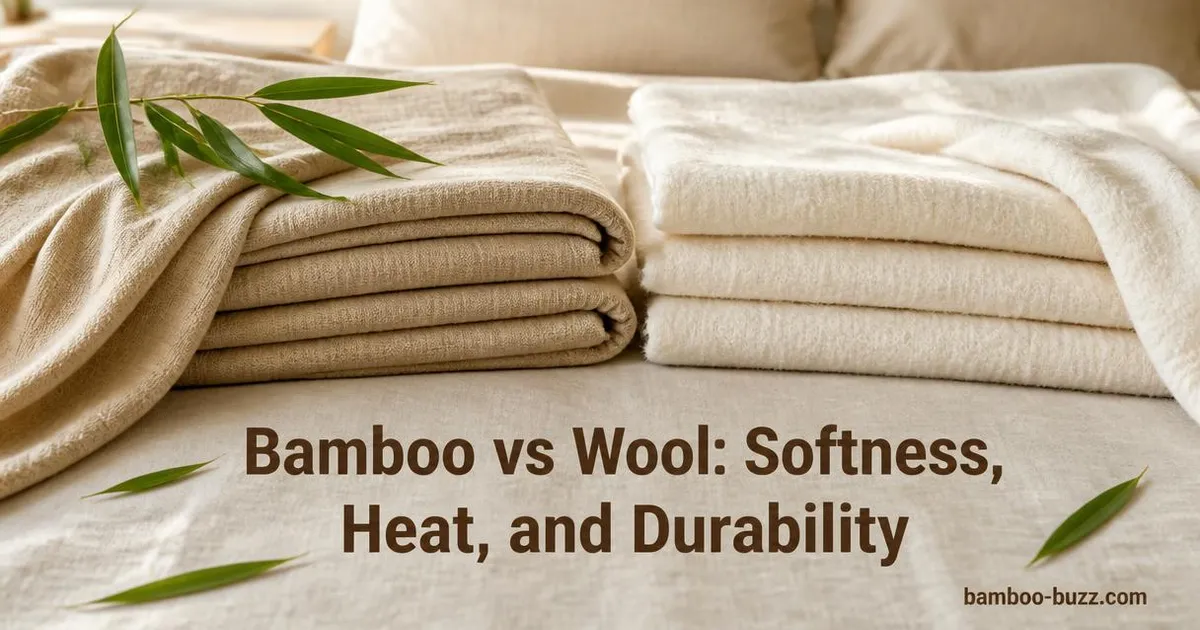
Bamboo vs Wool: Softness, Heat, and Durability
Bamboo and wool sit at opposite ends of the fiber spectrum. One is a plant-based cellulose textile spun from grass stalks. The other is a protein fiber sheared from sheep. Both end up in socks, base layers, and bedding, but how they feel, handle sweat, resist odor, and hold up over time differs sharply.
If you’re deciding between the two, the real question isn’t which is better overall. It’s which one fits your climate, your washing routine, and what you’re actually wearing it for.
Key Takeaways
- Bamboo fabric is typically viscose rayon made by dissolving bamboo cellulose in chemical solvents. Wool is a natural animal protein fiber sheared from sheep.
- Bamboo feels cooler and silkier against skin. Wool feels warmer and springier, though itchiness varies depending on the fiber grade.
- Bamboo handles heat and humidity better than wool. Wool insulates better in cold and damp conditions.
- Wool generally outlasts bamboo in high-wear items like socks and base layers, and handles extended wear between washes without getting rank.
- Choose bamboo for hot sleepers, warm climates, and sensitive skin. Choose wool for cold weather and outdoor layering.
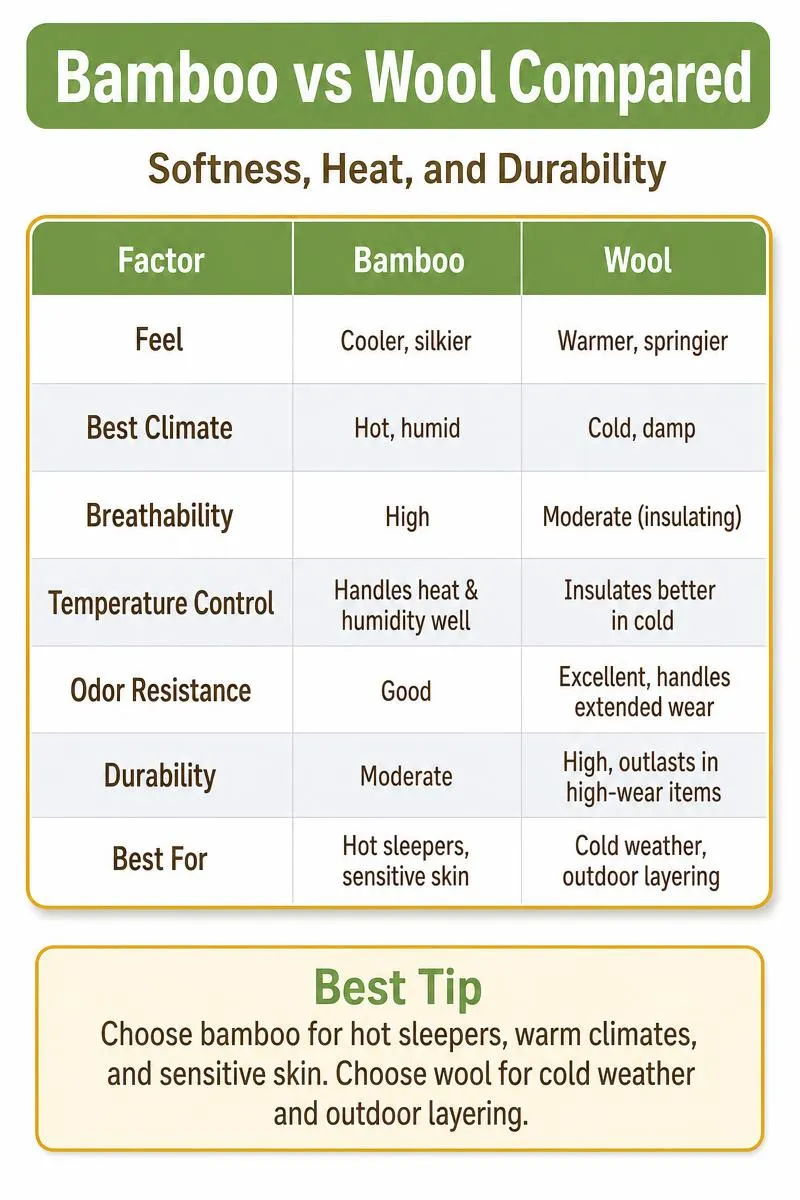
Bamboo Vs Wool Compared
| Factor | Bamboo | Wool |
|---|---|---|
| Feel | Cooler, silkier | Warmer, springier |
| Best climate | Hot, humid | Cold, damp |
| Breathability | High | Moderate (insulating) |
| Temperature control | Handles heat & humidity well | Insulates better in cold |
| Odor resistance | Good | Excellent (handles extended wear) |
| Durability | Moderate | High (outlasts in high-wear items) |
| Best for | Hot sleepers, sensitive skin | Cold weather, outdoor layering |
What Is Bamboo Fabric?
Bamboo fabric is usually viscose rayon. Manufacturers dissolve bamboo cellulose in chemical solvents to create fibers that are then spun into yarn. A less common version, mechanical bamboo fiber, is processed directly from the plant’s bast without chemical dissolution, but most bamboo fabric on the market is the viscose type.
The result is a textile with a very smooth hand feel. Bamboo viscose drapes softly, wicks moisture away from skin, and breathes well in warm conditions. Raw bamboo grows quickly without pesticides or irrigation, which makes the crop itself renewable. The manufacturing process, though, involves chemical solvents that some buyers weigh as a trade-off.
Bamboo fabric works best for warm-weather clothing, breathable base layers, hot-weather bedding, and socks worn in humid climates. The main weaknesses are durability and care. Bamboo viscose can be less durable than animal fiber equivalents, and some sources suggest quality varies by manufacturer. Delicate washing is usually required.
Keep Reading
Best bamboo pillow cases on amazon
Find top-rated bamboo pillow cases for sleepers prioritizing softness and temperature regulation.
What Is Wool?
Wool is a natural animal protein fiber sheared from sheep. Merino wool, a finer and softer variant, comes from a specific breed and is what most performance clothing uses. Coarser grades like traditional lambswool are stiffer and more common in heavy sweaters and blankets.
Wool insulates even when damp, which makes it the go-to fiber for cold-weather layers, hiking socks, and winter duvets. The fiber’s crimp gives it natural elasticity, so wool garments stretch and recover without losing shape. Wool also resists odor over multiple wears, thanks to the structure of the protein fiber and the lanolin that remains after processing.
Coarser wool grades can feel itchy or provoke skin sensitivity, even though merino is fine enough for most people. Wool requires careful washing to avoid shrinkage, and some buyers have concerns about animal sourcing practices in the wool industry.
Bamboo vs Wool: Comfort and Feel
Bamboo viscose has a smooth, cool surface that glides against skin. Wool has a warm, springy texture with natural crimp that creates loft.
The itch factor matters with wool. Coarser grades have thick fibers that prick the skin, which is why traditional wool sweaters drive some people crazy. Merino wool is finer than traditional grades like lambswool, and most people find it comfortable against bare skin. It’s still an animal fiber, though, so anyone with a known wool sensitivity should test a small area first.
Bamboo’s smoothness makes it a strong pick for sensitive skin. The bamboo viscose fibers are round and smooth at a microscopic level, so the fabric doesn’t create friction the way coarse fibers do.
Bottom line: Bamboo wins for cool smoothness. Wool wins for warm plushness.
Bamboo vs Wool: Breathability and Temperature
Bamboo viscose breathes well and moves moisture through the fabric quickly. In hot, humid conditions, that combination keeps air circulating against your skin instead of trapping it. Hot sleepers and people in warm climates tend to prefer bamboo bedding and clothing for exactly this reason.
Wool’s strength is the opposite. The crimped fiber structure traps pockets of air, which creates insulation. Wool keeps you warm in cold conditions and, importantly, continues insulating when damp from sweat or rain. That’s why wool base layers are standard for hiking, skiing, and cold-weather outdoor work.
For base layers specifically, the temperature range you’re operating in determines which fiber makes sense. Bamboo base layers work well in summer heat or for low-output activities. Wool base layers excel in cold weather and high-output activities where sweat would saturate a less insulating fabric.
Bottom line: Bamboo wins for heat. Wool wins for cold.
Pros and cons of bamboo sheets
An in-depth pros and cons breakdown of bamboo sheets covering softness, breathability, and care that complements the…
Bamboo vs Wool: Odor Resistance
Wool naturally resists odor over multiple wears. The protein structure of wool and residual lanolin create an environment where odor-causing bacteria struggle to multiply. Hikers and travelers know this well: merino base layers and socks can be worn for multiple days without developing the smell that synthetic or cotton equivalents would after one use.
Bamboo viscose handles moisture reasonably well and dries fairly quickly, but it doesn’t match wool’s odor resistance over extended wear. Raw bamboo contains a compound called bamboo kun, which has mild antibacterial properties. Most of that compound doesn’t survive the viscose chemical process, though, so finished bamboo fabric has limited natural odor resistance compared to wool.
For socks and base layers worn for a single day, either fiber works fine.
Bottom line: Wool wins for extended wear between washes.
Bamboo vs Wool: Durability and Care
Wool is the more durable fiber for high-wear items. The protein fiber flexes and recovers under repeated bending without snapping, which is why wool socks and sweaters last for years with proper care. Wool also resists pilling better than most viscose fabrics, though pilling can still happen in high-friction areas.
Bamboo viscose is softer but more delicate. The fibers can weaken with abrasion, so bamboo socks and base layers tend to show wear faster than wool equivalents in the same use case. Pilling is more common with bamboo, especially in areas that rub against other fabric or skin.
Wool needs cold water, gentle detergent, and air drying to avoid felting and shrinkage. Machine washing wool on a normal cycle will ruin it.
Bamboo viscose also requires gentle washing, typically cold water on a delicate cycle, and air drying. Hot water and machine drying can damage viscose fibers and shorten the fabric’s life.
Bottom line: Wool is generally more durable. Bamboo requires gentler care.
Which Should You Choose?
Your climate and use case should drive the decision.
- Hot sleepers and warm climates: Bamboo. The breathability and cool hand feel make bamboo bedding and clothing more comfortable in heat.
- Cold-weather outdoor layers: Wool. The insulation and damp-tolerant performance make wool the better fiber for hiking, skiing, and winter use.
- Sensitive skin that reacts to coarse fibers: Bamboo. The smooth bamboo viscose surface avoids the friction and prickle that coarser wool can cause.
- Multi-day hiking or travel with limited washing: Wool. The odor resistance means you can wear merino base layers for days without them smelling.
- Buyers weighing renewability versus animal sourcing: Bamboo grows without pesticides or irrigation, but most bamboo fabric uses chemical viscose processing. Wool is a natural animal fiber, but comes with animal-sourcing concerns.
Explore More
A direct comparison of bamboo and silk pillowcases useful for readers weighing fabric feel and temperature against wool…
FAQs About Bamboo and Wool
Are wool or bamboo socks better?
It depends on the season and activity. Wool socks perform better for cold weather, hiking, and extended wear because they insulate when damp and resist odor. Bamboo socks work well in warm, humid conditions where breathability matters more than insulation.
Is bamboo fabric good for summer?
Yes. Bamboo viscose breathes well, wicks moisture, and feels cool against skin. These qualities make it a strong summer fabric for clothing and bedding.
Which is better, a wool duvet or a bamboo duvet?
Wool duvets insulate better and regulate temperature in cold bedrooms. Bamboo duvets feel cooler and lighter, which suits hot sleepers and warm-weather use. Choose based on your sleeping temperature, not on the duvet alone.
Is merino wool itchy in a t-shirt?
For most people, no. Merino fibers sit comfortably against bare skin. If you have a known wool sensitivity, test a small area first or look for ultra-fine merino.
Which is more eco-friendly, bamboo or merino wool?
Both have trade-offs. Bamboo grows quickly without pesticides or irrigation, but most bamboo fabric is made through chemical viscose processing. Merino wool is a natural protein fiber but raises animal-sourcing questions. If manufacturing chemicals are your main concern, wool is simpler. If animal sourcing is your main concern, bamboo avoids that entirely.
Which lasts longer, bamboo or wool clothing?
Wool generally lasts longer, especially in high-wear items like socks and base layers. The protein fiber flexes and recovers under repeated bending without snapping. Bamboo viscose is more prone to abrasion damage and pilling over time.
Can you wear bamboo or wool for everyday shirts?
Both work. Bamboo shirts feel smooth and cool, which suits everyday wear in warm conditions. Merino wool shirts work well in cooler weather and for travel, since you can wear them multiple times between washes.
Does bamboo resist odor better than wool?
No. Wool resists odor better than bamboo over multiple wears. Raw bamboo contains bamboo kun with mild antibacterial properties, but most of it doesn’t survive the viscose process used to make most bamboo fabric.
Final Verdict
Bamboo and wool excel in opposite conditions, so there’s no universal winner. If you live somewhere warm, sleep hot, or need fabric gentle on sensitive skin, bamboo makes sense. If you spend time in cold weather, need layers that perform when damp, or want to wear something for days without washing it, wool is the better fit.
Blended fabrics exist too, if you want one garment that splits the difference between the fibers. Some people keep both and rotate by season, because bamboo viscose and wool solve genuinely different problems. Figure out your primary climate and how often you’re willing to wash, then match the material to that use case.
External References
- Investigating the Antibacterial Characteristics of Japanese … – NIH (NCBI)
- Antimicrobial Properties of Bamboo Fibres – Biomedres
- Material properties – STINGRAY – Stingray
- Prospects Of Bamboo Fibers In The Textile And Apparel … – Ijirmf
- (PDF) Textile binding and release of body odor compounds … – ResearchGate
- Eco-Friendly Bamboo Fabric Overview | PDF | Textiles – Scribd