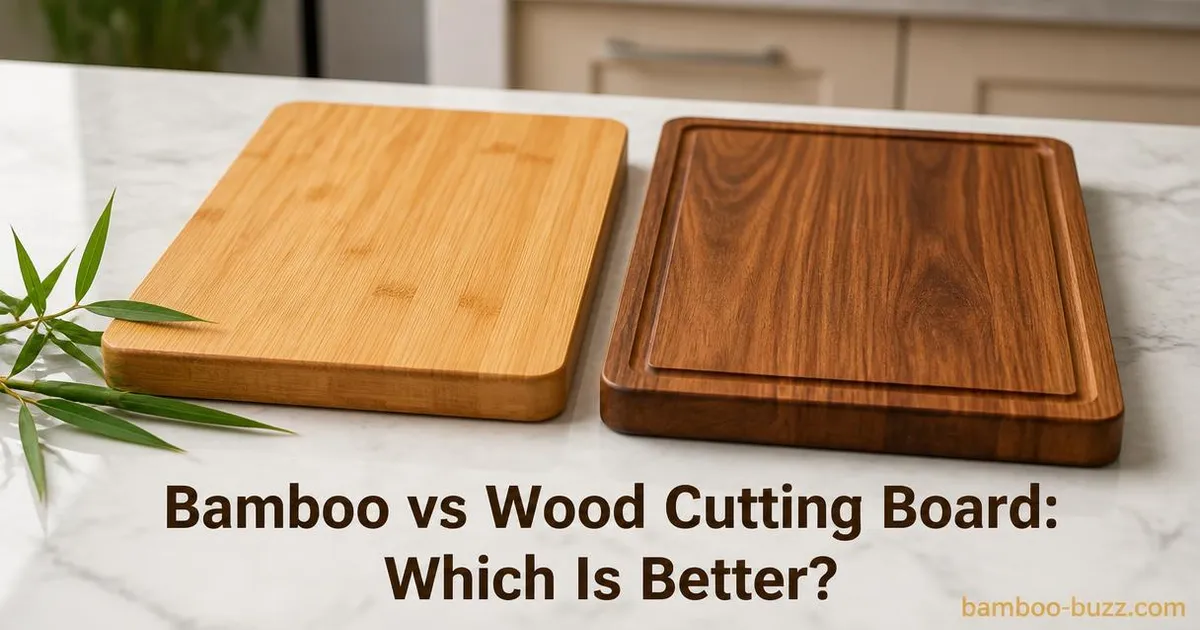
Bamboo vs Wood Cutting Board: Which Is Better?
Bamboo cutting boards are harder than most hardwoods. That same hardness is what dulls your knives faster than a softer wood surface would. Wood boards feel gentler on blades but demand more upkeep to stay in good shape.
Your ideal pick comes down to how you cook, how much maintenance you tolerate, and whether you care more about knife edges or easy cleaning.
Key Takeaways
- Bamboo absorbs less water than wood and resists scarring, but its hardness dulls knife edges faster over time.
- Wood boards, especially end-grain hardwood, let knife edges sink slightly between fibers rather than hitting a blunt surface.
- Both bamboo and wood require hand washing and immediate drying; neither belongs in a dishwasher.
- Some sources suggest professional chefs favor hardwood cutting boards for daily prep work.
- Construction quality affects lifespan more than material choice does.
- Your willingness to oil and dry your board after each use matters more than whether it is bamboo or wood.
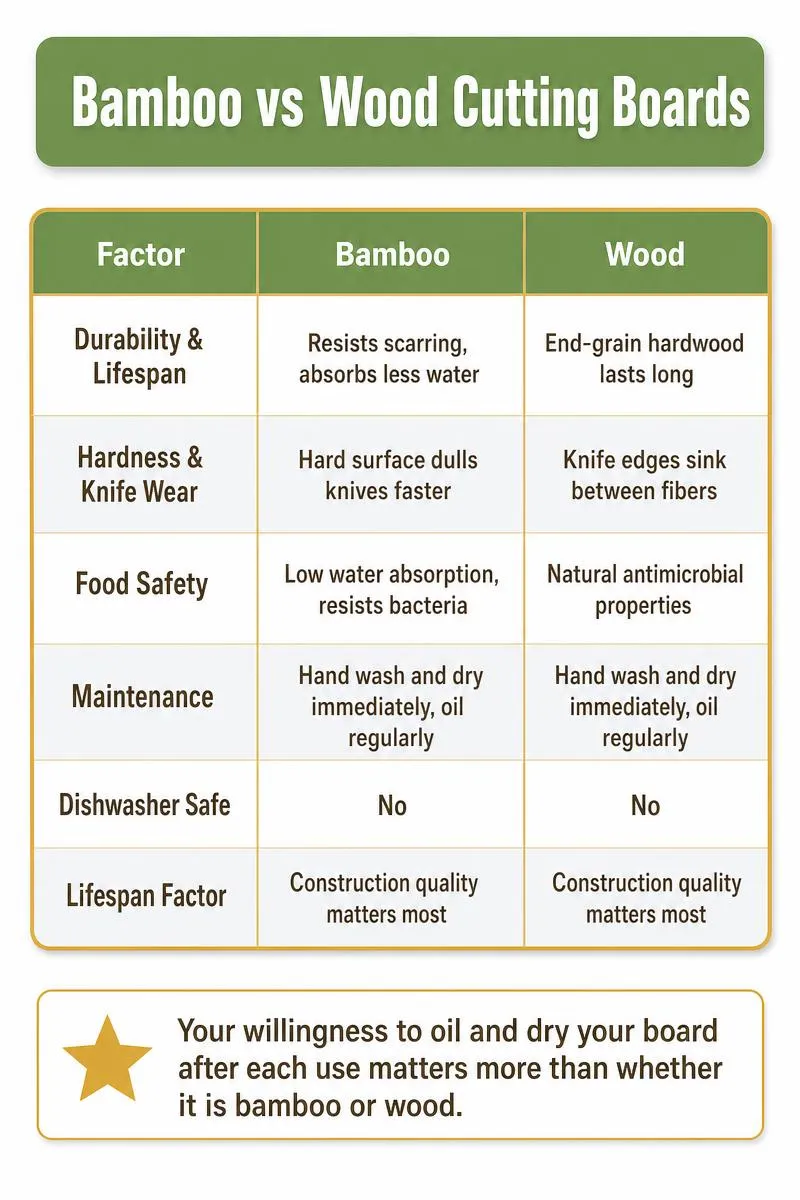
Quick Comparison: Bamboo Vs Wood Cutting Board
| Factor | Bamboo | Wood |
|---|---|---|
| Durability & Lifespan | Resists scarring; less water absorption | End-grain hardwood lasts long |
| Hardness & Knife Wear | Hard surface dulls knives faster | Edges sink between fibers; gentler on knives |
| Food Safety | Low water absorption; resists bacteria | Natural antimicrobial properties |
| Maintenance | Hand wash, dry immediately, oil regularly | Hand wash, dry immediately, oil regularly |
| Dishwasher Safe | No | No |
| Lifespan Factor | Construction quality matters most | Construction quality matters most |
What Is a Bamboo Cutting Board?
Bamboo cutting boards are made from laminated strips of bamboo grass fibers laminated together with adhesive. Despite being a grass rather than a tree, bamboo produces a surface harder than most hardwoods used for cutting boards.
Bamboo boards are best for quick prep, light chopping, and cooks who want a lightweight, affordable option. The strengths include low cost, fast renewable growth, and a surface less porous than most woods.
The weaknesses are real, though: that hardness can dull knives faster than wood, low-quality boards may splinter along the seams, and bamboo cannot withstand prolonged soaking without warping or cracking.
Worth Reading Next
Bamboo vs maple cutting boards
Detailed comparison of bamboo and maple cutting boards covering hardness, maintenance, and which suits home cooks.
What Is a Wood Cutting Board?
Wood cutting boards typically come from maple, walnut, cherry, or teak. These boards are available in edge-grain construction, where fibers run parallel to the board face, and end-grain construction, where fibers stand vertically so the knife cuts between them rather than across them.
Wood boards are best for heavy daily use, butchery tasks, and cooks who want a surface that ages gracefully. End-grain boards have self-healing properties where light cuts close up as wood fibers swell back together. Softer hardwoods like walnut and cherry are gentler on knife edges than bamboo.
Well-maintained wood boards also last for years. The trade-offs: wood boards are heavier than bamboo, require regular oiling with food-grade mineral oil, and warp if left wet for extended periods.
Bamboo Cutting Board vs Wood Cutting Board: Durability and Lifespan
Bamboo’s density gives it strong resistance to scarring and water absorption. Daily knife work leaves fewer visible marks on bamboo than on softer woods, and the surface resists moisture penetration better.
Wood boards show wear differently. End-grain hardwood absorbs knife strikes between its fibers, so the surface develops a worn patina rather than deep gouges. Edge-grain boards show cuts more visibly but maintain structural integrity if oiled regularly.
Construction quality affects longevity more than the raw material does. A well-made bamboo board with tight lamination and quality adhesive will outlast a cheaply glued wood board. Premium hardwood end-grain boards, built with solid joinery and maintained with oil, last longer than any bamboo option.
The winner: High-quality hardwood end-grain boards last longest. Bamboo outperforms cheap wood but falls short of premium hardwood.
Bamboo Cutting Board vs Wood Cutting Board: Hardness and Knife Wear
Bamboo’s density is its biggest trade-off for knife owners. The laminated grass fibers create a surface with little give, so your knife edge strikes a rigid surface each time it lands. That repeated impact dulls the blade faster than a softer cutting surface would.
Soft hardwoods behave differently. Knife edges sink slightly into the grain on each cut, meaning the blade meets resistance from the sides rather than taking a direct hit on the edge. End-grain construction amplifies this effect because the knife separates fibers vertically instead of cutting across them.
The winner: Wood is better for knife preservation. Bamboo works for occasional use but wears down edges faster with daily chopping.
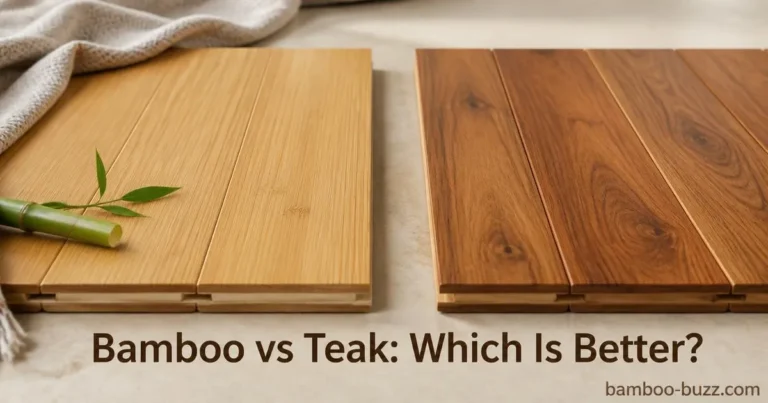
Explains how bamboo and teak differ in hardness and knife impact, with practical notes on longevity.
Bamboo Cutting Board vs Wood Cutting Board: Food Safety and Bacteria
Both bamboo and wood can harbor bacteria in knife grooves if not cleaned properly. Some sources suggest wood has a natural capacity to absorb and trap bacteria, and the pathogens die off inside the fibers. Bamboo’s lower porosity means fewer places for moisture and bacteria to settle, but bamboo does not offer the same bacteria-trapping absorption some researchers have observed in wood.
For raw meat prep, using a dedicated board matters more than the material itself. Cross-contamination happens when the same board handles meat and produce without sanitizing between uses, not because of whether that board is bamboo or wood.
One advantage both materials share over plastic: neither bamboo nor wood sheds microplastics into your food. Plastic cutting boards release microplastic particles as knives wear down the surface, which is not a concern with plant-based materials.
The winner: Tie if properly cleaned and sanitized. Wood may have a slight edge based on bacteria die-off inside its fibers, but both materials require thorough cleaning after raw meat.
Bamboo Cutting Board vs Wood Cutting Board: Maintenance and Care
Both bamboo and wood need hand washing with warm, soapy water. Neither belongs in a dishwasher, where heat and prolonged water exposure will warp, crack, or split either material.
Wood boards need regular applications of food-grade mineral oil to keep the fibers from drying out and cracking. Most wood boards benefit from regular oiling – roughly monthly with frequent use, and more frequently if the surface looks dry or feels rough.
Bamboo boards benefit from occasional oiling too, but less often than wood. Bamboo’s lower porosity means it does not dry out as quickly, so occasional oiling is enough – far less often than the monthly routine wood wants.
Drying matters for both materials. After washing, stand the board upright or lay it on a rack so air circulates around all sides. Never leave either material sitting in standing water or lying flat on a wet counter.
The winner: Bamboo wins on low maintenance. It needs less oiling and tolerates brief moisture exposure better, but neither material is truly hands-off.
Which Should You Choose?
- If you prep meat daily and want the most knife-friendly surface, go with a hardwood end-grain board. The softer surface and self-healing fibers keep your blades sharper between sharpenings.
- If you want the lightest, easiest-to-rinse board for quick vegetable prep, bamboo is the better pick. It weighs less, costs less, and handles brief rinsing without warping.
- If regular oiling and careful drying feel like too much commitment, bamboo makes more sense. Certain hardwoods like teak contain natural oils that reduce the frequency of conditioning, so those are worth considering too.
- If your kitchen runs humid or a board might occasionally get neglected, bamboo resists moisture better than most woods. Bamboo’s lower porosity means it tolerates damp conditions without warping as readily.
- If you prioritize renewable materials on a budget, bamboo grows faster than any hardwood tree and costs less to produce. Responsibly sourced hardwood is also renewable, but the growth cycle spans decades versus bamboo’s much faster regeneration.
Also Worth Checking Out
Compares bamboo and acacia for kitchen tools, helpful if you’re weighing material choices across utensils and boards.
FAQs About Bamboo and Wood Cutting Boards
What are the disadvantages of using a bamboo cutting board?
The main drawback is knife dulling. Bamboo’s hardness means your blade hits a rigid surface on every cut, which wears the edge faster than a softer wood. Lower-quality bamboo boards can also splinter along the laminated seams if the adhesive fails.
Are bamboo cutting boards safe, and what is the healthiest type to use?
Bamboo cutting boards are safe for food prep when cleaned properly. Unlike plastic boards, bamboo does not shed microplastics into food. The healthiest approach is using separate boards for raw meat and other foods, regardless of material.
Do bamboo cutting boards need to be oiled?
Yes, but less often than wood. Bamboo benefits from occasional oiling with food-grade mineral oil to prevent the surface from drying and cracking.
What is the best wood for a cutting board?
Maple, walnut, cherry, and teak are the most common choices. Maple offers a good balance of hardness and affordability. Walnut and cherry are softer, making them gentler on knife edges. Teak contains natural oils that reduce the need for frequent conditioning.
How long do bamboo and wood cutting boards last?
Lifespan depends more on construction quality and maintenance than on material. A well-maintained hardwood end-grain board can serve for years with regular oiling. Bamboo boards typically need replacement sooner due to splintering at the seams or surface wear, though quality varies widely between brands.
How often should you oil a wood cutting board?
Most wood boards need regular oiling – roughly monthly with frequent use. If the board looks dry, feels rough, or water stops beading on the surface, it is time to apply food-grade mineral oil. Mineral oil is the standard choice because it will not go rancid.
What do professional chefs use for cutting boards?
Some sources suggest professional chefs prefer hardwood cutting boards for daily prep. End-grain hardwood boards are common in professional kitchens because they handle heavy daily use and are gentler on knives. Many chefs also keep separate boards for different ingredients to prevent cross-contamination.
Does bamboo give off microplastics?
No. Bamboo is a plant material, so knives cutting into the surface release plant fibers, not plastic particles. Plastic cutting boards are the ones that shed microplastics as the knife wears down the surface.
Why don’t we use bamboo instead of wood?
Bamboo works well for some cooks, but its hardness dulls knives faster than softer hardwoods. Wood also offers end-grain construction that lets knife edges sink between fibers, which bamboo’s laminated structure cannot replicate.
Final Verdict
Hardwood end-grain boards remain the better choice for serious home cooks who maintain their tools. The gentler surface and self-healing fibers give knives a longer edge life between sharpenings, and the boards age well with regular oiling.
Bamboo is a practical, affordable option for casual use and small kitchens. It weighs less, costs less, and needs less upkeep than most woods.
If you only have room for one board and rarely cook meat, bamboo is sufficient. If you cook daily and want your knives to stay sharp, invest in a hardwood board and commit to the oiling routine. Pick based on your willingness to oil and dry the board after each use.
External References
- Bamboo Cutting Board: The Ultimate 2026 Buying Guide – Joybuy
- Invited Perspective: Should You Scrap Your Plastic Cutting … – NIH (NCBI)
- Food safe mineral oil – Woodcarvingillustrated
- Best Bamboo Cutting Board Buyer Guide | Joybuy – Joybuy
- Cutting Boards: An Overlooked Source of Microplastics in … – Acs
- Cutting Boards of Plastic and Wood Contaminated … – NIH (NCBI)