Bamboo vs Maple Cutting Board: Which Is Better?
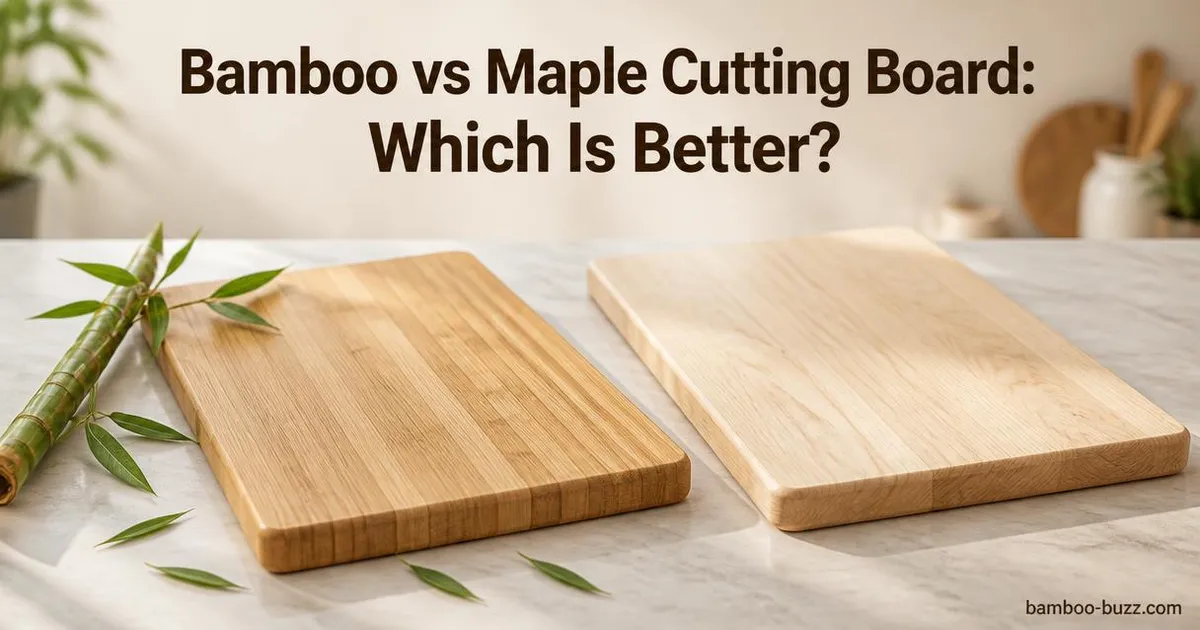
Bamboo cutting boards cost less and resist water, but they’re hard enough to dull your knives faster than maple. Maple boards, especially end-grain versions, absorb the impact of each cut and close back up, which protects your blade and extends the board’s life. The choice comes down to how often you cook, what you’re cutting, and whether you’re willing to maintain wood.
The real differences come down to hardness, food safety, maintenance, and what each board costs over years of daily use.
Key Takeaways
- Maple is softer than bamboo and causes less wear on knife edges during daily chopping
- Bamboo resists water absorption better than maple but can develop splinters where knife marks accumulate
- Maple end-grain construction closes up after cuts, reducing grooves where bacteria can hide after cutting raw meat
- Both materials require mineral oil or board cream to prevent cracking and warping
- Bamboo costs less upfront but may need replacement sooner under heavy use, while maple end-grain boards last years with proper care
Comparing the Top Bamboo Vs Maple Cutting Board
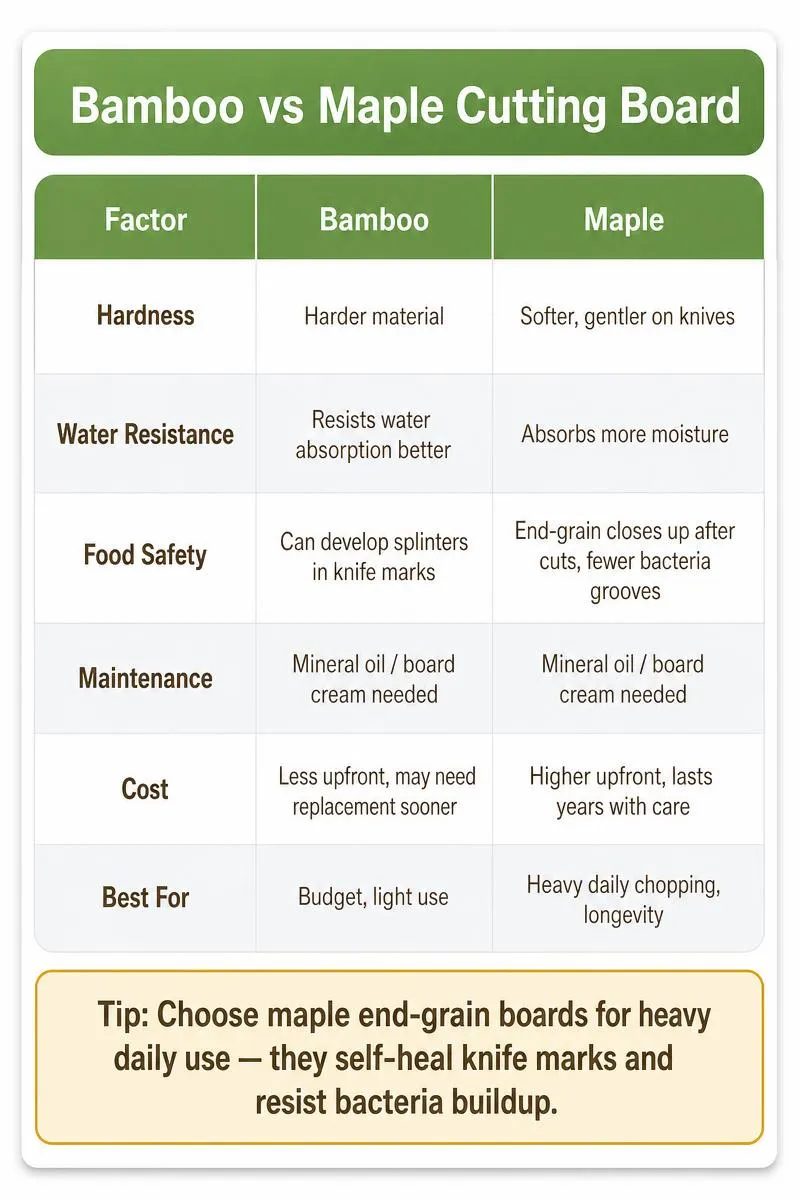
| Factor | Bamboo | Maple |
|---|---|---|
| Hardness | Harder | Softer, gentler on knives |
| Water resistance | More water resistant | Absorbs more moisture |
| Food safety | May splinter in knife marks | End-grain closes after cuts |
| Maintenance | Mineral oil / board cream | Mineral oil / board cream |
| Cost | Lower upfront; may need earlier replacement | Higher upfront; long-lasting with care |
| Best for | Budget, light use | Heavy daily chopping, longevity |
What Is a Bamboo Cutting Board?
Bamboo cutting boards are made from compressed bamboo grass fibers bonded together under pressure to form a hard composite material. Manufacturers market them as eco-friendly because bamboo regrows from its root system after harvest without replanting, and the crop matures in a few years instead of decades.
The composite structure makes bamboo boards significantly harder than most wood cutting surfaces. This hardness resists visible knife marks and surface scarring during light prep work, but it also means your blade strikes a more rigid surface with each cut.
Bamboo works best for light to moderate chopping, quick vegetable prep, and cooks who want a board they can lift easily and store in a cabinet. The material weighs less than a comparable maple board, which matters if you move your cutting surface around the kitchen often.
The main weaknesses show up with heavy use. Deep knife scores can cause the compressed fibers to splinter or fray at the cut edges. Soaking the board or leaving it wet can cause warping because moisture affects the bonded layers unevenly.
Related Reading
Acacia vs bamboo cutting boards
A focused comparison of acacia and bamboo cutting boards covering grain type, durability, and care differences.
What Is a Maple Cutting Board?
Maple cutting boards are the hardwood standard in professional kitchens and among serious home cooks. You’ll find two construction types: edge-grain, where wood strips are glued with the grain running horizontally, and end-grain, where the wood fibers point up like bristles on a brush.
End-grain maple absorbs knife impact differently than other constructions. The blade pushes wood fibers apart instead of cutting through them, and the fibers spring back after the knife lifts. This self-healing property keeps the surface smooth longer and reduces the visible knife marks that accumulate on edge-grain or bamboo boards.
Maple boards suit heavy daily use, butchering tasks, and cooks who own expensive knives they want to protect. The softer wood gives slightly under the blade, which reduces the impact force that dulls a sharp edge over time.
The material requires more maintenance than bamboo. Maple absorbs moisture readily, so boards need regular applications of mineral oil or board cream to seal the wood and prevent warping. End-grain boards also weigh significantly more than bamboo or edge-grain versions, which can make them awkward to move or store.
Bamboo vs Maple: Hardness and Durability
Bamboo measures harder than maple on the Janka hardness scale, which means it resists dents and surface scarring from normal use. That same hardness creates a more rigid surface that doesn’t absorb knife impact, and some sources suggest this accelerates blade wear over time because the knife edge strikes a less forgiving material with each cut.
Maple end-grain tolerates repeated chopping without the surface splintering that bamboo boards can develop in heavily used areas. The vertical wood fibers compress and spring back rather than fracturing, which keeps the board smooth through regular use. Edge-grain maple shows knife marks more readily than end-grain but still outlasts bamboo in typical home kitchen conditions.
The bonded fibers don’t heal or close up after cutting, so each knife mark remains as a permanent groove that can deepen with repeated cuts in the same area.
For heavy daily use, maple wins because the softer wood tolerates aggressive chopping without splintering. For light prep work where you plan to replace the board periodically, bamboo’s harder surface resists initial wear better.
Bamboo vs Maple: Food Safety and Hygiene
Bamboo resists water absorption because of its density and composite structure. The material doesn’t soak up liquid from raw meat or produce as quickly as maple, which helps limit bacterial growth if you dry the board promptly after washing. Some sources credit bamboo kun, a compound in raw bamboo, with mild antibacterial properties, though the manufacturing process may reduce or eliminate it depending on the bonding method used.
Maple end-grain may self-heal small grooves where bacteria can collect after cutting raw meat. The vertical fibers close up after knife cuts, which reduces the number of deep scratches that trap food particles and moisture. Some sources suggest that bacteria pulled into the wood grain during cutting don’t multiply readily and often die off as the wood dries.
Both materials need immediate washing and drying after contact with raw meat. Bamboo dries faster after washing, which limits how long moisture sits on the surface.
For frequent raw meat prep, maple end-grain handles cleanup well because the surface heals from cuts and you can scrub aggressively without causing splinters. For quick vegetable prep with fast cleanup and drying, bamboo’s water resistance and quick-drying surface work fine.
Keep Reading
Bamboo vs plastic cutting boards
A head-to-head look at durability, knife friendliness, and sanitation between bamboo and plastic cutting boards.
Bamboo vs Maple: Maintenance Requirements
Both materials require hand washing and immediate drying. Neither survives a dishwasher because the high heat and prolonged moisture exposure cause warping or cracking in any wood or bamboo board.
Maple absorbs moisture readily through its open grain structure, which means it needs oiling more frequently than bamboo to prevent the wood from drying out and cracking. Most maple boards need mineral oil or board cream whenever water stops beading on the surface and starts soaking in.
Bamboo needs oiling less often because its dense composite structure doesn’t absorb or release moisture as quickly as maple. The material can go longer between treatments, but it still requires regular oiling to prevent the compressed fibers from drying out completely. When bamboo does crack from neglect, the damage often appears as sharp splinters rather than the gradual warping maple develops.
Neither material is low-maintenance. If you already maintain wood tools and cutting surfaces regularly, maple fits that routine. If you want zero-maintenance, neither bamboo nor maple will work without eventual cracking or warping.
Bamboo vs Maple: Cost and Long-Term Value
Bamboo boards typically cost less upfront than maple boards of equivalent size. You can find a bamboo cutting board for noticeably less than a comparable edge-grain maple board, and significantly less than an end-grain maple version.
Maple end-grain boards cost more at purchase but can last for years with proper oiling and cleaning. The self-healing surface means you’re not replacing the board every time knife marks accumulate.
For occasional cooking and light prep, bamboo offers good value because you’re not stressing the surface enough to cause premature wear. Bamboo boards may show splintering or deep knife marks sooner under heavy use, which means you’ll replace them more often than a well-maintained maple board. For daily use with frequent raw meat prep and heavy chopping, maple becomes a better investment because the higher upfront cost spreads across more years of use.
Which Should You Choose?
- If you’re eco-conscious on a budget and do light to moderate prep work, bamboo gives you a fast-growing material that costs less. The board will handle daily vegetable chopping and quick tasks without requiring frequent oiling.
- If you prep raw meat several times a week, choose maple in an end-grain construction. The self-healing surface reduces grooves where bacteria hide, and you can scrub the board aggressively without causing splinters.
- If you own expensive knives and want to protect the edges, maple’s softer wood absorbs impact better than bamboo’s hard composite surface. The difference matters most if you sharpen your knives regularly and notice when they dull faster than expected.
- If you have a small kitchen with limited storage or lifting concerns, bamboo weighs less than maple and takes up less space. The lighter board is easier to move from cabinet to counter and back.
- If you never oil wood tools or maintain cutting boards, reconsider both options. Bamboo and maple both need regular care to prevent cracking and warping.
Worth Reading Next
A broader material comparison that explains strength and maintenance trade-offs useful for final purchase decisions.
FAQs About Bamboo and Maple Cutting Boards
What is the healthiest material for a cutting board?
Maple and bamboo both work for food safety if you wash and dry them immediately after use. Maple end-grain may reduce bacterial hiding spots because the surface self-heals small cuts, while bamboo resists water absorption that can support bacterial growth. Both materials need regular cleaning to stay sanitary.
Is it safe to put raw meat on a bamboo cutting board?
Yes, as long as you wash the board with hot soapy water and dry it completely right after use. Bamboo’s water resistance helps it dry quickly, which limits bacterial growth. Deep knife marks in bamboo can trap food particles, so replace the board once you see significant splintering or grooves.
What do professional chefs use for cutting boards?
Most professional kitchens use maple or other hardwood boards, often in end-grain construction for heavy prep stations. Some chefs prefer synthetic boards for raw meat because they can go through commercial dishwashers. Bamboo appears less often in professional settings because the harder surface dulls knives faster under constant use.
What are the downsides of bamboo cutting boards?
Bamboo is harder than maple, which can dull knife edges faster with repeated chopping. The compressed fiber structure can splinter where deep knife marks accumulate, and the material will warp if soaked or left wet. Bamboo also requires oiling to prevent cracks, though less frequently than maple.
What type of wood is best for cutting boards?
Maple works best for most home cooks because it balances hardness with knife-friendliness and resists bacterial growth when properly maintained. End-grain maple construction lasts longest because the vertical wood fibers absorb knife impact and self-heal after cuts. Other good options include walnut and cherry, both softer than maple.
Can you use Dawn dish soap on a bamboo cutting board?
Yes, regular dish soap works fine for bamboo cutting boards. Wash the board with hot soapy water after each use, rinse thoroughly, and dry it immediately to prevent warping. Avoid soaking the board or leaving it in standing water, which can damage the bonded bamboo layers.
Which cutting board is better for cutting vegetables, bamboo or maple?
Either works well for vegetables. Bamboo weighs less and dries faster, which suits quick prep and frequent cleaning. Maple protects knife edges better during repetitive slicing and dicing. Choose bamboo if you want a lightweight board for light prep, or maple if you chop vegetables daily and want to minimize blade wear.
Final Thoughts
Maple wins for cooks who chop daily, prep raw meat often, and want a board that protects knife edges while healing from cuts. End-grain construction costs more upfront but lasts years with regular oiling and proper cleaning.
Bamboo works for light prep, tight budgets, and cooks who prefer a material that grows quickly and regrows after harvest. The harder surface resists initial scarring but may dull knives faster and splinter under heavy use.
If you never maintain wood surfaces, neither bamboo nor maple will work without cracking or warping. Look at hard rubber or wood fiber composite boards that tolerate neglect better.
Decide whether an end-grain or edge-grain maple board fits your budget and counter space if you cook daily. If you prep lightly and want to spend less, grab a bamboo board and plan to replace it when knife marks accumulate.
External References
- Cutting Boards of Plastic and Wood Contaminated … – NIH (NCBI)
- Resistance of natural bamboo fiber to microorganisms and … – NCSU (.edu)
- Resistance of Natural Bamboo Fiber to Microorganisms … – ResearchGate
- Containing and Removing Bamboo – UMD (.edu)
- Charcuterie Boards and Food Safety | UNL Food | Nebraska – UNL (.edu)