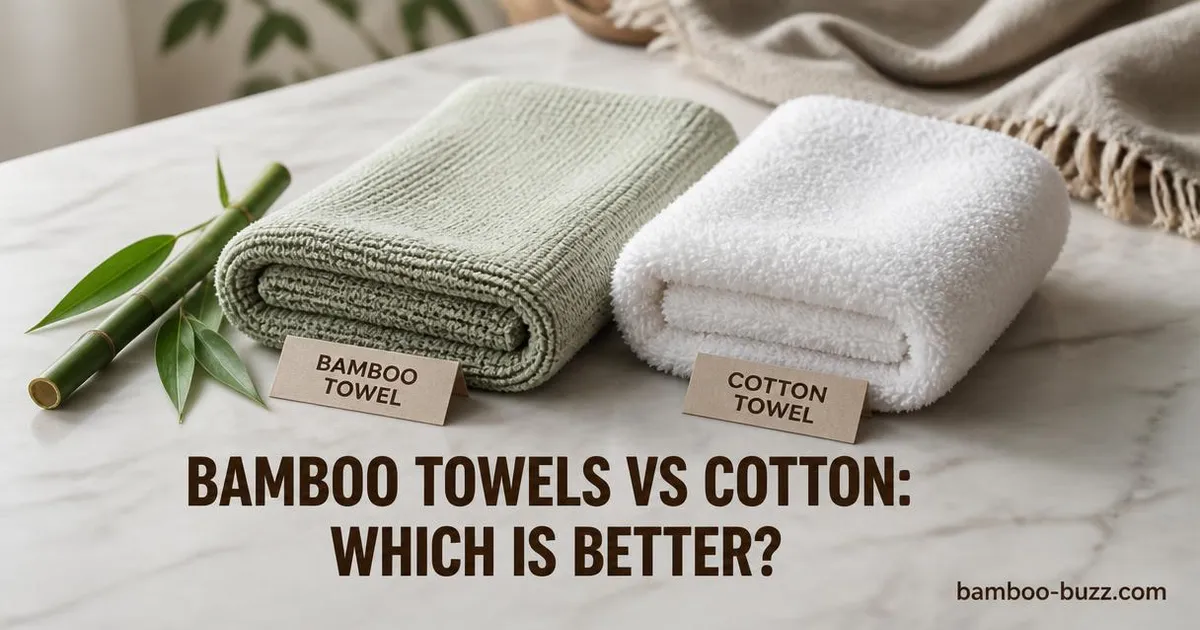
Bamboo Towels vs Cotton: Which Is Better?
Bamboo towels dry faster and resist odors better than most cotton towels. Cotton towels, on the other hand, are easier to find, cheaper to replace, and tolerate hot water and bleach without a second thought.
Most people weighing bamboo towels vs cotton are really looking at four things: how well the towel absorbs water, how it feels against skin, how long it lasts, and what its production does to the environment. The answer shifts depending on your bathroom’s humidity, your laundry habits, and how much you’re willing to spend.
Neither material wins on every front.
Key Takeaways
- Bamboo dries faster and resists odor buildup better than cotton – but cotton is easier to find and simpler to care for.
- Softness varies by weave and quality in both materials. Bamboo tends to feel softer out of the package, but cotton catches up with the right weave and repeated washing.
- Durability depends on construction. Some sources suggest bamboo-cotton blends hold up longer than 100% bamboo viscose towels, which can weaken with repeated washing.
- The environmental story is mixed. Bamboo grows fast with minimal irrigation, but most bamboo towels are made through chemical viscose processing – mechanically processed bamboo is harder to find.
- Cotton wins on price and availability. Most shoppers will find cotton towels in every price range at nearly any store.
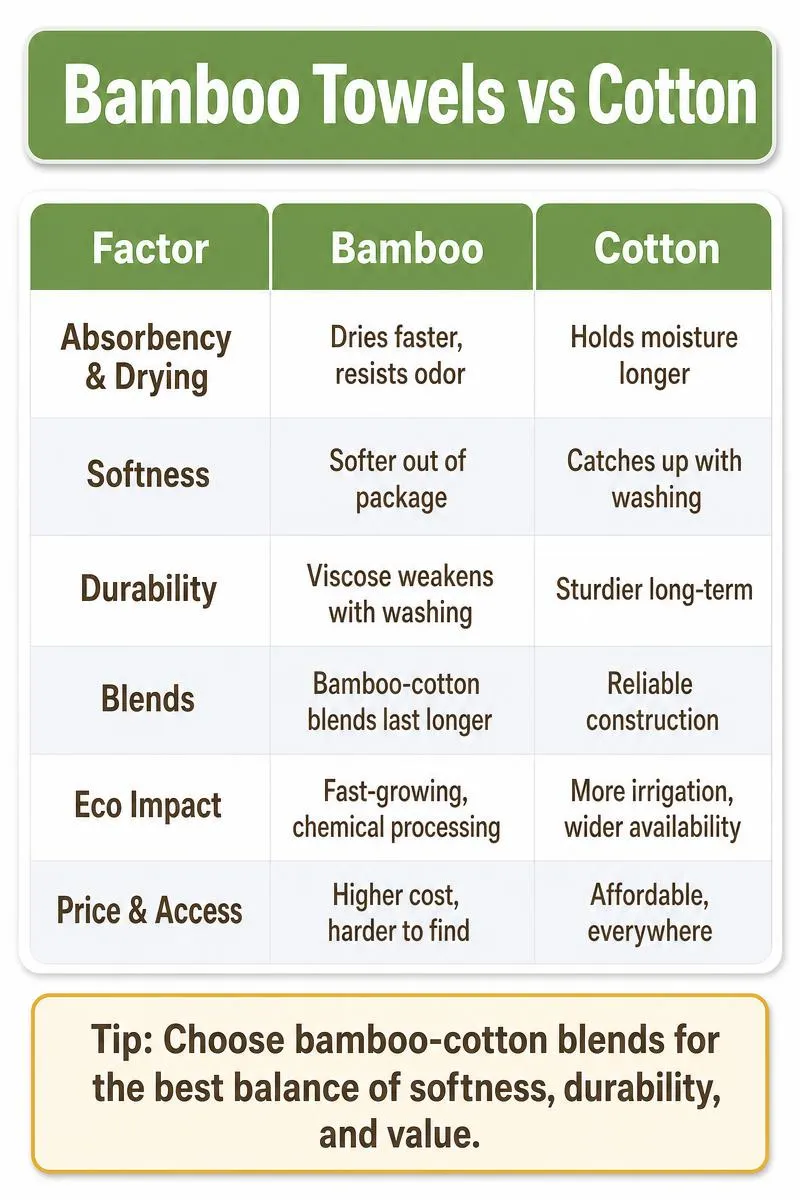
Quick Comparison: Bamboo Towels Vs Cotton
| Factor | Bamboo | Cotton |
|---|---|---|
| Absorbency & Drying | Dries faster, resists odor | Holds moisture longer |
| Softness | Softer out of package | Catches up with washing |
| Durability | Viscose can weaken with washing | Sturdier long-term |
| Blends | Bamboo-cotton blends last longer | Reliable construction |
| Environmental Impact | Fast-growing; chemical processing common | More irrigation; widely available |
| Price & Access | Higher cost; harder to find | Affordable; everywhere |
What Are Bamboo Towels?
Bamboo towels are made from fibers extracted from bamboo stalks. Most of what you’ll see on shelves is labeled ‘viscose from bamboo’ or ‘rayon from bamboo’ – both indicate that the bamboo pulp was dissolved in chemical solvents and extruded into fibers, the same process used to make conventional rayon.
A smaller share of bamboo towels is mechanically processed, where the bamboo stalk is crushed and combed into fibers without chemical solvents. These are harder to find and typically more expensive. You’ll also see bamboo-cotton blends, which combine bamboo viscose fibers with cotton to balance softness and durability.
Bamboo towels tend to dry quickly on a rack, resist odor buildup, and feel soft and smooth in the hand straight from the package. The fiber structure is less hospitable to the bacteria that cause damp-towel smell.
The main drawbacks:
- Cost more than cotton and aren’t available everywhere – true 100% bamboo towels, especially mechanically processed ones, are hard to locate.
- Care instructions can be more specific than cotton’s.
Worth Reading Next
Best bamboo bath towels on amazon
A curated list of top-rated bamboo bath towels with buying tips and comparisons to cotton.
What Are Cotton Towels?
Cotton towels are woven from fibers harvested from the cotton plant. Standard cotton, Egyptian cotton, and Turkish cotton all come from the same plant species but differ in fiber length, which affects how the yarn spins and how the finished towel feels.
Cotton towels are produced in a wide range of weaves and weights – from thin, flat-woven kitchen towels to thick, loop-pile bath sheets. That variety means you can find a cotton towel at nearly any price point and weight preference.
The strengths:
- Tolerates hot water, bleach, and regular detergent without much fuss.
- Widely available at every price point.
The trade-offs:
- Dries slower than bamboo, which can lead to mildew smell if left damp in a pile.
- Conventional cotton growing uses significant amounts of water and pesticides.
Bamboo Towels vs Cotton Towels: Absorbency and Drying Time
Both materials absorb water, but they do it differently. Bamboo viscose fibers are smooth and release moisture quickly. Cotton fibers hold onto water longer, which means a cotton towel can feel heavier when wet and take longer to dry on a rack.
That faster drying matters most in humid bathrooms where air circulation is poor. A bamboo towel hung in a steamy bathroom after a shower dries noticeably faster than a cotton towel hung beside it. A cotton towel in the same conditions might stay damp long enough to develop a sour smell, especially if the towel is a thick, high-pile style.
In dry climates with good ventilation, the difference shrinks. Both materials dry reasonably well when air can move around them. If your bathroom has an exhaust fan or you live somewhere with low humidity, cotton’s slower drying becomes less of a problem.
Bamboo Towels vs Cotton Towels: Softness and Texture
Bamboo towels often feel softer than cotton towels straight out of the package. The viscose process produces smooth, round fibers that glide against skin rather than catching on it. Cotton towels can feel slightly rougher at first, especially lower-grade cotton with shorter fibers.
After several washes, the gap narrows. Cotton towels break in – the fibers soften and the towel develops a familiar, lived-in feel. Bamboo viscose towels can lose some of their initial softness over time, particularly if washed in hot water or with harsh detergents, which can weaken the viscose fibers.
Weave matters as much as material. A high-pile Turkish cotton towel can feel plush and hotel-like, while a flat-woven bamboo towel feels lightweight and smooth. If you prefer a thick, cushioned feel under your hands, a well-made cotton towel with long loops will deliver that more reliably than a thin bamboo alternative.
If you prefer a lighter, draping feel against your skin, bamboo’s smooth fibers get closer to that sensation.
A pros-and-cons breakdown of bamboo bath mats, useful for comparing texture and absorbency across bathroom linens.
Bamboo Towels vs Cotton Towels: Durability and Care
Cotton towels are built for rough treatment. You can wash cotton towels in hot water, use bleach on white ones, and tumble dry on high heat. The fibers are resilient enough that frequent washing with strong detergent doesn’t significantly shorten their lifespan.
Well-made cotton towels hold up for years under standard laundry routines.
Bamboo viscose towels need gentler handling. Most manufacturers recommend cold or warm water washes, mild detergent, and low-heat or air drying. Fabric softener can coat the fibers and reduce absorbency, and bleach can damage bamboo viscose fibers directly.
Following the care label extends the towel’s life, but the instructions also mean you can’t just toss bamboo towels in with the rest of your laundry on a hot cycle.
Some sources suggest bamboo-cotton blends hold up better over time than 100% bamboo viscose towels. The cotton adds structural strength that pure viscose lacks, which helps the towel survive repeated washing without thinning or losing shape. If you want the feel of bamboo but washing tolerance closer to cotton, a blend might be the practical middle ground.
Bamboo Towels vs Cotton Towels: Environmental Impact
Bamboo grows fast – it’s one of the fastest-growing plants on the planet – and bamboo needs far less irrigation than cotton and is typically grown without pesticides. As a raw crop, bamboo uses far less water than cotton and grows on land that doesn’t need replanting after each harvest, since bamboo regrows from the same root system.
The catch is in the processing. Most bamboo towels are made from viscose, which means dissolving bamboo pulp in chemical solvents like carbon disulfide and sodium hydroxide, then extruding the resulting solution into fibers. This chemical process has waste and emissions impacts that can offset some of the crop’s environmental advantages.
Closed-loop processing systems that capture and reuse solvents exist but aren’t universal across manufacturers.
Cotton’s environmental footprint is well-documented. Conventional cotton is water- and pesticide-intensive to grow. Organic cotton reduces the pesticide load but still needs significant water, and organic cotton towels cost more and are harder to find.
If you’re choosing based on the raw crop alone, bamboo has a clear advantage. If you’re factoring in the full manufacturing chain, the picture depends on whether the bamboo was mechanically processed (rare, lower chemical impact) or chemically processed into viscose (common, higher chemical impact), and whether the cotton is conventional or organic.
Which Should You Choose?
The right choice depends on where the towel lives and how you wash it.
- For humid bathrooms or gym bags: Bamboo. The faster drying time and odor resistance matter most when towels stay damp or get stuffed into a bag.
- For households that wash everything together on hot: Cotton. Cotton tolerates hot water, strong detergent, and high-heat drying without special instructions.
- For sensitive skin reacting to chemical residues: Look for mechanically processed bamboo or certified organic cotton. Both reduce exposure to processing chemicals, though for different reasons – mechanically processed bamboo skips the viscose solvents, and organic cotton skips the pesticides used in conventional growing.
- For tight budgets and easy replacement: Cotton. Cotton is available at every price point and easy to replace without hunting for a specific brand or fiber type.
- For buyers prioritizing fast drying and odor resistance: Bamboo. A bamboo-cotton blend keeps most of this benefit if you also want cotton’s easier care.
Explore More
A focused bamboo vs cotton comparison for socks that highlights differences in absorbency, softness, and care – useful…
FAQs About Bamboo Towels and Cotton Towels
Are bamboo towels better than cotton?
Not universally. Bamboo dries faster and resists odor better, but cotton is easier to care for, cheaper, and more widely available. The better choice depends on your bathroom conditions and laundry habits.
What are the downsides of bamboo and cotton towels?
Bamboo towels cost more, require gentler washing, and true 100% bamboo versions are harder to find. Cotton towels dry slower, can develop mildew smell if left damp, and conventional cotton production uses heavy water and pesticide resources.
Which is healthier, bamboo or cotton towels?
Both are safe for most people. If you have sensitive skin, look for OEKO-TEX certification on either material, which tests for harmful chemical residues. Mechanically processed bamboo and organic cotton reduce exposure to processing chemicals and pesticides respectively.
What type of towels do five-star hotels use?
Most five-star hotels use high-quality cotton towels – typically Egyptian or Turkish cotton with a high-pile loop weave. Hotels favor cotton because the material withstands industrial laundering in hot water with strong detergents, day after day.
Are bamboo towels more absorbent than cotton towels?
In practice, both absorb well enough for drying off after a shower – the bigger difference is in drying speed, where bamboo pulls ahead.
How does the softness of bamboo compare to cotton towels?
Bamboo towels usually feel softer out of the package because viscose fibers are smooth and round. Cotton towels soften with repeated washing, and high-quality cotton with long fibers can match or exceed bamboo’s softness over time.
How does the durability of bamboo stack up against cotton?
Cotton is more durable under regular washing conditions, especially hot-water cycles and high-heat drying. Bamboo viscose fibers weaken faster with harsh washing, and some sources suggest bamboo-cotton blends last longer than 100% bamboo viscose.
What is the best way to care for bamboo versus cotton towels?
Wash bamboo towels in cold or warm water with mild detergent, skip fabric softener, and dry on low heat or air dry. Cotton towels handle hot water, regular detergent, and high-heat drying – white cotton towels can be bleached without concern.
Is bamboo cotton better than 100% cotton?
A bamboo-cotton blend can offer a useful compromise: some of bamboo’s softness and faster drying, with cotton’s structural durability. A blend is worth it if bamboo’s softness and faster drying justify paying more and following gentler washing instructions.
Are 100% bamboo towels good?
Yes, 100% bamboo towels are soft, fast-drying, and odor-resistant. The trade-offs are higher cost, gentler care requirements, and availability – true 100% bamboo towels, especially mechanically processed ones, are harder to find than bamboo-cotton blends or viscose-based versions.
Final Thoughts
Neither bamboo nor cotton is the universally better towel. The right pick matches your bathroom conditions and how you do laundry.
Bamboo suits buyers who want fast drying and odor resistance and are willing to follow care labels – skip the hot water, skip the bleach, skip the fabric softener. If your bathroom stays humid or you toss towels in a gym bag, those traits earn the premium.
Cotton remains the practical default for easy maintenance, hot-water washing, and wide availability. If you wash everything on one cycle, replace towels whenever they wear out without overthinking the purchase, and want options at every price point, cotton is the less complicated choice.
Before buying either, check the fiber content label. ‘100% bamboo’ means something different from ‘viscose from bamboo,’ and a bamboo-cotton blend behaves differently from both. Knowing what the towel is actually made of tells you more about how it’ll perform than any marketing claim on the front of the packaging.
External References