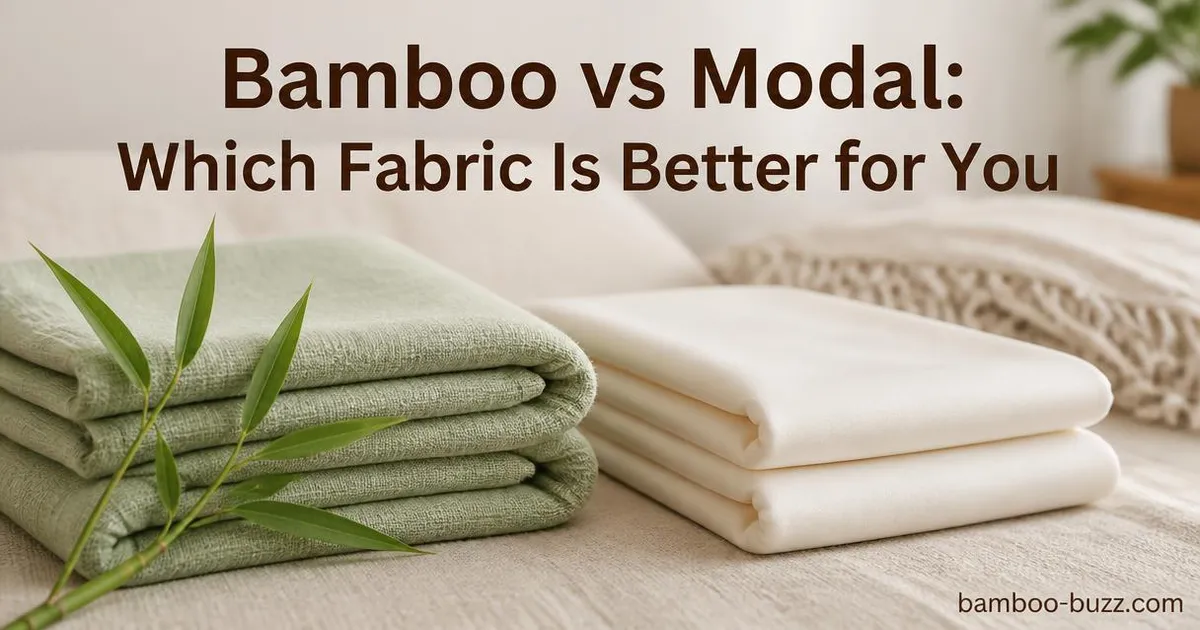
Bamboo vs Modal: Which Fabric Is Better for You
Most people assume bamboo fabric is the natural pick and modal is the synthetic alternative. In reality, both are usually cellulose fibers chemically dissolved and reformed into yarn – modal from beech tree pulp, bamboo from bamboo grass cellulose. The differences that actually matter are breathability, durability, cost, and how much the marketing lines up with what is in the fabric.
If you are choosing between the two for underwear, bedding, or everyday clothing, the fiber name alone does not tell you enough. You need to know which one handles sweat better, which survives the wash longer, and which label actually means what you think it means.
Key Takeaways
- Modal is typically smoother and more pill-resistant; bamboo usually offers better breathability and natural moisture absorption.
- Both are commonly produced through chemically intensive viscose/rayon processing, though mechanical bamboo exists as a rare alternative.
- Modal tends to hold its shape and strength longer through repeated washing; bamboo durability varies significantly by weave and quality.
- Some sources suggest modal may release microplastics during washing, whereas bamboo viscose is plant-derived but involves heavy chemical use.
- Bamboo usually costs more and appears less often in budget retail; modal is widely available at moderate prices.
- For baby clothes or sensitive skin, processing certifications matter more than the fiber name on the label.
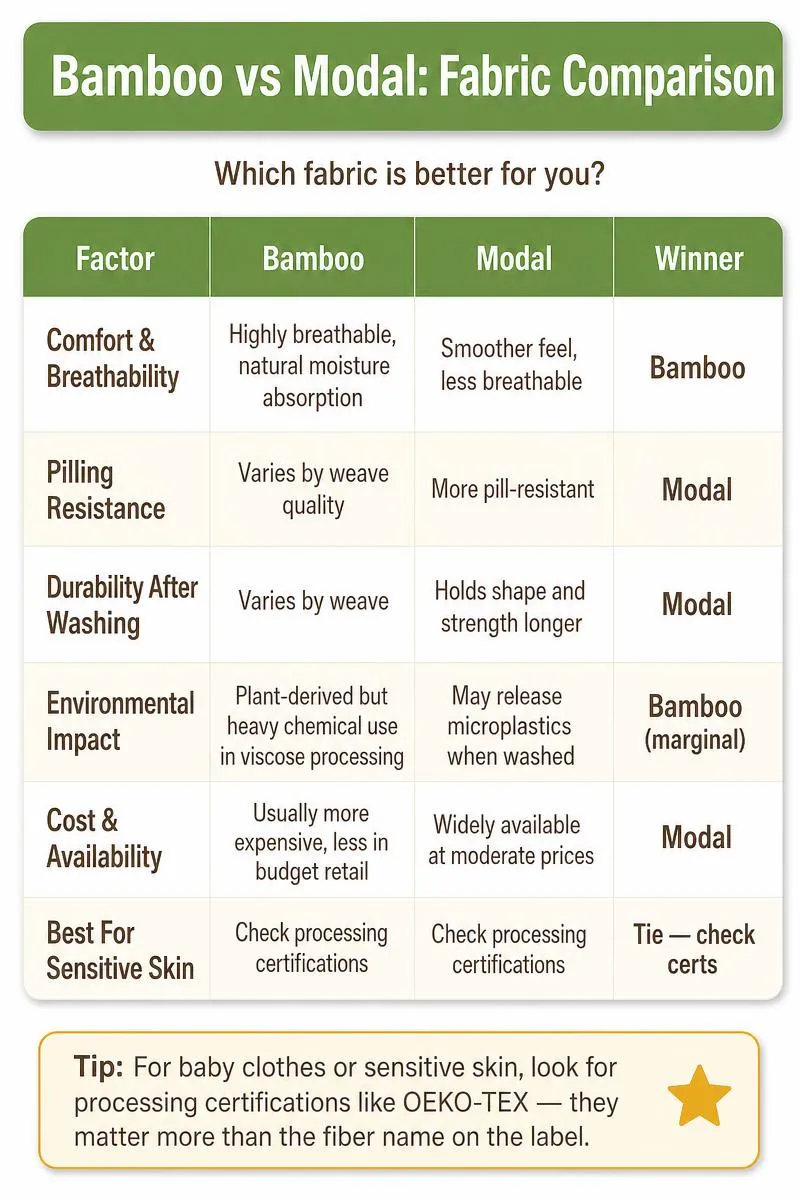
Bamboo Vs Modal Compared
| Factor | Bamboo | Modal | Winner |
|---|---|---|---|
| Comfort & Breathability | Highly breathable; natural moisture absorption | Smoother feel; less breathable | Bamboo |
| Pilling Resistance | Varies by weave quality | More pill-resistant | Modal |
| Durability After Washing | Varies by weave | Holds shape and strength longer | Modal |
| Environmental Impact | Plant-derived; heavy chemical viscose processing | May release microplastics when washed | Bamboo (marginal) |
| Cost & Availability | Usually more expensive; less in budget retail | Widely available at moderate prices | Modal |
| Best For Sensitive Skin | Check processing certifications | Check processing certifications | Tie — check certs |
What Is Bamboo Fabric?
Bamboo fabric is a cellulose fiber made from bamboo grass. Most bamboo fabric on the market is chemically processed into viscose or rayon – the same solvent-based method used to turn wood pulp into standard rayon. Mechanical processing, where bamboo fibers are crushed and combed without chemical dissolution, exists but is rare and expensive to produce.
Bamboo viscose works well for underwear, activewear, hot-weather clothing, and bedding where breathability matters. The fiber has a reputation for natural softness and moisture absorption, and bamboo grass grows quickly without replanting.
The label can mislead you, though. ‘Bamboo fabric’ on a tag does not mean the garment was mechanically processed or pesticide-free by default – most of what you will find is bamboo viscose, and the actual fabric quality varies depending on how the cellulose was manufactured and woven.
Worth Reading Next
A curated list of top bamboo blankets and how they compare in softness and breathability for bedding use.
What Is Modal Fabric?
Modal is a semi-synthetic cellulose fiber made from beech tree pulp. Modal was engineered as a more stable, softer upgrade to standard viscose rayon, with tighter molecular bonds that give the fiber better dimensional stability and a smoother surface.
Modal is best suited for underwear, base layers, and garments where drape matters. Modal has a very smooth hand-feel, resists shrinking and pilling better than standard viscose, and holds dye well through repeated washing.
Modal is still chemically processed, though. Modal’s softness advantage can also disappear if the fiber is blended with low-quality material – a modal-polyester blend will not feel or perform like pure modal.
Bamboo vs Modal: Comfort and Breathability
Bamboo wins for hot sleepers and sweaty climates; modal wins for immediate silky softness and elegant drape. The right choice depends on how your body runs and what conditions you will wear the fabric in.
Bamboo viscose tends to breathe better and absorb moisture more readily against the skin. In humid conditions, that moisture absorption can help keep you feeling drier, though the fabric may take longer to release that moisture than a synthetic alternative would. In dry heat, bamboo feels cool and light against the skin.
Modal has a denser, smoother surface that feels silkier immediately but does not move air quite as freely. In humid conditions, modal can feel warmer against the skin because modal does not absorb moisture as aggressively as bamboo does. In dry or moderate conditions, modal’s drape and smoothness make modal comfortable for close-fitting garments where skin contact is the priority.
Worth Reading Next
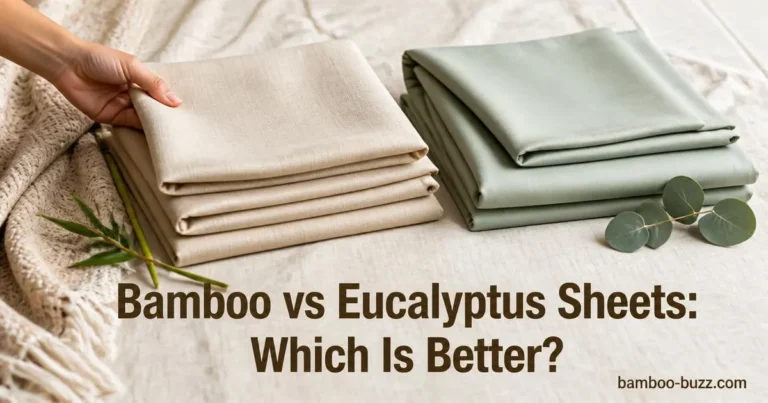
A direct comparison of bamboo and eucalyptus sheets covering breathability, softness, and moisture-wicking for sleepers.
Bamboo vs Modal: Environmental Impact and Processing
This comparison is a tie with real tradeoffs. Bamboo wins on raw material renewability – the grass grows quickly and regrows without replanting. Modal sometimes wins on processing efficiency, depending on the manufacturer: some modal producers use closed-loop systems that recover and reuse the chemical solvents involved in production.
Both fabrics are typically made through the viscose process, which dissolves cellulose in chemical solvents and reforms the material into fibers. Mechanical bamboo processing avoids these solvents entirely but is rare enough that you will struggle to find the fabric in mainstream retail.
Some sources suggest modal may release microplastics during washing because of modal’s semi-synthetic structure. Bamboo viscose is fully plant-derived at the fiber level, but the chemical processing bamboo viscose goes through raises toxicity questions about what ends up in wastewater and what residues remain in the finished fabric.
If chemical processing is your primary concern, neither standard bamboo viscose nor standard modal is clearly better. Look for OEKO-TEX certification or similar processing standards regardless of which fiber you choose.
Bamboo vs Modal: Durability and Care
Modal wins for predictable longevity and easy home care; bamboo is more delicate depending on construction.
Modal keeps its size and resists surface pilling through normal home laundering. You can usually machine-wash modal on a gentle cycle and hang or lay the garment flat to dry without much drama. The tighter molecular structure that makes modal an upgrade over standard viscose also gives modal more dimensional stability over time.
Bamboo viscose is softer and more prone to stretching, shrinkage, and pilling depending on the weave and quality. Some bamboo fabrics perform well with gentle machine washing and air drying; other bamboo fabrics lose shape or develop pills quickly. The variability is wider than with modal – two bamboo garments from different brands can age very differently.
For both fabrics, avoid hot water and high-heat drying. Gentle cycles and air drying extend the life of either material.
Bamboo vs Modal: Cost and Accessibility
Modal wins for affordability and mainstream availability; bamboo is often priced at a premium. If you have noticed bamboo clothing costing more than comparable modal pieces, that pattern holds across most retail tiers.
Modal is widely available at moderate prices from major clothing brands. Modal shows up in more major brand lineups, so quality and pricing stay more predictable.
Bamboo fabric tends to sit at higher price points and appears less often in budget retail. Some of that premium reflects the cost of bamboo viscose production, and some of the premium reflects branding – ‘bamboo’ carries a natural-fiber marketing appeal that lets brands charge more. The price difference does not always reflect a clear performance advantage over modal.
Which Should You Choose?
Underwear and base layers: Choose modal for smoothness and shape retention through repeated washing. Choose bamboo if you run hot and want more natural moisture absorption against the skin.
Baby clothes, sensitive skin: Either fabric can work, but prioritize OEKO-TEX or similar processing certifications over the fiber name. Residual processing chemicals are the real concern, and certification tells you more about what is actually in the fabric than the label does.
Eco-conscious buyers: Bamboo grass is highly renewable as a raw material, but the actual environmental impact depends heavily on the viscose processing method used. If environmental impact is your priority, look for mechanically processed bamboo or Tencel lyocell, which uses a closed-loop system that recovers most of its solvent.
Budget-conscious shoppers: Modal is generally easier to find at lower prices with more consistent quality control across brands. You will get more predictable performance per dollar with modal than with bamboo.
Hot climates and activewear: Bamboo is frequently preferred for breathability and moisture management in hot conditions. Modal manages moisture adequately but does not move air or absorb sweat quite as effectively.
You Might Also Like
A side-by-side look at comfort, durability, and environmental trade-offs between bamboo and organic cotton fabrics.
FAQs About Bamboo and Modal
Is modal better than bamboo?
For most everyday clothing and underwear, modal is the more practical choice because modal holds shape longer and resists pilling through repeated washing. Bamboo is better if your priority is breathability and natural moisture absorption in hot conditions.
What are the disadvantages of modal fabric?
Modal is chemically processed, can feel warmer in humid conditions than bamboo, and may release microplastics during washing. Modal’s softness advantage also disappears if the fiber is blended with low-quality material.
What are the downsides of bamboo fabric?
Most bamboo fabric is chemically processed viscose, so the ‘natural’ label can be misleading. Bamboo durability varies widely by brand and weave, and bamboo typically costs more than modal for comparable garments.
Does modal release microplastics?
Some sources suggest modal may release microplastics during washing due to modal’s semi-synthetic structure, though the evidence is still early and mixed. Using a laundry bag designed to capture microfibers can help reduce any shedding.
Is modal healthy to wear?
Modal is generally safe to wear for most people. The main concern is residual processing chemicals, which vary by manufacturer and finishing process.
Is bamboo modal toxic?
Neither bamboo viscose nor modal is inherently toxic to wear, but both fibers involve chemical processing that can leave residues if not properly managed. Certifications like OEKO-TEX indicate that the finished fabric has been tested for harmful substance levels.
What fabric is better than bamboo?
Modal offers better durability and consistent quality; Tencel lyocell offers a more environmentally responsible processing method with similar softness. Cotton remains the most widely available natural option.
Is bamboo cotton better than Tencel modal?
Bamboo cotton blends offer more durability than pure bamboo viscose but lose some breathability. Tencel modal offers better softness and more environmentally responsible processing through a closed-loop solvent recovery system.
Final Thoughts
Modal is the practical default for everyday clothing and underwear – modal is easier to care for, delivers consistent softness, and holds shape through repeated washing. If your priority is breathability and natural moisture management in hot conditions or for specific bedding uses, bamboo is worth the premium.
If chemical processing is your main concern, skip standard viscose versions of either fabric and look for mechanically processed bamboo or Tencel lyocell instead.
Buy one garment in each fabric, wash both three times, and wear each one before investing in a full wardrobe of either. Your skin and your washing machine will tell you more than any label can.
External References
- OEKO-TEX® STANDARD 100 – OEKO-TEX
- Transforming economic and environmental sustainability … – ScienceDirect
- Environmental Impact of Textile Materials: Challenges in Fiber … – NIH (NCBI)
- Lyocell: The Sustainable Fiber Revolution – Promises and … – Ecoaya
- Release of Microplastic Fibers from Polyester Knit Fleece … – Acs
- Cradle-to-Gate Life Cycle Assessment of Industrial Lyocell … – MDPI