Bamboo vs Satin Sheets: Which Is Better?
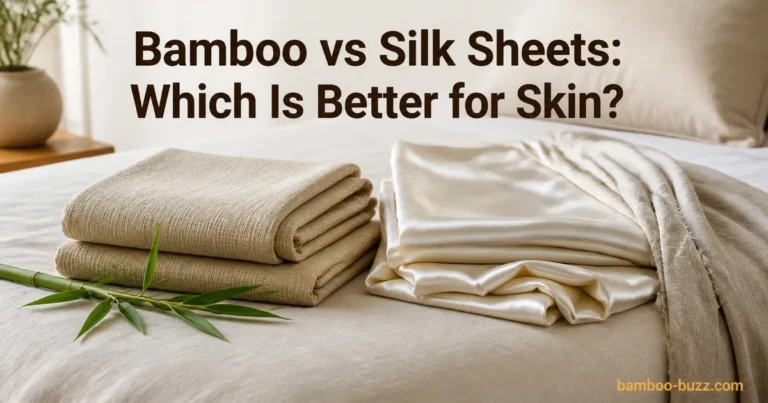
Most people choosing between bamboo and satin sheets are actually weighing two completely different priorities: staying cool versus reducing friction on hair and skin. Bamboo sheets win on breathability and temperature regulation. Satin sheets win on smoothness and glide. Neither one is objectively better, because they solve different problems.
The real decision comes down to five things: texture, temperature, care, durability, and how each material is actually made. Both fabrics involve processing that raises questions, and neither is as straightforward as marketing suggests.
Key Takeaways
- Bamboo sheets generally stay cooler and breathe better than satin.
- Satin sheets create less friction for hair and skin.
- Bamboo is typically easier to wash and maintain.
- Hot sleepers and allergy-prone users usually prefer bamboo.
- Those prioritizing hair frizz reduction and luxury glide usually prefer satin.
- Some sources suggest chemical processing concerns exist with both material types.
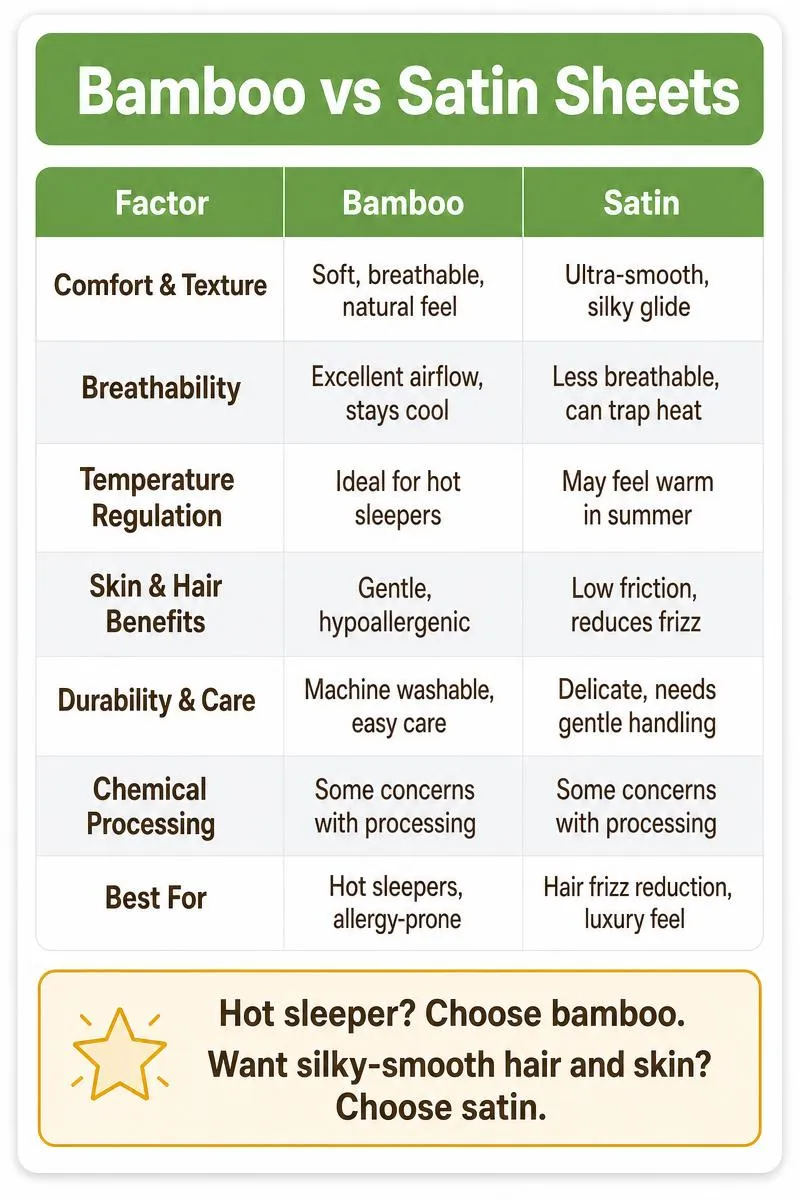
Bamboo Vs Satin Sheets Quick Comparison
| Factor | Bamboo | Satin |
|---|---|---|
| Comfort & Texture | Soft, breathable, natural feel | Ultra-smooth, silky glide |
| Breathability | Excellent airflow, stays cool | Less breathable, can trap heat |
| Temperature Regulation | Ideal for hot sleepers | May feel warm in summer |
| Skin & Hair Benefits | Gentle, hypoallergenic | Low friction, reduces frizz |
| Durability & Care | Machine washable, easy care | Delicate, needs gentle handling |
| Chemical Processing | Some concerns with processing | Some concerns with processing |
| Best For | Hot sleepers, allergy-prone | Hair frizz reduction, luxury feel |
What Are Bamboo Sheets?
Bamboo sheets are bedding made from bamboo fibers, most commonly processed into viscose, modal, lyocell, or linen. Bamboo is often marketed as a low-input crop, but the fabric’s footprint depends on whether it becomes linen, viscose, or lyocell.
How the stalk becomes fabric depends on the process. Mechanical processing crushes bamboo stalks and combs out the natural fibers, producing bamboo linen. Chemical processing dissolves bamboo cellulose in solvents to create viscose or lyocell, the same method used to make rayon.
Lyocell uses a closed-loop system that recovers most of the solvent. Standard viscose does not.
Bamboo sheets regulate temperature well and breathe effectively, which is why hot sleepers often prefer them. The fabric is frequently recommended for sensitive skin and allergies because some sources credit a compound in raw bamboo, called bamboo kun, with mild antibacterial properties. Most of bamboo kun does not survive the viscose process, though, so that benefit is mainly relevant to bamboo linen.
The main weakness is chemical processing. Standard bamboo viscose involves solvents that can pose environmental and worker safety concerns if the facility does not use closed-loop recovery. Care instructions also vary depending on the weave, so you need to check the label rather than assuming all bamboo sheets wash the same way.
Related Reading
Best bamboo leggings on amazon
A curated list of comfortable bamboo leggings for readers who like the soft, breathable feel of bamboo textiles and…
What Are Satin Sheets?
Satin refers to a weave, not a fiber. Satin sheets can be made from silk, polyester, or a blend of both. Competitor research in this category focuses heavily on silk satin, which reduces friction and retains moisture against skin and hair.
Polyester satin is cheaper and more common but does not offer the same moisture retention.
Silk satin provides a smooth surface that lets hair glide rather than catch, which helps reduce frizz and breakage. The weave also creates a sleek, slippery feel that reads as luxurious. Polyester satin mimics the surface texture but lacks silk’s protein structure.
The main weakness is care. Silk satin usually requires hand washing or a delicate cycle with cold water. Polyester satin is more washable but does not breathe as well as bamboo, meaning it can trap heat during warm nights.
Bamboo vs Satin Sheets: Comfort and Texture
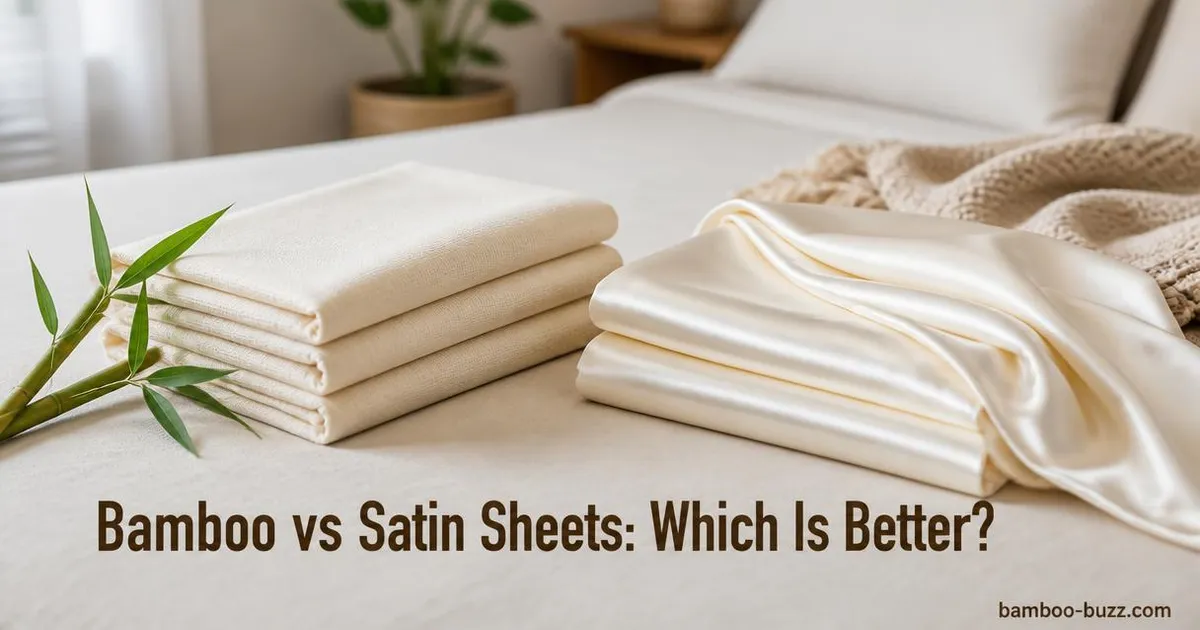
Bamboo sheets have a soft, matte finish that feels smooth without being slippery. The fabric drapes closely against the body and has a slightly cool touch when you first get in bed. Satin sheets have a sleek, slippery surface that glides under your hands and against your skin, creating a distinctly different sensation.
Satin wins for glide and luxury feel. Bamboo wins for a softer, more understated texture that feels comfortable without the slickness.
Bamboo vs Satin Sheets: Breathability and Temperature Regulation
Bamboo fibers wick moisture away from the body and allow air to circulate through the weave, which helps regulate temperature throughout the night. The fabric feels cool initially and does not trap heat the way tighter weaves do. Hot sleepers tend to prefer bamboo sheets because the weave lets heat escape instead of trapping it.
Satin’s breathability depends entirely on the fiber content. Silk satin breathes reasonably well because silk is a natural protein fiber, but it still does not match bamboo’s airflow. Polyester satin traps heat and moisture, making it a poor choice for warm sleepers or humid climates.
Bamboo wins for breathability. If temperature regulation is your top concern, bamboo is the clear pick regardless of which satin you compare it against.
You Might Also Like
An in-depth comparison of bamboo and sateen sheets covering differences in weave, texture, and care to help clarify…
Bamboo vs Satin Sheets: Skin and Hair Benefits
Satin’s smooth weave creates very little friction against hair and skin. Hair slides across the surface instead of catching, which helps reduce frizz, tangles, and breakage. This is especially relevant for curly, dry, or fragile hair types that are prone to damage from rougher fabrics.
Silk satin also retains moisture against skin and hair overnight.
Bamboo provides breathable, gentle contact with skin. The fabric is less likely to irritate sensitive or allergy-prone skin because it allows airflow and does not trap heat against the body. Bamboo does not match satin’s friction reduction, though, so hair can still catch and pull against the surface.
Satin wins for friction reduction and hair glide. Bamboo wins for breathable, cool contact with skin.
Bamboo vs Satin Sheets: Durability and Care
Bamboo sheets typically tolerate machine washing on a gentle cycle with cold water. Most can go in a dryer on low heat, though air drying extends the fabric’s lifespan. The fibers hold up well to regular washing without pilling or losing softness, as long as you avoid bleach and high heat.
Satin sheets require more careful handling, especially silk satin. Silk needs hand washing or a delicate cycle, cool water, and air drying away from direct sunlight. Polyester satin is more durable but can still snag or pill with rough treatment. Replacement timelines vary for both materials, but satin generally needs replacing sooner when cared for improperly.
Bamboo wins for easier care. If you want bedding you can wash regularly without special treatment, bamboo is the practical choice.
Bamboo vs Satin Sheets: Chemical Processing and Allergies
Bamboo viscose production dissolves bamboo cellulose in chemical solvents, creating the same environmental concerns as rayon manufacturing. Closed-loop processing recaptures the solvent through filtration and distillation, preventing it from entering wastewater. Bamboo lyocell uses this closed-loop method, while standard viscose does not.
Bamboo linen uses mechanical processing with no chemical solvents at all.
Silk satin is produced by boiling silkworm cocoons and unwinding the continuous silk thread, a process that uses water and heat but no chemical solvents. Polyester satin is made from petroleum-based synthetic fibers, which involves its own chemical processing and raises microplastic concerns during washing.
Bamboo linen or lyocell is the winner when chemical-free or low-chemical sourcing matters most. Both bamboo viscose and polyester satin involve processing that some sleepers may want to avoid. If allergies are a concern, bamboo’s breathability and lack of trapped heat tend to perform better than polyester satin, which can hold dust and moisture against the skin.
Also Worth Checking Out
A clear explanation of how bamboo is processed into rayon/viscose and what that means for chemicals, softness, and…
Which Should You Choose?
Your priorities determine which fabric fits.
- Sleep hot or live in a humid climate. Bamboo’s breathability and moisture wicking make it the better pick.
- Curly or damaged hair. Satin’s low-friction surface reduces frizz and breakage more effectively than bamboo.
- Sensitive skin or allergy-prone skin. Bamboo allows airflow and does not trap heat against the skin, which tends to reduce irritation.
- Low-maintenance bedding that holds up to regular washing. Bamboo tolerates machine washing better and requires less special care.
- Luxury glide feel and prioritize hair frizz reduction. Satin delivers the smooth surface and slick texture bamboo cannot match.
FAQs About Bamboo and Satin Sheets
Should I get bamboo or satin sheets?
It depends on your top priority. Bamboo is better for hot sleepers, easy care, and sensitive skin. Satin is better for reducing hair frizz and creating a smooth, luxury feel against the skin.
What is the downside to bamboo sheets?
Standard bamboo viscose involves chemical solvents used in rayon production. If that concerns you, look for bamboo lyocell or bamboo linen, which use closed-loop or mechanical processing. Care instructions also vary by weave, so check the label.
Which sheet type is the healthiest to sleep on?
Bamboo is generally healthier for hot sleepers and allergy-prone skin because it breathes and does not trap heat. Silk satin is healthier than polyester satin for hair and skin because it retains moisture and contains no synthetic fibers. Look for OEKO-TEX certification if residual processing chemicals are a concern.
Do bed bugs like bamboo sheets?
Bed bugs are attracted to warmth and carbon dioxide, not specific fabrics. No sheet material repels bed bugs. Tighter weaves may make it slightly harder for them to move through the fabric, but bamboo and satin do not offer meaningful protection.
Can you put 100% bamboo sheets in the dryer?
Most bamboo sheets can go in a dryer on low heat. Air drying extends the lifespan of the fibers. Avoid high heat, which can damage bamboo viscose and cause shrinkage.
Does bamboo give off microplastics?
Bamboo viscose, lyocell, and linen are cellulose-based fibers, not synthetic polymers. They do not shed microplastics during washing. Polyester satin does shed microplastics, because polyester is a petroleum-based synthetic.
Will satin sheets make my hair greasy?
No, satin does not cause greasiness. The smooth surface reduces friction, which helps hair retain its natural oils rather than having them stripped by rougher fabrics. Greasiness is more related to your hair type and washing routine than to your sheets.
How often should I replace bamboo versus satin sheets?
Both materials degrade over time with regular use and washing. Bamboo sheets tend to last longer because they tolerate machine washing without damage. Silk satin may need replacing sooner, especially if washed improperly. Polyester satin falls somewhere in between.
Are bamboo sheets actually made from bamboo?
Yes, bamboo sheets are made from bamboo cellulose. Viscose and lyocell dissolve the cellulose in solvents and reconstitute it into fibers. Bamboo linen is made by mechanically crushing and combing the stalks. The raw material is bamboo either way.
Can either fabric help reduce allergies?
Bamboo may help allergy-prone sleepers because the fabric breathes and does not trap heat or moisture against the skin. Bamboo kun, a compound in the raw plant, has mild antibacterial properties, though most of it does not survive viscose processing. Satin does not offer specific allergy benefits, though silk’s smooth surface is less likely to irritate sensitive skin than rougher weaves.
Final Verdict
Bamboo is the practical choice for most sleepers who need breathability, easy care, and a fabric that holds up to regular washing. Satin is the better pick when hair protection and a smooth, luxurious surface are your top priorities.
Buy one set aligned with your single biggest sleep concern and test it against your current sheets for a week. The feel will tell you more than any spec sheet can.
External References
- Is Bamboo Fabric Safe? Viscose vs Lyocell Explained – Fibercheck
- Lyocell fibre production using NMMO – A simulation-based … – NCSU (.edu)
- called smart fabrics – Science
- OEKO-TEX® STANDARD 100 – OEKO-TEX
- Our Closed Loop Process Saves Water and Energy – YALA – Yala
- (PDF) Recovery of N-Methylmorpholine N-Oxide (NMMO … – ResearchGate