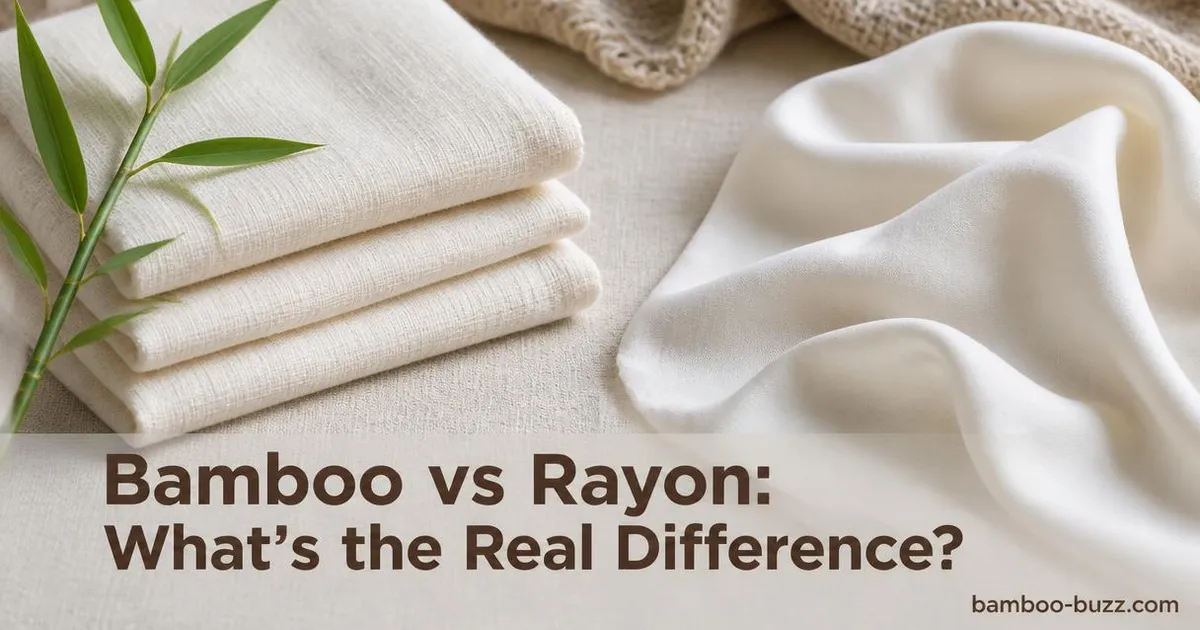
Bamboo vs Rayon: What’s the Real Difference?
Most bamboo fabric sold today is chemically processed into a form of rayon. So when a label says bamboo, what it usually means is bamboo viscose – regenerated cellulose from bamboo pulp, made using the same solvent process as conventional rayon from wood pulp.
That creates real confusion at the point of purchase. You see bamboo sheets, bamboo rayon, and rayon listed as separate options, but the first two often describe the same thing: a semi-synthetic fiber where bamboo cellulose gets dissolved, extruded, and spun into thread.
The differences that actually matter come down to which cellulose source is used, which chemical process turns that source into fiber, and how the finished fiber performs in your sheets or clothes. Reading the label for the specific fiber name – not just the marketing term – is where that comparison starts.
Key Takeaways
- Most bamboo fabric is chemically processed into a form of rayon, not mechanically processed natural fiber.
- Bamboo rayon and conventional rayon share similar care requirements: both lose strength when wet, wrinkle easily, and need gentle, low-heat washing.
- Bamboo lyocell, made in a closed-loop process that recovers most of its solvent, is the lowest-impact option among bamboo-derived textiles.
- Bamboo-based sheets generally wick moisture and breathe better than conventional rayon for hot sleepers.
- True mechanical bamboo linen – where bamboo stalks are crushed and combed rather than dissolved – is rare and expensive. Most affordable bamboo textiles are regenerated cellulose fibers.
Quick Comparison: Bamboo Vs Rayon
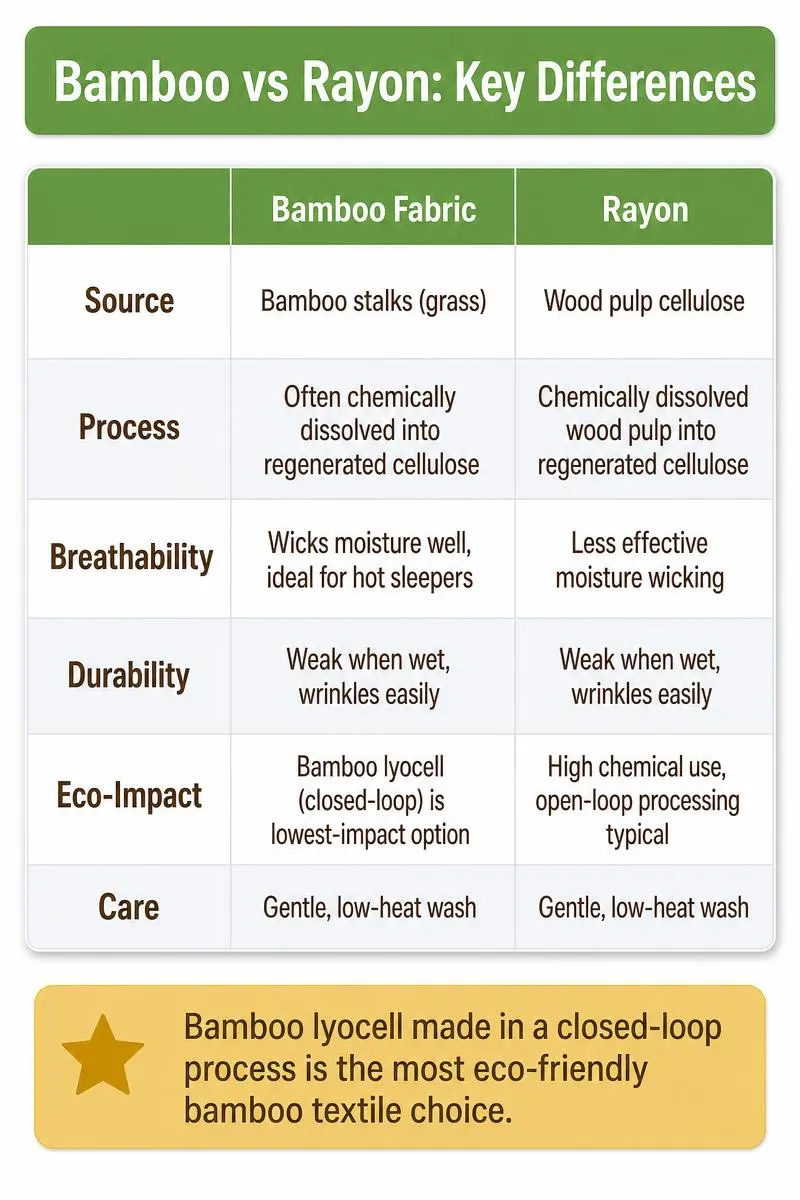
| Feature | Bamboo Fabric | Rayon |
|---|---|---|
| Source | Bamboo stalks (grass) | Wood pulp cellulose |
| Process | Often chemically dissolved into regenerated cellulose | Chemically dissolved wood pulp into regenerated cellulose |
| Breathability | Wicks moisture well; good for hot sleepers | Less effective moisture wicking |
| Durability | Weak when wet; wrinkles easily | Weak when wet; wrinkles easily |
| Eco-impact | Bamboo lyocell (closed-loop) = lowest-impact | High chemical use; open-loop processing typical |
| Care | Gentle, low-heat wash | Gentle, low-heat wash |
What Is Bamboo Fabric?
Textiles labeled bamboo fabric start with bamboo pulp, which gets processed into fibers sold under several names: bamboo viscose, bamboo rayon, and bamboo lyocell. A much rarer category, mechanical bamboo linen, crushes bamboo stalks and combs out the fibers without dissolving them – but you won’t find it in most big-box stores.
Bamboo fabric works best for sheets, towels, and clothing where softness and moisture management matter. The hand-feel is smooth and cool against skin, and bamboo-derived fibers tend to pull moisture away from the body faster than conventional rayon.
The main weakness: most commercial bamboo fabric relies on chemical processing to turn bamboo cellulose into spinnable fiber. Durability also varies depending on the weave and how carefully you wash and dry the material.
Top-rated breathable bamboo joggers to try if you want to feel how bamboo fabric performs in real clothing.
What Is Rayon?
Rayon is a semi-synthetic fiber made from regenerated cellulose – usually wood pulp harvested from trees. The pulp gets dissolved in chemical solvents, then extruded through spinnerets to form long, continuous filaments that become thread.
Rayon excels in lightweight apparel, dress linings, and blended fabrics where a flowing drape matters. The fabric feels cool and smooth against skin, takes dye well, and costs less than silk or long-staple cotton.
Rayon loses a significant amount of its strength when wet, which means rough handling during washing can stretch or tear the fabric. The production process is chemically intensive, and the finished material wrinkles easily without careful pressing or blending with other fibers.
Bamboo Fabric vs Rayon: Production Process and Material Source
The raw input differs: bamboo fabric starts with bamboo grass, while conventional rayon starts with wood pulp harvested from trees. But both go through the same chemical regeneration – dissolving cellulose in solvents, then extruding the dissolved cellulose into filaments.
Some sources suggest bamboo cellulose produces a slightly different cross-section in the finished fiber, which may affect moisture absorption – but the manufacturing method is functionally identical.
Instead of the standard viscose process, lyocell uses a solvent in a closed-loop system that recovers and reuses most of the chemical input. The result is less chemical waste and lower water pollution compared to both standard bamboo viscose and conventional rayon.
Bottom line: Bamboo lyocell leads on reduced chemical waste. Standard bamboo viscose and conventional rayon are comparable in processing intensity – both dissolve cellulose in chemical solvents to produce the same type of fiber.
Bamboo Fabric vs Rayon: Texture, Breathability, and Durability
Both bamboo viscose and conventional rayon feel soft and smooth against skin, with a fluid drape that works well in loose-fitting clothing. The difference shows up most in bedding and sleepwear, where moisture management matters overnight.
Bamboo-derived fibers tend to wick moisture and breathe slightly better than conventional rayon, which makes bamboo sheets and sleepwear more comfortable for hot sleepers. Conventional rayon, on the other hand, often drapes more fluidly – which is why rayon shows up in summer dresses, blouses, and linings where flow matters more than moisture control.
Both fibers lose strength when wet, pill with abrasion, and break down under hot water and aggressive machine washing.
Bottom line: Bamboo fabric for hot sleepers and bedding. Conventional rayon for flowy apparel and drape.
Keep Reading
Pros and cons of bamboo fabric
A detailed pros-and-cons breakdown of bamboo fabric covering softness, moisture-wicking, and durability.
Bamboo Fabric vs Rayon: Environmental Impact
Bamboo grows fast, needs little to no pesticide, and regrows from the same root system after harvest – which sounds better than harvesting trees for rayon. But the chemical processing required to turn bamboo into fabric offsets much of that advantage.
Conventional rayon comes from wood pulp that requires more land and longer growing cycles than bamboo. The solvent process for both viscose rayon and bamboo viscose releases chemical waste if not recovered, and both can contribute to water pollution when factories cut corners on treatment.
Bamboo lyocell and mechanical bamboo linen lead the field here. Lyocell’s closed-loop solvent recovery keeps most of the chemicals out of wastewater, and mechanical bamboo linen skips the chemical dissolution step entirely – though mechanical bamboo linen is rougher, pricier, and hard to find.
Bottom line: Bamboo lyocell and mechanically processed bamboo lead. Standard bamboo viscose and conventional rayon are roughly similar in overall impact – the chemical processing dominates the footprint either way.
Bamboo Fabric vs Rayon: Safety and Care
Bamboo rayon and conventional rayon are both regenerated cellulose, not synthetic plastic like polyester or nylon. Neither sheds microplastics in the way petroleum-based synthetics do.
That said, both can retain trace chemical residues from the solvents used in production. OEKO-TEX certification tests finished fabric for harmful substance levels, which is the most reliable way to confirm a specific product is clean.
Care instructions are nearly identical for both. Wash on gentle cycles with mild detergent, avoid hot water, and tumble dry on low or line dry. High heat weakens the fibers and can cause shrinkage or permanent wrinkling.
Bottom line: Both need gentle cycles, low heat, and mild detergent. If both are viscose-type rayons, the care requirements are functionally the same.
Which Should You Choose?
Most sustainable option: Choose bamboo lyocell or, if you can find it, mechanical bamboo linen. Both avoid the heavy chemical waste of standard viscose processing.
For hot sleepers: Go with bamboo fabric – specifically bamboo viscose or bamboo lyocell sheets. Both pull moisture away from skin better than conventional rayon for overnight comfort.
Budget and drape: Conventional rayon or rayon blends give you similar softness and flow at a lower price than most bamboo-derived options.
For sensitive skin: Either option works if the fabric carries OEKO-TEX certification. The certification tests for residual chemicals that could irritate skin – don’t assume the bamboo name alone guarantees that.
Low-maintenance bedding: Neither bamboo fabric nor rayon fits that bill. Both require gentle, low-heat care and will degrade with harsh washing.
Also Worth Checking Out
A head-to-head comparison of bamboo and hemp textiles to help readers weighing alternative sustainable fibers.
FAQs About Bamboo Fabric and Rayon
Is bamboo fabric the same as bamboo rayon?
In most cases, yes. The bamboo fabric sold in stores is typically bamboo viscose – a type of rayon made from bamboo cellulose rather than wood pulp.
Is rayon from bamboo a safe fabric?
Yes, for most people. The main concern is residual processing chemicals from the solvent stage, which can irritate sensitive skin. Look for OEKO-TEX certification if that is a worry.
Is rayon from bamboo still plastic, and does it shed microplastics?
No – rayon from bamboo is regenerated cellulose, not a petroleum-based synthetic like polyester or nylon. The fiber comes from plant cellulose, so rayon from bamboo doesn’t shed microplastics the way true synthetics do.
What are the downsides of bamboo fabric and bamboo sheets?
The chemical processing used for most bamboo viscose carries environmental costs that the bamboo label doesn’t always make clear. Bamboo fabric also loses strength when wet, wrinkles easily, and needs gentle, low-heat washing.
Which is better, rayon or bamboo fabric?
For sheets and hot sleepers, bamboo fabric generally breathes and wicks moisture better. For lightweight apparel where drape and cost matter more, conventional rayon performs similarly for less money.
Do bed bugs like bamboo sheets?
Bed bugs are attracted to body heat and carbon dioxide, not specific fabrics. Bamboo sheets don’t repel or attract bed bugs any differently than cotton or conventional rayon.
What laundry detergent is best for bamboo sheets?
A mild liquid detergent without bleach or fabric softeners works best. Both bleach and fabric softeners can degrade regenerated cellulose fibers and reduce the moisture-wicking performance of bamboo sheets.
Can regular rayon be considered an eco-friendly material?
Conventional rayon comes from a renewable resource – wood pulp – but the solvent process releases chemical waste unless the factory uses a closed-loop recovery system. The renewable raw material is a plus, but the chemical intensity of production keeps conventional rayon from being a clean choice on its own.
What are the best uses for bamboo and rayon fabrics?
Bamboo fabric shines in sheets, towels, and sleepwear where moisture wicking and softness matter. Conventional rayon works best in lightweight, drapey apparel – dresses, blouses, linings – where flow and affordability matter more than moisture management.
Final Thoughts
For bedding and hot sleepers, bamboo-derived textiles generally outperform conventional rayon in breathability and moisture control. For general apparel and budget-conscious buyers, conventional rayon offers similar drape and feel at a lower price.
True mechanical bamboo linen is a separate category entirely – a rare, costly textile that is neither rayon nor viscose, made by crushing and combing bamboo stalks rather than dissolving the cellulose.
Before buying, read the label for the specific fiber name: bamboo viscose, rayon from bamboo, or bamboo lyocell. The fiber name tells you which process was used – and that is the most reliable predictor of how the fabric will feel, wear, and wash over time.
External References