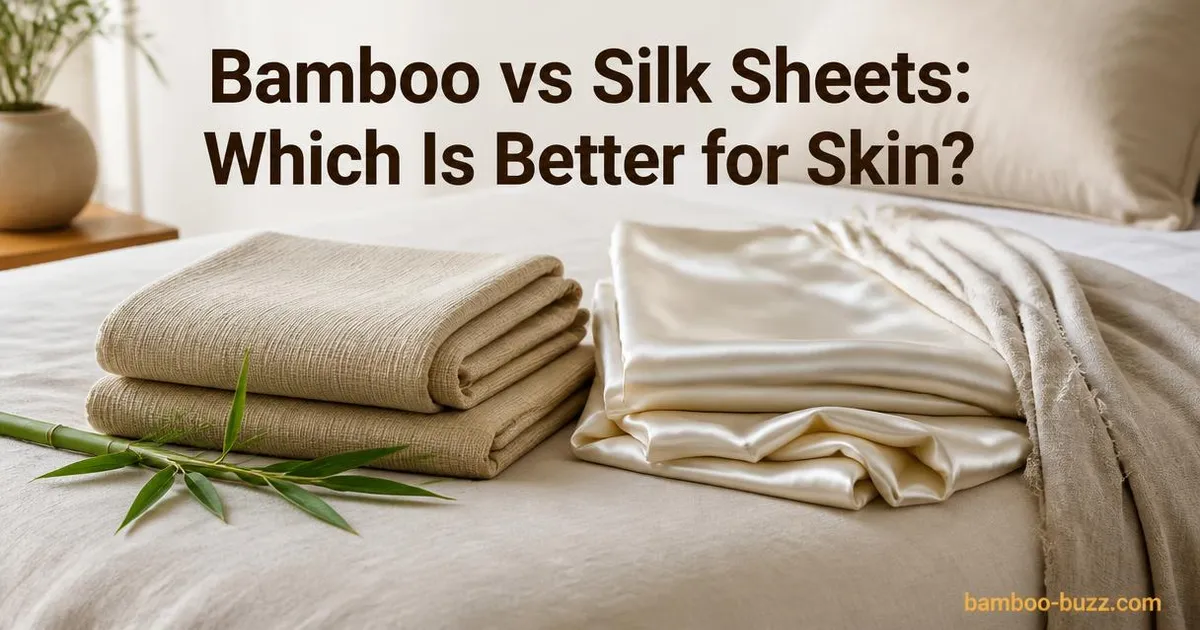
Bamboo vs Silk Sheets: Which Is Better for Skin?
# Bamboo vs Silk Sheets for Skin: Which Is Better?
Silk has a reputation as the luxury fabric for your face, but the better fabric for your skin depends on what your skin actually needs. The real choice comes down to three things: how much friction the fabric creates against your skin, how well it holds onto moisture overnight, and how much laundering you’re willing to do.
Your skin type, sleep temperature, and tolerance for fussy care routines should drive the decision, not the price tag.
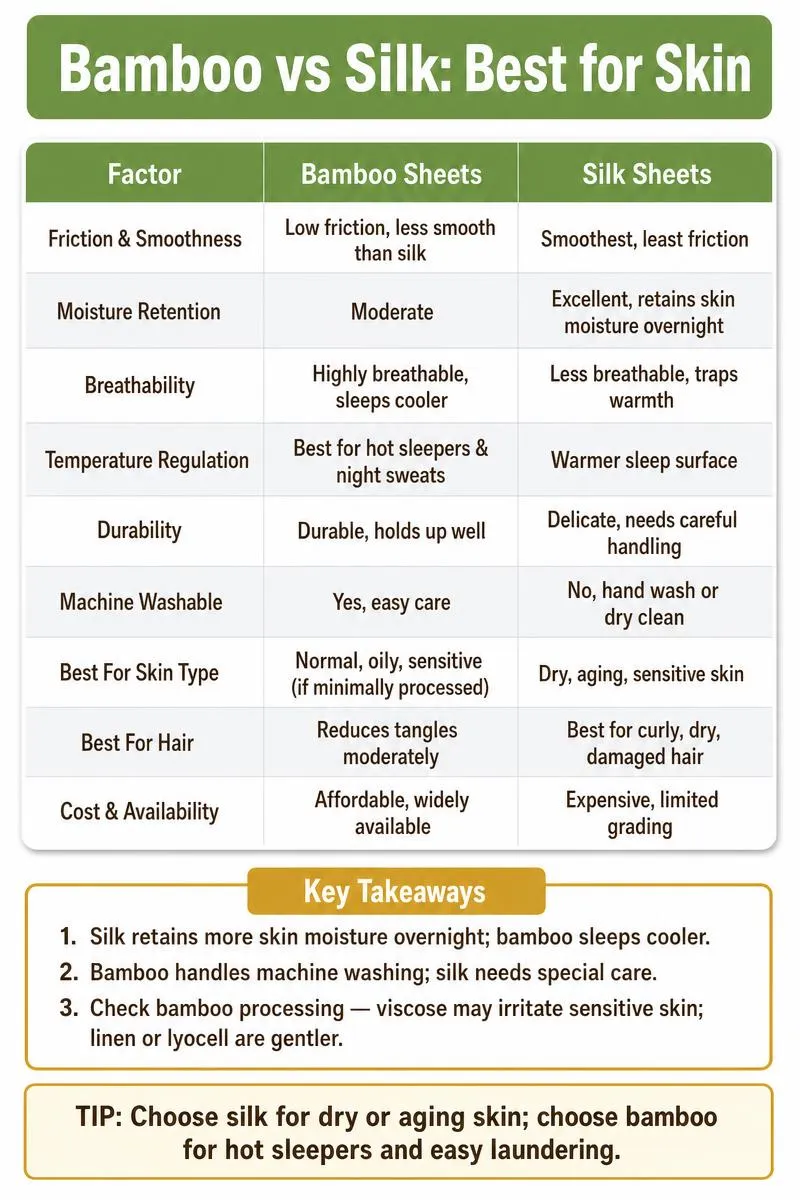
Key Takeaways
- Both fabrics create less friction than cotton, but silk is smoother and helps skin retain more moisture overnight.
- Bamboo generally sleeps cooler and handles machine washing without special treatment.
- Silk suits dry or aging skin best; bamboo suits hot sleepers and anyone who wants easy maintenance.
- Chemically processed bamboo viscose may raise skin sensitivity concerns that mechanically processed bamboo linen or silk do not.
- The right pick depends on how you weigh temperature regulation, moisture retention, and laundering effort.
Bamboo Vs Silk Sheets For Skin Side-by-Side
| Factor | Bamboo Sheets | Silk Sheets |
|---|---|---|
| Friction & Smoothness | Low friction, less smooth than silk | Smoothest, least friction |
| Moisture Retention | Moderate | Excellent; retains moisture overnight |
| Breathability | Highly breathable; sleeps cooler | Less breathable; traps warmth |
| Temperature Regulation | Best for hot sleepers & night sweats | Warmer sleep surface |
| Durability | Durable; holds up well | Delicate; needs careful handling |
| Machine Washable | Yes; easy care | No; hand wash or dry clean |
| Best For Skin Type | Normal, oily, sensitive (if minimally processed) | Dry, aging, sensitive skin |
| Best For Hair | Reduces tangles moderately | Best for curly, dry, damaged hair |
| Cost & Availability | Affordable, widely available | Expensive, limited grading |
What Are Bamboo Sheets?
Bamboo sheets aren’t a single fabric. The term covers several constructions made from bamboo pulp, and the processing method changes how the final sheet feels and behaves against your skin.
1. Bamboo Viscose, Modal, Lyocell, and Linen
Bamboo viscose is the most common type. Manufacturers dissolve bamboo pulp in chemical solvents to create fibers, then spin those fibers into yarn. The process is similar to how rayon is made.
Bamboo modal uses a modified version of the viscose process that produces a stronger, finer fiber.
Bamboo lyocell uses a closed-loop solvent system that recovers most of the chemicals used, which some sources consider less harsh on both workers and the final fabric. Bamboo linen is mechanically processed: the plant fibers are crushed and combed rather than chemically dissolved, making it the most environmentally straightforward but also the roughest against skin.
2. How Processing Affects Skin Contact
The processing method matters for skin because residual chemicals from viscose production can remain in the fabric. Some people with sensitive skin react to those residuals.
Bamboo lyocell and bamboo linen avoid most of that concern because the closed-loop process and mechanical processing leave fewer chemical traces. If you have reactive skin, look for OEKO-TEX certification, which tests for harmful substance residues in finished textiles.
3. Best for Hot Sleepers and Machine-Washable Bedding
Bamboo sheets breathe well and wick moisture away from your body, which helps if you sleep hot. You can wash most bamboo sheets in a machine on a gentle cycle with cold water, then tumble dry on low. No hand washing, no special detergents, no air drying on a rack for hours.
4. Weaknesses
Quality varies a lot between brands because the viscose process can produce fibers of different strengths. Bamboo sheets generally don’t last as long as silk with heavy use, and the chemical processing involved in making bamboo viscose raises environmental and skin-sensitivity concerns that mechanically processed fabrics avoid.
Explore More
Top-rated bamboo mattress protector on amazon
Find bamboo mattress protectors that add breathable, hypoallergenic bedding layers-useful if you want bamboo bedding…
What Are Silk Sheets?
Silk sheets are woven from silk fibers produced by silkworms, most commonly mulberry silkworms. The grading system and the type of silk used determine quality, texture, and price.
1. Mulberry Silk and Grading
Mulberry silk is the gold standard. Silkworms fed exclusively on mulberry leaves produce long, uniform fibers that create the smoothest, most consistent fabric.
Silk sheets are graded by weight and quality, often expressed as momme weight, with higher numbers indicating denser, more durable silk.
Generic silk may use shorter fibers from various silkworm species, resulting in a less smooth texture. Bamboo silk is a misleading term that refers to bamboo viscose fabric with a silky finish, not actual silk from silkworms.
2. How Production Affects Cost and Availability
Raising silkworms, harvesting cocoons, and reeling silk fibers into threads is labor-intensive and slow. That drives up the cost of genuine silk sheets compared to bamboo alternatives. Real mulberry silk sheets are also harder to find in stores because many retailers stock bamboo viscose sheets or silk blends instead.
3. Best for Dry Skin, Aging Concerns, and Damaged Hair
Silk’s smooth surface creates very little friction against your skin, which means less pulling and tugging while you sleep. The fibers also help skin retain moisture because they don’t absorb as much water from your skin surface as cotton does overnight.
Silk pillowcases are a common pick for people with dry or aging skin, and for anyone with curly, fragile, or damaged hair that breaks easily from friction.
4. Weaknesses
Silk demands careful maintenance. Most silk sheets require hand washing or a delicate machine cycle with pH-neutral detergent, and air drying. Sun exposure can damage silk fibers, so drying in direct sunlight is off the table.
Silk also costs significantly more upfront.
Bamboo Sheets vs Silk Sheets: Skin and Hair Benefits
Both fabrics beat cotton on friction, but they split on moisture: silk keeps it on your skin, bamboo wicks it away.
1. Friction and Overnight Hydration
Silk has a naturally smooth fiber structure that creates less drag against your skin than bamboo or cotton. That smoothness means your skin and hair glide across the surface instead of catching and pulling. Silk fibers absorb less moisture than cotton or bamboo, which helps your skin stay more hydrated overnight rather than losing water to the pillowcase.
Bamboo creates less friction than cotton but more than silk. The trade-off is that bamboo wicks moisture away from your body, which helps if you sweat at night but may pull some surface moisture from your skin if you run dry.
2. Acne-Prone, Dry, and Sensitive Skin
For acne-prone skin, less friction matters because irritation and trapped bacteria can worsen breakouts. Silk’s smooth surface reduces that friction, and its low absorption means fewer skin oils transfer into the fabric. Bamboo viscose wicks moisture well, which can help if sweat contributes to your breakouts, but the chemical processing residuals in some bamboo viscose may irritate sensitive skin.
For dry skin, silk’s moisture retention gives it the edge. For sensitive skin, the processing method matters more than the fiber type. Bamboo lyocell and silk both avoid most chemical residual concerns, while bamboo viscose may not.
3. Hair Breakage and Tangles
Silk wins clearly here. The smooth surface lets hair strands slide rather than catch, which reduces tangles and breakage, especially for curly, coily, or chemically treated hair.
Bamboo reduces friction compared to cotton but doesn’t match silk’s glide. If protecting your hair is a top priority, silk is the stronger choice.
Bamboo Sheets vs Silk Sheets: Comfort and Texture
Silk has a distinctive slippery, cool-to-touch smoothness with a natural sheen. The fabric drapes closely against the body, which some people love and others find too clingy. Bamboo viscose has a soft, slightly brushed feel that’s closer to a high-quality cotton sateen.
It drapes well but doesn’t cling the way silk does.
If you move around a lot during sleep, bamboo may feel more comfortable because the fabric stays put without sliding with you. Silk’s slick surface can make the pillowcase or sheet shift as you turn, which some sleepers find annoying.
Related Reading
A focused comparison of bamboo and silk pillowcases with practical notes on skin and hair benefits and care, which…
Bamboo Sheets vs Silk Sheets: Breathability and Temperature Regulation
Bamboo is the stronger choice for temperature regulation. Bamboo viscose wicks moisture and allows airflow through the fabric, which helps dissipate body heat. If you sleep hot or experience night sweats, bamboo keeps you cooler than silk does.
Silk is breathable but doesn’t wick moisture as effectively as bamboo. The dense weave of high-quality silk can trap some warmth, which feels cozy in winter but may be too warm for hot sleepers or summer nights.
If heat triggers your skin irritation or sweating, bamboo’s superior airflow matters.
Bamboo Sheets vs Silk Sheets: Durability and Care
Bamboo and silk need opposite care routines.
Bamboo sheets go in the washing machine on a gentle cycle with cold water and a mild detergent. You can tumble dry on low heat. Stains come out relatively easily with normal pretreatment. Bamboo sheets hold up to regular washing but may thin or pill over time with heavy use.
Silk requires hand washing or a delicate machine cycle with a pH-neutral or silk-specific detergent. You need to air dry silk away from direct sunlight, which takes longer and limits where you can dry it. Silk stains more easily and is harder to spot-clean without professional help.
However, silk fibers are strong for their weight, and well-maintained silk sheets can last a long time if you follow the care instructions.
Which Should You Choose?
Your main concern decides this: dryness or hair breakage points to silk, night heat or laundry logistics points to bamboo.
1. Dry Skin or Aging Concerns: Silk
Silk’s low absorption keeps more moisture on your skin’s surface overnight, and the smooth surface reduces the friction that can tug at fine lines and delicate skin. If dryness or aging is your primary concern, silk is worth the extra care.
2. Hot Sleepers or Night Sweats: Bamboo
Bamboo’s moisture wicking and airflow keep you cooler than silk, which matters if heat triggers breakouts, irritation, or discomfort. You also get machine-washable convenience.
3. Sensitive or Allergy-Prone Skin: Compare Processing
Bamboo lyocell and silk both avoid most chemical processing residual concerns. Bamboo viscose may leave traces of processing chemicals that irritant reactive skin.
4. Curly, Dry, or Damaged Hair: Silk
The smooth fiber structure of silk reduces tangles and breakage more effectively than bamboo. For curly, coily, or chemically treated hair, silk pillowcases are the usual pick for protecting those hair types.
5. Frequent Machine Washing Needed: Bamboo
If your life involves kids, pets, or just a preference for tossing sheets in the wash, bamboo handles that. Silk does not.
You Might Also Like
Breaks down differences in texture, sheen, and feel between bamboo and satin-style sheets-handy when weighing comfort…
FAQs About Bamboo and Silk Sheets
What are the downsides of bamboo sheets?
Quality varies between brands because the viscose process can produce weaker or stronger fibers depending on manufacturing standards. Bamboo sheets generally don’t last as long as silk with heavy use, and the chemical solvents used in viscose production raise both environmental and skin-sensitivity concerns. Bamboo lyocell addresses some of those concerns through its closed-loop processing.
What are the downsides of silk pillowcases and sheets?
Silk requires hand washing or delicate-cycle washing with special detergent, air drying away from sunlight, and careful stain treatment. The upfront cost is significantly higher than bamboo, and silk is harder to find in physical stores. Silk also stains more easily and may not suit hot sleepers who need maximum airflow.
What sheets do dermatologists recommend for sensitive skin?
Recommendations for sensitive skin usually land on silk or bamboo lyocell because both create low friction and avoid the chemical processing residuals found in some bamboo viscose. Look for OEKO-TEX certification on any bedding you’re considering, since that standard tests finished fabric for harmful substance residues.
Which is better for aging or acne-prone skin, bamboo or silk?
For aging skin, silk is better because its low absorption helps skin retain moisture overnight and its smooth surface reduces friction that can stress delicate skin. For acne-prone skin, the answer depends on whether sweat or friction is your primary trigger. Silk reduces friction and oil absorption into the fabric, while bamboo wicks sweat away from skin. If heat aggravates your acne, bamboo may be the more practical choice.
Can bamboo or silk sheets help reduce allergies?
Both fabrics create less static and trap fewer dust particles than cotton, which may help mild allergy symptoms. Raw bamboo contains bamboo kun, an antibacterial compound, but most of it does not survive the viscose process, so treat hypoallergenic claims on bamboo viscose as marketing rather than tested fact. If allergies are your main concern, look for OEKO-TEX certified options and wash bedding regularly.
Are bamboo sheets actually made from bamboo?
Yes, the raw material is bamboo pulp. But the fibers in most bamboo sheets are chemically processed through the same method used to make rayon, not woven directly from the plant. Bamboo linen is the exception, made by mechanically crushing and combing the fibers without chemical solvents.
What is the difference between bamboo silk, 100% silk, and mulberry silk?
Bamboo silk is not silk at all. It is bamboo viscose fabric marketed with a silky finish. 100% silk means the fabric is entirely silk fibers but doesn’t specify which silkworm species produced them. Mulberry silk comes from silkworms fed only mulberry leaves, producing the longest, most uniform fibers and the smoothest, most durable fabric.
How do you wash and care for bamboo and silk bedding?
Bamboo sheets: machine wash on a gentle cycle with cold water and mild detergent, then tumble dry on low. Silk sheets: hand wash or use a delicate machine cycle with a pH-neutral or silk-specific detergent, then air dry away from direct sunlight. Never use bleach or fabric softener on either fabric.
How often should you replace bamboo versus silk sheets?
There is no fixed timeline, but bamboo sheets typically show wear sooner than well-maintained silk because the viscose fibers thin and pill with repeated washing. Signs to replace include visible thinning, persistent pilling, or a rougher texture than when new. Silk lasts longer with proper care but degrades faster if washed incorrectly or exposed to sunlight regularly.
Will silk sheets make my hair greasy?
No. Silk absorbs less oil than cotton, so it actually helps your hair retain its natural moisture balance rather than stripping oils away. If your hair feels greasy on silk, the cause is likely your hair products or wash schedule, not the pillowcase.
Final Verdict
Bamboo is the smarter pick if you sleep hot, want machine-washable convenience, or have skin that tolerates viscose-processed fabrics without reacting. Silk is worth the maintenance when dry skin, aging, or hair breakage is your priority and you don’t mind the delicate care routine.
One common middle ground: pair a silk pillowcase with bamboo sheets. You get silk’s friction and moisture benefits for your face and hair while keeping the cooling, easy-care advantages of bamboo for the rest of the bed. If that sounds like the right balance, check our bamboo sheet care guide and silk pillowcase recommendations to narrow down specific products that fit your routine.
External References
- Is Bamboo Fabric Sustainable? Processing Truth vs. … – Deadsoxy
- Properties, Production, and Recycling of Regenerated … – PMC – NIH (NCBI)
- Is Bamboo Fabric Safe? Viscose vs Lyocell Explained – Fibercheck
- Antimicrobial Properties of Bamboo Fibres – Biomedres
- OEKO-TEX® STANDARD 100 – OEKO-TEX
- Safety Assessment of Bamboo Viscose in Infant and … – Thecottonlane