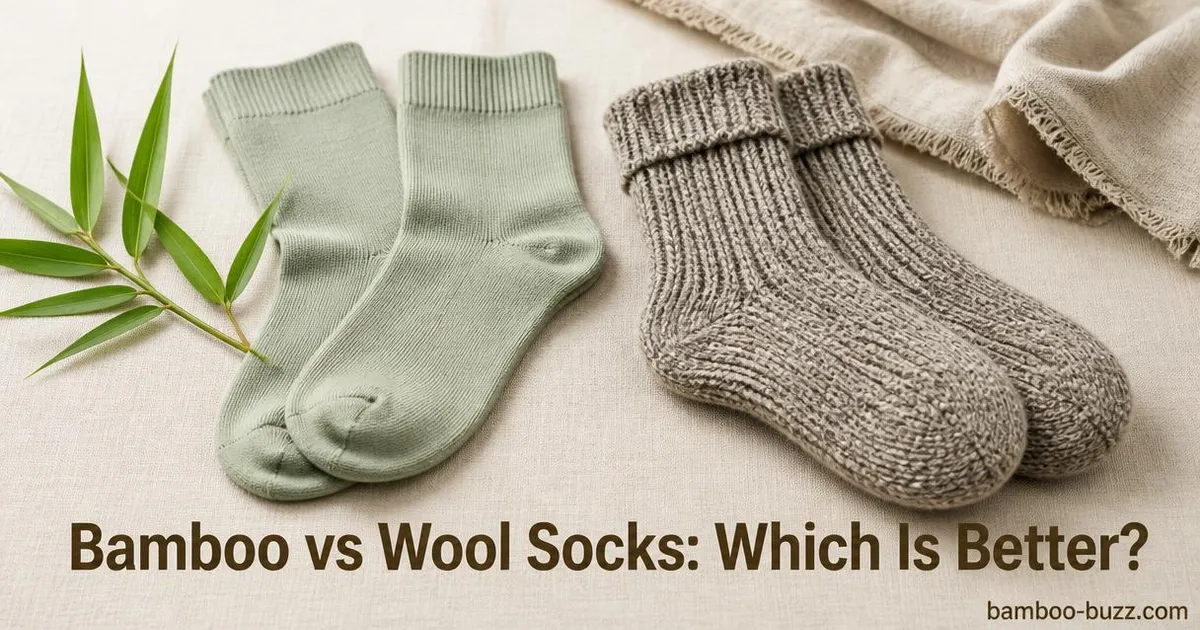
Bamboo vs Wool Socks: Which Is Better?
Most people pick socks based on feel, then get surprised when that same pair falls apart, shrinks, or turns a summer hike into a sweaty mess. Bamboo and wool both solve sock problems, but they solve different ones. Bamboo viscose gives you a silky-smooth surface that stays cool in warm conditions, while merino wool traps air in its crimped fibers to keep your feet warm when the temperature drops.
The decision between bamboo vs wool socks comes down to what your feet actually deal with on a given day. Office wear, trail hiking, sensitive skin, cold mornings, humid afternoons – each scenario pushes you toward one material over the other.
Key Takeaways
- Bamboo socks usually feel softer and silkier against skin, while wool offers more cushioned support underfoot.
- Wool generally insulates better in cold weather. Bamboo stays cooler in warm conditions and indoor settings.
- Both materials wick moisture, but some sources suggest wool handles heavy sweat better during long hikes.
- Durability depends on yarn quality and care routine, not just the raw material.
- Cost and environmental impact vary by manufacturing process and brand, not by fiber type alone.
Comparing the Top Bamboo Vs Wool Socks
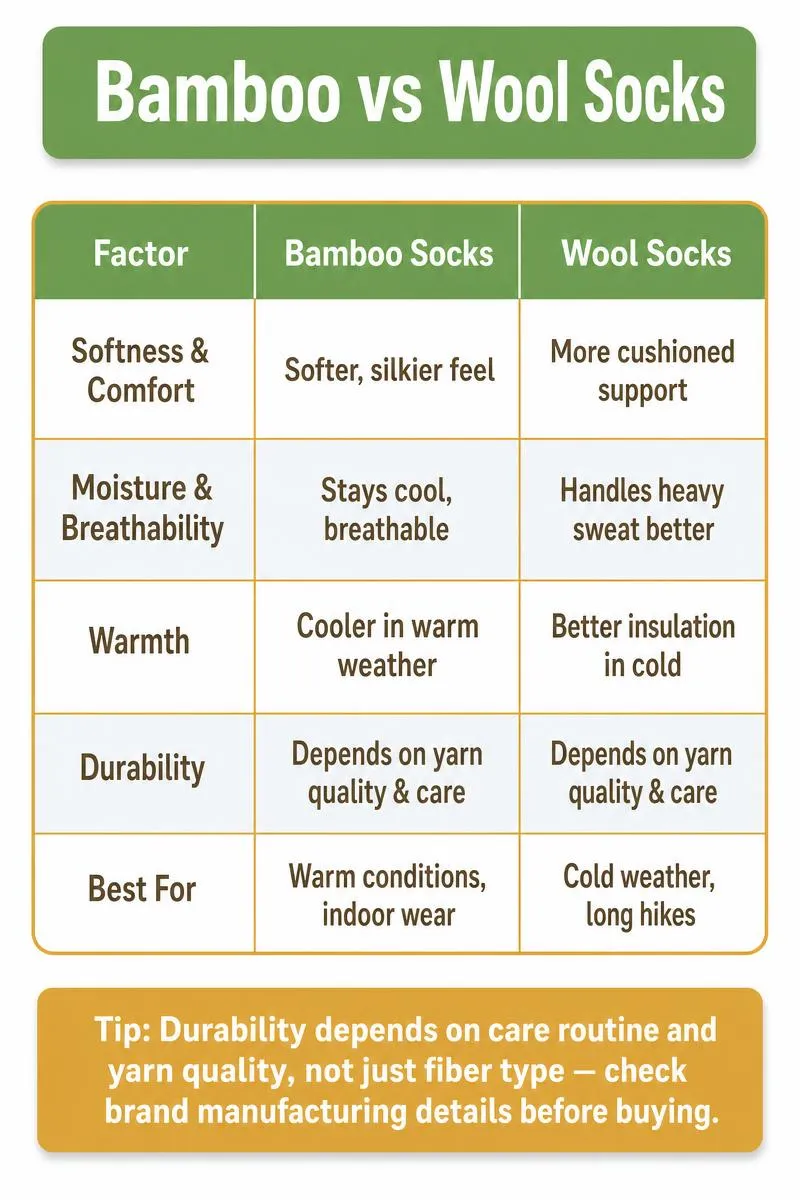
| Factor | Bamboo Socks | Wool Socks |
|---|---|---|
| Softness & Comfort | Softer, silkier feel | More cushioned support |
| Moisture & Breathability | Stays cool, breathable | Handles heavy sweat better |
| Warmth | Cooler in warm weather | Better insulation in cold |
| Durability | Depends on yarn quality & care | Depends on yarn quality & care |
| Best For | Warm conditions, indoor wear | Cold weather, long hikes |
What Are Bamboo Socks?
Bamboo socks are made from viscose or rayon derived from bamboo pulp. The manufacturing process dissolves bamboo cellulose in chemical solvents, then extrudes the solution into fine fibers. Those fibers have a naturally smooth, round cross-section, which is why bamboo viscose feels silky against skin rather than scratchy.
Bamboo socks work best for daily wear, business settings, warm climates, and sensitive skin. The smooth fiber surface creates less friction than wool against bare skin, which matters if you’re wearing dress shoes for hours.
The weaknesses are real, though. Bamboo viscose provides limited cold-weather insulation compared to wool’s crimped fiber structure. Bamboo socks can also shrink under high heat in the dryer, since viscose fibers contract under hot conditions.
Related Reading
Explains how bamboo fiber becomes rayon/viscose and what that means for feel, breathability, and odor control.
What Are Wool Socks?
Wool socks are made from animal fiber, most commonly merino wool from sheep. Merino fibers have a natural crimp that traps air between strands, creating insulation. That same crimp structure also helps wool absorb moisture vapor inside the fiber while repelling liquid on the surface.
Wool socks shine for hiking, outdoor work, and cold-weather layering. The crimped fibers compress under your weight and bounce back, giving you cushioned support that bamboo viscose doesn’t match.
Wool socks typically cost more than bamboo, and some people find the fiber irritating against bare skin, though merino’s fine fiber diameter reduces that problem compared to coarser wool grades. Wool also needs careful washing – cool water and air drying – to avoid felting and shrinkage.
Bamboo Socks vs Wool Socks: Softness and Comfort
Softness comes down to fiber structure. Bamboo viscose fibers are smooth and round in cross-section, so they glide against skin with minimal friction. Wool fibers have scales on their surface – even fine merino – which creates more texture against bare skin.
For daily wear and dress socks, bamboo wins. The silky feel of bamboo viscose works well under fitted shoes where you don’t want bulk or texture rubbing. If you’re sitting at a desk or walking around town, that smooth surface keeps your feet comfortable for hours.
Wool takes the win for cushioned support during activity. The crimped merino fibers compress and recover, absorbing impact underfoot when you’re hiking or standing on hard ground. Bamboo viscose feels softer to the touch but doesn’t provide the same springy cushion.
Winner: Bamboo for daily and dress wear. Wool for cushioned support during activity.
Bamboo Socks vs Wool Socks: Moisture and Breathability
Both materials pull moisture away from skin, but the mechanisms differ. Wool draws moisture vapor through the fiber itself before it collects on your skin. Bamboo viscose wicks liquid along the fiber surface through capillary action.
Wool handles heavy sweat better during long exertion. Some sources suggest wool outperforms bamboo for multi-hour hikes and high-output activities where sweat volume is high. The fiber can take on significant moisture vapor while still feeling dry to the touch.
Bamboo works well for light daily moisture management. The fibers wick sweat away from skin quickly in normal daily conditions, and the smooth surface allows decent airflow in low-exertion settings. For an office day or a casual walk, bamboo keeps your feet dry enough.
Winner: Wool for heavy exertion and long wear. Bamboo for light daily moisture management.
Keep Reading
A direct, in-depth comparison of bamboo and wool covering warmth, moisture management, and comfort – perfect for…
Bamboo Socks vs Wool Socks: Warmth and Temperature Regulation
Merino wool’s crimped fibers trap pockets of air, and that trapped air is what insulates your foot from cold. Merino wool socks hold warmth effectively in freezing conditions and during outdoor activities like skiing or winter hiking. The same air pockets that retain heat also allow some breathability when you warm up.
Bamboo viscose doesn’t trap air the same way. The smooth fibers lay flat against each other, which means less trapped air and less insulation. That works in your favor in warm offices, summer climates, and indoor settings where wool would feel overheated.
Wool socks can overheat your feet indoors, especially in heated buildings or during summer.
Winner: Wool for cold outdoor use. Bamboo for warm offices and mild climates.
Bamboo Socks vs Wool Socks: Durability and Maintenance
Durability is less about material and more about yarn quality, knit construction, and how you wash the socks. A well-made bamboo sock with a reinforced heel and toe can outlast a cheaply knit wool sock. Conversely, high-twist merino wool holds up better than loosely spun bamboo viscose.
Bamboo viscose fibers are softer and finer than wool, which means they can pill and thin out faster at friction points like heels and toes. Hot water and dryer heat compound the problem, causing bamboo viscose to shrink and lose elasticity. Wash bamboo socks in cool or warm water and skip the dryer.
Wool socks resist pilling better than bamboo in most cases, thanks to the fiber’s natural elasticity and crimp. That said, wool has its own maintenance demands. Hot water and agitation cause wool fibers to felt, shrinking and matting the fabric, so cool water and air drying are non-negotiable.
Winner: Tie. Both last with proper care, though wool often requires more deliberate maintenance.
Bamboo Socks vs Wool Socks: Sustainability and Cost
Bamboo as a crop grows without pesticides or irrigation, harvests quickly, and regrows from the same root system after cutting. The problem is the processing. Turning bamboo pulp into viscose requires chemical solvents, and not all manufacturers recover those chemicals. Closed-loop viscose processing captures and reuses solvents, reducing the environmental impact, but not every brand uses that method.
Wool comes from sheep, which require land, water, and feed, and sheep farming produces methane. Overgrazing can degrade land. Wool is biodegradable and lasts a long time per pair if cared for, which spreads the production impact over more wears.
Cost varies by brand and quality. Bamboo socks tend to sit at a lower price point for everyday options. Wool socks, especially merino, usually cost more per pair but may last longer with proper care, reducing cost per wear.
Winner: Bamboo on lower land use if sourced from closed-loop processing. Wool on longevity per wear. Cost varies by brand.
Also Worth Checking Out
Breaks down environmental and manufacturing differences between bamboo and viscose that influence sustainability and…
Which Should You Choose?
- You work in an office and want soft dress socks: Choose bamboo. The smooth viscose surface feels comfortable under fitted shoes and stays cool in heated buildings.
- You hike or camp in cold, wet conditions: Choose wool. Merino’s crimped fibers insulate well, and the fiber structure handles heavy sweat during long exertion.
- You have sensitive skin or dislike scratchy textures: Choose bamboo. The round, smooth viscose fiber surface creates less friction against skin than wool’s scaled surface.
- You need all-season outdoor performance: Choose wool. Merino regulates temperature across a wider range and manages moisture better during variable conditions.
- You prioritize budget everyday basics: Compare blended options or look for bamboo socks on sale. Bamboo-cotton blends often cost less than pure merino while offering decent comfort for daily wear.
FAQs About Bamboo Socks and Wool Socks
Are bamboo socks warmer than wool socks?
No. Merino wool’s crimped fibers trap more air, providing better insulation. Bamboo viscose fibers lay flat and trap less air, making bamboo socks cooler against skin.
Do bamboo socks wick moisture as well as wool?
For light daily activity, bamboo wicks moisture effectively. For heavy sweating during long hikes or high-output activities, wool generally performs better because wool fibers absorb moisture vapor internally.
Can you machine wash bamboo or wool socks?
Both can go in a washing machine, but use cool or warm water. Hot water causes bamboo viscose to shrink and wool to felt. Skip the dryer for both materials and let them air dry.
Do bamboo socks shrink in the dryer?
Yes. Bamboo viscose fibers contract under high heat. Wash bamboo socks in cool or warm water and air dry them to maintain shape and fit.
Are wool socks itchy for everyone?
No. Merino wool uses fine-diameter fibers that most people find comfortable against bare skin. Coarser wool grades can cause itching. If you’ve had a bad experience with wool, it was likely a coarser grade, not merino.
Is bamboo fabric more sustainable than wool?
Bamboo as a crop uses less water and grows without pesticides. The viscose manufacturing process involves chemical solvents, so the environmental impact depends on whether the manufacturer uses closed-loop processing. Wool is biodegradable and long-lasting but comes from livestock farming, which has its own land and emissions footprint.
How long do wool socks last with regular use?
Wool socks last a long time with proper care – cool-water washing and air drying. Durability depends more on yarn quality and construction than on the fact that the fiber is wool.
What are the downsides of bamboo socks?
Bamboo socks provide limited cold-weather insulation and can shrink under heat. The viscose fibers are softer and finer than wool, which can lead to faster wear at friction points like heels and toes.
Do feet sweat less in bamboo or wool socks?
Both manage moisture. Wool absorbs more sweat volume inside its fibers, which helps during heavy exertion. Bamboo wicks moisture along the fiber surface, which works well for normal daily activity but may feel less dry during intense exercise.
Are bamboo socks better for sensitive skin?
For many people, yes. Bamboo viscose has a smooth, round fiber surface that creates less friction against skin. Wool fibers have surface scales that create more texture than bamboo viscose, though merino’s fine fiber diameter reduces irritation compared to coarser wool grades. If you react to residual processing chemicals in bamboo viscose, look for socks labeled as processed to remove residual solvents.
Final Verdict
Neither material is perfect for every foot or season. Wool handles cold, wet, and high-exertion conditions better. Bamboo wins on softness, cool comfort, and sensitive-skin friendliness.
Try one pair of each. Wear them for a week in your normal routine and see which one your feet actually prefer.
External References
- Bamboo Clothing: Green, or Greenwashed? – Biggreenpurse
- Bamboo Viscose 101: Is it an Eco-Friendly & Sustainable … – Theecohub
- What is Viscose from Bamboo? Benefits & Sustainability … – Slycollective
- Wool garments for exercise in cold climate – NTNU (.edu)
- Carbon disulfide in viscose rayon manufacturing. – CDC