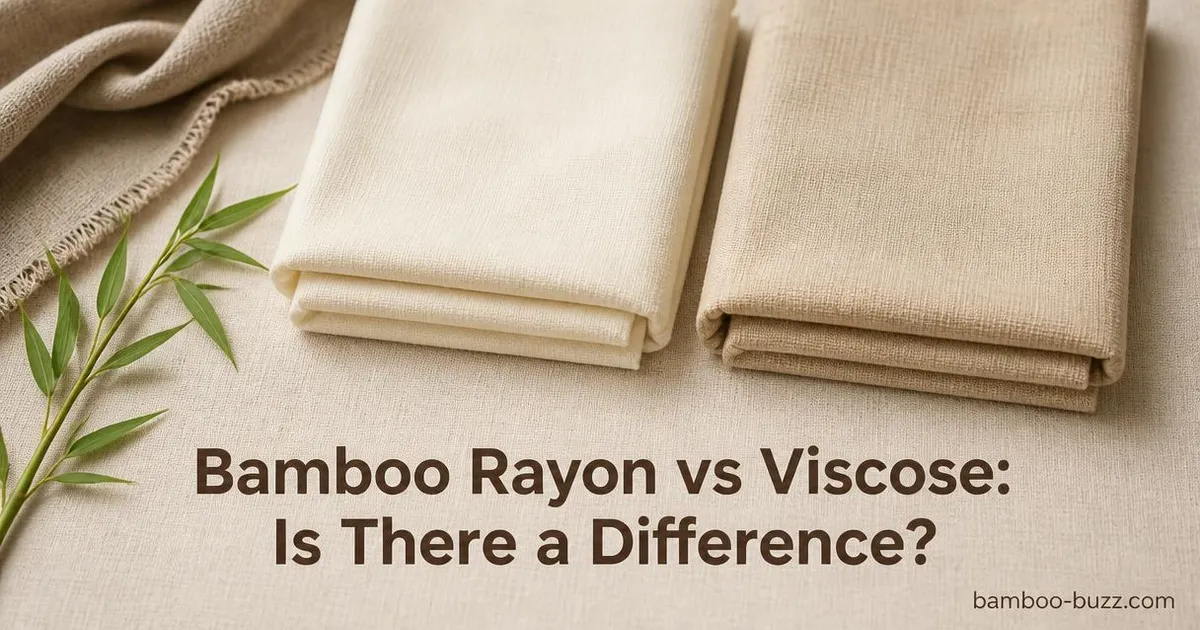
Bamboo Rayon vs Viscose: Is There a Difference?
You’re looking at two nearly identical bamboo fabric products. One tag says “rayon from bamboo”; the other says “bamboo viscose.” The price might even be different. So which one actually matters for how the fabric feels, how safe it is, and how you should wash it?
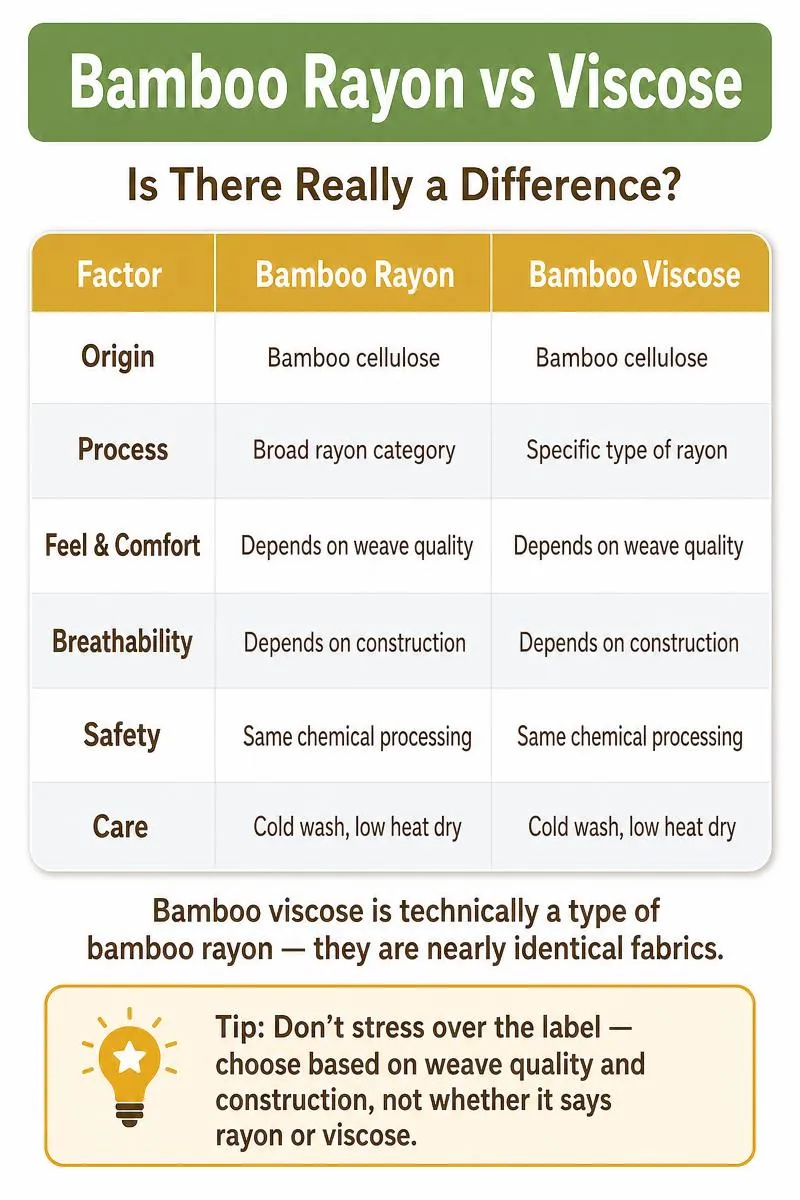
Here’s the short answer: viscose is a specific method of making rayon. Bamboo viscose is a subset of bamboo rayon, not a separate fabric. The label difference tells you almost nothing about comfort or quality – the weave, weight, and construction matter far more.
Key Takeaways
- Both fabrics start as bamboo cellulose dissolved in chemical solvents and regenerated into soft fibers.
- ‘Viscose’ names a specific production process that falls under the broader rayon category, so bamboo viscose is technically a type of bamboo rayon.
- Feel, breathability, and durability depend on weave type and construction quality, not whether the tag says rayon or viscose.
- Chemical processing and safety questions apply identically to both fabrics.
- Care instructions overlap almost completely: cold wash, low heat or line dry, no bleach, avoid fabric softener.
Quick Comparison: Bamboo Rayon Vs Viscose
| Factor | Bamboo Rayon | Bamboo Viscose |
|---|---|---|
| Origin | Bamboo cellulose | Bamboo cellulose |
| Process | Broad rayon category | Specific type of rayon |
| Feel & Comfort | Depends on weave quality | Depends on weave quality |
| Breathability | Depends on construction | Depends on construction |
| Safety | Same chemical processing | Same chemical processing |
| Care | Cold wash, low heat dry | Cold wash, low heat dry |
What Is Bamboo Rayon?
Bamboo rayon is the broad term for any regenerated cellulose fiber sourced from bamboo. The bamboo plant is harvested, broken down into cellulose pulp, then dissolved in chemical solvents to create a spinnable fiber. That fiber gets woven into fabric for bedding, clothing, and textiles.
The strength of the bamboo rayon label is that it covers multiple soft, breathable fiber variants – including viscose and lyocell. The weakness is ambiguity. ‘Bamboo rayon’ does not tell you which specific manufacturing method was used, and that method can affect everything from texture to environmental footprint.
If you see ‘bamboo rayon’ on a product tag, you know the source material and the general category. You don’t know the exact process without checking further.
Explore More
Pros and cons of bamboo sheets
A concise pros-and-cons breakdown covering comfort, durability, and care for bamboo sheets made from rayon/viscose.
What Is Bamboo Viscose?
Bamboo viscose refers specifically to bamboo fabric made using the viscose regeneration process and is the most widely available bamboo fabric process. In this method, bamboo cellulose is dissolved in sodium hydroxide and carbon disulfide, then extruded through spinnerets to form fibers. The result is a smooth, soft fabric with moisture-wicking properties.
Bamboo viscose works well for cooling sheets, sleepwear, and everyday apparel. The smooth texture and moisture management make it a common choice for hot sleepers and people with sensitive skin.
The downsides are real, though. The viscose process requires chemical solvents, and the resulting fabric needs delicate handling. Specific wash requirements – cold water, gentle cycles, no bleach – are standard for bamboo viscose products.
Bamboo Rayon vs Bamboo Viscose: Manufacturing and Labeling
The relationship between these two terms is hierarchical, not competitive. Viscose is one specific process within the broader rayon fiber category. All bamboo viscose is bamboo rayon, but not all bamboo rayon is bamboo viscose – some bamboo rayon might be made using the lyocell process instead.
Both paths use chemical processing to convert bamboo cellulose into wearable fiber. The lyocell method uses a different solvent, typically N-methylmorpholine N-oxide, in a closed-loop system that recovers and reuses most of the chemical.
There’s no practical manufacturing winner between the two labels. If the exact process matters to you, check the brand’s product details – the tag alone won’t tell you.
Bamboo Rayon vs Bamboo Viscose: Feel and Comfort
Both bamboo rayon and bamboo viscose produce soft, silky fabrics that work well for sensitive skin. The fiber itself is smooth and round in cross-section, which reduces friction against skin compared to rougher fibers.
Texture differences between finished products come from the weave, not the fiber name:
- A sateen weave feels slicker and more lustrous.
- A percale weave feels crisper and more matte.
- A twill weave adds diagonal texture and durability.
Finishing treatments also affect hand feel. Neither label has an inherent comfort advantage.
Related Reading
A closer comparison of bamboo sheets versus percale for sleepers who want a crisp, breathable weave.
Bamboo Rayon vs Bamboo Viscose: Breathability and Cooling
Both fibers wick moisture and allow airflow, which is why bamboo fabrics are popular for hot sleepers and summer bedding. The regenerated cellulose structure absorbs moisture into the fiber itself rather than letting it sit on the surface.
Cooling performance depends on fabric weight and weave more than the fiber name. A lightweight, loosely woven bamboo fabric will breathe better than a dense, tightly woven one – regardless of whether the tag says rayon or viscose.
For hot sleepers, either label works.
Bamboo Rayon vs Bamboo Viscose: Safety and Health
Both bamboo rayon and bamboo viscose require chemical solvents to convert bamboo pulp into wearable fiber. Finished fabric goes through washing stages to remove residual chemicals, but questions about trace residue remain valid for both labels.
Some sources suggest that manufacturing standards and certification matter more than the terminology on the tag. OEKO-TEX certification, for example, tests finished textiles for harmful chemical residues regardless of the production method used.
Neither fabric is plastic – bamboo rayon and bamboo viscose are cellulose-based, not synthetic polymer fibers. But both raise legitimate questions about chemical processing and environmental impact, particularly around wastewater from the viscose method.
Bamboo Rayon vs Bamboo Viscose: Durability and Care
Both fabrics require gentle handling to maintain fiber integrity over time. Bamboo cellulose fibers weaken when wet and when exposed to heat, which makes aggressive washing and high-heat drying the main causes of premature wear.
The shared care rules are straightforward: wash in cold water on a gentle cycle, dry on low heat or line dry, skip bleach entirely, and avoid fabric softener. Fabric softener coats the fibers and reduces moisture-wicking performance.
Durability depends on construction quality and weave type, not the label name. A well-constructed bamboo fabric with a tight weave will hold up longer than a loosely constructed one, whether it’s called rayon or viscose.
You Might Also Like
How bamboo sheets stack up against silk in softness and drape, helpful when judging feel between rayon/viscose fabrics.
Which Should You Choose?
Choose bamboo viscose if you want the label to specify the exact process used. The viscose designation tells you the fiber was made using the standard regeneration method, which is the most common and widely available bamboo fabric process.
Choose bamboo rayon if you want access to other variants like lyocell that fall under the broader rayon category. Some brands use ‘bamboo rayon’ as an umbrella term, and you may find lyocell-process products listed under that label.
For hot sleepers: either label works. Check the product’s stated fabric weight and weave openness before comparing labels. Look for fabric described as lightweight, breathable, or cooling in the product details.
For eco-conscious buyers: neither label has a clear environmental edge by default. The viscose process uses more chemicals and produces more wastewater. If environmental impact is your priority, look for brands that specify closed-loop processing or carry OEKO-TEX certification. Organic bamboo viscose is one variant to consider if available.
For budget shopping: compare construction details and customer reviews rather than paying more for one label over the other. Weave type, fabric weight, and stitching quality predict performance better than whether the tag says rayon or viscose.
FAQs About Bamboo Rayon and Bamboo Viscose
What are bamboo rayon and bamboo viscose made of?
Both are made from bamboo cellulose. The bamboo stalk is harvested, pulped, then dissolved in chemical solvents and extruded into fibers. The fibers are spun into yarn and woven into fabric.
Is viscose from bamboo a natural fiber?
Viscose from bamboo is a semi-synthetic fiber, also called regenerated cellulose. The raw material is natural bamboo cellulose, but the chemical processing required to turn that cellulose into fiber means the finished product is not classified as a natural fiber.
Is bamboo viscose the same as bamboo rayon?
Bamboo viscose is a type of bamboo rayon. Viscose names the specific process used to make the fiber, while rayon is the broader category. All bamboo viscose is bamboo rayon, but not all bamboo rayon is made using the viscose process.
Is rayon from bamboo good quality?
Rayon from bamboo can be high quality, but quality depends on construction, weave, and finishing rather than the fiber label. Look for tight, even stitching, consistent color, and a smooth hand feel as indicators of good construction.
Is it safe to wear bamboo rayon and bamboo viscose?
Both fabrics are generally safe to wear. The main concern is residual processing chemicals, which is more a matter of manufacturing standards than fiber type. If chemical sensitivity is a concern, look for OEKO-TEX certified products, which test for harmful residues in finished textiles.
Do bamboo rayon and viscose contain microplastics?
No. Bamboo rayon and bamboo viscose are cellulose-based fibers, not synthetic polymers. Microplastic shedding comes from polyester, nylon, and acrylic fabrics. Bamboo cellulose fibers break down differently than synthetic ones.
What are the downsides of bamboo fabric?
Bamboo fabric requires chemical solvents to manufacture, needs gentle washing to avoid damage, and can pill or lose shape with rough handling. The viscose process specifically raises environmental concerns around chemical waste and water usage.
Is bamboo fabric better than cotton?
Bamboo fabric is softer and more moisture-wicking than most cotton, and bamboo typically needs less irrigation and fewer pesticides than cotton. However, cotton requires less chemical processing to become fabric. Each material has different tradeoffs depending on what you prioritize.
Which is best for bed sheets, bamboo rayon or bamboo viscose?
Neither label has an advantage for bed sheets. What matters is weave type, fabric weight, and construction quality. A sateen weave gives a silky feel; a percale weave feels crisper. Choose based on your texture preference and the product’s construction details.
How do you wash and care for bamboo rayon and bamboo viscose?
Wash in cold water on a gentle cycle. Dry on low heat or line dry. Avoid bleach and fabric softener – softener coats the fibers and reduces moisture wicking. These care rules apply equally to both labels.
Final Verdict
For most buyers, bamboo rayon and bamboo viscose describe the same fabric category with no practical difference in comfort, safety, or care. The one edge case: if you specifically want lyocell-process bamboo fabric, search within bamboo rayon listings, since lyocell falls under the rayon umbrella but is not viscose.
Skip the label debate and check the product details for weave type and fabric weight. Those two factors affect how the fabric feels, breathes, and holds up far more than whether the tag says rayon or viscose.
External References
- Regenerated cellulose by the Lyocell process, a brief … – ResearchGate
- Microfiber pollution: an ongoing major environmental issue … – ACADEMIA (.edu)
- From Fabric to Finish: The Cytotoxic Impact of Textile … – MDPI
- Bisphenols in daily clothes from conventional and recycled … – NIH (NCBI)
- OEKO-TEX® STANDARD 100 – OEKO-TEX