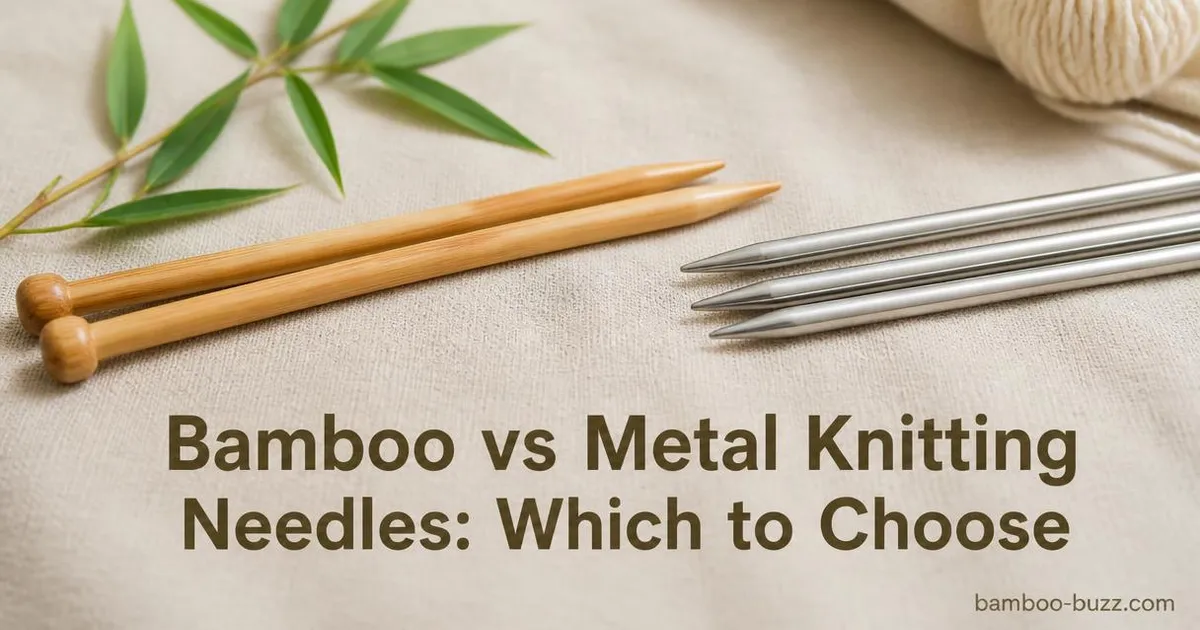
Bamboo vs Metal Knitting Needles: Which to Choose
The needle you hold through a long knitting session affects your speed, your stitches, and your hands. The wrong material can slow you down, drop your stitches, or make your hands ache before you finish a row.
Bamboo and metal needles solve different problems. Bamboo grips your yarn; metal lets it slide. Bamboo feels warm; metal stays cool. Neither one is better across the board – the right pick depends on what you are knitting and how you like to knit.
Key Takeaways
- Bamboo grips yarn better, making it forgiving for beginners and for slippery fibers like cotton or silk.
- Metal stitches faster thanks to a slick surface that lets stitches glide with little resistance.
- Bamboo feels warm and lightweight; metal feels cool and can be heavier in your hands.
- Metal lasts longer with almost no maintenance; bamboo can warp or develop rough spots over time.
- Yarn fiber and pattern complexity often matter more than skill level when choosing between the two.
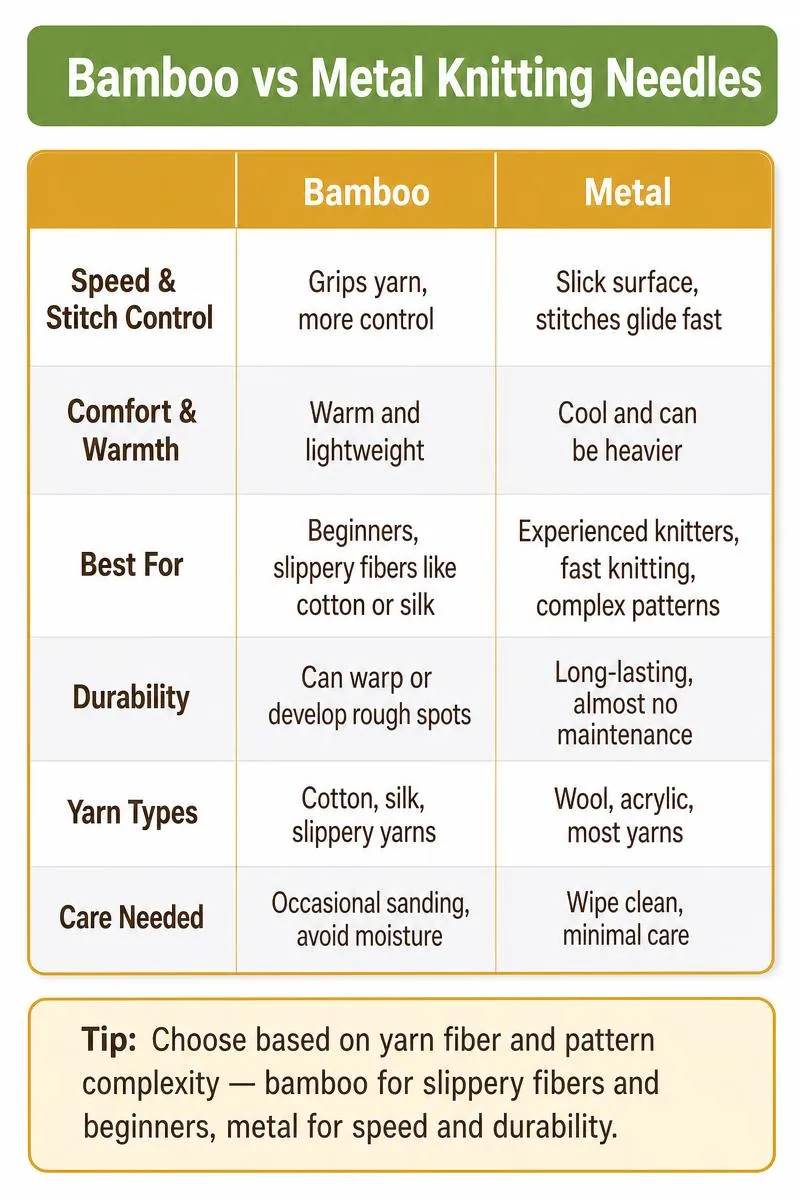
Quick Comparison: Bamboo Vs Metal Knitting Needles
| Factor | Bamboo | Metal |
|---|---|---|
| Speed & Stitch Control | Grips yarn, more control | Slick surface, stitches glide fast |
| Comfort & Warmth | Warm and lightweight | Cool and can be heavier |
| Best For | Beginners; slippery fibers | Experienced knitters; complex patterns |
| Durability | Can warp or develop rough spots | Long-lasting; minimal maintenance |
| Yarn Types | Cotton, silk, slippery yarns | Wool, acrylic, most yarns |
| Care Needed | Occasional sanding; avoid moisture | Wipe clean; minimal care |
What Are Bamboo Knitting Needles?
Bamboo knitting needles are made from bamboo grass that is dried, shaped, and polished into needle form. Some retail listings group bamboo needles together with wood needles, though bamboo is technically a grass rather than a hardwood.
Bamboo needles suit beginners, slippery yarns like cotton or silk, and knitting in warm climates where metal feels uncomfortable. The material is lightweight, warm to the touch, and produces a quiet stitching sound that some knitters prefer for relaxing sessions.
The tradeoff is durability. Bamboo can snag if the surface splinters, and the tips may lose their smoothness over time. Fast knitters often find bamboo too grippy for building speed.
Worth Reading Next
A concise material comparison that readers can use to understand how bamboo performs against another similar natural…
What Are Metal Knitting Needles?
Metal knitting needles are typically made from aluminum, stainless steel, or nickel-plated steel. The surface is hard, cold, and has very little friction against yarn.
Metal needles suit wool projects, detailed lace work, and complex patterns that require precise stitch definition. The slick surface lets stitches move quickly along the shaft, and the material resists bending, snapping, and moisture damage.
The downsides are mostly about comfort. Metal feels cold in winter, and some knitters find the rigid surface is harder on joints during long sessions. Stitches can also slide off the tips a little too easily if you set your work down mid-row.
Bamboo vs Metal Knitting Needles: Speed and Stitch Control
If you want to knit fast, metal is the clear winner. The slick metal surface lets stitches glide along the shaft with minimal drag. Experienced knitters who have settled into a rhythm often prefer metal for exactly that reason.
Bamboo wins for control. The slightly textured surface of dried bamboo grass creates friction that holds stitches in place, which means fewer dropped stitches and less scrambling to recover your work. That grip is especially useful when you are working with slippery yarns or learning a new technique.
The winner depends on whether you prioritize pace or precision. If you are confident in your stitches and want to cover ground, metal gets you there faster. If you are still building muscle memory or working with a yarn that slides, bamboo keeps things manageable.
Bamboo vs Metal Knitting Needles: Comfort and Warmth
Bamboo feels warm in your hands from the start and gets warmer as you knit. The lightweight build also reduces hand fatigue during long knitting sessions.
Metal feels cold when you first pick it up, especially in winter. Some knitters also report that the rigid surface is harder on joints during extended knitting, though experience varies from person to person.
Bamboo takes the comfort category for extended knitting. The warmth and lighter weight make a real difference when you are working through a large project or dealing with hand sensitivity.
A focused look at warmth and next-to-skin comfort comparing bamboo to merino wool-useful when discussing needle warmth…
Bamboo vs Metal Knitting Needles: Best Projects and Yarn Types
The yarn you are using often dictates which needle works better. Bamboo grips slippery yarns like cotton, bamboo viscose, and silk, keeping stitches from sliding off the tips. Bamboo also works well for simple patterns where speed is less important than keeping your stitches secure.
Metal pairs well with wool and textured yarns that already have some natural grip on the needle. The slick surface of metal needles is preferred for lace and complex cables, where you need stitches to move freely and stitch definition needs to be sharp.
There is no single winner here. The right choice depends on the fiber content of your yarn and how complex your pattern is.
Bamboo vs Metal Knitting Needles: Durability and Care
Metal needles resist bending, snapping, and moisture. Aluminum, stainless steel, and nickel-plated steel all hold their shape with only occasional cleaning. You can drop them or leave them in a project bag without worrying about damage.
Bamboo is more vulnerable. The material can warp if exposed to heat or humidity, and the surface may develop rough spots or splinters over time. Some knitters sand bamboo needles lightly to restore smoothness, but eventually the needles may need replacement.
Metal wins for longevity.
Which Should You Choose?
Your situation narrows the choice quickly.
You are a beginner. Go with bamboo. The grip gives you room to make mistakes without losing stitches, and the lighter weight is easier on your hands while you build technique.
You knit fast or work large wool projects. Metal is the better fit. The slick surface lets you maintain speed without fighting the needle.
You have hand fatigue or arthritis. Bamboo’s warmth and lighter weight reduce strain during long sessions. The quiet stitching also helps if you knit to relax.
You use slippery or fine yarns. Bamboo holds cotton, silk, and bamboo viscose yarns in place better than metal, which can let fine stitches slide right off.
You do detailed lace or colorwork. Metal gives you the sharp stitch definition and free-moving stitches that lace and colorwork demand.
Explore More
A practical comparison of bamboo and modal covering softness, durability, and care-handy for readers weighing long-term…
FAQs About Bamboo and Metal Knitting Needles
Should I choose metal or bamboo knitting needles?
It depends on your yarn and knitting style. Bamboo grips slippery yarns and feels lighter; metal is faster and more durable. Try bamboo if you are new or working with cotton and silk, and metal if you want speed or are knitting wool lace.
Which material is best for knitting needles?
No single material is best for everything. Metal is best for speed, durability, and wool projects. Bamboo is best for grip, comfort, and slippery yarns. Most experienced knitters keep both types on hand.
Why are bamboo needles a great choice for beginners?
Bamboo’s surface friction holds stitches in place, so beginners drop fewer stitches while learning. The lightweight feel also reduces hand fatigue during practice sessions.
How do I choose between bamboo and metal needles for my project?
Match the needle to your yarn fiber first. Slippery yarns like cotton and silk pair better with bamboo’s grip. Wool and textured yarns work well on metal’s slick surface. Then consider pattern complexity – lace and cables favor metal.
What are the most comfortable knitting needles?
For most knitters, bamboo needles are the most comfortable for extended sessions. Bamboo feels warm, weighs less than metal, and produces less clicking noise. Metal can feel cold and harder on joints during long knitting periods.
Do expensive knitting needles make a difference?
Higher-priced needles often have smoother finishes, more consistent sizing, and better join quality on circular sets. A well-finished bamboo needle or a nickel-plated metal needle will feel noticeably smoother than a budget version of the same material.
What are the best bamboo knitting needles?
Look for bamboo needles with a smooth, consistent finish and tightly joined cables if you are buying circulars. Brands that polish the bamboo thoroughly and use durable cord attachments tend to perform best and resist splintering longer.
What are considered the best knitting needles?
The best needles match your most common yarn and project type. Metal needles from aluminum, stainless steel, or nickel-plated steel are favored for lace and speed. Bamboo needles are favored for comfort and grip. Match the needle material to your project’s yarn weight and fiber – that single step does more to improve your knitting experience than any brand or price point.
Final Verdict
Keep both bamboo and metal needles on hand if you knit a variety of projects. Most knitters develop a clear preference over time, but that preference usually comes from trying both on different yarns and patterns.
If you are new, start with bamboo. Add a set of metal needles once you want to pick up speed or tackle lace work. Before your next purchase, match the needle material to your project’s yarn weight and fiber – that single step does more to improve your knitting experience than any brand or price point.
External References
- Is Bamboo Fabric Sustainable? Processing Truth vs. … – Deadsoxy
- NIGP CODES COLB – Longbeach
- Safety Assessment of Bamboo Viscose in Infant and … – Thecottonlane
- Migraine-like headaches associated with nickel allergy … – PMC – NIH (NCBI)
- SCA DIRECTORY OF OCCUPATIONS Fifth Edition – Dol
- Bastrop County Purchasing Vendor Information Form – Bastropcounty