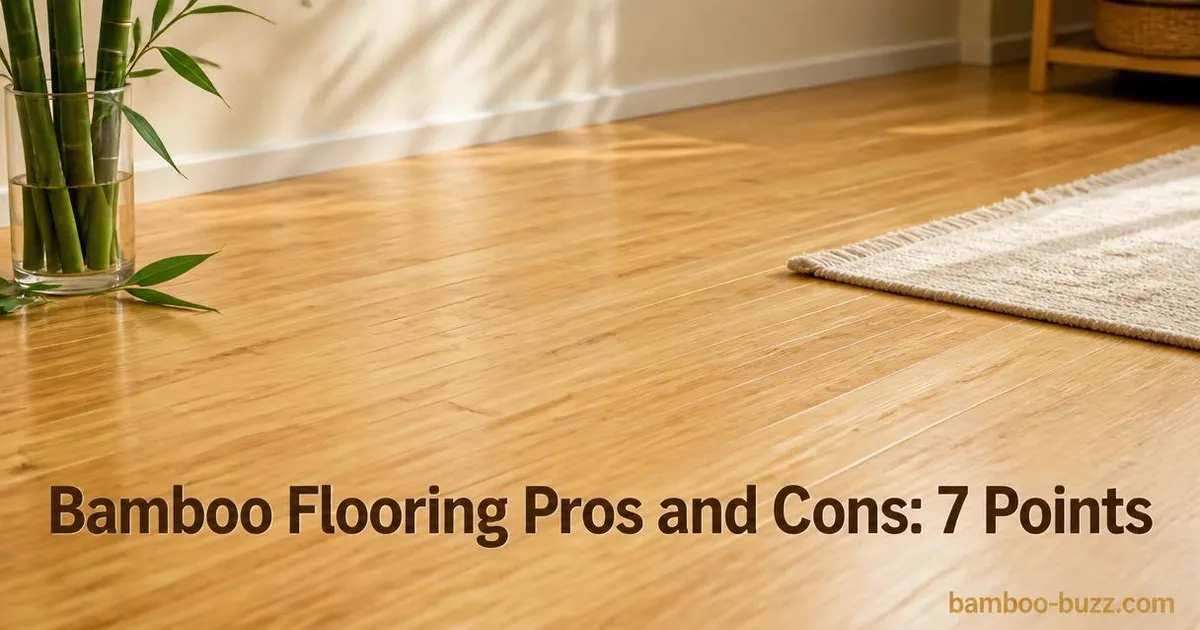
Bamboo Flooring Pros and Cons: 7 Points
Bamboo is a grass, not a tree – but walk into a flooring showroom and you’ll see it shelved right next to oak and maple. That placement makes sense on the surface, since bamboo flooring planks look and feel similar to hardwood once installed. But the marketing often glosses over real differences between solid, engineered, and strand-woven bamboo, and those differences change where you can install it, how long it lasts, and what you’ll pay.
Here’s the straight version: bamboo flooring has genuine advantages in cost and renewability for budget- and eco-focused buyers, but moisture sensitivity and inconsistent quality between manufacturers are real tradeoffs. Below you’ll find the three main construction types, seven specific pros and cons, and answers to the questions buyers ask most before committing.
Key Takeaways
- Bamboo flooring comes in solid, engineered, and strand-woven forms – each with different installation methods, location limits, and price points.
- Strand-woven bamboo is the hardest option, but no bamboo flooring is fully waterproof.
- Initial cost generally runs lower than comparable hardwood, though strand-woven styles can close that gap.
- Quality and lifespan vary significantly between manufacturers and construction styles, so brand research matters.
- Moisture sensitivity restricts bamboo flooring in basements and humid areas without proper management.
Explore More
A focused look at how bamboo bath mats perform in wet-room conditions-useful for readers worried about bathroom bamboo…
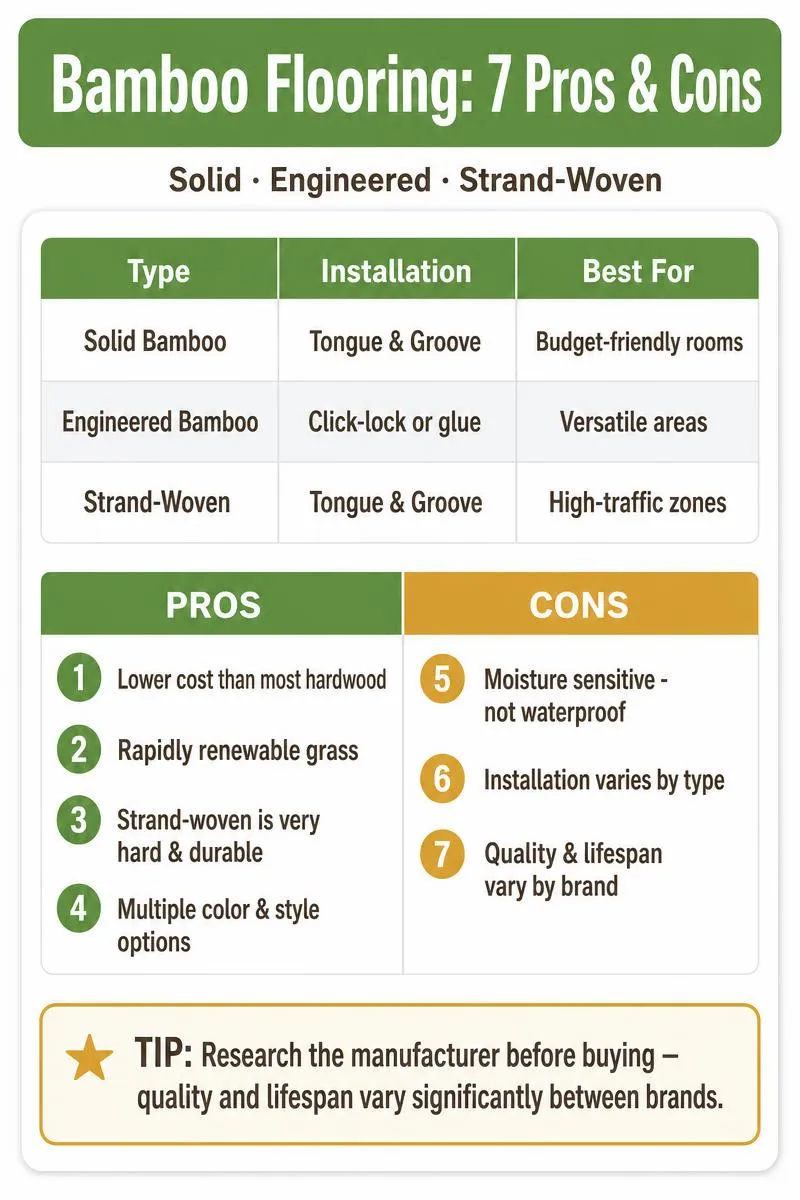
Bamboo Flooring Pros And Cons Side-by-Side
| Type | Installation | Best For |
|---|---|---|
| Solid Bamboo | Tongue & Groove | Budget-friendly rooms |
| Engineered Bamboo | Click-lock or glue | Versatile areas |
| Strand-Woven Bamboo | Tongue & Groove | High-traffic zones |
Types of Bamboo Flooring
Not all bamboo flooring is built the same way, and the construction type determines how you install it, where you can put it, and who should handle the job.
Solid Bamboo (Tongue-and-Groove)
Solid bamboo flooring is made from strips of mature bamboo stalks that are laminated together into planks with a tongue-and-groove edge profile. Installation typically requires professional glue-down or nail-down over a wood subfloor. Solid bamboo is generally not recommended below grade, meaning basements are usually off the table.
Engineered Bamboo
Engineered bamboo flooring combines a bamboo wear layer bonded to a plywood or fiberboard core. The layered construction handles humidity changes better than solid bamboo, and some engineered styles allow floating installation over a moisture barrier. That makes engineered bamboo more flexible for installation location, though the core material affects overall durability.
Strand-Woven Bamboo
Strand-woven bamboo is made by shredding bamboo fibers, mixing them with resin, and compressing the mixture under high heat and pressure. The result is a dense, hard plank that outperforms solid and engineered bamboo in indentation resistance. Strand-woven bamboo costs more than solid bamboo but still typically undercuts comparable hardwood.
Installation methods vary by product – some click together as floating floors, others require glue or nail down.
Explore More
Bamboo countertops pros and cons
A homeowner guide to the pros and cons of bamboo countertops, with durability and moisture-care details relevant to…
7 Pros and Cons of Bamboo Flooring
The first four cut in bamboo’s favor; the last three are where buyers get caught out.
1. Lower Initial Cost Than Most Hardwood
Bamboo flooring generally costs less than oak or other traditional hardwoods upfront. That said, the price range between solid, engineered, and strand-woven bamboo is wide enough that budget-focused buyers should compare all three before assuming the savings are automatic. Strand-woven bamboo, while still often cheaper than premium hardwood, sits at the top of the bamboo price ladder.
Installation costs also shift depending on whether the planks need glue-down, nail-down, or can float as a click-together system.
2. Rapidly Renewable Grass
Bamboo reaches harvest maturity far faster than the decades hardwood trees need. However, how sustainable the final product actually is depends on sourcing and manufacturing practices – adhesives used in lamination, transportation distance, and whether harvesting practices degrade the surrounding ecosystem all factor in. On raw renewability bamboo has a clear edge; once you count adhesives and shipping, the advantage narrows.
3. Hardness and Durability in Strand-Woven Styles
Strand-woven bamboo’s compressed fiber-and-resin construction makes it the hardest bamboo flooring option available. In practical terms, strand-woven bamboo resists dents and scratches better than solid or engineered bamboo, which makes it a strong pick for high-traffic households with kids or pets. Solid bamboo sits in a moderate hardness range, and engineered bamboo’s durability depends heavily on the core material and wear layer thickness.
4. Color and Style Options
Bamboo flooring comes in a range of colors and finishes, from natural light tones to darker carbonized shades and stained options. Carbonized bamboo is produced by steam-treating the fibers, which darkens the color but also softens the material slightly. Finishes range from matte to glossy, and wider plank styles are available from some manufacturers.
For kitchen floors specifically, bamboo’s color range gives design-focused buyers options that coordinate with both light and dark cabinetry – though bamboo’s moisture sensitivity still matters in kitchens.
5. Moisture Sensitivity and Water Risk
No bamboo flooring is fully waterproof. Bamboo planks can swell, warp, or delaminate when exposed to standing water or sustained high humidity. Neither type should be installed in bathrooms or other areas with regular water exposure.
Kitchens are a gray area – spills wiped up promptly are usually fine, but appliance leaks or chronic humidity can damage the planks. Basements require a moisture test and vapor barrier at minimum, and some manufacturers void warranties for below-grade installations regardless.
6. Installation Requirements Differ by Type
The DIY-vs-professional decision depends on which construction type you choose. Solid tongue-and-groove bamboo typically needs professional glue-down or nail-down installation over a wood subfloor, while engineered bamboo may allow floating installation with a click system, which experienced DIYers can install without a contractor. Strand-woven bamboo installation depends on the specific product – some click together, others require adhesive or fasteners.
Check the manufacturer’s instructions for your specific construction type before buying. Subfloor requirements also vary: some products need a perfectly flat surface, while others tolerate minor irregularities.
7. Quality and Lifespan Vary Between Manufacturers
The lifespan of bamboo flooring depends on construction quality, type, and maintenance. Strand-woven bamboo from a reputable manufacturer can last decades under proper care. Lower-quality solid or engineered bamboo from budget brands may show wear, chipping, or delamination sooner.
Refinishing is possible with solid and strand-woven bamboo if the wear layer is thick enough, but engineered bamboo with a thin bamboo veneer may not be refinishable. For long-term homeowners, brand research and warranty terms matter as much as the construction type you choose.
FAQs About Bamboo Flooring
What are the main disadvantages of bamboo flooring?
Moisture sensitivity is the biggest drawback – no bamboo flooring is waterproof, and sustained humidity or standing water can warp or delaminate planks. Quality inconsistency between manufacturers is the second major issue, since lower-grade bamboo can chip, scratch, or wear unevenly.
How long does bamboo flooring last?
Well-made strand-woven bamboo can last for decades with proper care. Budget-grade solid or engineered bamboo may need replacement sooner, though refinishing extends lifespan if the wear layer is thick enough.
Is bamboo flooring better than LVP?
They serve different priorities. Bamboo offers a harder surface and a real-material look that LVP mimics but doesn’t fully match. LVP is fully waterproof and easier to install as a floating floor, which makes it more practical for basements, bathrooms, and DIY projects.
Bamboo wins on renewability and hardness; LVP wins on water resistance and installation simplicity.
What is the healthiest flooring for a home?
Solid unfinished hardwood, tile, and natural linoleum are commonly cited as low-emission options. Bamboo flooring’s health profile depends on the adhesives and finishes used – some bamboo products emit low VOCs, while cheaper options may use adhesives that off-gas. Look for FloorScore or GREENGUARD Gold certification if indoor air quality is a concern.
What flooring choices do homeowners regret most?
Common regrets involve installing moisture-sensitive flooring in wet areas, choosing the cheapest option available and dealing with premature wear, and skipping subfloor preparation before installation. Bamboo flooring in a basement or bathroom without proper moisture management falls into the first category.
What is the safest flooring for seniors?
Slip-resistant surfaces and slight cushioning are key safety factors. Bamboo flooring is hard and can be slippery, especially when wet. Cork or rubber flooring offers more give underfoot, and textured LVP provides better slip resistance for senior households.
What flooring is commonly used in high-end homes?
Solid hardwood – particularly wide-plank oak, walnut, and hickory – remains the standard in high-end residential construction. Bamboo appears in high-end homes when the design priorities are sustainability or a specific aesthetic, but it hasn’t replaced hardwood as the default luxury choice.
What is the cheapest non-toxic flooring option?
Natural linoleum and solid unfinished hardwood with a low-VOC finish are among the most affordable options with strong indoor air quality profiles. Bamboo flooring falls in a middle range – cheaper than most premium hardwoods but more than some laminate or vinyl options, with toxicity depending on adhesives and finishes.
Explore More
Acacia vs bamboo cutting board
A material comparison that highlights hardness, scratch resistance, and care considerations readers can apply when…
Final Thoughts
Bamboo flooring fits buyers who want a lower-cost alternative to hardwood with a fast-growth renewable backstory – as long as they pick the right construction type for the room. The moisture and quality variables are manageable, but only if you know what you’re walking into.
Before ordering, check whether your room’s moisture levels and subfloor conditions suit solid, engineered, or strand-woven bamboo. Then order samples of both bamboo and LVP to see how each material actually looks under your home’s lighting – that side-by-side comparison tells you more than any spec sheet.
External References