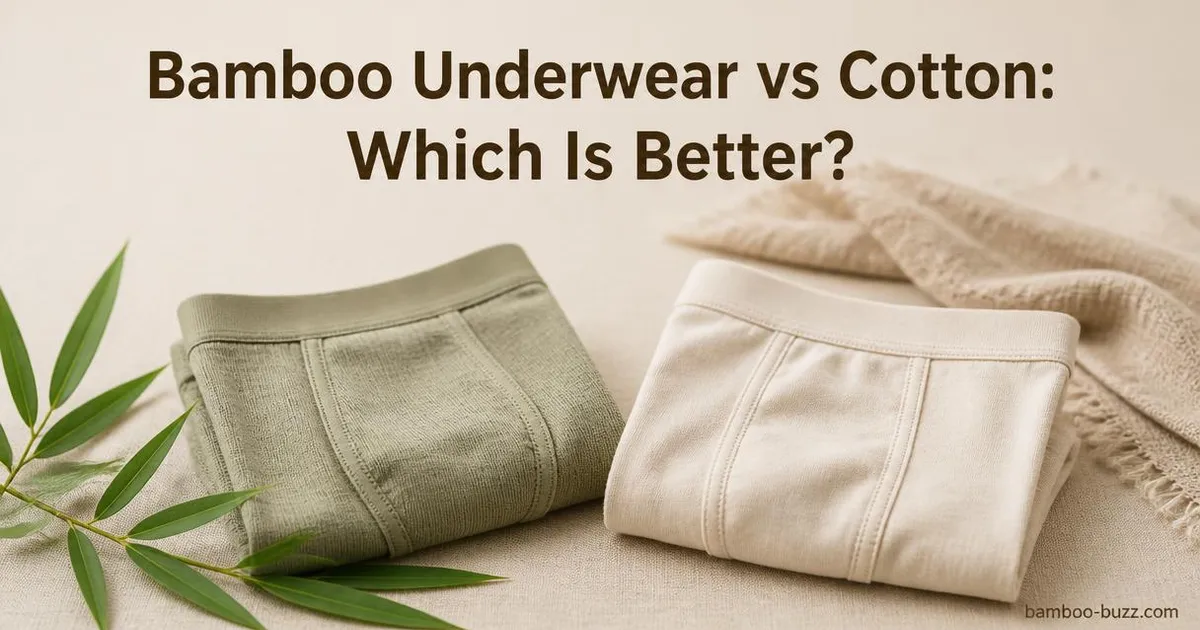
Bamboo Underwear vs Cotton: Which Is Better?
Bamboo viscose underwear feels silkier against your skin than cotton typically does, but turning bamboo stalks into fabric means dissolving them in chemical solvents. Cotton grows as a usable fiber right off the plant, but conventional cotton is one of the most water-intensive crops to grow.
Neither fabric is as straightforward as the marketing suggests. Bamboo viscose and cotton are the two main natural-fiber contenders for underwear. The choice between bamboo underwear vs cotton comes down to what you actually wear them through – heat, chafing, laundry day, or tight budgets – and which tradeoffs you can live with.
Key Takeaways
- Bamboo viscose feels softer and causes less chafing for many people, yet the chemical processing it requires gives some wearers pause
- Cotton tolerates hot washes and dryer heat, making it lower maintenance and generally longer-lasting in real-world use
- Breathability depends more on weave and fabric weight than fiber type; bamboo can feel cooler in heat but is not universally superior
- Bamboo underwear usually costs more per pair, and whether it lasts long enough to justify that price depends heavily on how you wash it
- Neither fabric wins cleanly on sustainability – cotton uses significant water, while bamboo viscose involves chemical solvents
You Might Also Like
A curated list of top bamboo boxers to compare fit and fabric feel if you want to try bamboo underwear.
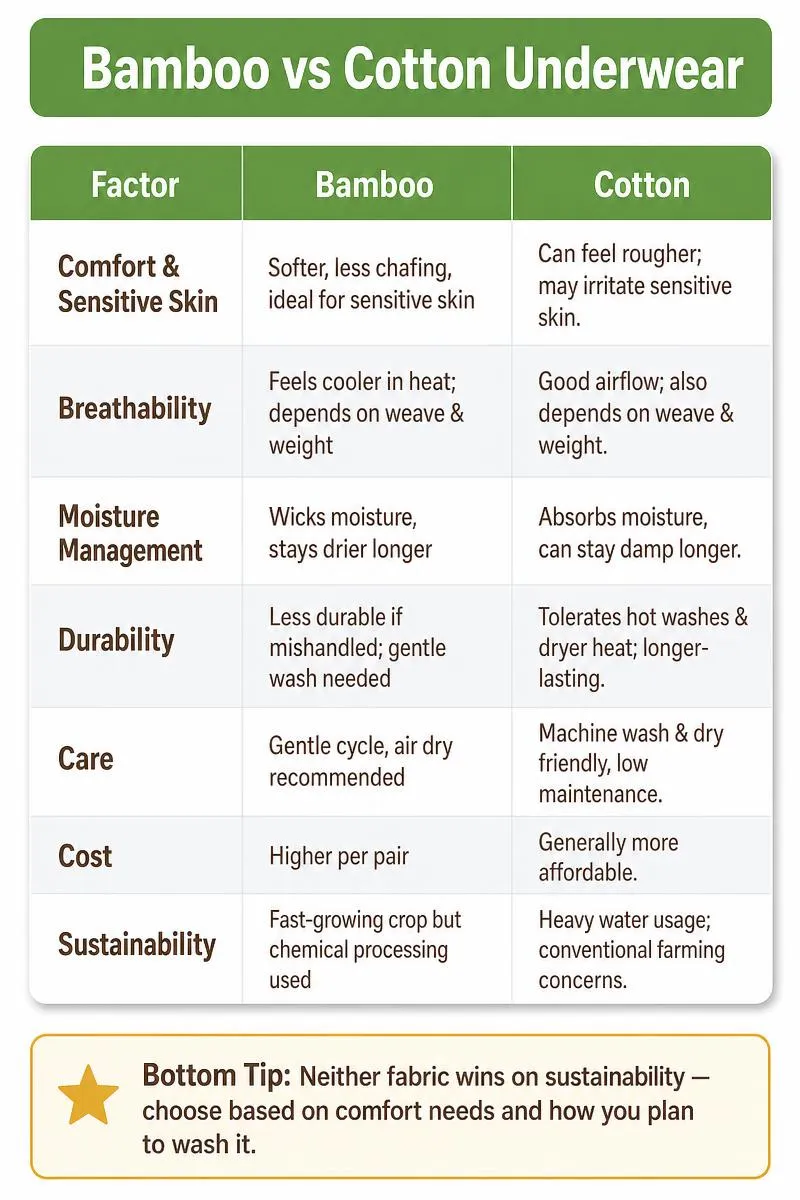
Quick Comparison: Bamboo Underwear Vs Cotton
| Factor | Bamboo | Cotton |
|---|---|---|
| Comfort & Sensitive Skin | Softer; less chafing | Can feel rougher; may irritate |
| Breathability | Feels cooler in heat; weave-dependent | Good airflow; weave-dependent |
| Moisture Management | Wicks moisture; stays drier | Absorbs moisture; may stay damp |
| Durability | Less durable; needs gentle wash | Tolerates heat; longer-lasting |
| Care | Gentle cycle; air dry | Machine wash & dry friendly |
| Cost | Higher per pair | More affordable |
| Sustainability | Fast-growing; chemical processing | High water use; farming concerns |
What Is Bamboo Underwear?
Bamboo underwear is made primarily from bamboo viscose, a regenerated cellulose fiber created by dissolving bamboo pulp in chemical solvents and extruding the result into threads. The raw material is bamboo, but the finished fiber shares more in common with rayon than with anything growing in a forest.
Bamboo viscose underwear works well in specific situations: hot weather, exercise, pregnancy, thigh-chafing prevention, and perimenopause night sweats. The fabric has a very soft hand feel, a stretchy drape that moves with your body, and moisture-wicking properties that pull sweat away from the skin.
The downsides are real, though. Bamboo viscose requires delicate care – cold washes, air drying, no bleach – and the chemical solvents involved in making the fiber raise questions for people concerned about manufacturing inputs. Bamboo underwear also costs more per pair than comparable cotton options.
What Is Cotton Underwear?
Cotton underwear is made from natural cotton fibers, usually knit into a jersey construction that stretches with a small amount of spandex blended in for shape retention. Cotton is the default underwear material for most people.
Cotton underwear works best for everyday wear, high-heat washing routines, budget-conscious buying, and people with chemical sensitivities who want a minimally processed fiber. Cotton is widely available, tolerates hot water and machine drying, and has a proven track record of durability over many wash cycles.
The weaknesses show up in specific scenarios. Heavier cotton weaves can retain moisture and cause chafing during exercise or in humid weather. Conventional cotton farming is water-intensive and typically uses pesticides, which is an environmental concern even if it does not affect the finished fabric directly.
Bamboo Underwear vs Cotton Underwear: Comfort and Sensitive Skin
Comfort is where bamboo viscose and cotton diverge most clearly, and where personal body type matters as much as fabric choice.
Bamboo viscose has a smoother, silkier hand feel than cotton jersey. The fibers are rounder at the surface, which reduces friction against skin. For people who experience thigh chafing, pregnancy skin sensitivity, or discomfort from seams and waistbands, bamboo viscose often feels noticeably gentler.
Cotton jersey has a slightly rougher texture, though the difference is small in well-made cotton underwear. Cotton does hold its shape better through repeated washing, which means the fit stays more consistent. Some people find that cotton boxer briefs ride up less than bamboo viscose boxers because the fabric has more structure and less drape.
One caveat: bamboo viscose processing uses chemical solvents. Residual processing chemicals can irritate sensitive skin. If you have strict chemical sensitivities, organic cotton skips both the viscose chemical process and conventional cotton pesticides.
Winner for comfort: Bamboo viscose wins on softness and chafing reduction for most wearers. Organic cotton is the better pick if your skin reacts to residual processing chemicals.
Explore More
An in-depth comparison of bamboo fiber and cotton covering softness, absorbency, and wear – ideal for readers weighing…
Bamboo Underwear vs Cotton Underwear: Breathability and Moisture Management
Breathability is more complicated than most marketing claims suggest, and the fiber type alone does not determine how cool underwear feels.
Bamboo viscose wicks moisture away from the skin and dries relatively quickly, which can make the fabric feel cooler in direct heat. Cotton absorbs sweat readily but holds onto moisture longer, meaning a cotton pair can feel damp and heavy in humid conditions. For people dealing with hot flashes, night sweats, or summer heat, bamboo viscose often feels more comfortable against damp skin.
Fabric weight and weave matter as much as fiber type, though. A lightweight cotton blend can outperform a heavy bamboo viscose knit on breathability. The weave determines how much air circulates through the fabric, and the weight determines how much moisture the fabric holds before feeling saturated.
For people prone to yeast infections, the goal is keeping skin dry. Bamboo viscose dries faster, which may reduce how long skin stays damp – though no underwear fabric eliminates infection risk on its own.
Some sources suggest bamboo viscose has odor-resistant properties, but no lab studies confirm that claim. Cotton does not have inherent odor resistance either, though cotton tolerates hot washing and bleach, which kills bacteria more effectively than the cold delicate cycle bamboo viscose requires.
Winner for breathability: Bamboo often feels cooler in direct heat, but fabric weight and weave matter more than fiber alone. There is no universal winner.
Bamboo Underwear vs Cotton Underwear: Durability and Care
Durability is where cotton pulls ahead decisively, and where bamboo viscose’s delicate nature becomes a practical problem.
Cotton underwear tolerates hot water washes, machine drying, and even bleach without significant damage. Cotton fibers are strong when wet and hold up through many wash cycles. Waistband elastic and stitching are usually the first things to fail on cotton underwear, not the fabric itself.
Bamboo viscose is weaker when wet and more prone to pilling, stretching out, and thinning over time. The care instructions typically call for cold water, gentle cycles, and air drying – which means you need to plan laundry around the fabric’s limitations. Skipping those instructions shortens the lifespan considerably.
Waistband degradation and stitch retention tend to happen faster on bamboo viscose underwear than on comparable cotton pairs. If you wash underwear in hot water as a hygiene measure – which many people do – bamboo viscose will not hold up. Cotton will, and that alone makes cotton the more practical choice for anyone who wants to toss underwear in with the rest of the laundry without thinking about it.
Winner for durability: Cotton wins for longevity and low-maintenance laundry routines by a clear margin.
Bamboo Underwear vs Cotton Underwear: Cost and Sustainability
Cost and sustainability both involve tradeoffs that neither fabric resolves cleanly.
Bamboo underwear typically costs more per pair than cotton, sometimes significantly more. The higher price reflects the processing costs of turning raw bamboo into viscose fiber, not necessarily higher quality construction. Whether bamboo viscose underwear lasts long enough to justify the higher price depends entirely on how carefully you wash and dry the fabric.
Cotton underwear is cheaper upfront and widely available at every price point. The lower cost means replacing worn-out pairs stings less, and cotton’s longer lifespan under normal washing conditions means you replace pairs less often.
On sustainability, both fabrics have real problems. Conventional cotton farming uses significant water and typically involves pesticides. Bamboo grows quickly with little irrigation and few pesticide inputs, which is a genuine advantage.
But turning bamboo into viscose requires chemical solvents, and those solvents have environmental and worker safety implications. Some manufacturers use closed-loop processing that recovers and reuses solvents, but not all do – and product labels rarely clarify which process was used.
Neither bamboo viscose nor cotton sheds microplastics, since both are cellulosic fibers rather than synthetic polymers. The sustainability concern with bamboo viscose is the chemical processing, not microplastic pollution.
Winner for cost and sustainability: Cotton wins on upfront cost. The sustainability question depends on whether you consider water-intensive farming or chemical processing the bigger problem – there is no clean winner.
You Might Also Like
Pros and cons of bamboo fabric
A balanced pros-and-cons breakdown of bamboo fabric that addresses durability, care, and environmental trade-offs…
Which Should You Choose?
The decision comes down to what your body and your laundry routine actually demand from underwear.
- If you struggle with thigh chafing or pregnancy discomfort: Bamboo viscose is worth trying. The softer hand feel and stretchy drape reduce friction in ways cotton jersey does not.
- If you need underwear that survives hot washes and industrial laundry: Cotton is the only sensible choice. Bamboo viscose will degrade quickly under hot water and dryer heat.
- If you are buying basics on a tight budget: Cotton gives you more pairs per dollar and lasts longer under rough washing. You will not notice the comfort difference if you have never worn bamboo viscose.
- If you experience hot climates, night sweats, or perimenopause heat: Try bamboo viscose. The moisture-wicking and quick-drying properties make a real difference when your skin is damp.
- If you have strict chemical sensitivities or prefer minimally processed fibers: Organic cotton skips both the viscose chemical solvents and conventional cotton pesticides. That makes organic cotton the safest choice for reactive skin.
FAQs About Bamboo and Cotton Underwear
Is bamboo underwear better than cotton?
Not universally. Bamboo viscose feels softer and wicks moisture better, making the fabric better for chafing, heat, and sensitive skin. Cotton is more durable, cheaper, and easier to care for. Which is better depends on your priorities.
Is bamboo underwear better than cotton for sensitive skin?
For most people, yes – bamboo viscose’s smoother fibers reduce friction against skin. The exception is skin that reacts to residual chemical processing agents in viscose. If that applies to you, organic cotton is the safer pick.
Are bamboo boxers better than cotton for stopping thigh chafing?
Usually, yes. Bamboo viscose has a silkier surface and more drape, which reduces the friction that causes chafing. Cotton jersey has more grip and texture, which can worsen chafing for some body types.
Is bamboo more breathable than cotton?
Not necessarily. Bamboo viscose often feels cooler in direct heat because the fabric wicks and dries faster, but fabric weight and weave determine breathability more than fiber type does. A lightweight cotton can out-breathe a heavy bamboo knit.
Is bamboo underwear antibacterial?
No confirmed evidence. Some sources suggest bamboo fabric has antibacterial properties, but no lab studies confirm it. Since viscose processing dissolves and regenerates the bamboo cellulose, most compounds from the raw bamboo plant do not carry through to the finished fiber.
Does bamboo underwear last longer than cotton?
No, generally the opposite. Bamboo viscose is weaker when wet, more prone to pilling, and requires gentle washing. Cotton tolerates hot water and dryer heat and typically lasts longer under normal use.
Is bamboo underwear worth the extra cost?
That depends on how you wash the fabric. If you follow the care instructions – cold water, gentle cycle, air drying – bamboo viscose underwear can maintain its comfort long enough to justify the price. If you want to toss underwear in a hot wash and dryer, the extra cost is wasted because the viscose will degrade quickly.
How should I wash bamboo viscose underwear?
Cold water, gentle or delicate cycle, no bleach, air dry. Hot water and machine drying weaken viscose fibers and cause shrinking, pilling, and loss of stretch. If that care routine does not fit your life, cotton is the better choice.
What are the disadvantages of bamboo undies?
Higher cost, delicate care requirements, shorter lifespan under normal washing, and chemical processing concerns. Bamboo viscose also loses shape faster than cotton if not washed carefully.
Does bamboo give off microplastics?
No. Bamboo viscose is a cellulosic fiber, not a synthetic polymer, so the fabric does not shed microplastics. The environmental concern is the chemical solvents used in viscose processing, not plastic pollution.
Final Verdict
Neither bamboo viscose nor cotton is the single best underwear fabric for everyone. Bamboo wins on immediate comfort, softness, and heat relief – cotton wins on durability, cost, and laundry tolerance. People with chemical sensitivities may find organic cotton the safest middle ground, skipping both the viscose solvents and conventional cotton pesticides.
The most practical next step: buy one pair of bamboo viscose and one pair of cotton in the same style. Wear each for a few days, wash each the way you normally would, and see which one you reach for first. Your own wear test tells you more than any comparison can.
External References
- Carbon disulfide exposure assessment in a Chinese … – ACADEMIA (.edu)
- Resistance of natural bamboo fiber to microorganisms and … – NCSU (.edu)
- Carbon disulfide removal from gasoline fraction using zinc … – NIH (NCBI)
- WINDS Model Demonstration with Field Data from a … – USDA
- Is Bamboo Fabric Safe? Viscose vs Lyocell Ranked (2026) – Fibercheck
- Agricultural Water Management – USDA