Bamboo Fiber vs Cotton: Which Is Better?
You’re standing in the bedding aisle or scrolling through baby clothes, and the choice keeps coming down to the same two fibers: bamboo or cotton. Both are plant-based, both get marketed as soft and breathable, and both have a version of the word ‘natural’ slapped on the packaging somewhere.
Here’s the catch: most fabric labeled ‘bamboo’ isn’t what you’d picture. The bamboo plant gets chopped up and dissolved in solvents like sodium hydroxide and carbon disulfide to make viscose rayon, not spun directly into thread the way cotton is. That processing detail shapes how the fabric feels, how it holds up in the wash, and whether the environmental claims behind it actually hold water.
Key Takeaways
- Most bamboo fabric sold today is viscose or rayon made from bamboo pulp, not mechanically processed natural bamboo fiber.
- Bamboo tends to feel softer and more moisture-wicking than standard cotton, but requires gentler washing.
- Organic cotton avoids pesticide concerns; conventional cotton uses significant water and agricultural chemicals.
- Some sources suggest bamboo uses less water than cotton to produce, though processing methods vary widely.
- Bamboo products often cost more upfront than comparable cotton items.
Also Worth Checking Out
A clear comparison of bamboo fiber and modal covering processing, softness, and everyday use.
Comparing the Top Bamboo Fiber Vs Cotton
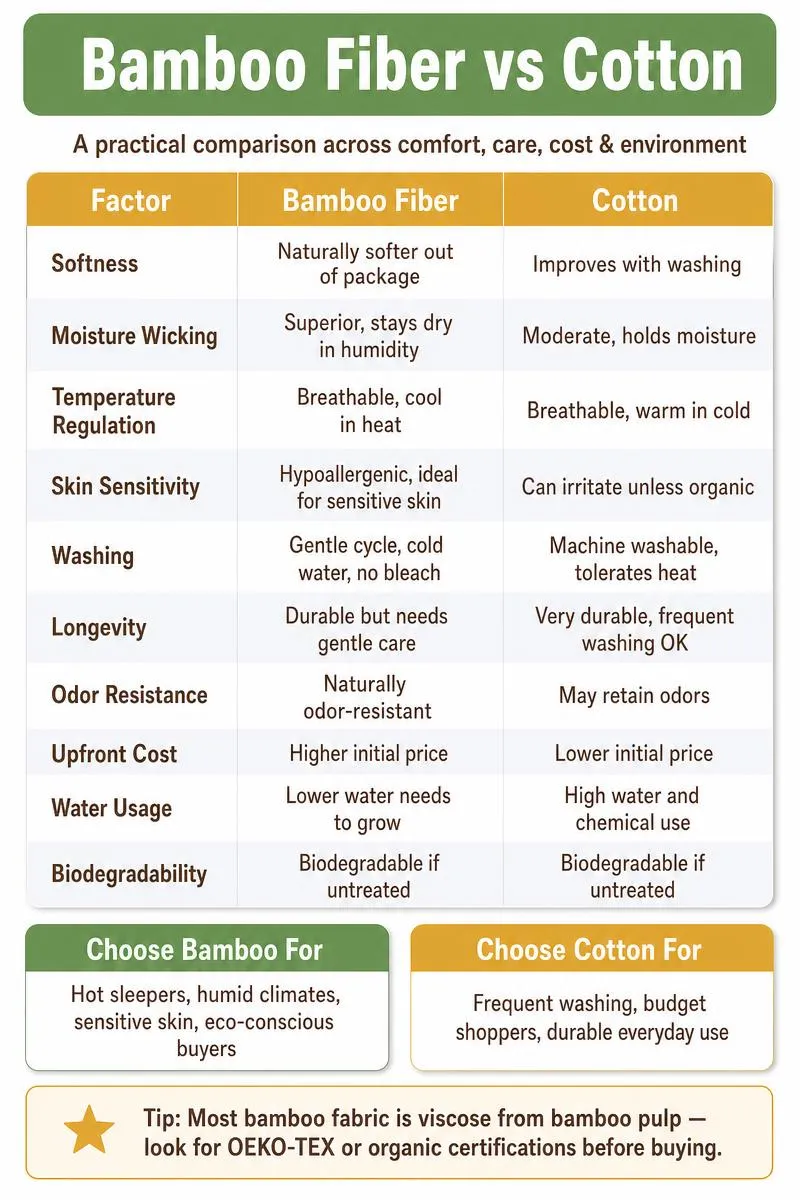
| Factor | Bamboo Fiber | Cotton |
|---|---|---|
| Softness | Naturally softer out of package | Improves with washing |
| Moisture Wicking | Superior, stays dry in humidity | Moderate, holds moisture |
| Temperature Regulation | Breathable, cool in heat | Breathable, warm in cold |
| Skin Sensitivity | Hypoallergenic, ideal for sensitive skin | Can irritate unless organic |
| Washing | Gentle cycle, cold water, no bleach | Machine washable, tolerates heat |
| Longevity | Durable but needs gentle care | Very durable, frequent washing OK |
| Odor Resistance | Naturally odor-resistant | May retain odors |
| Upfront Cost | Higher initial price | Lower initial price |
| Water Usage | Lower water needs to grow | High water and chemical use |
| Biodegradability | Biodegradable if untreated | Biodegradable if untreated |
What Is Bamboo Fiber?
Bamboo fiber starts as bamboo grass – one of the fastest-growing plants on the planet – but getting from stalk to fabric usually means a chemical process. The bamboo gets broken down into cellulose pulp, then dissolved in solvents like sodium hydroxide and carbon disulfide to create a viscous liquid that’s extruded into fibers. The result is bamboo viscose, also called bamboo rayon.
A much less common method mechanically crushes the bamboo and extracts fibers directly, producing bamboo linen – but you’ll rarely see that on retail shelves.
Bamboo fiber works best for hot-weather clothing, base layers, baby garments, and sheets for hot sleepers. The fabric tends to feel silky against the skin, wicks moisture away from the body, and breathes well in humid conditions.
The main weakness: most bamboo fabric relies on chemical processing, and durability varies depending on the manufacturer. Label confusion makes things harder – ‘rayon from bamboo’ and true bamboo linen are very different products, but packaging often blurs the line.
What Is Cotton?
Cotton is a natural fiber harvested from cotton bolls, then ginned, carded, and spun into yarn with relatively minimal processing for standard versions. You’ve likely worn cotton your entire life – t-shirts, jeans, bed sheets, towels – and the familiarity is part of the appeal. Organic cotton skips synthetic pesticides and fertilizers, which matters if you’re concerned about agricultural chemical exposure.
Cotton is best for everyday apparel, bedding, towels, and baby clothing. Organic cotton in particular has a strong track record for baby items where chemical sensitivity is a concern.
Cotton’s strengths include wide availability, easy care, and reliable breathability. The main weakness is that conventional cotton farming uses significant water and pesticides compared to other fiber crops. Lower-grade cotton can also feel rough or pill over time, especially in lighter weaves.
Bamboo Fiber vs Cotton: Comfort and Breathability
The comfort gap shows up in three places: the first touch, a humid night, and how sensitive skin reacts after a week of wear.
1. Out-of-Package Softness
Bamboo viscose typically feels softer than standard cotton right out of the package. The rayon fibers have a smooth, round cross-section that gives bamboo fabric a silky or suede-like hand-feel. Cotton feels crisp when new in tighter weaves like percale, or soft in looser weaves like flannel and sateen.
High-quality long-staple cotton can match bamboo’s softness, but standard cotton usually starts a step behind.
2. Moisture Wicking and Temperature Regulation
Bamboo fiber pulls moisture away from the skin and disperses it across the fabric surface, which helps in humid climates and for people who sleep hot. Cotton absorbs moisture well but holds it against the body, so a damp cotton shirt stays damp in muggy weather.
If you overheat at night or live somewhere sticky, bamboo viscose sheets and clothing tend to feel cooler against the skin than cotton equivalents.
3. Skin Sensitivity
Organic cotton is the go-to for people with allergies or chemical sensitivities because organic farming and minimal processing mean fewer residues on the finished fabric. Bamboo viscose has a smooth surface that reduces friction against sensitive skin, which some people find more comfortable.
The trade-off: bamboo viscose goes through chemical solvents during manufacturing, and trace residues can occasionally irritate very sensitive skin. Looking for OEKO-TEX certification on bamboo products helps confirm that residual chemicals meet safety thresholds.
Worth Reading Next
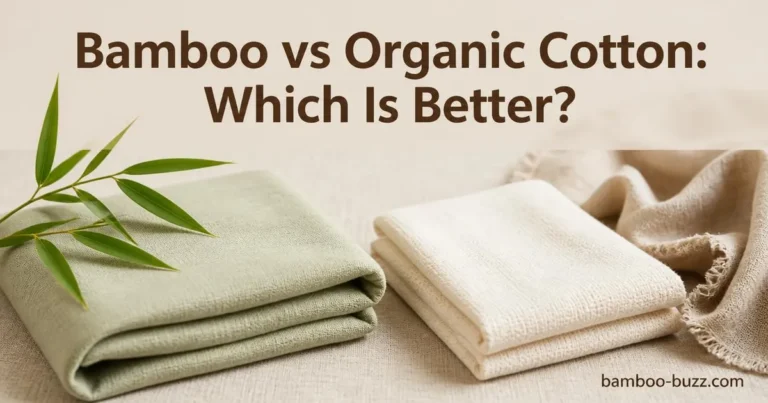
A closer look at how bamboo sheets compare to cotton percale for hot sleepers and breathability.
Bamboo Fiber vs Cotton: Durability and Care
Care requirements diverge fast here – one fiber shrugs off a hot wash, the other needs gentle handling to stay soft.
1. Washing Requirements
Bamboo viscose usually needs cold water and a gentle cycle – hot water and aggressive agitation can weaken the fibers and cause shrinkage. Cotton tolerates hot water, regular cycles, and machine drying without much trouble, which is why cotton dominates towels and frequently-washed items like underwear and kids’ clothes.
2. Longevity
High-quality cotton holds up well over repeated washing and resists pilling better than lower grades. Bamboo viscose can pill and thin over time, especially if washed in warm water or dried on high heat. Both fibers resist shrinking when manufactured properly, but bamboo requires more attention to care labels to maintain its original shape and texture.
Cotton’s tolerance for rougher handling gives the edge in expected lifespan for items you wash weekly.
3. Stain Release and Odor Resistance
Cotton releases stains reasonably well, especially in hot water with standard detergents. Bamboo viscose is trickier – the fibers can hold onto stains if exposed to heat, and bleach weakens the rayon structure.
Bamboo contains a compound called bamboo kun that’s often credited with antibacterial properties, though most of it doesn’t survive the viscose process. Cotton has no equivalent antibacterial mechanism, but its washability makes odor management straightforward with regular laundering.
Bamboo Fiber vs Cotton: Cost and Value
Price is where these two fibers separate fastest, and the math changes depending on how often you wash the item.
1. Typical Price Ranges
Bamboo sheets and clothing generally cost more than comparable cotton items. A set of bamboo viscose sheets typically runs higher than a mid-range cotton percale or sateen set at the same store. Bamboo baby clothes and base layers also sit at a premium compared to conventional cotton equivalents.
2. Cost Per Wear
The higher upfront cost of bamboo makes less sense for items you wash frequently and aggressively, since the fibers degrade faster under rough laundering. Cotton’s lower price and wash tolerance give cotton a better cost-per-wear for everyday basics like t-shirts, socks, and towels.
For items washed less often – like dressier bamboo tops or seasonal bedding – the premium feels more reasonable.
3. Budget Alternatives
Conventional cotton remains the most affordable option for most categories and is widely available at every price tier. Bamboo-blend fabrics, which mix bamboo viscose with cotton or polyester, offer some of bamboo’s softness at a lower cost than pure bamboo. These blends sacrifice some moisture-wicking performance but make bamboo products accessible at a lower budget.
Bamboo Fiber vs Cotton: Environmental Impact
The environmental story flips depending on whether you judge the crop or the factory.
1. Agricultural Inputs
Bamboo grows rapidly with little need for pesticide or irrigation – the plant regenerates from its root system after harvest and can reach maturity in a few years. Conventional cotton is water- and pesticide-intensive, requiring significant irrigation and chemical inputs to maintain yields.
2. Processing
The chemical viscose process used for most bamboo fabric dissolves bamboo pulp in solvents, some of which can be recovered in closed-loop systems – though not all manufacturers use closed-loop methods. Cotton ginning and spinning require minimal chemical processing for raw cotton, but conventional cotton relies on agricultural chemicals earlier in the supply chain.
Organic cotton processing avoids both agricultural chemicals and the solvents used in viscose production.
3. Biodegradability and End-of-Life
Both bamboo viscose and cotton are biodegradable in principle, since both are cellulosic fibers. Bamboo viscose breaks down over time in the right conditions, though chemical residues from processing can complicate decomposition. Cotton biodegrades more cleanly, especially organic cotton without finishing treatments.
Worth Reading Next
Explains how viscose processing differs from natural silk and what that means for environmental impact and feel.
Which Should You Choose?
The right pick depends less on the fiber and more on how you plan to live with it.
1. Hot Sleepers or Humid Climates
Bamboo fiber’s moisture wicking and temperature regulation make it the stronger pick for people who overheat at night or live in muggy weather. Bamboo viscose sheets handle night sweats better, and bamboo clothing dries faster on the body than cotton in humid conditions.
2. Easy Care and Frequent Washing
Cotton, especially mid-weight or organic, holds up to regular laundering in hot water and dryer heat. If you want fabrics that survive your standard wash routine without special handling, cotton is the practical choice.
3. Babies or Sensitive Skin
Organic cotton is the safer pick if chemical sensitivity is your main concern, since organic farming and minimal processing mean fewer potential irritants. Bamboo viscose wins on softness – the smooth fiber surface feels gentler against skin than rougher cotton weaves.
For baby items specifically, organic cotton has the longer track record and more transparent certification standards.
4. Budget-Conscious Shoppers
Conventional cotton offers lower prices and wide availability across every product category. You’ll find it everywhere, at every price point, without needing to research manufacturers or certification labels.
5. Eco-Conscious Buyers
Look for mechanically processed bamboo linen or certified organic cotton if environmental impact drives your decision. Avoid generic bamboo rayon unless the supplier is transparent about their processing methods – closed-loop viscose systems recover solvents, but many manufacturers don’t disclose whether they use that approach.
FAQs About Bamboo Fiber and Cotton
Is bamboo fabric really just rayon?
For the most part, yes. Most fabric sold as ‘bamboo’ is viscose rayon made from bamboo cellulose. True bamboo linen, made by mechanically extracting fibers, exists but is rare in retail products.
Is rayon made from bamboo toxic to wear or an endocrine disruptor?
No evidence suggests finished bamboo viscose fabric acts as an endocrine disruptor. Trace chemical residues from the viscose process are the main concern, and OEKO-TEX certified products meet safety thresholds for skin contact.
Is bamboo fabric healthier than cotton?
Neither fiber is inherently healthier. Organic cotton avoids pesticide residues, and bamboo viscose offers a smoother surface that some people find more comfortable against sensitive skin. Your priorities – chemical transparency versus softness – determine which is the better fit.
Is bamboo fabric good in hot weather?
Yes. Bamboo viscose wicks moisture and breathes well, making it a solid choice for hot-weather clothing and bedding. It stays drier through humid nights than most cotton weaves.
Do bed bugs like bamboo sheets?
Bed bugs are attracted to body heat and carbon dioxide, not specific fabric types. Bamboo sheets don’t repel bed bugs any more than cotton sheets do. Tighter weaves in either fiber can make it slightly harder for bed bugs to hide in seams, but material choice alone doesn’t prevent infestations.
Is rayon from bamboo a microplastic?
No. Rayon from bamboo is a cellulosic fiber derived from plant material, not a petroleum-based synthetic. Microplastics come from synthetic fibers like polyester and nylon, not from bamboo viscose or cotton.
Is bamboo fiber safer than plastic?
Yes – both fibers biodegrade instead of shedding persistent plastic particles.
What are the downsides of bamboo fabric?
Most bamboo fabric requires chemical solvents to manufacture, care labels demand cold water and gentle cycles, and the fabric can pill or thin over time. Cost is also higher than comparable cotton items in most categories.
Is bamboo or cotton better for babies?
Organic cotton has the longer safety track record and clearer certification standards for baby products. Bamboo viscose feels softer, which some babies prefer against their skin. If chemical sensitivity is a concern, organic cotton is the more conservative choice.
Final Verdict
There’s no single winner between bamboo fiber and cotton – the right choice depends on whether you prioritize softness, easy care, budget, or chemical transparency. Bamboo viscose delivers a silkier feel and better moisture wicking for hot sleepers and humid climates. Cotton wins on washability, availability, and a cleaner processing path when you choose organic.
If avoiding chemical processing matters most, go with certified organic cotton. If you need moisture-wicking softness and don’t mind gentler washing, bamboo viscose is worth the premium. Read the fabric label – look for ‘100% bamboo viscose’ or ‘100% organic cotton’ – rather than trusting front-of-package marketing that says ‘bamboo’ or ‘natural’ without specifying what’s actually in the weave.
External References
- Resistance of natural bamboo fiber to microorganisms and … – NCSU (.edu)
- Natural fibers in sustainable materials: extraction technologies … – NIH (NCBI)
- OEKO-TEX® new regulations 2020 – OEKO-TEX
- Viscose Fabric Environmental Impact | Sustainable Fashion – Commonobjective
- Viscose, Rayon, Modal, Lyocell, Cupro: Decoding Man- … – Earthday
- Antimicrobial Properties of Bamboo Fibres – Biomedres