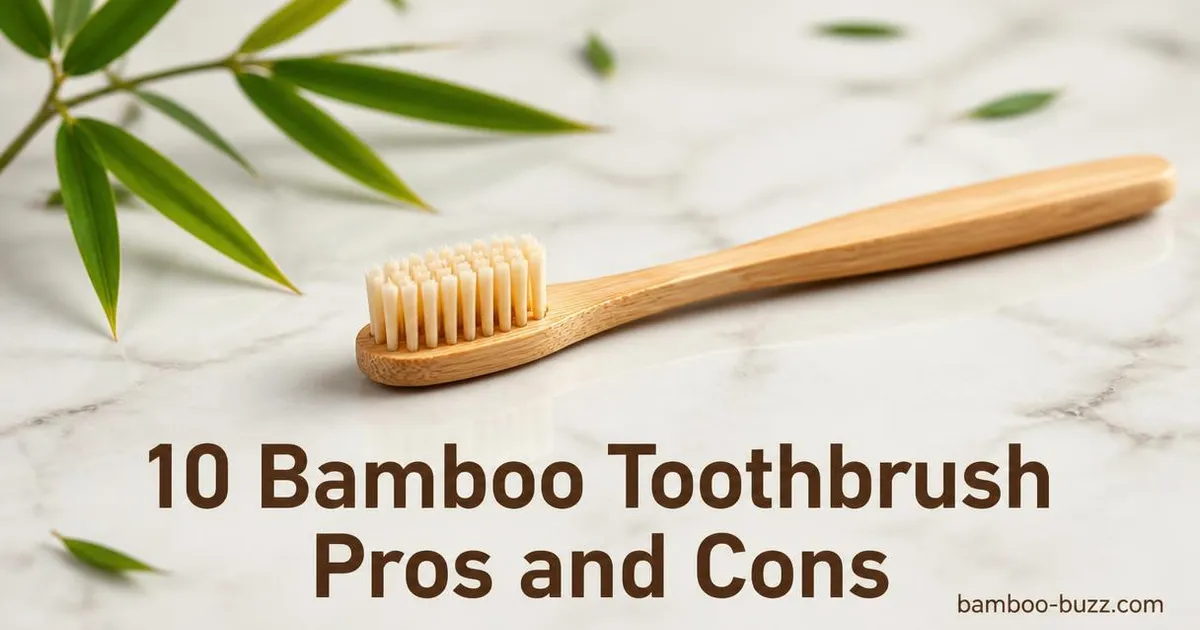
10 Bamboo Toothbrush Pros and Cons
The real question is whether switching is genuinely better or mostly marketing. Most people assume a bamboo toothbrush is a fully plant-based product. The handle is – but the bristles are almost always nylon, and that detail changes the disposal story more than you might expect.
The bamboo handle does replace a piece of petroleum-based plastic that would otherwise sit in a landfill indefinitely. But the full picture includes water-intensive farming, overseas shipping, and bristles that need to be pulled out before the handle can go in a compost bin.
Ten tradeoffs below cover cleaning power, durability, disposal reality, and the environmental costs that never show up on the packaging.
Key Takeaways
- Bamboo handles replace plastic, but bristles are almost always synthetic nylon – so the brush is rarely compost-ready as-is.
- How you brush matters more than handle material; cleaning performance is broadly similar to plastic toothbrushes.
- Bamboo produces a compound called bamboo kun that resists some bacteria, but damp handles can still mold without proper drying.
- Full lifecycle impact includes water-intensive farming, overseas shipping emissions, and varnish or lacquer coatings on some brands.
- Handle durability varies widely – some crack or splinter – and sustainability claims are not always transparent across brands.
Comparing the Top Bamboo Toothbrush Pros And Cons
| Pros | Cons |
|---|---|
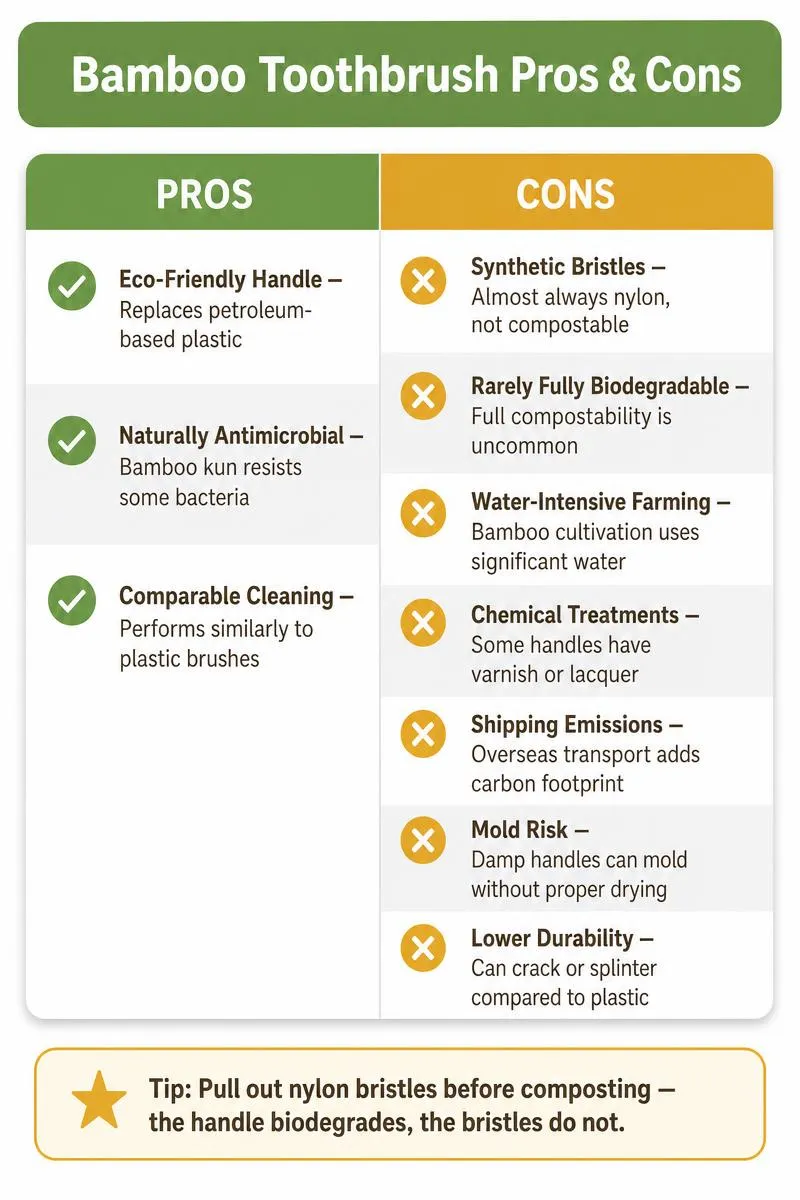
| Eco-Friendly Handle — Replaces petroleum-based plastic | Synthetic Bristles — Almost always nylon, not compostable |
| Naturally Antimicrobial — Bamboo kun resists some bacteria | Rarely Fully Biodegradable — Full compostability is uncommon |
| Comparable Cleaning — Performs similarly to plastic brushes | Water-Intensive Farming — Bamboo cultivation uses significant water |
| – | Chemical Treatments — Some handles have varnish or lacquer |
| – | Shipping Emissions — Overseas transport adds carbon footprint |
| – | Mold Risk — Damp handles can mold without proper drying |
| – | Lower Durability — Can crack or splinter compared to plastic |
Are Bamboo Toothbrushes Actually Better?
For reducing plastic, yes. For cleaning your teeth, not inherently.
Dentists generally agree that technique matters more than the tool. A soft-bristled brush used with proper form removes plaque effectively regardless of whether the handle is bamboo or plastic. Bristle stiffness, brush head size, and your brushing habits drive the results – not the handle material.
Bamboo toothbrushes are adequate for most users. The bristles on reputable brands are the same nylon you would find on a conventional toothbrush, so plaque removal is broadly comparable. Where bamboo falls short is durability and disposal simplicity – not cleaning power.
Explore More
Bamboo charcoal vs activated charcoal
A clear comparison of bamboo charcoal and activated charcoal, helpful for readers curious about charcoal-infused…
10 Pros and Cons of Bamboo Toothbrushes
Ten tradeoffs trace the full lifecycle of a bamboo toothbrush, from how the raw material is grown to what happens after you finish using the brush. Some represent clear improvements over plastic; others complicate the disposal and sustainability story.
1. Bamboo Handles Replace Petroleum-Based Plastic
A standard plastic toothbrush handle is polypropylene – a petroleum-derived plastic that does not biodegrade. The handle on a bamboo toothbrush comes from a grass species that regenerates without replanting after harvest.
If your goal is eliminating petroleum-based plastic from your bathroom routine, the handle checks that box. The tradeoff is that the rest of the brush – the bristles – usually does not.
2. Natural Antimicrobial Properties
Bamboo contains a compound called bamboo kun that gives the plant mild resistance to bacteria and fungi. This resistance is one reason bamboo handles may hold up better than plastic in terms of bacterial growth on the surface.
The catch is that bamboo kun exists in the raw plant. How much survives the cutting, shaping, and finishing processes varies by manufacturer. Some sources suggest the antimicrobial effect is reduced but not eliminated by processing, though studies specific to finished toothbrush handles are limited.
3. Cleaning Performance Is Comparable to Plastic
The bristles do the cleaning, and most bamboo toothbrushes use the same nylon bristle types as conventional brushes. Soft, medium, and firm options are available, and the handle material does not change how the bristles contact your teeth.
If you are worried that switching to bamboo means compromising on oral care, bristle performance is broadly the same. Your brushing technique – consistent duration, gentle pressure, reaching all surfaces – matters far more than what the handle is made from.
4. Bristles Are Almost Always Synthetic
The bristles on a bamboo toothbrush are typically nylon – the same petroleum-based material as on a plastic brush. Some brands use castor-oil-based nylon or bio-based polyester, but pure plant-based bristles that actually clean teeth are rare.
Nylon is used because nylon is durable, flexible, and holds its shape after repeated wetting. Plant-based alternatives tend to fray or lose stiffness quickly, which is why even brands marketing themselves as fully biodegradable usually still use nylon. If a brand claims plant-based bristles, check whether the bristles are a castor-oil nylon blend or fully plant-based filaments.
5. Full Biodegradability Is Rare in Practice
A bamboo handle will break down in a compost pile or municipal green waste bin. The nylon bristles will not. To compost the handle, you need to pull the bristles out with pliers first – and those bristles go in the trash.
Even brands claiming compostable bristles face certification gaps, and municipal composting facilities may not accept them. For most people, the honest disposal routine is: pull bristles, compost the handle, landfill the bristles. That routine beats a fully plastic brush, but it is not zero-waste.
6. Bamboo Farming Uses Significant Water
Bamboo is often described as a low-impact crop because bamboo is typically grown without pesticides and sequesters carbon. Both claims have real basis. But bamboo cultivation also requires substantial water, particularly in regions where irrigation supplements rainfall.
The environmental footprint of a bamboo toothbrush starts at the farm, not the bathroom. If water conservation is a priority for you, the agricultural stage of the lifecycle is worth weighing alongside the plastic-reduction benefit of the finished handle.
7. Some Handles Receive Chemical Treatments
Raw bamboo has a natural surface that can splinter and degrade with moisture exposure over time. To prevent splintering and degradation, some manufacturers treat handles with coatings – including varnishes, lacquers, or chemical sealants – that extend the life of the brush but are not always disclosed on packaging.
A coated handle may resist mold and splintering better than an uncoated one, but a synthetic coating can complicate composting. Brands that specify an uncoated or natural-oil-finished handle give you a clearer disposal path than brands that stay vague about the finish.
8. Overseas Shipping Adds to Carbon Footprint
Bamboo toothbrushes sold in North America and Europe are typically manufactured in China, where the raw material is grown. Shipping finished brushes across the Pacific adds freight emissions to the product lifecycle that a locally made plastic brush would not carry.
Some brands source bamboo closer to sale markets or manufacture domestically, which reduces transport distance. But the dominant supply chain still involves ocean freight from Asia, which is a real carbon cost even if the handle itself is biodegradable.
9. Mold Can Develop on Damp Handles
Bamboo is a porous natural material. If a bamboo toothbrush sits in a damp holder or a humid bathroom, the handle can develop mold or mildew – something that does not happen with plastic.
Rinsing the handle after use and storing the brush upright in a well-ventilated spot reduces mold risk. Some users keep their bamboo toothbrush in a holder that allows airflow on all sides, rather than a closed cup. If you live in a humid climate, the handle needs more drying attention than a plastic brush ever would.
10. Durability Can Fall Short of Plastic
Polypropylene handles are tough, waterproof, and rarely crack under normal use. Bamboo handles can split, crack, or splinter – especially if a bamboo handle gets wet repeatedly without drying, or if the brush is stored bristle-side-down in standing water.
Heavy-handed brushers who press hard may notice the handle flexing or developing hairline cracks over time. Most dental professionals recommend regular toothbrush replacement, and a bamboo handle that is not dried properly between uses can show wear before a plastic one would.
How to Choose a Bamboo Toothbrush
A few practical checks separate genuinely thoughtful bamboo toothbrushes from brands leaning on vague environmental marketing.
Look for bristle transparency. Brands that specify whether bristles are nylon, bio-based nylon, or plant-based give you the information needed to make disposal decisions. Brands that say ‘biodegradable bristles’ without naming the material are worth questioning.
Check the handle finish. An uncoated or natural-oil-finished handle composts more cleanly than one with a synthetic lacquer. If the packaging does not mention the finish, the handle may have a coating that is not disclosed.
Review the packaging. Cardboard or paper packaging is recyclable and compostable. Plastic blister packs or polybag wrapping undercut the point of choosing a bamboo handle.
Some sources suggest favoring brands that publish sourcing location, bristle composition, and manufacturing practices openly.
Also Worth Checking Out
Bamboo cooking utensils pros and cons
A pros-and-cons breakdown of everyday bamboo kitchen items that readers can use to compare durability and care with…
FAQs About Bamboo Toothbrushes
Do dentists recommend bamboo toothbrushes?
Most dentists do not specifically recommend bamboo over plastic – dentists recommend soft bristles, proper technique, and regular replacement. The handle material is not a factor in clinical oral health guidance, so a bamboo toothbrush with soft nylon bristles meets the same basic standard as a conventional brush.
What are the downsides of using a bamboo toothbrush?
The main downsides are nylon bristles that are not biodegradable, mold risk on damp handles, potential for cracking or splintering, and the carbon footprint of overseas shipping. You also need to remove bristles with pliers before composting the handle, which adds a step to disposal.
What are the main advantages of using a bamboo toothbrush?
The handle replaces petroleum-based plastic, the bamboo plant regenerates without replanting, and bamboo kun provides mild antimicrobial resistance on the handle surface. If you compost the handle after removing bristles, you divert biodegradable material from landfill.
Are bamboo toothbrushes good for the environment?
Better than a fully plastic toothbrush, but not a complete environmental solution. The handle biodegrades, but bristles usually do not, and the full lifecycle includes water-intensive farming and overseas shipping emissions. Reducing plastic is a genuine improvement, but shipping emissions, farm water use, and nylon bristles remain real tradeoffs.
What is the healthiest toothbrush to use?
A soft-bristled brush that you replace regularly is the healthiest choice for your teeth, regardless of handle material. If you have specific oral health concerns – gum sensitivity, enamel erosion, orthodontic work – your dentist’s recommendation on bristle type and brush head size matters more than what the handle is made from.
Which bamboo toothbrush is best?
The best bamboo toothbrush is one with soft nylon bristles, an uncoated or naturally finished handle, and transparent packaging about sourcing and bristle composition. Look for brands that name their materials and do not overstate biodegradability claims.
Should I ask my dentist before switching to bamboo?
If you have specific dental concerns – sensitive gums, receding gums, or orthodontic appliances – checking with your dentist makes sense. For most people, the switch from plastic to bamboo does not change the clinical recommendations for bristle type, replacement frequency, or brushing technique.
Related Reading
Another small reusable bamboo-item pros-and-cons post that offers context on sustainability trade-offs and care…
Final Thoughts
Bamboo toothbrushes are a reasonable step for reducing plastic handles, but not a perfect environmental solution. The handle replaces petroleum-based plastic; the bristles do not.
If you switch, store the brush upright in a dry spot, and check whether your local composting facility accepts the bare bamboo handle after you pull the bristles. For the nylon bristles, pliers and the trash bin remain the honest disposal path.
External References
- Castor Oil Bristles: The ‘Plant-Based’ Toothbrush … – Co
- Development of Biodegradable Composites Using … – MDPI
- Water Footprint: Comparing the Manufacturing Process of … – Biotouchless
- bamboo: Topics by Science.gov – Science
- (PDF) Estimating water usage of bamboo – ResearchGate
- Bio-Inspired Nanomaterials for Micro/Nanodevices – PMC – NIH – NIH (NCBI)