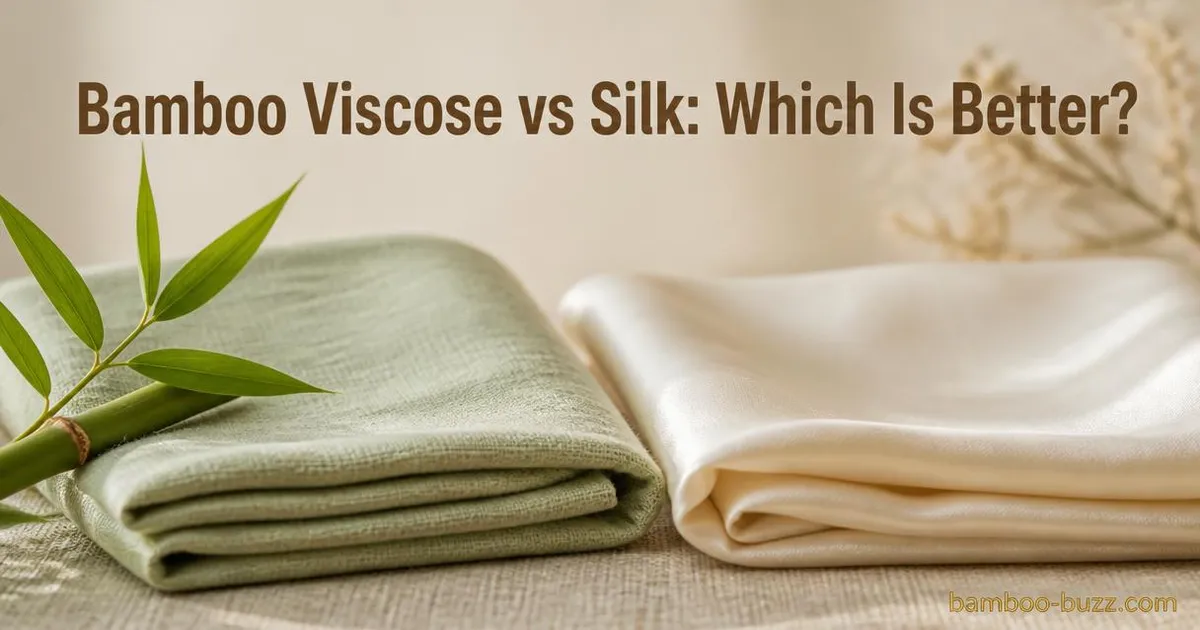
Bamboo Viscose vs Silk: Which Is Better?
Should you spend premium money on silk sheets and clothing, or get a similar smooth feel from bamboo viscose for less money? Both fabrics feel smooth against your skin, but they get there through completely different processes – one spun by silkworms, one dissolved from plant pulp in chemical solvents.
The differences show up in how each fabric handles heat, moisture, friction, and your laundry routine. Here’s where each one actually wins, so you can match the fabric to what matters most for your sleep and skin.
Key Takeaways
- Bamboo viscose is a regenerated cellulose fiber from processed bamboo pulp; silk is a natural protein fiber spun by silkworms.
- Silk feels cooler and slicker; bamboo viscose feels softer and more cotton-like.
- Hot sleepers often prefer bamboo viscose for moisture-wicking; silk excels at temperature regulation across seasons.
- Silk’s low friction is recommended for curly or damaged hair; bamboo viscose is the lower-cost, easier-care option.
- Silk requires delicate washing by hand or dry cleaning; bamboo viscose is machine washable but may wear faster over time.
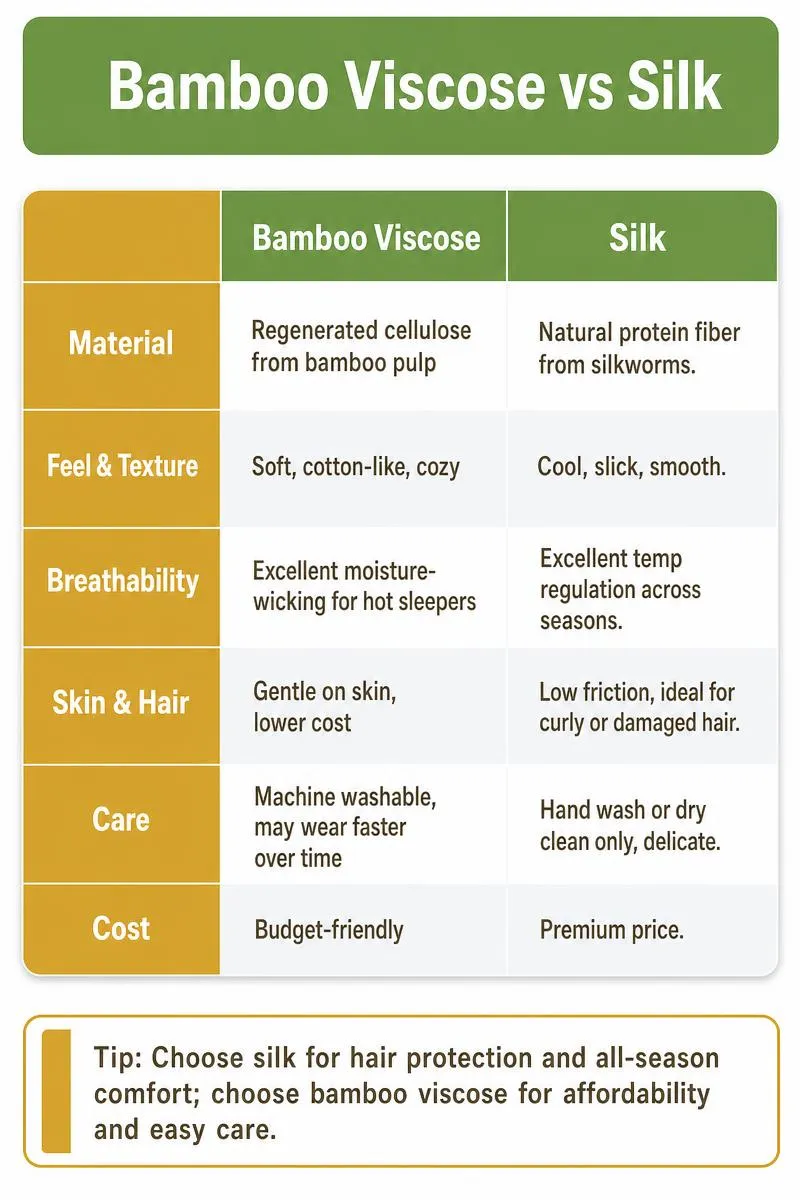
Bamboo Viscose Vs Silk Side-by-Side
| Feature | Bamboo Viscose | Silk |
|---|---|---|
| Material | Regenerated cellulose from bamboo pulp | Natural protein fiber from silkworms |
| Feel & Texture | Soft, cotton-like, cozy | Cool, slick, smooth |
| Breathability | Excellent moisture-wicking for hot sleepers | Excellent temperature regulation across seasons |
| Skin & Hair | Gentle on skin; lower cost | Low friction; ideal for curly or damaged hair |
| Care | Machine washable; may wear faster | Hand wash or dry clean; delicate |
| Cost | Budget-friendly | Premium price |
What Is Bamboo Viscose?
Bamboo viscose is a regenerated cellulose fiber made by dissolving bamboo pulp in chemical solvents, then extruding the solution into fibers. The result is a soft, fluid fabric used for sheets, pillowcases, and clothing.
Best for: hot sleepers and anyone wanting a silky feel without silk pricing.
Strengths: soft, breathable, moisture-wicking, machine washable, and cheaper than silk.
Weaknesses: some sources suggest the chemical solvents used in processing raise environmental concerns, and some sources suggest durability issues – bamboo viscose can pill, stretch, and break down faster than silk.
Explore More
Best baby bamboo pajamas on amazon
A curated list of top baby bamboo pajamas for readers comparing bamboo viscose and silk for sleepwear and comfort.
What Is Silk?
Silk is a natural protein fiber produced by silkworms, most commonly mulberry silk for bedding and apparel. Silkworms spin cocoons from a single continuous thread, which is then unwound and woven into fabric.
Best for: sensitive skin, curly or dry hair, and sleepers who want temperature regulation across seasons.
Strengths: extremely smooth, naturally temperature regulating, moisture retaining, and strong when properly cared for.
Weaknesses: high price, hand wash or dry clean only, and prone to water spots and abrasion damage.
Bamboo Viscose vs Silk: Comfort and Texture
Silk delivers a cool, slick, nearly frictionless feel against your skin. The protein fibers create a smooth surface that glides rather than grips.
Bamboo viscose offers a plush, silky-but-matte texture with fluid drape and less slipperiness than silk. Bamboo viscose feels closer to a very high-quality cotton sateen than to actual silk.
Winner: silk for a cool, nearly frictionless glide; bamboo viscose for a soft, cozy drape.
Bamboo Viscose vs Silk: Breathability and Temperature Regulation
Bamboo viscose wicks moisture away from your skin and allows airflow, which is why hot sleepers and people in humid climates often prefer bamboo sheets. The cellulose fibers absorb and release moisture more readily than silk.
Silk regulates temperature across seasons – it feels cool in summer and holds warmth in winter – but it’s less absorbent than bamboo viscose, so it won’t handle heavy night sweats as well.
Winner: bamboo viscose for night sweats and humid conditions; silk for year-round consistency in moderate climates.
Related Reading
A close comparison of thermal performance and moisture management that complements the article’s section on…
Bamboo Viscose vs Silk: Skin and Hair Benefits
Silk’s low-friction surface reduces tangles, frizz, and sleep creases on your face. Silk pillowcases are widely recommended for people with curly, textured, or damaged hair, and for sensitive skin that reacts to rougher fabrics.
Bamboo viscose is soft and non-irritating for most skin types, but the cellulose fiber surface doesn’t reduce friction the way silk does. You get a gentle feel without the slickness that protects hair from snagging.
Winner: silk for hair protection and friction-sensitive skin; bamboo viscose for affordable, gentle everyday comfort.
Bamboo Viscose vs Silk: Durability and Care
Bamboo viscose goes in the washing machine – cold water, gentle cycle, no fabric softener. But the same cellulose fibers that make bamboo viscose soft also make the fabric prone to pilling, stretching, and gradual breakdown with repeated washing.
Silk is strong for its weight when properly maintained, but that maintenance means hand washing or dry cleaning. Water spots, abrasion, and rough handling can leave permanent marks on silk fibers.
Winner: silk for longevity with careful maintenance; bamboo viscose for easy, everyday washing.
Which Should You Choose?
Hot sleepers: bamboo viscose for moisture-wicking and airflow that handles night sweats better than silk.
Curly or damaged hair: silk pillowcases for reduced friction and moisture retention that helps prevent frizz and breakage.
Budget buyers: bamboo viscose delivers a silky feel at a lower cost than silk.
Sensitive skin: silk offers less friction against your face; bamboo viscose offers soft affordability for full bedding sets.
Eco-conscious buyers: weigh the chemical solvents used in viscose processing against the animal-derived nature of silk. Bamboo is often grown without pesticides or irrigation, but dissolving it into viscose requires chemical solvents.
Explore More
Pros and cons of bamboo batting
Practical pros/cons focused guidance for readers weighing durability, care, and use of bamboo-derived textiles in…
FAQs About Bamboo Viscose and Silk
Is viscose from bamboo safe for skin?
Yes, for most people. The main exception is sensitive skin reacting to residual processing chemicals – look for OEKO-TEX certification if that’s a concern.
Does bamboo viscose contain microplastics?
No. Bamboo viscose is a cellulose fiber, not a synthetic polymer. It won’t shed microplastics in the wash the way polyester or nylon does.
Is bamboo or silk better for skin?
Silk is better for friction-sensitive skin because the protein fiber surface is smoother. Bamboo viscose is still soft and non-irritating for most people, and costs much less for full bedding sets.
What are the drawbacks of bamboo viscose?
The chemical processing raises environmental concerns, and the fabric can pill, stretch, and break down faster than silk or cotton with repeated washing. Some sources also note that bamboo viscose loses strength when wet.
What are the downsides of silk?
High price, delicate care requirements, and vulnerability to water spots and abrasion. Silk also isn’t as moisture-absorbent as bamboo viscose, so heavy sweaters may find silk less comfortable.
Can either fabric help reduce allergies?
Both fabrics tend to be less hospitable to dust mites than cotton, though neither is a guaranteed fix for allergies. Silk’s tight weave may also keep allergens from settling into the fabric.
How do you wash bamboo and silk bedding?
Bamboo viscose: machine wash cold on a gentle cycle, no fabric softener, air dry or tumble dry low.
Silk: hand wash in cool water with silk-safe detergent, or dry clean – avoid wringing, and dry flat away from direct sunlight.
Are bamboo sheets actually made from bamboo?
Yes, but the bamboo plant doesn’t get woven directly into fabric. The bamboo stalk is broken down into pulp, dissolved in chemical solvents, and extruded as regenerated cellulose fibers – the same process used to make rayon.
Should you avoid wearing viscose?
Not for most people. Viscose is soft, breathable, and comfortable. The main concerns are environmental – the chemical solvents used in processing – and durability, since it may not last as long as cotton or linen.
Final Verdict
For easy-care, breathable, budget-friendly bedding, bamboo viscose is the practical pick. For hair protection, a luxury feel, and long-term durability with careful maintenance, silk earns the higher price.
Some people layer a silk pillowcase over bamboo viscose sheets – you get the friction benefit for your hair without paying silk prices for the full set. Decide whether sleep temperature, hair protection, or maintenance ease matters most, and pick accordingly.
External References
- OEKO-TEX® STANDARD 100 – OEKO-TEX
- The Ongoing History of Harm Caused and Hidden by … – PMC – NIH (NCBI)
- Silk vs. Cotton Study| Why Silk Wins for Hair Protection – Mulberryparksilks
- The Best Hypoallergenic Bedding for Allergy-Prone Sleepers – Gingerlily
- Hypoallergenic Sheets – Mattressmiracle
- Viscose, Rayon, Modal, Lyocell, Cupro: Decoding Man- … – Earthday