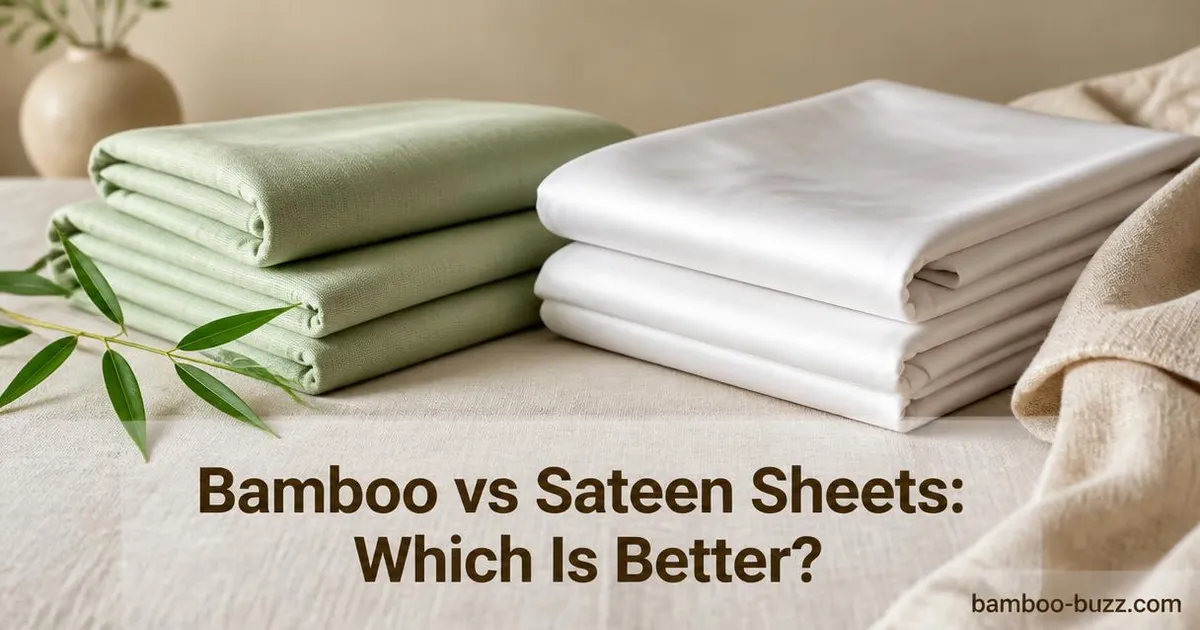
Bamboo vs Sateen Sheets: Which Is Better?
Bamboo and sateen sheets both feel soft right out of the package, but they get there in completely different ways. Sateen is cotton woven in a satin structure that puts more threads on the surface, giving you a smooth, lustrous finish. Bamboo sheets are made from cellulose extracted from bamboo pulp, usually processed into viscose or lyocell, and woven into a lightweight fabric that drapes differently than cotton weaves.
The confusion starts because both are marketed as soft and luxurious, and both can feel great against your skin. But the material underneath each one changes how they sleep, how they wear, and how much effort they take to maintain.
Key Takeaways
- Sateen feels silkier and heavier immediately; bamboo feels lighter and smoother.
- Bamboo generally sleeps cooler and wicks moisture better than sateen.
- Sateen resists wrinkles better; bamboo wrinkles more easily and needs gentler laundering.
- Some sources suggest bamboo may be preferable for sensitive skin, though individual reactions vary.
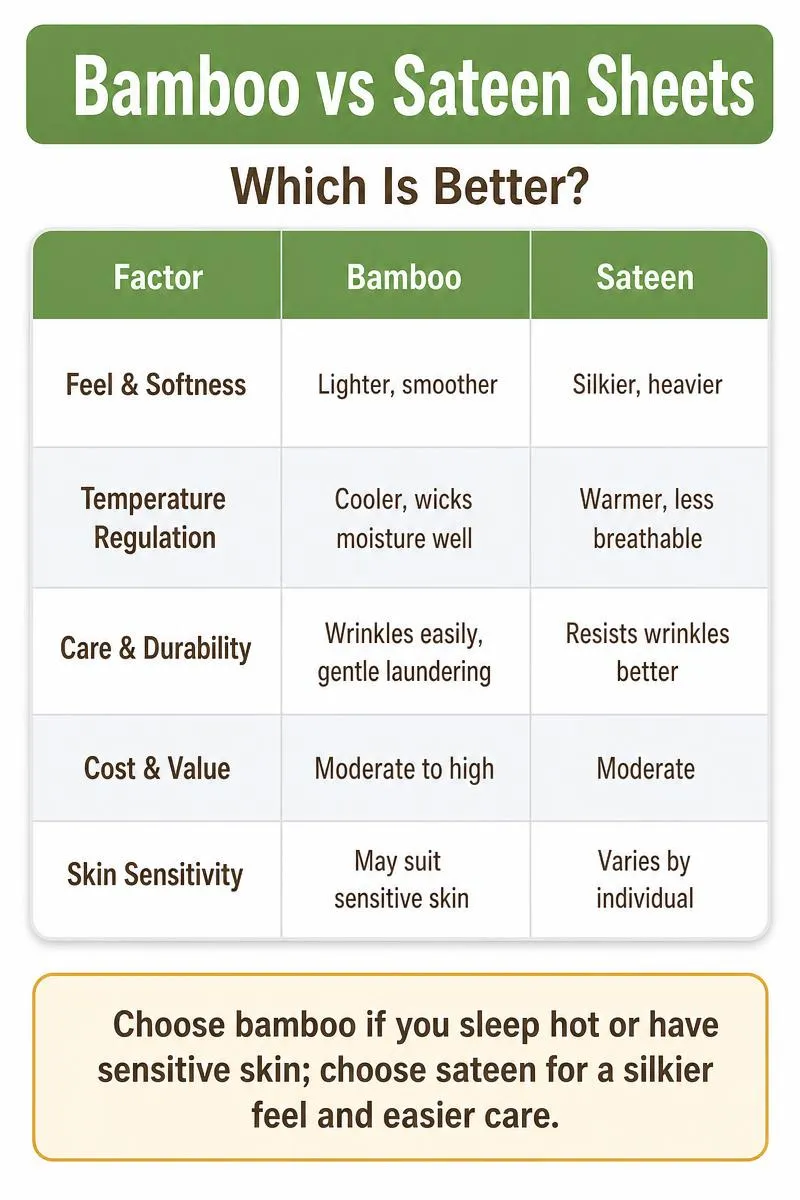
Bamboo Vs Sateen Sheets Side-by-Side
| Factor | Bamboo | Sateen |
|---|---|---|
| Feel & Softness | Lighter, smoother | Silkier, heavier |
| Temperature Regulation | Cooler; wicks moisture | Warmer; less breathable |
| Care & Durability | Wrinkles easily; gentle wash | Resists wrinkles |
| Cost & Value | Moderate–high | Moderate |
| Skin Sensitivity | May suit sensitive skin | Varies by individual |
What Are Bamboo Sheets?
Bamboo sheets are typically made from bamboo viscose, lyocell, or bamboo linen, not raw bamboo fiber. The bamboo stalk is broken down into cellulose, dissolved in a chemical solvent to create fibers, and then spun into yarn. Viscose is the most common process; lyocell uses a closed-loop system that recycles most of the solvent.
Bamboo linen is mechanically processed without solvents but feels coarser and is less common.
Bamboo sheets work best for hot sleepers, humid climates, and anyone who wants a lightweight drape. The fabric breathes well and wicks moisture away from your skin, and has a soft hand feel that some weaves improve with repeated washing.
Bamboo sheets wrinkle easily, often need gentle wash cycles, and price varies widely depending on the weave and manufacturing process. Low-quality bamboo viscose sets can pill, and the chemical processing involved means the final fabric is far removed from the raw bamboo stalk.
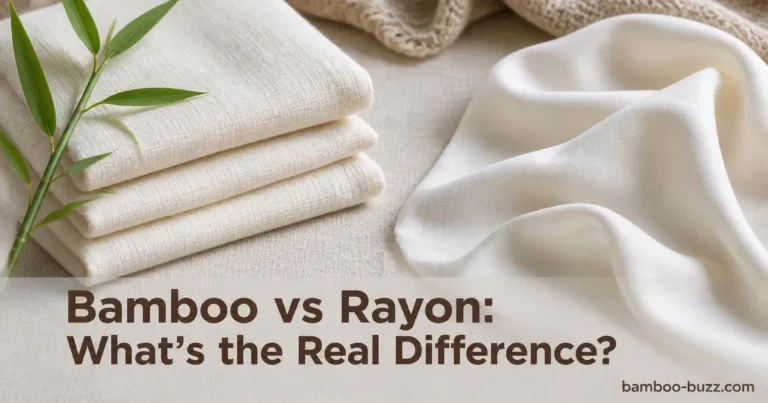
A close look at how bamboo-derived rayon differs from bamboo fabric and what that means for softness, breathability,…
What Are Sateen Sheets?
Sateen is cotton woven in a satin structure, specifically three threads passing over the surface and one passing under. That pattern puts more cotton threads on the face of the fabric, creating a lustrous, smooth surface that feels substantial and silky.
Sateen sheets suit people who want a luxe, hotel-style drape and immediate smoothness. The heavier weight feels smooth against your skin from the first night, and the weave naturally resists wrinkles better than plain cotton weaves.
The downside is breathability. The tight weave and cotton content trap more body heat than percale or bamboo, which makes sateen better suited to cooler rooms. Sateen can also pill over time, especially with friction from rougher fabrics or skin.
Bamboo Sheets vs Sateen Sheets: Feel and Softness
Sateen delivers a cool, silky, and substantial hand feel from day one. The satin weave puts dense cotton threads on the surface, so your skin touches more yarn and less open space. That density is what creates the weighted, smooth sensation people associate with hotel bedding.
Bamboo feels smooth and light. Viscose and lyocell fibers are fine and flexible, so the fabric drapes closely without heaviness. Some bamboo weaves soften further with washing, meaning the hand feel after several washes can be different from the first.
The winner depends on whether you prefer drape and weight or airy lightness. If you want sheets that feel like they have substance, sateen is the better match. If you want sheets that feel like they barely weigh anything, bamboo wins.
Bamboo Sheets vs Sateen Sheets: Temperature Regulation
Bamboo wicks moisture and stays cooler for hot sleepers and warm climates. The viscose and lyocell fibers absorb and release moisture quickly, which helps when your body produces sweat overnight. That moisture management is the main reason bamboo sheets feel cooler against your skin.
Sateen holds more warmth because of the tight weave and cotton content. The three-over-one-under structure leaves less open space for air to move through, so body heat stays trapped between the fabric and your skin. Sateen works better in cooler rooms or for people who sleep cold.
Bamboo wins for hot sleepers. Sateen wins for people who want extra warmth or sleep in air-conditioned rooms that run cold.
You Might Also Like
Bamboo charcoal vs activated charcoal
Explains how charcoal treatments from bamboo affect moisture wicking, odor control, and temperature regulation in…
Bamboo Sheets vs Sateen Sheets: Care and Durability
Sateen resists wrinkles and handles standard washing well. The cotton fibers and satin weave bounce back from the dryer looking relatively smooth, and you can usually wash sateen on a normal cycle without much special attention. Pilling can happen with abrasion over time, especially where your body rubs the same spot repeatedly.
Bamboo wrinkles out of the dryer and often needs low heat or line drying to look neat. The fine viscose or lyocell fibers crease easily, and high heat can damage them. Check for pilling on low-quality bamboo sets, where shorter fibers work loose and form small balls on the surface.
Sateen wins for low-maintenance care. Bamboo wins if you accept extra laundering steps in exchange for the breathability and lightweight drape.
Bamboo Sheets vs Sateen Sheets: Cost and Value
Entry-level bamboo and mid-range sateen often overlap in price. Once you move into premium tiers, the costs diverge. Premium prices vary, and which costs more depends on the weave and brand.
Think about cost per night based on expected lifespan and how often you wash your sheets. Sateen may last longer with rougher handling, while bamboo can degrade faster if washed on hot cycles or dried on high heat. Your care habits matter more than the sticker price when figuring out long-term value.
There is no clear winner here. Value depends on how you wash, where you live, and what you prioritize in how your sheets feel.
Which Should You Choose?
Your sleeping temperature and care preferences should drive this decision more than anything else.
- You sleep hot or live in a humid climate: Bamboo sheets. The moisture-wicking fibers and lightweight weave handle warmth and sweat better.
- You want easy care and minimal ironing: Sateen sheets. Standard washing, low wrinkling, and fewer special instructions.
- You want hotel-style drape: Sateen sheets. The satin weave drapes heavily and smoothly from the first night.
- You have sensitive skin or want the lightest possible sheet: Bamboo sheets. Smooth, fine fibers create less friction against skin.
- You want low cost per night and do not run hot: Compare mid-range sateen against bamboo lyocell, since both can deliver good value depending on how you care for them.
You Might Also Like
A general pros-and-cons guide to bamboo as a material that highlights durability and care lessons applicable to bamboo…
FAQs About Bamboo Sheets and Sateen Sheets
What is the downside to bamboo sheets?
Bamboo sheets wrinkle easily and need gentle washing, and can pill if the fiber quality is low. The chemical processing used to make bamboo viscose also means the finished sheet shares little with the plant it came from, which matters if you are choosing based on environmental impact.
What are the disadvantages of sateen sheets?
Sateen traps more body heat than percale or bamboo because the tight weave limits airflow. Sateen can also pill over time with friction, and the lustrous surface may lose some sheen after repeated washing.
Are sateen sheets hot to sleep on?
Yes, compared to bamboo and cotton percale. The weave traps warm air against your skin, so body heat stays closer to your body. Sateen is a good choice if you sleep cold or keep your bedroom cool.
Do bamboo sheets actually stay cooler than sateen all night?
For most people, yes. Bamboo viscose and lyocell fibers wick moisture and release heat faster than the dense weave of sateen cotton. In extremely cold rooms with no body heat to manage, the difference matters less because neither fabric needs to cool you down.
Do bamboo sheets pill?
They can, especially on lower-quality sets where shorter fibers loosen and form small balls on the surface. Higher-quality bamboo lyocell tends to pill less than cheaper bamboo viscose because the fibers are longer and more uniform. Washing on gentle cycles and avoiding high heat reduces pilling.
Can I use bleach on bamboo sheets to whiten them?
No. Bleach damages viscose and lyocell fibers, weakening the fabric and causing it to break down faster. Use a mild detergent and oxygen-based whiteners if you need to brighten bamboo sheets, and always check the care label first.
Are bamboo sheets better for sensitive skin than sateen?
Some sources suggest bamboo may be preferable for sensitive skin, though individual reactions vary. The smooth, lightweight fibers create less friction against skin, and bamboo viscose tends to feel less irritating than rougher cotton weaves. If you react to residual processing chemicals, look for OEKO-TEX certified bamboo sheets.
How many times can I wash bamboo sheets before they lose quality?
There is no fixed number. Wash frequency, water temperature, detergent type, and drying method all affect how long bamboo sheets maintain softness. Gentle cycles, cool or warm water, and low heat or line drying extend the useful life significantly.
Final Verdict
Choose bamboo if cooling and breathability are your top priorities. Choose sateen if you want immediate luxury feel and easier care.
In very cold, dry climates, sateen’s warmth is an advantage. In year-round heat, bamboo is hard to beat.
Decide your top priority first, temperature or texture, then shop within that category rather than comparing across both. You will narrow your options faster and end up with sheets that solve the problem you care about.
External References
- Bamboo Sheets for Night Sweats: What the Data Shows – Natuclothes
- OEKO-TEX® – Tailor-made solutions for the textile and leather … – OEKO-TEX
- Preventing Color Transfer by Bleeding or Crocking • AnswerLine – IASTATE (.edu)
- ‘Bamboo’ Fabrics – FTC
- a comparative study of aesthetic and performance properties … – UKY (.edu)
- Is Bamboo Material Breathable? Pros, Cons, & … – Bambooclothes