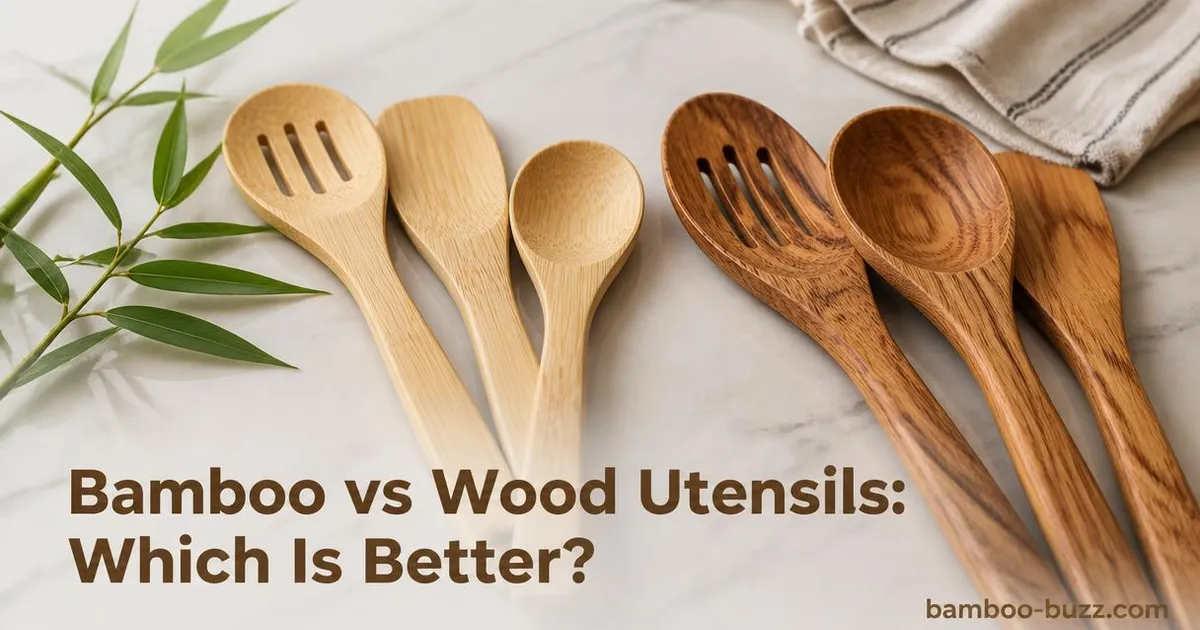
Bamboo vs Wood Utensils: Which Is Better?
Bamboo and wood utensils both work fine for most cooking. The real difference comes down to how much moisture your cooking involves, how gentle you need to be with your pans, and how much maintenance you’re willing to do.
Bamboo is technically a grass, not a wood, and that changes a few things that matter in the kitchen. Wood and bamboo have different fiber structures, different porosity levels, and different tendencies when they get wet or hot. Those differences affect how long your utensils last and how they treat your cookware.
Key Takeaways
- Bamboo is harder and less porous than most hardwoods, making it more resistant to moisture absorption and staining.
- Wood utensils are generally softer and gentler on delicate cookware coatings.
- Neither bamboo nor wood releases microplastics, though their natural porosity differs.
- Both require hand washing; neither belongs in the dishwasher.
- Some sources suggest both materials are durable for everyday cooking, though maintenance needs vary by material.
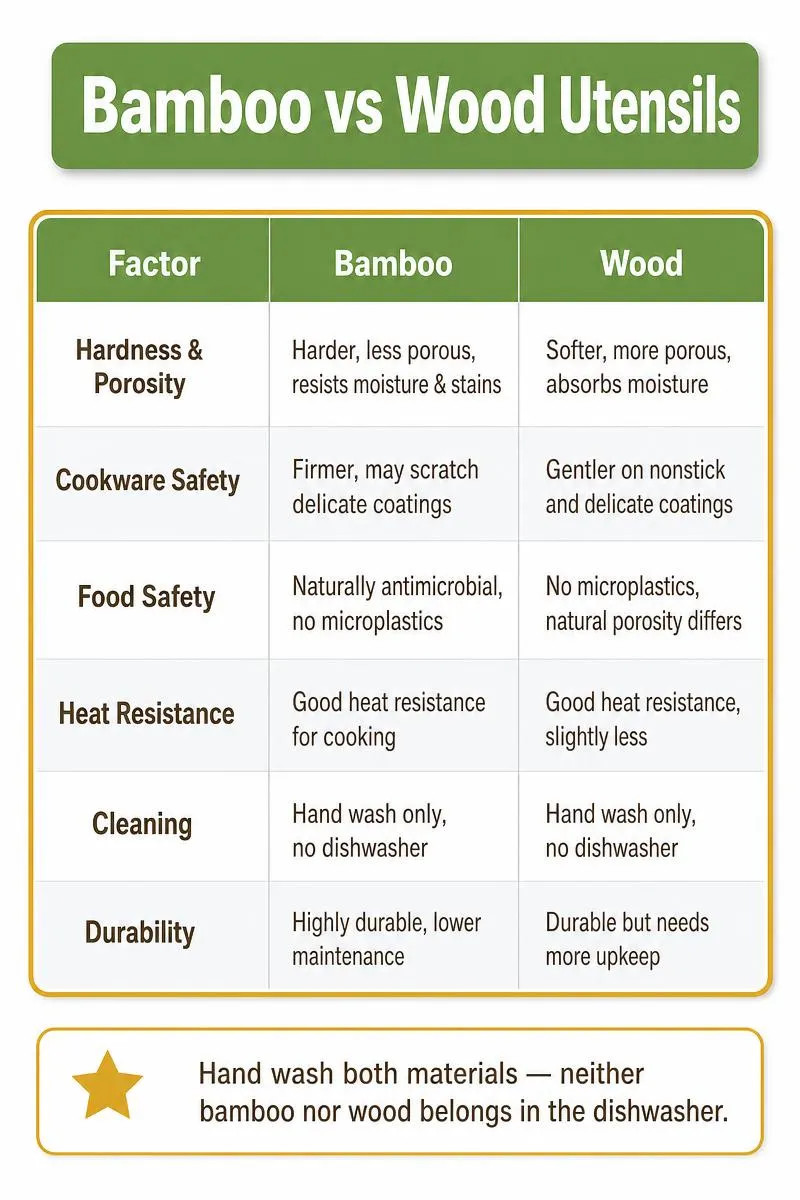
Bamboo Vs Wood Utensils Quick Comparison
| Factor | Bamboo | Wood |
|---|---|---|
| Hardness & Porosity | Harder; less porous; resists moisture | Softer; more porous; absorbs moisture |
| Cookware Safety | Firmer; may scratch delicate coatings | Gentler on nonstick and delicate coatings |
| Food Safety | Naturally antimicrobial; no microplastics | No microplastics; natural porosity differs |
| Heat Resistance | Good heat resistance | Good heat resistance; slightly less |
| Cleaning | Hand wash only; not dishwasher-safe | Hand wash only; not dishwasher-safe |
| Durability | Highly durable; lower maintenance | Durable; needs more upkeep |
What Are Bamboo Utensils?
Bamboo utensils start as Moso bamboo, a fast-growing grass that reaches harvest maturity in a few years rather than the decades most trees need. The harvested stalks get split, shaped, and finished into spoons, spatulas, tongs, and serving tools.
Bamboo works well for everyday stirring, serving, and cooking with non-stick cookware. The surface is hard and dense, and bamboo is less absorbent than beech, maple, or acacia. That density helps bamboo resist moisture and staining better than softer woods typically do.
The main trade-off is that bamboo’s hardness can be less forgiving on fragile pan coatings. A bamboo edge won’t scratch most non-stick surfaces, but softer wood applies even gentler contact. Bamboo can also splinter with age or if you buy low-grade pieces, especially along the grain where the fibers separate over time.
A closer look at how bamboo dinnerware compares to wheat-straw plates for everyday kitchen use.
What Are Wood Utensils?
Wooden utensils are typically carved from beech, maple, or acacia. These hardwoods have been used in kitchens for centuries, and you’ll find them in a wide range of styles, from simple spoons to elaborate turner designs.
Wood utensils shine at gentle folding, sautéing, and any task where you want a soft edge against your cookware. The grain structure of beech, maple, and acacia gives wood a slight give that bamboo doesn’t have. That flexibility means wood makes softer contact with non-stick and ceramic coatings.
The downside is porosity. Wood absorbs more moisture than bamboo, which can lead to warping, cracking, or retaining food flavors over time. A wooden spoon used for tomato sauce and then poorly dried may hold onto odors longer than a bamboo equivalent.
Bamboo Utensils vs Wood Utensils: Durability and Lifespan
Bamboo takes the edge on durability, with one caveat.
Bamboo’s fiber density is higher than most hardwoods used for kitchen tools. That density means bamboo resists surface wear that softens wood over months of daily use. Bamboo also absorbs less moisture, so it’s less prone to the warping and splitting that wood experiences when it cycles between wet and dry conditions.
Lower-grade bamboo pieces can still splinter, especially at the edges where the grain is exposed. A cheap bamboo spoon might start shedding fibers before a well-made wooden spoon does. Quality matters as much as material here.
Under daily use, both materials last a long time with proper care.
Bamboo Utensils vs Wood Utensils: Food Safety and Hygiene
The winner here depends on your care habits more than the material itself.
Bamboo contains a compound called bamboo kun that has mild antibacterial properties. How much of that compound remains in finished utensils isn’t well documented, so treat this as a potential advantage rather than a guaranteed one. Wood, particularly beech and maple, has its own history of safe food contact and is widely used in professional kitchens.
Neither bamboo nor wood releases microplastics. Both are solid, natural materials that don’t shed synthetic particles the way plastic or silicone utensils can. If avoiding microplastics is a priority, both materials handle that concern equally.
The real hygiene factor is porosity. Wood absorbs more moisture and food residue than bamboo, which means wood requires more diligent drying and occasional oiling to prevent bacteria from settling into the grain. Bamboo’s lower absorbency gives it a slight edge if you’re not always thorough about drying your utensils.
Also Worth Checking Out
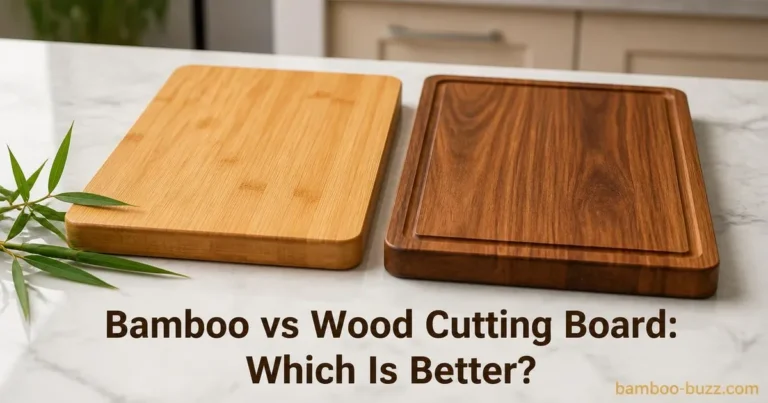
How bamboo and wood cutting boards differ in porosity, maintenance, and bacterial resistance – directly relevant to…
Bamboo Utensils vs Wood Utensils: Cooking Performance and Heat Resistance
This one’s a tie, and the right choice depends on your cookware.
Both bamboo and wood are safe for non-stick pans. Neither will scratch a Teflon or ceramic coating under normal use. Wood has a softer edge, though, which makes it slightly more forgiving if you’re aggressive with your stirring or scraping.
Neither material conducts heat the way metal does. You can leave a bamboo or wooden spoon in a hot pot without the handle becoming too hot to hold. Both materials can scorch or discolor if left against a very hot pan surface for extended periods, so avoid resting them on the edge of a screaming hot skillet.
Bamboo Utensils vs Wood Utensils: Care and Maintenance
Bamboo wins for lower upkeep, though both materials need the same basic care routine.
Hand wash both bamboo and wood utensils with warm water and mild soap. Neither belongs in the dishwasher. The heat and water pressure in a dishwasher cycle will warp, crack, or destroy bamboo and wood alike.
Bamboo needs oiling less frequently than wood because it absorbs less moisture during washing, so it can go longer between mineral oil treatments. Wood benefits from regular oiling to keep the grain sealed and prevent cracking.
Dry both materials immediately after washing. Letting either one air-dry in a dish rack invites warping and, in the case of wood, potential bacterial growth in the grain. Stand them upright or lay them flat on a towel.
Which Should You Choose?
Your cooking habits should drive this decision more than any general ranking.
- Non-stick or ceramic pans: Go with wood utensils. The softer edge makes gentler contact with delicate coatings, and the slight flexibility reduces the chance of scuffing.
- Lowest maintenance: Choose bamboo. Lower absorbency means less oiling, faster drying, and better resistance to staining.
- Sustainability on a budget: Bamboo sets usually cost less than comparable wood sets, and bamboo regrows faster than any hardwood tree used for utensils.
- High-moisture cooking: Bamboo resists water better. If you make a lot of soups, stews, or braised dishes, bamboo won’t soften or warp the way wood can with repeated exposure.
- Traditional feel in hand: Wood utensils have a warmer, more substantial feel. Beech and maple carry a bit more weight than bamboo, and some cooks just prefer how that handles in the pan.
Pros and cons of bamboo straws
An itemized pros-and-cons breakdown covering cleaning, longevity, and environmental impact for a common bamboo kitchen…
FAQs About Bamboo Utensils and Wood Utensils
What is better, wood or bamboo utensils?
It depends on your cooking style. Bamboo is harder, less porous, and lower maintenance. Wood is softer on cookware and has a more traditional feel. For most home cooks, bamboo offers better value and durability.
What is the healthiest material for cooking utensils?
Wood and bamboo are both solid choices because neither releases microplastics or synthetic chemicals. Both have long histories of safe food contact. Stainless steel is also safe but will scratch non-stick pans.
Do bamboo utensils have microplastics?
No. Bamboo is a natural grass, and finished bamboo utensils are solid plant material with no synthetic components. They don’t shed microplastics the way plastic or nylon utensils can.
Do wooden kitchen utensils absorb food flavors?
Yes, more than bamboo. Wood is more porous, so it can hold onto strong flavors and colors from foods like tomato sauce, garlic, or curry. Washing promptly and oiling regularly helps reduce this.
What kitchen utensil material is best for non-stick pans?
Wood, bamboo, and silicone are all safe for non-stick cookware. Wood is the gentlest option due to its softer edge. Bamboo is safe but slightly harder. Silicone is safe but some people prefer avoiding synthetic materials.
How long do bamboo and wooden utensils last?
Both can last for years with proper hand washing and occasional oiling. Bamboo typically needs less maintenance over its lifespan. Wood may require more frequent oiling to prevent cracking.
Can you put bamboo or wooden utensils in the dishwasher?
No. The heat and water pressure will warp, crack, or split both materials. Hand wash only, and dry immediately.
Can you use olive oil on wood utensils?
You can, but mineral oil or beeswax-based finishes are better. Olive oil can go rancid over time and leave an odor. Food-grade mineral oil won’t spoil and keeps the grain sealed.
When should you throw out wooden or bamboo utensils?
Replace them when you see deep cracks, persistent odors that won’t wash out, visible mold, or splintering edges. Surface discoloration alone isn’t a reason to toss a utensil.
Do professional chefs use wooden utensils?
Yes, many do. Wooden spoons and spatulas are common in professional kitchens for tasks like sautéing, folding, and tasting. Some chefs prefer wood specifically because the soft edge won’t damage delicate cookware.
Final Verdict
Bamboo wins for moisture resistance, durability, and low upkeep. Wood wins for gentle pan contact and that traditional weight in your hand. The edge cases are real: very cheap bamboo can splinter, and very soft wood can warp if it stays wet too long.
Whichever you choose, hand wash and dry immediately. That one habit does more for longevity than the material choice itself.
External References