Bamboo Yarn vs Cotton Yarn: Differences Explained
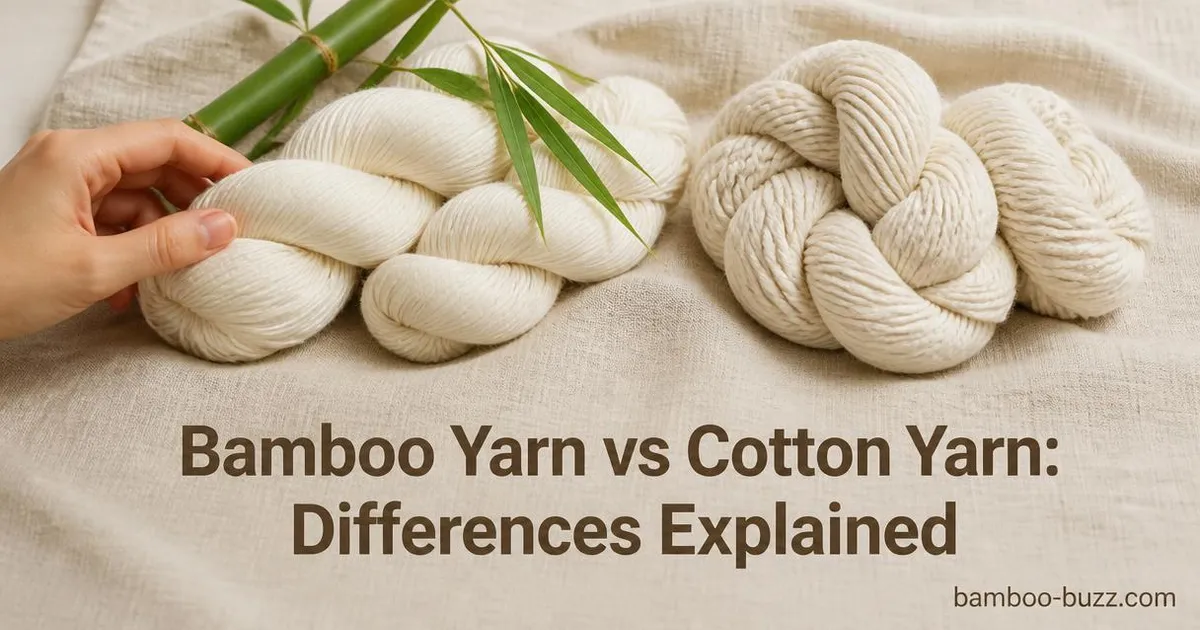
Pick up a skein of bamboo yarn and a skein of cotton yarn, and the difference is immediate. One feels silky and heavy in your hand, almost like it wants to slide through your fingers. The other feels matte, grounded, and ready to hold whatever shape you give it.
That contrast carries all the way through to the finished project. Bamboo yarn drapes and flows. Cotton yarn holds structure and stays put. Choosing between them comes down to what you’re making and how you want it to behave after the last stitch.
Key Takeaways
- Bamboo yarn offers more sheen and drape, while cotton holds structure better for defined stitches
- Bamboo viscose feels cool against skin, making it suited for lightweight wearables
- Cotton provides the stability and shape recovery needed for structured projects and home goods
- Both fibers have environmental tradeoffs depending on how they are processed
- The best choice depends on whether you are making flowing garments or sturdy, shaped items
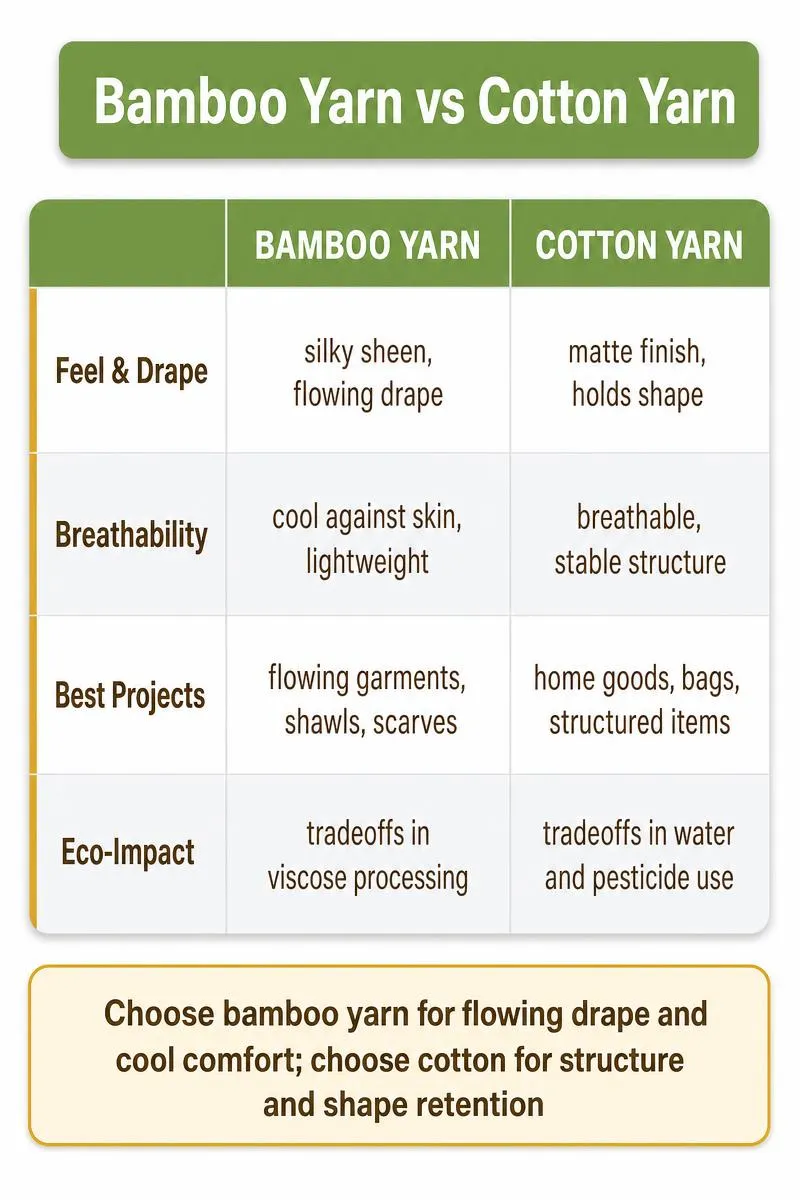
Bamboo Yarn Vs Cotton Yarn Quick Comparison
| Feature | Bamboo Yarn | Cotton Yarn |
|---|---|---|
| Feel & Drape | Silky sheen; flowing drape | Matte finish; holds shape |
| Breathability | Cool against skin; lightweight | Breathable; stable structure |
| Best Projects | Flowing garments, shawls, scarves | Home goods, bags, structured items |
| Eco-Impact | Tradeoffs in viscose processing | Tradeoffs in water & pesticide use |
What Is Bamboo Yarn?
Bamboo yarn starts with bamboo pulp, which is most commonly dissolved into fibers through the viscose process. The same chemical method produces rayon from wood pulp. A less common mechanical process breaks down the plant without solvents, but the resulting yarn is rougher and more expensive, so most bamboo yarn on the shelf is viscose-based.
The result is a yarn with a silky feel, high sheen, and excellent drape. Bamboo viscose yarn produces breathable fabric that feels cool against the skin, which makes it a strong pick for lightweight garments, shawls, and anything worn close to the body.
The tradeoffs are real. Bamboo yarn can split while working, especially with pointed hooks or needles. The yarn lacks elasticity, so ribbing and fitted shapes don’t snap back the way wool does. Bamboo fabric also tends to lack body, which means structured pieces can end up sagging over time.
Worth Reading Next
Best bamboo knitting needles on amazon
A curated list of smooth bamboo knitting needles ideal for working with bamboo and cotton yarns.
What Is Cotton Yarn?
Cotton yarn is spun from natural plant fibers harvested from cotton bolls. The fiber is cellulose-based, like bamboo viscose, but it retains its original structure rather than being dissolved and reformed. The yarn has a matte finish and a sturdy hand.
Cotton holds shape well, absorbs moisture, and provides the stability that structured projects need. That makes cotton yarn the go-to for dishcloths, bags, amigurumi, and warm blankets where you want the fabric to stay exactly where you put it.
The downsides are straightforward. Cotton yarn is heavier than bamboo for the same yardage, and the fabric has less drape. A cotton garment can feel stiff compared to a bamboo one, especially at tighter gauges.
Bamboo Yarn vs Cotton Yarn: Feel, Drape, and Stretch
Run bamboo yarn through your fingers and you’ll notice a slick, cool surface with visible sheen. Cotton yarn feels drier and more textured, with a matte appearance that doesn’t catch light the same way.
For flowing garments and accessories, bamboo yarn drapes better than cotton. A bamboo shawl or camisole falls in soft folds, while the same pattern in cotton sits more rigidly. If your pattern calls for drape, bamboo is the clear winner.
Stretch and recovery tell a different story. Neither bamboo nor cotton is elastic on its own. Both fibers will stretch under tension, but cotton tends to recover its shape better after being pulled. Bamboo fabric can grow longer with wear and not bounce back, which is why bamboo garments often benefit from a relaxed fit rather than a snug one.
Bamboo Yarn vs Cotton Yarn: Breathability and Wear
Both fibers breathe well, but they handle moisture differently against the skin. Bamboo viscose has a cool, smooth hand that feels refreshing in warm weather. Cotton absorbs moisture readily but doesn’t wick it away as efficiently.
For warm-weather garments, bamboo yarn has the edge. The lightweight drape and smooth fiber surface make bamboo viscose comfortable in heat. During active wear, bamboo wicks moisture away from the skin, while cotton absorbs sweat and holds onto it, which can feel damp during extended activity.
If you’re making something for summer wear or a lightweight layer, bamboo handles the job better. Cotton is the stronger choice when you want a fiber that absorbs moisture without any slick surface feel.
A focused comparison of bamboo and wool covering warmth, moisture-wicking, and durability in garments.
Bamboo Yarn vs Cotton Yarn: Best Projects and Use Cases
Bamboo yarn shines in lightweight tops, lace shawls, and summer accessories where drape and sheen matter. A bamboo camisole or wrap looks elegant and the drape makes openwork designs fall gracefully. Lace patterns show off the sheen of bamboo viscose particularly well.
Cotton yarn excels at dishcloths, structured bags, amigurumi, and heavy blankets. Cotton holds up to repeated washing, which matters for items that see daily use. Amigurumi needs a yarn that keeps its shape so stuffing doesn’t bulge through, and cotton delivers that reliably.
For crochet specifically, cotton’s stiffness is an advantage. Crochet fabric is already denser than knit fabric, and cotton helps maintain clean stitch definition. Bamboo yarn works for crochet too, but the slick surface can make it hard to maintain even tension, and the lack of elasticity means crochet edges may not hold as crisply. Knitters generally find bamboo easier to work with, since the smooth surface glides easily on needles and the drape complements knit fabric.
Bamboo Yarn vs Cotton Yarn: Eco-Impact and Processing
Most bamboo yarn goes through the viscose process, which dissolves bamboo pulp using chemical solvents like sodium hydroxide and carbon disulfide. The chemicals can be recovered and reused in closed-loop systems, but not all manufacturers use that method. Some sources suggest bamboo is marketed as a low-impact fiber based on how the plant grows, but the processing involved matters just as much.
Bamboo as a crop grows quickly without pesticides or irrigation, which gives it an advantage over cotton at the farming stage. Cotton farming typically requires significant water and pesticide use, though organic cotton reduces both.
Cotton processing is simpler because the fiber is used directly after harvesting and ginning, without being dissolved and reformed. That means fewer chemicals are involved in turning raw cotton into yarn. The agricultural inputs for cotton, especially water, are higher than for bamboo.
Neither fiber is a clear environmental winner. Bamboo wins on crop cultivation; cotton wins on processing simplicity. Choose organic cotton or closed-loop viscose bamboo if processing chemicals are your concern.
Which Should You Choose?
- Silky drape: Bamboo yarn. The sheen and flow of bamboo viscose make it ideal for tops, shawls, and accessories where you want movement and a smooth hand.
- Structure and durability: Cotton yarn. Dishcloths, placemats, and bags benefit from cotton’s ability to hold shape and withstand washing.
- Sensitive skin: Bamboo yarn. The smooth surface of bamboo viscose is gentle against sensitive skin. Check the manufacturer’s processing claims for residual chemical recovery before buying.
- Warmth and heft: Cotton yarn. Cotton’s weight gives blankets a substantial feel and helps them hold up to regular use and washing.
- Daily-use shape retention: Cotton yarn. Cotton’s better shape recovery and structural stability make it the safer choice for items that get handled frequently.
Explains how viscose processing alters bamboo fiber properties and environmental footprint – useful when weighing…
FAQs About Bamboo Yarn and Cotton Yarn
Does bamboo yarn stretch more than cotton yarn?
Both fibers lack natural elasticity, but bamboo stretches more during wear and doesn’t recover as well as cotton. Cotton tends to return to its original shape better after being pulled.
Is bamboo yarn or cotton yarn better for sensitive skin?
Bamboo yarn is generally better for sensitive skin because the smooth viscose surface feels softer and cooler. If residual processing chemicals are a concern, check the manufacturer’s processing claims for residual chemical recovery.
What projects work best with bamboo yarn?
Lightweight tops, lace shawls, summer scarves, and other wearables where drape and sheen matter. Bamboo yarn is also a good choice for baby items because of its softness.
Should I use bamboo or cotton yarn for crochet?
Cotton yarn is usually easier for crochet because it holds tension and maintains stitch definition. Bamboo yarn can be slippery on a hook and may not hold structured crochet shapes as well.
Which is better for blankets, bamboo or cotton yarn?
Cotton yarn is better for most blankets because it provides warmth, weight, and durability. Bamboo yarn works for lightweight summer throws but may not hold up to heavy use the way cotton does.
How does 100% bamboo yarn compare to bamboo-cotton blends?
Bamboo-cotton blends combine bamboo’s drape and sheen with cotton’s structure and shape retention. A blend weighted toward cotton gives more structure while keeping some of bamboo’s sheen, while a blend weighted toward bamboo keeps more drape at the cost of some body.
What is the difference between bamboo and cotton yarn processing?
Cotton fiber is harvested, ginned, and spun directly into yarn. Bamboo yarn usually goes through the viscose process, which dissolves the pulp in chemical solvents and reforms it into fibers. Mechanical processing exists for bamboo but is rare due to cost and rougher results.
Final Verdict
Neither bamboo yarn nor cotton yarn is objectively better. Bamboo wins for flowing, lightweight wearables where drape matters. Cotton wins for structured, durable pieces that need to hold their shape. For projects that need a bit of both, a bamboo-cotton blend splits the difference.
If you’re still deciding, check out our yarn selection guide for matching fiber types to specific project categories.
External References
- Publications – Organic-center
- Bamboo based fabric, is it really Bamboo? – MythDefied – Choice
- Health Effects of Occupational Exposure to Carbon Disulfide. – Ntis
- Industrial Hygiene Testing Services – Emsl
- Properties, Production, and Recycling of Regenerated … – PMC – NIH (NCBI)
- Viscose, Rayon, Modal, Lyocell, Cupro: Decoding Man- … – Earthday