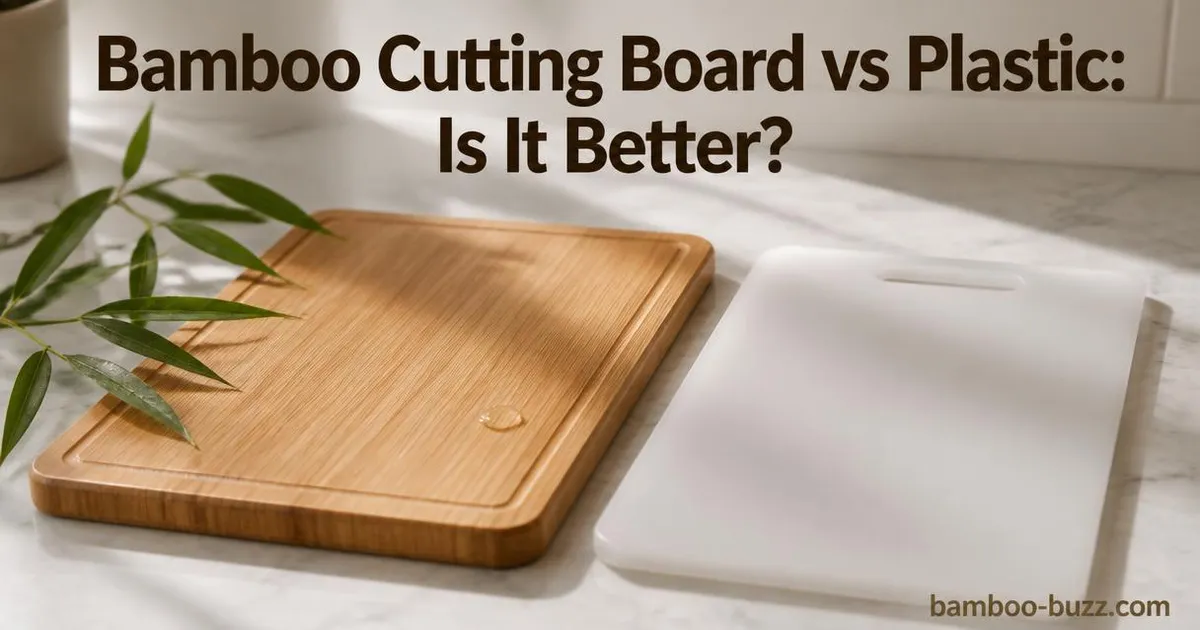
Bamboo Cutting Board vs Plastic: Is It Better?
Most people own a plastic cutting board because it was cheap, light, and dishwasher-safe – and then spent years cutting on a surface that developed deep scars trapping food residue. Bamboo boards flip that trade: they stay smoother for longer but refuse to go in the dishwasher, crack if you soak them, and need occasional oiling to stay in shape.
The real question isn’t which material is universally better. It’s which one fits how you actually cook, how you clean, and what you’re willing to maintain. A raw-meat-heavy cook who relies on dishwasher sterilization has different needs than someone doing mostly vegetable prep on a single board.
Key Takeaways
- Plastic is dishwasher-safe and cheaper upfront; bamboo is renewable but requires hand-washing and occasional oiling.
- Bamboo’s density gives a firmer cutting feel than most plastic boards, which affects how your knife edge wears over time.
- Both materials need thorough cleaning after raw meat contact, and heavily scarred boards of either type can trap bacteria in grooves.
- Bamboo suits buyers prioritizing sustainability and a rigid cutting surface; plastic suits buyers prioritizing convenience and low cost.
Related Reading
A detailed comparison of bamboo and maple cutting boards covering durability, knife wear, and maintenance.
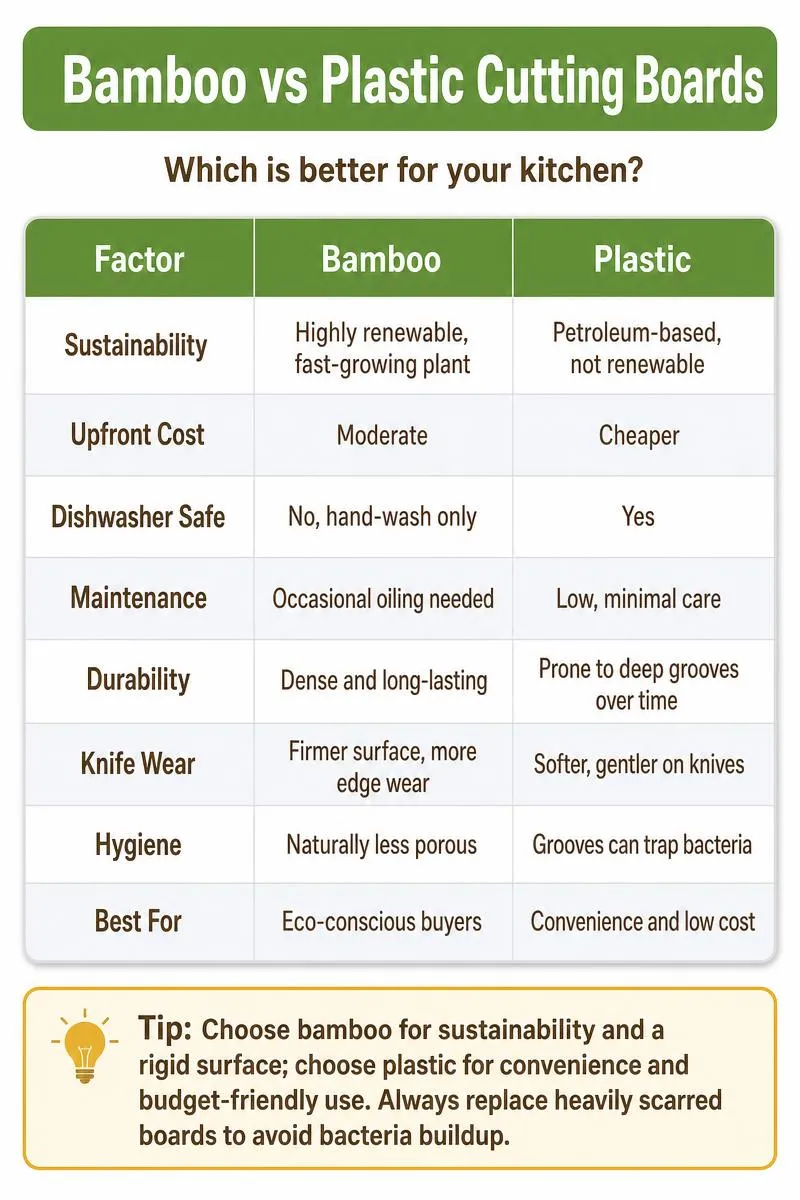
Bamboo Cutting Board Vs Plastic at a Glance
| Factor | Bamboo | Plastic |
|---|---|---|
| Sustainability | Highly renewable, fast-growing | Petroleum-based, not renewable |
| Upfront cost | Moderate | Cheaper |
| Dishwasher safe | No — hand-wash only | Yes |
| Maintenance | Occasional oiling needed | Low maintenance |
| Durability | Dense and long-lasting | Prone to deep grooves over time |
| Knife wear | Firmer surface — more edge wear | Softer — gentler on knives |
| Hygiene | Naturally less porous | Grooves can trap bacteria |
| Best for | Eco-conscious buyers | Convenience & low cost |
What Are Bamboo Cutting Boards?
Bamboo cutting boards are made from laminated strips or compressed bamboo grass, marketed as a renewable alternative to timber and plastic. Bamboo is technically a grass, not a tree, and it grows back fast enough that harvesting doesn’t require replanting the root system.
These boards work best for home cooks doing vegetable prep, bread slicing, and light daily tasks. The surface is firm and gives you stable feedback under a knife, though that firmness comes with trade-offs for knife-edge wear.
Bamboo strengths:
- Fast-growing raw material that regenerates without replanting
- Relatively lightweight compared to hardwood boards
- Firm cutting surface with predictable feedback
- Reputation for being knife-friendly when properly maintained
Bamboo weaknesses:
- Cannot go in the dishwasher – heat and water cause the laminate glue to fail and the board to crack
- Soaking or prolonged exposure to water has the same effect
- The surface dries out over time and requires occasional mineral oil application to prevent splitting
What Are Plastic Cutting Boards?
Plastic cutting boards are typically made from polyethylene or polypropylene, and they come in two main forms: flexible sheets and rigid boards.
Plastic boards are best for raw meat prep, high-volume cooking, and color-coded allergen separation. Commercial kitchens rely on color-coded plastic systems to prevent cross-contamination between meat types, and that same logic works at home if you cook with raw proteins frequently.
Plastic strengths:
- Inexpensive and easy to replace when worn
- Dishwasher-safe for high-heat sanitizing
- Lightweight and portable
- Low cost means you can keep several boards dedicated to different food types without much investment
Plastic weaknesses:
- Develops deep knife scars over time that trap food residue difficult to clean even in a dishwasher
- Boards without rubber grips can slide on smooth countertops
- Polyethylene and polypropylene are not biodegradable, so worn-out boards go to landfill
Bamboo Cutting Boards vs Plastic Cutting Boards: Hygiene and Food Safety
Both materials are safe when cleaned properly, but the cleaning methods and failure points differ. Plastic can be dishwasher-sanitized at high temperatures. Bamboo resists moisture absorption but must be hand-washed because heat and water damage the laminate.
Raw meat changes the calculation. On plastic, you can run the board through a dishwasher cycle after cutting raw chicken or pork and rely on heat to sanitize. On bamboo, you need to wash with hot soapy water immediately, scrub the surface thoroughly, and let it air-dry completely before storing.
Grooves are where both materials fail. Deep knife scars on plastic boards trap residue that dishwashers may not fully reach. On bamboo, deep scoring is less common because the surface is harder, but any grooves that do form are harder to sanitize since you can’t use a dishwasher.
Some sources suggest bamboo has natural antimicrobial properties due to a compound called bamboo kun, which appears in the living plant. Whether meaningful amounts survive the lamination and manufacturing process is not well-established. Neither bamboo nor plastic is self-sterilizing – proper cleaning matters far more than any inherent material property.
Keep Reading
Bamboo charcoal vs activated charcoal
Explains bamboo charcoal’s adsorption and antimicrobial properties versus activated charcoal – useful for readers…
Bamboo Cutting Boards vs Plastic Cutting Boards: Durability and Lifespan
Bamboo wins for long-term use if you maintain it. Plastic wins for short-term convenience where you simply replace the board when it gets scarred.
Bamboo’s durability depends on laminate glue integrity. The adhesive holding the strips together can fail if the board is soaked, exposed to high heat, or left in direct sunlight. A well-maintained bamboo board – hand-washed, dried upright, oiled occasionally – can outlast several plastic boards. A neglected one can crack long before a plastic board wears out.
Plastic boards warp when exposed to high heat, including some dishwasher cycles if the temperature is high enough. They also discolor from food stains, particularly from spices like turmeric or tomato-based sauces. The practical response is replacement, and since plastic boards are cheap, most people just swap them out.
The true cost over years of ownership depends on your habits. One bamboo board with regular oiling may cost less than repeatedly buying plastic replacements. But if you treat a bamboo board poorly and it cracks, you’re buying a replacement sooner than expected – and spending more than you would on plastic.
Bamboo Cutting Boards vs Plastic Cutting Boards: Knife Care and Cutting Feel
Bamboo wins for edge retention and stable feedback under a blade. Softer plastics reduce wrist fatigue but damage faster under heavy use.
The density difference is the key factor. Bamboo is denser than most plastic cutting board materials, which means the surface resists scoring better but also provides less give when the knife lands. A sharp blade hits a firmer surface on bamboo, and that firmness gives you more predictable cutting feedback – the board doesn’t flex or bounce.
Whether bamboo dulls knives faster than plastic depends on the knife and the plastic. Harder bamboo can wear a knife edge slightly more than softer polyethylene, but the difference is minor compared to glass or stone boards, which genuinely ruin edges quickly. Softer plastic boards cushion the blade more, which feels gentler during long prep sessions but means the board absorbs more of the impact and scars faster.
If you use high-carbon steel knives and sharpen regularly, bamboo gives you a stable, predictable surface. If you use softer stainless knives and prefer a board with some give, plastic feels more forgiving under the blade.
Bamboo Cutting Boards vs Plastic Cutting Boards: Maintenance and Daily Care
Plastic wins for convenience. Bamboo wins for repairability.
Plastic boards go in the dishwasher. That covers washing, sanitizing, and drying in one step. Stains and odors can be stubborn in deep grooves, and once those grooves are deep enough, replacement is the practical option. Some thick plastic boards can be resurfaced by sanding or planing down the scored layer, but most home-grade boards are too thin to make that worthwhile.
Bamboo boards require hand-washing with hot soapy water, followed by air-drying in an upright position. Stains can be treated with a paste of salt and lemon or a diluted hydrogen peroxide solution. Odors are less of an issue on bamboo than on scarred plastic, partly because the dense surface resists deep penetration.
Oiling bamboo is the maintenance step most people skip. Food-grade mineral oil applied occasionally fills the surface pores and prevents the bamboo from drying out and cracking. A dry, unoiled bamboo board is the one most likely to split along the grain – not from cutting, but from the material shrinking as moisture leaves.
Worth Reading Next
Compares environmental impacts and material properties of bamboo vs hemp to help readers weigh sustainability when…
Which Should You Choose?
- Frequent raw-meat cooks who rely on dishwasher sterilization: Plastic. The dishwasher cycle gives you reliable heat sanitizing that bamboo can’t handle.
- Home cooks who want a firm, renewable board for vegetables and bread: Bamboo. The dense surface handles daily prep well and stays smoother longer.
- Tight budgets with frequent replacement cycles: Plastic. Low upfront cost and no maintenance means you replace rather than repair.
- Long-lasting board buyers who do not mind hand-washing: Bamboo. With oiling and proper drying, the surface holds up through years of daily prep.
- Color-coding cooks who need boards for allergen or dietary separation: Plastic. Color-coded plastic sets are inexpensive and standard in food-safety training.
FAQs About Bamboo and Plastic Cutting Boards
Do bamboo cutting boards dull knives?
Bamboo is denser than most plastic, so it can cause slightly more edge wear than a soft polyethylene board. The effect is minor compared to glass or stone, which genuinely damage knife edges. Regular honing keeps the difference negligible.
Is it safe to cut raw meat on a bamboo cutting board?
Yes, if you wash it immediately with hot soapy water and let it dry completely. The limitation is that you can’t run bamboo through a dishwasher for heat sanitizing, so you need to be thorough with hand-washing. Some cooks keep a separate plastic board specifically for raw meat and use bamboo for everything else.
What are the downsides of bamboo cutting boards?
Bamboo boards can’t go in the dishwasher, can crack if soaked or exposed to high heat, and need periodic mineral oil application to prevent drying. The laminate glue can also fail over time if the board is mistreated.
What is the healthiest material for a cutting board?
There’s no single healthiest option – both bamboo and plastic are safe with proper cleaning. The health risk comes from deep grooves trapping bacteria, regardless of material. Replace any board – bamboo or plastic – once the surface is heavily scarred.
What is the most hygienic cutting board for meat?
A plastic board run through a dishwasher on a high-heat cycle is the most straightforward option for raw meat, because the heat sanitizing is reliable. Bamboo works if you’re disciplined about hand-washing and drying, but it requires more effort for the same result.
What cutting boards do chefs and test kitchens recommend?
Commercial kitchens typically use color-coded plastic boards for food-safety compliance. Test kitchens often use a combination – plastic for raw proteins and wood or bamboo for everything else. The color-coded system lets staff visually confirm which board touched which food type.
What cutting board should I avoid?
Glass, stone, and ceramic boards damage knife edges quickly and offer no cutting give. Avoid any board with deep, irreparable grooves – regardless of material – since those grooves harbor bacteria that routine cleaning may not reach.
How are bamboo cutting boards made?
Bamboo stalks are harvested, split into strips, and then laminated together with food-safe adhesive. The strips can be arranged flat-grain or edge-grain depending on the board design. The laminated surface is then sanded smooth and finished, sometimes with a light oil coating before sale.
Final Verdict
If you’re willing to hand-wash and oil a board occasionally, bamboo gives you a firm, renewable surface that resists deep scoring better than plastic. If you cook a lot of raw meat and want the convenience of dishwasher sanitizing, keep an inexpensive plastic board dedicated to that purpose and use bamboo for everything else.
Commercial and professional kitchens often prefer color-coded plastic systems for safety compliance, and home cooks can copy the same color-coded system if cross-contamination is a concern.
One next step: inspect your current cutting board for deep grooves right now. If the surface is heavily scarred, decide whether to replace it with a maintained bamboo board or start a rotation of inexpensive plastic boards you swap out regularly.
External References
- Impacts of Plastic Pollution | US EPA – EPA
- Utilization of polypropylene film as an adhesive to prepare … – NCSU (.edu)
- Clean THEN Sanitize: A One-Two Punch to Stop … – USDA
- Investigating the Antibacterial Characteristics of Japanese … – NIH (NCBI)
- Effect of some manufacturing variables on formaldehyde … – ACADEMIA (.edu)
- Cutting Boards – Food Safety and Inspection Service – USDA – USDA FSIS