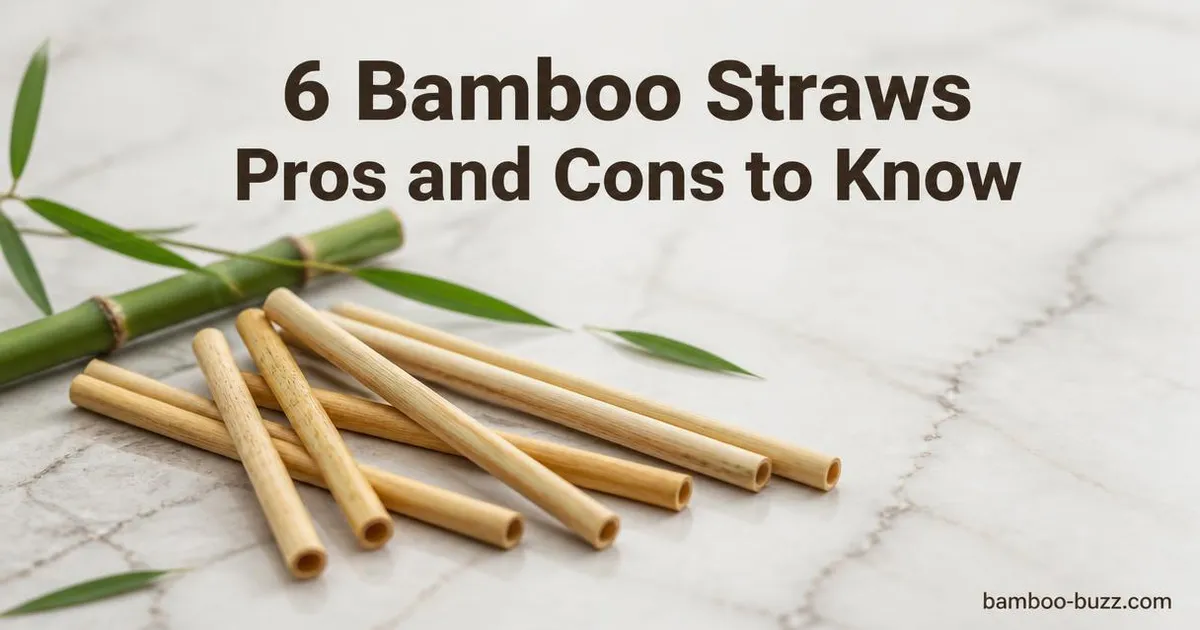
6 Bamboo Straws Pros and Cons to Know
Bamboo straws seem like an obvious upgrade from plastic – until a few months in, when you notice the edges fraying. They biodegrade, they do not taste like anything, and they work fine for a cold drink. But they also split, they do not survive a dishwasher cycle, and nobody is going to hand you one at a drive-through.
This article walks through six specific tradeoffs of bamboo straws, then compares them directly with paper, metal, glass, and silicone. The goal is to help you decide whether bamboo fits your actual habits – not the habits a marketing page assumes you have.
Key Takeaways
- Bamboo straws biodegrade naturally, but they need replacing sooner than metal or glass and are not the most durable reusable option.
- They are generally safe and taste-neutral for cold drinks, though they are not dishwasher safe – hand cleaning and thorough drying are necessary.
- Some sources suggest limited restaurant adoption comes down to practical concerns about durability in high-volume settings.
- Compared to paper, metal, glass, and silicone, bamboo occupies a distinct category: fully compostable but less suited to hot drinks or heavy daily use.
You Might Also Like
Pros and cons of bamboo utensils
Detailed pros/cons and maintenance tips for bamboo kitchen tools that readers can apply to straws and other reusable…
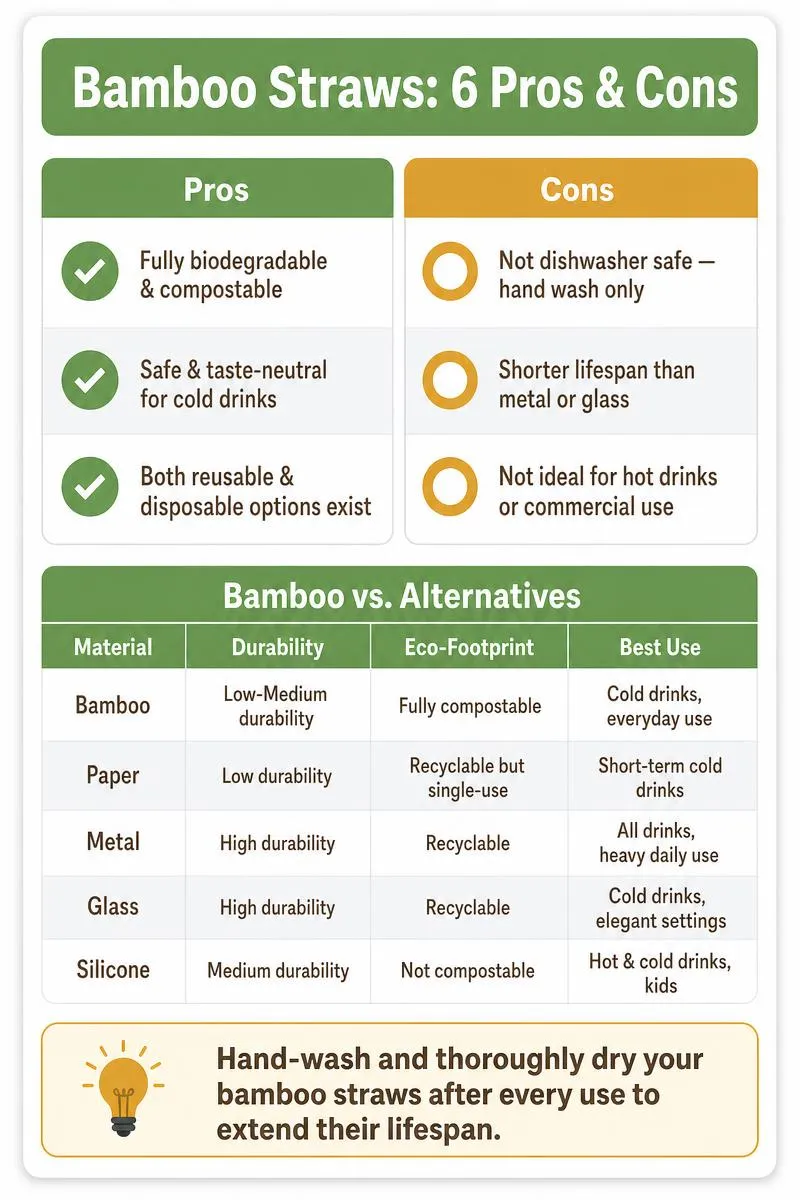
Bamboo Straws Pros And Cons Compared
| Material | Durability | Eco-Footprint | Best Use |
|---|---|---|---|
| Bamboo | Low 6Medium | Fully compostable | Cold drinks, everyday use |
| Paper | Low | Recyclable but single-use | Short-term cold drinks |
| Metal | High | Recyclable | All drinks, heavy daily use |
| Glass | High | Recyclable | Cold drinks, elegant settings |
| Silicone | Medium | Not compostable | Hot & cold drinks, kids |
6 Pros and Cons of Bamboo Straws
None of these tradeoffs is a dealbreaker on its own. The decision comes from stacking them against your actual routine.
1. They are fully biodegradable and compostable unlike plastic or silicone
When a bamboo straw reaches the end of its life, you can compost it. Bamboo is a plant material, so it breaks down the way a twig or a wooden skewer would – no special facility required, just a compost pile or bin with enough moisture and microbial activity.
Plastic straws, by contrast, fragment into microplastics instead of fully biodegrading. Silicone straws last nearly as long and are petroleum-derived, so even though they are reusable, their end-of-life story is closer to plastic than to bamboo. Metal and glass straws can be recycled, but the production energy behind stainless steel and borosilicate glass is significant.
Bamboo’s advantage is straightforward: it grew from soil and returns to soil. That does not make it perfect – it still needs to be harvested, shaped, and shipped – but the disposal step genuinely closes a loop that plastic and silicone do not.
2. They are safe and taste-neutral for most everyday beverages
Bamboo straws do not leach metallic flavors the way stainless steel can, especially with acidic drinks like lemonade or kombucha. They also do not carry the papery taste that paper straws impart, which is really the paper breaking down in liquid.
The bamboo itself is inert enough for cold and room-temperature drinks. Smoothies, iced coffee, juice, sparkling water – none of these pull a taste off a bamboo straw the way some metals pull a faint metallic note from acidic beverages.
Most reusable bamboo straws ship without any finish. Some brands apply a food-grade finish, but the basic product is just a hollowed-out stalk, sanded smooth. If you are checking labels, look for straws that specify no lacquer or a food-safe natural finish.
3. Both reusable and disposable bamboo options exist, though single-use versions still create waste
Reusable bamboo straws are the ones most people picture – a set in a pouch with a cleaning brush. These are designed to be washed and reused for months. They are thicker-walled and usually come from mature bamboo stalks.
Single-use bamboo straws are thinner and mass-produced for events, cafes, and takeout. They are biodegradable, which beats plastic, but they still represent a one-time-use product. If the goal is reducing waste overall, a single-use bamboo straw is better than a single-use plastic straw but worse than a reusable anything.
The reusable form makes sense for home use and occasional outings. The disposable form fits situations where washing is not practical – large events, catering, festivals – but the waste tradeoff is real.
4. They are not dishwasher safe and require hand cleaning with thorough drying
Bamboo is porous. Soaking a bamboo straw in water – or running it through a dishwasher cycle – lets moisture penetrate the fiber walls. That leads to two problems: splitting and mold.
The cleaning routine that actually works is simple but not optional. Rinse the straw immediately after use, run a pipe-cleaner-style brush through the hollow interior with warm soapy water, then stand it upright or lay it flat in a well-ventilated spot until fully dry. Drying matters more than washing – a damp bamboo straw stored in a drawer will grow mold faster than a dirty one left in open air.
If that sounds like more effort than you want for a straw, bamboo may not be the right material for your routine.
5. Their lifespan is shorter than metal or glass and depends on moisture exposure
A reusable bamboo straw typically lasts several months of regular use before it starts to show wear. The signs are visible: the ends fray or splinter, the surface develops cracks, or the interior darkens in patches that do not wash out. Sometimes the straw splits lengthwise, especially if it has been soaked or stored damp.
Metal and glass straws, by comparison, can last years with basic care. They do not absorb moisture, so their failure mode is different – metal dents or scratches, glass chips or breaks, but neither degrades from normal use the way bamboo does.
How long bamboo lasts depends heavily on how it is treated. A straw that is rinsed, brushed, and dried after every use will outlast one that sits in a glass of water for an hour and goes back in a drawer still damp.
6. They are not ideal for hot drinks or high-volume commercial settings
Bamboo straws work well with cold and room-temperature beverages. Hot drinks are a different story – bamboo can absorb heat and transfer it to the outside of the straw, making it uncomfortable to hold or sip. The material can also warp or crack with repeated exposure to high temperatures.
In restaurants and cafes, the practical concern is durability under volume. A straw that lasts months at home might last weeks or days in a setting where it gets heavy use, inconsistent cleaning, and no controlled drying routine. Some sources suggest that limited restaurant adoption of bamboo straws comes down to these operational issues rather than cost or supply.
For a household using straws occasionally with cold drinks, these limitations rarely come up. For a coffee shop running through hundreds of drinks a day, they matter.
Bamboo Straws vs. Paper, Metal, Glass, and Silicone
Each of the five materials gives something up – the question is which tradeoff matches your habits.
Durability and lifespan
- Metal and glass: Can last years with no material degradation.
- Silicone: Flexes rather than breaking under pressure and outlasts bamboo by far.
- Bamboo: Lasts months, not years, and depends on how dry you keep it.
- Paper: Weakest structurally, often softening within minutes of contact with liquid.
Eco-footprint
Bamboo biodegrades quickly and grows fast without pesticides or heavy irrigation. Paper also biodegrades, but it requires significant water and chemical inputs to manufacture, and it is typically single-use. Metal and glass last far longer but carry higher production energy costs – mining, smelting, and kiln-firing all have substantial carbon footprints. Silicone outlasts bamboo, but it neither composts nor recycles, so every silicone straw eventually ends up in the trash.
If you rank by end-of-life alone: bamboo and paper compost, metal and glass recycle, and silicone sits in between. If you rank by total waste produced over years of use, a single metal straw used for years may generate less waste than the bamboo straws you replace in that time.
Taste and temperature behavior
- Metal: Can taste metallic with acidic drinks and conducts heat rapidly – a metal straw in a hot drink gets too hot to touch.
- Glass: Taste-neutral and does not conduct heat as much, but it can break.
- Silicone: Taste-neutral for most people, though some notice a faint rubbery quality.
- Paper: Tastes like paper, especially as it softens.
- Bamboo: Taste-neutral for cold drinks but can absorb and transfer heat with hot beverages.
Best use case for each material
Bamboo – Cold drinks at home, occasional outings, composting matters to you, and you will hand wash.
Paper – One-time events, takeout, situations where washing is not possible and composting is available.
Metal – Daily use, hot or cold drinks, you want one straw that lasts years and do not mind a metallic note with acidic beverages.
Glass – You want taste neutrality and a straw that lasts, and you are careful enough to avoid dropping it.
Silicone – Kids, travel, situations where flexibility and durability matter more than compostability.
A side-by-side material comparison showing when bamboo outperforms other woods – helpful when weighing straws against…
How to Clean and Care for Bamboo Straws
The routine is short, but skipping any single step is what actually shortens a straw’s life.
Hand-washing technique
Rinse the straw under running water right after use – do not let residue dry inside. Take a narrow bristle brush (most bamboo straw sets include one) and run it through the hollow interior with warm water and a small amount of dish soap. A few passes are usually enough. If you drink smoothies or pulpy juices, check the interior against light to make sure no residue remains.
Drying and storage
Shake out excess water and stand the straw upright in a rack or glass, or lay it flat on a clean cloth in a spot with airflow. Do not put a damp straw in a closed drawer or a pouch. Once fully dry – which can take several hours depending on humidity – store it in a breathable container or loose in a drawer.
The two things that kill bamboo straws are prolonged soaking and damp storage. If you avoid both, neither splitting nor mold is likely to end the straw early.
Signs a straw is done
Replace a bamboo straw when the ends splinter or fray to the point of being uncomfortable on your lips, when visible cracks run along the length of the straw, or when the interior develops dark patches that do not come out with brushing. A straw that has split open is past its usable life.
FAQs About Bamboo Straws
Each answer below assumes cold drinks and hand washing unless stated otherwise.
What are the disadvantages of bamboo straws?
They are not dishwasher safe, they have a shorter lifespan than metal or glass, they can split or grow mold if stored damp, and they are not ideal for hot drinks. The cleaning and drying routine also requires more attention than dropping a metal straw in a dishwasher basket.
Are bamboo straws safe to drink from?
Yes, for cold and room-temperature beverages. Bamboo is a natural plant material with no chemical coating on most reusable versions, and it does not leach flavors. If you have a specific sensitivity, look for straws that state no lacquer or a food-safe finish.
Are bamboo straws actually eco-friendly?
They biodegrade and compost, which is a genuine end-of-life advantage over plastic and silicone. The manufacturing and shipping still carry environmental costs, and single-use bamboo straws still create waste. They are a real improvement over plastic but not a free pass.
How long do bamboo straws last?
Reusable bamboo straws typically last several months with proper care – rinsing, brushing, and thorough drying after each use. Lifespan depends heavily on moisture exposure. A straw that stays dry between uses will last longer than one that is repeatedly soaked or stored damp.
Can you clean bamboo straws in the dishwasher?
No, bamboo straws are not dishwasher safe. The heat and prolonged water exposure can cause splitting, warping, and mold. Hand wash with a brush and let the straw dry completely before storing.
Are bamboo straws hygienic?
They can be, with proper care. The hollow interior needs to be brushed clean and dried fully after each use. Bamboo is porous, so if it stays damp, mold can develop inside. A straw that is cleaned and dried consistently is as hygienic as any reusable option.
Are bamboo straws taste-neutral?
Yes, for cold drinks. Bamboo does not impart a metallic taste the way stainless steel can with acidic beverages, and it does not taste like paper the way paper straws do. Most reusable bamboo straws are just sanded plant material with no coating to contribute flavor.
What drinks are bamboo straws suitable for?
Cold and room-temperature drinks: water, juice, iced coffee, smoothies, cocktails, sparkling water. They are not ideal for hot beverages because bamboo can absorb and transfer heat, and repeated exposure to high temperatures can cause cracking or warping.
Are bamboo straws better than paper straws?
For repeated use, yes – a reusable bamboo straw replaces many single-use paper straws and does not collapse or soften in liquid. For genuine single-use situations, both are biodegradable, but bamboo is sturdier and does not add a papery taste to your drink. The tradeoff is that bamboo requires washing while paper does not.
Related Reading
Pros and cons of bamboo toothbrushes
Covers hygiene, durability, and care concerns for small bamboo items – useful for FAQ readers curious about safety and…
Final Thoughts
Bamboo straws make sense if you want a compostable straw for cold drinks and you are willing to hand wash and replace them every few months. They sit in a category no other material matches – fully biodegradable and reusable – but they are not the most durable or lowest-maintenance option. If you need a straw that lasts years or handles hot beverages without degrading, metal or glass is the practical next step to research.
External References
- (PDF) Non-homogeneous Thermal Properties of Bamboo – ACADEMIA (.edu)
- Thermal conductivity characterization of bamboo fiber … – ResearchGate
- FDA Alerts Industry and Consumers about Palm Leaf … – FDA
- Waste Reduction Resources for Businesses – Bainbridgewa
- what studies show about bacteria survival on bamboo … – Co
- Are Bamboo Utensils Safe? – Lillyteak