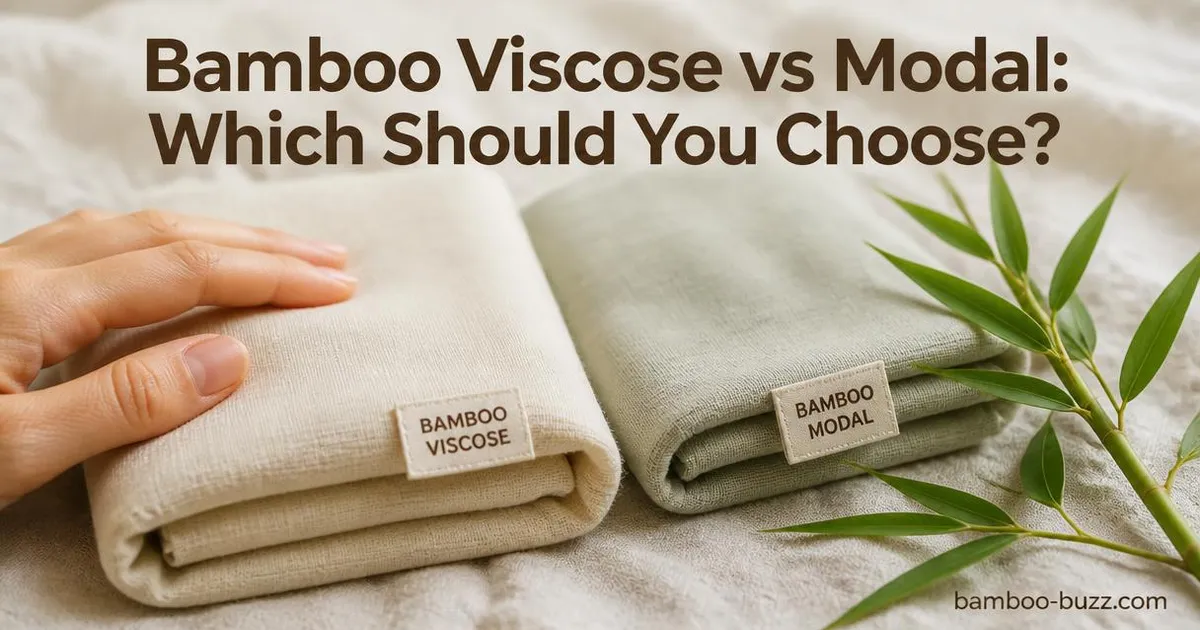
Bamboo Viscose vs Modal: Which Should You Choose?
Bamboo viscose and modal are both semi-synthetic rayons, which means plant pulp dissolved in chemicals and reformed into fibers. The difference comes down to what plant they start from and how the fabric behaves once you wear it or sleep on it.
Bamboo viscose starts with bamboo cellulose; modal typically starts with beechwood pulp. Both go through chemical processing, and neither is fully natural by the time it becomes fabric. So the real question isn’t which one is more natural – it’s which trade-offs matter more to you in terms of comfort, environmental impact, care, and cost.
Key Takeaways
- Both are semi-synthetic rayons – bamboo viscose uses bamboo pulp, modal typically uses beechwood pulp, and both are chemically processed into fiber.
- Bamboo viscose is usually more budget-friendly than modal across bedding and basics.
- Bamboo viscose is marketed as moisture-wicking and cooling; modal is marketed for exceptional softness and drape.
- Neither is fully natural, and processing transparency varies by manufacturer – some recover solvents, some don’t.
- Some sources suggest lyocell versions if closed-loop production is your top priority.
- Modal suits draped clothing and luxury basics; bamboo viscose suits moisture-wicking sheets and activewear.
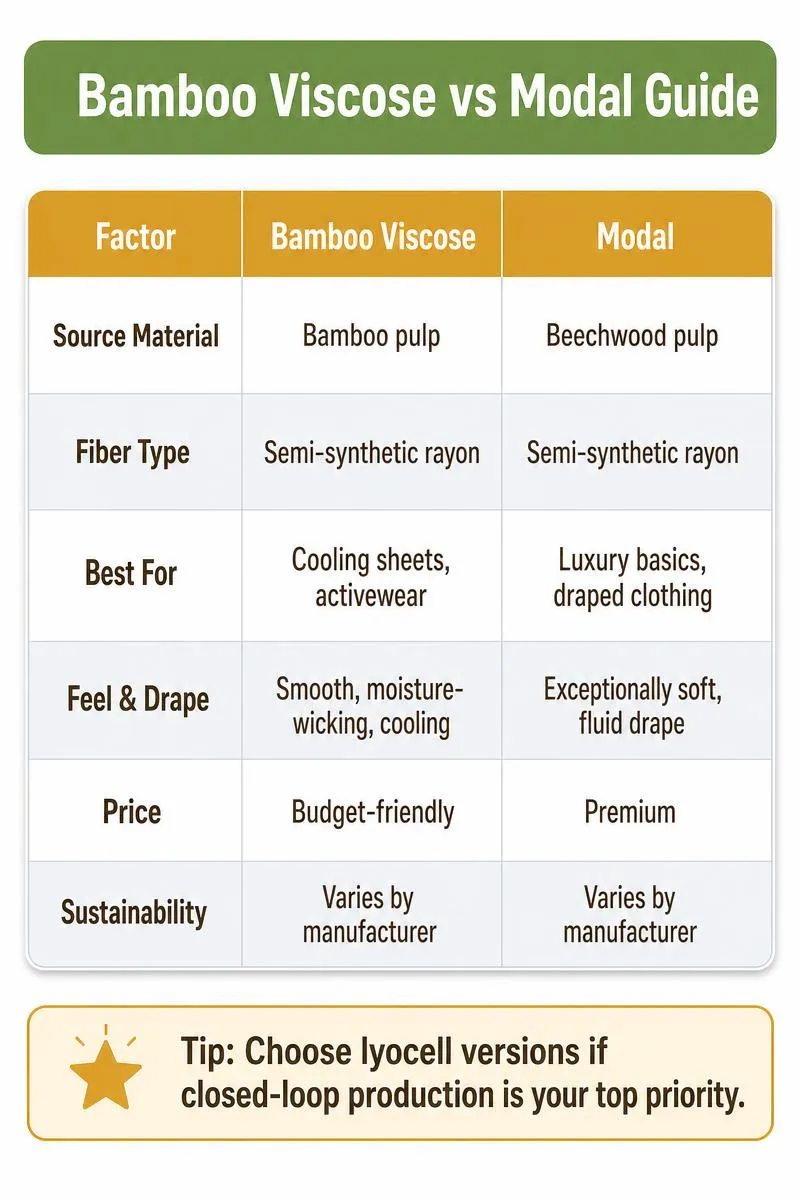
Bamboo Viscose Vs Modal Side-by-Side
| Factor | Bamboo Viscose | Modal |
|---|---|---|
| Source Material | Bamboo pulp | Beechwood pulp |
| Fiber Type | Semi-synthetic rayon | Semi-synthetic rayon |
| Best For | Cooling sheets, activewear | Luxury basics, draped clothing |
| Feel & Drape | Smooth, moisture-wicking, cooling | Exceptionally soft, fluid drape |
| Price | Budget-friendly | Premium |
| Sustainability | Varies by manufacturer | Varies by manufacturer |
What Is Bamboo Viscose?
Bamboo viscose is rayon produced from bamboo cellulose. The bamboo stalks are broken down into pulp, dissolved in chemical solvents (typically sodium hydroxide and carbon disulfide), and extruded into fibers through a spinneret. The result is a soft, breathable fabric that handles moisture well.
Best uses: bedding, underwear, activewear, and baby clothes.
Strengths of bamboo viscose: Bamboo viscose is soft, breathable, and moisture-wicking. Brands often market bamboo viscose as gentle on sensitive skin, and bamboo contains a compound called bamboo kun that brands market as antibacterial – though most of bamboo kun doesn’t survive the viscose chemical process.
Weaknesses of bamboo viscose: Conventional bamboo viscose uses an open-loop chemical process, meaning solvents and byproducts aren’t always recovered. Quality varies significantly between manufacturers. Bamboo viscose can also shrink if washed improperly.
Worth Reading Next
Best baby bamboo pajamas on amazon
curated picks for soft bamboo sleepwear that demonstrate how viscose and modal blends feel in real products.
What Is Modal?
Modal is rayon typically produced from beechwood pulp. Like bamboo viscose, beechwood cellulose is dissolved in chemicals and extruded into fiber. Modal is often positioned as a more refined version of standard viscose, with a smoother surface.
Best uses: draped clothing, luxury basics, underwear, and baby clothes.
Strengths of modal: Modal is exceptionally soft with a silk-like hand feel and excellent drape. Modal often holds dye and resists fading better than standard viscose through repeated washing. Modal is favored for body-skimming garments where drape and softness matter more than moisture management.
Weaknesses of modal: Modal uses the same category of chemical processing as bamboo viscose. Sourcing transparency varies by manufacturer. Modal typically costs more than bamboo viscose.
Bamboo Viscose vs Modal: Sustainability and Environmental Impact
Modal may edge ahead when the beechwood is responsibly sourced and solvents are recovered, but both rely on chemical processing. The sustainability comparison depends on the raw crop and what happens to the solvents.
Bamboo viscose sourcing: Bamboo grows quickly, which gives the raw crop a low-impact profile. But conventional bamboo viscose production uses an open-loop process where sodium hydroxide and carbon disulfide are discharged rather than recovered. This raises chemical waste concerns that offset the advantages of the bamboo plant itself.
Modal sourcing: Modal typically comes from beechwood trees, which are slower-growing than bamboo. Some modal manufacturers recover and reuse solvents in closed-loop systems, reducing chemical discharge. However, not all modal is produced this way – the label alone doesn’t tell you whether the process was closed-loop.
Neither bamboo viscose nor modal releases microplastics, since both are cellulosic fibers rather than synthetics like polyester. Both are biodegradable under the right conditions. Energy and water use in production varies by facility, and manufacturers rarely publish detailed figures.
Neither fabric is non-toxic in the strictest sense – residual processing chemicals can remain in the fiber. OEKO-TEX certification, when present, indicates testing for harmful substance residues.
If sustainability is your top priority, bamboo lyocell is the more relevant option within the bamboo family. Bamboo lyocell uses a closed-loop process where the solvent (N-methylmorpholine N-oxide) is recovered at a high rate and reused. Bamboo lyocell isn’t the same as bamboo viscose, and the label should say lyocell specifically.
Bamboo Viscose vs Modal: Comfort and Performance
Modal wins on softness and drape; bamboo viscose wins on moisture management and cooling feel.
Bamboo viscose comfort: Bamboo viscose is breathable and wicks moisture away from skin, which makes bamboo viscose feel cooler in warm conditions. Brands market bamboo viscose for sensitive skin and bacteria resistance. The cooling and wicking properties come from the fiber structure itself, not from bamboo kun.
Modal comfort: Modal delivers silk-like softness with a smooth, fluid drape that contours to the body without clinging. Modal is favored for body-skimming garments, luxury underwear, and loungewear where softness against skin is the primary concern. Modal doesn’t wick moisture as effectively as bamboo viscose, but modal’s hand feel is generally considered superior for next-to-skin comfort in low-activity settings.
Use case overlap: Both fabrics appear in women’s clothing, baby clothes, and bedding. For baby clothes, the choice often comes down to whether breathability and moisture-wicking (bamboo viscose) or softness and drape (modal) matters more for the specific garment.
Keep Reading
a practical clothing comparison covering breathability, moisture wicking, and comfort – useful when assessing viscose…
Bamboo Viscose vs Modal: Durability and Care
Modal is generally more stable through repeated washing, but pick bamboo viscose anyway if moisture-wicking matters more than wash stability.
Bamboo viscose care: Bamboo viscose is machine washable, but care labels matter. Hot water and high-heat drying can cause bamboo viscose to shrink or lose shape.
Modal care: Modal resists shrinking and fading better than conventional viscose, though modal still benefits from cold-water washing and low-heat drying. Modal garments often hold their shape and color longer than bamboo viscose garments under similar washing conditions.
Care tips for both: Wash cold, avoid high heat, and always check the care label. Fabric blends (like modal-spandex or bamboo viscose-cotton) may have different care requirements than unblended versions.
Bamboo Viscose vs Modal: Cost and Accessibility
Bamboo viscose is the more budget-friendly option; modal typically sits at a higher price point.
Bamboo viscose cost: Bamboo viscose is widely available at lower price points, particularly in bedding (sheets, pillowcases) and basics (underwear, socks, t-shirts). Bamboo viscose products are sold through major retailers and specialty bamboo brands alike.
Modal cost: Modal is typically priced higher and is often found in premium underwear, fashion brands, and luxury basics. Modal is also sold through major retailers, but modal products tend to carry a mid-range to premium price tag compared to bamboo viscose equivalents.
The price gap between bamboo viscose and modal isn’t enormous for individual items, but it adds up if you’re outfitting a bed or replacing a wardrobe.
Which Should You Choose?
Your use case and budget drive the decision.
- Budget-friendly bedding or basics: Choose bamboo viscose. You get softness, breathability, and moisture-wicking at a lower price point.
- Luxury underwear or draped clothing: Choose modal. Modal’s silk-like hand feel and fluid drape are hard to match at this price range.
- Baby clothes: Compare softness vs moisture needs. Modal offers drape and softness; bamboo viscose offers breathability and moisture-wicking. For sleepwear, bamboo viscose’s cooling feel may matter more. For everyday onesies, modal’s softness may win.
- Moisture-wicking sheets or activewear: Choose bamboo viscose. Bamboo viscose handles moisture better than modal, making bamboo viscose the better fit for sweaty sleepers or workout gear.
- Top priority is sustainability: Look for bamboo lyocell or certified closed-loop versions of either fabric. Standard bamboo viscose and modal both use chemical processing with variable solvent recovery.
a broader material comparison that helps readers weigh performance and sustainability across different natural fibers.
FAQs About Bamboo Viscose and Modal
What’s better, modal or bamboo viscose?
Neither is universally better. Modal is softer and drapes better; bamboo viscose wicks moisture and costs less. Modal suits luxury basics and draped garments; bamboo viscose suits activewear and cooling bedding.
Are modal and bamboo viscose safe to wear, or are they toxic?
Both are generally safe to wear. The concern is residual processing chemicals – look for OEKO-TEX certification if you want assurance that the finished fabric has been tested for harmful substance residues.
What are the drawbacks of bamboo viscose?
Bamboo viscose uses an open-loop chemical process, can shrink with improper care, and varies in quality between manufacturers. Bamboo viscose is also less dimensionally stable through washing than modal.
Does bamboo viscose release microplastics?
No. Bamboo viscose is a cellulosic fiber, not a synthetic like polyester. Cellulosic fibers don’t shed microplastics.
Is bamboo viscose basically plastic?
No. Bamboo viscose starts with plant cellulose and is a semi-synthetic fiber. Plastic fabrics like polyester and nylon are derived from petroleum. Bamboo viscose is chemically processed but not petroleum-based.
Is bamboo viscose or cotton the better choice?
It depends on what you need. Bamboo viscose is softer than most standard cotton and wicks moisture better. Cotton is more durable and easier to care for. For cooling bedding, bamboo viscose has an edge; for everyday durability, cotton wins.
What is the difference between bamboo viscose and bamboo lyocell?
Bamboo viscose uses sodium hydroxide and carbon disulfide in an open-loop process. Bamboo lyocell uses N-methylmorpholine N-oxide in a closed-loop process where the solvent is recovered and reused. Bamboo lyocell is the more sustainable option within the bamboo fabric family.
Does producing bamboo viscose require a lot of energy?
Energy use varies by facility and isn’t typically published by manufacturers. The chemical processing, pulping, and extrusion all require energy, but specific figures aren’t readily available for comparison.
Final Thoughts
There’s no overall winner between bamboo viscose and modal. Your budget, use case, and concerns about processing transparency should drive the choice. Bamboo viscose gives you moisture-wicking and cooling at a lower price; modal gives you superior softness and drape at a higher one.
Neither standard option is ideal if sustainability is your main concern. For that, look for bamboo lyocell or certified closed-loop modal, both of which recover solvents rather than discharging them.
Before buying, check the product label for exact fiber content and care instructions – a label saying ‘bamboo’ or ‘modal’ doesn’t tell you everything about how the fabric was made or how to keep it in good shape.
External References
- Properties, Production, and Recycling of Regenerated … – PMC – NIH (NCBI)
- National Emission Standards for Hazardous Air Pollutants – Federalregister
- OEKO-TEX® STANDARD 100 – OEKO-TEX
- Lyocell fibre production using NMMO – A simulation-based … – NCSU (.edu)
- How to Reduce Environmental Footprint of Lyocell … – Patsnap
- bamboo fiber antibacterial effect (a review) – ResearchGate