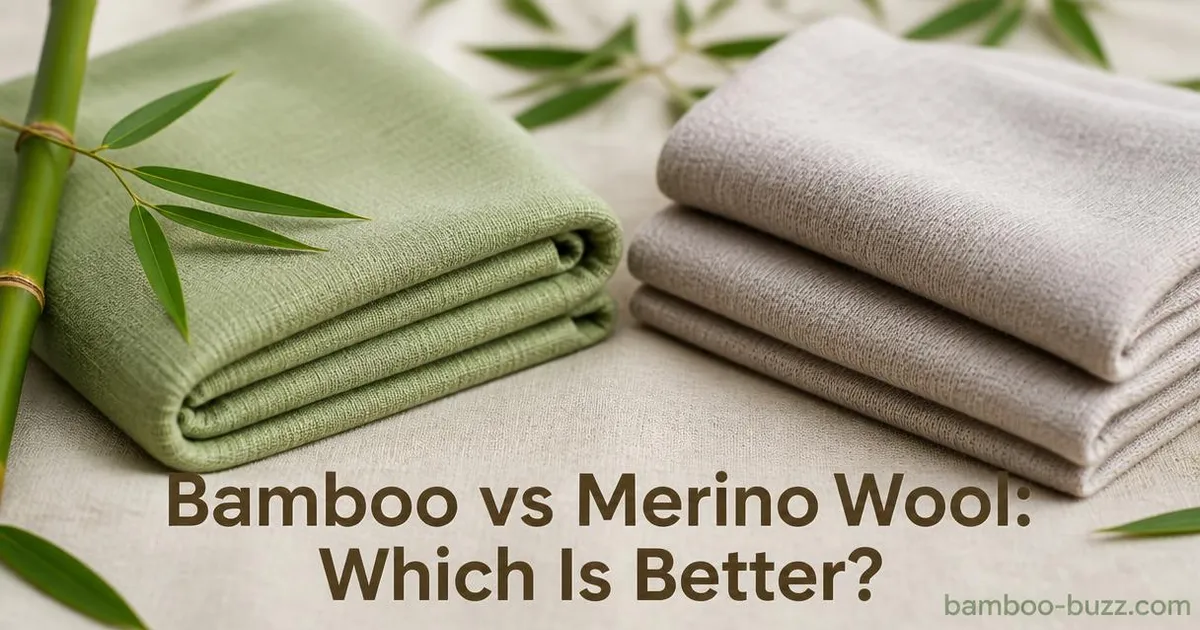
Bamboo vs Merino Wool: Which Is Better?
Most people picking between bamboo fabric and merino wool assume the softer one wins. That holds up right up until you wear the same shirt for three days on a trip – and suddenly odor control and temperature regulation matter more than how the fabric felt on day one.
Bamboo fabric and merino wool overlap in price range and use cases, but they solve different problems. Bamboo fabric prioritizes immediate comfort in warm conditions. Merino wool prioritizes performance across temperature swings and extended wear.
The choice comes down to what you actually need the garment to do: feel soft against your skin on a Tuesday, or stay wearable through a weekend of hiking without laundry access.
Key Takeaways
- Merino wool handles temperature swings and multi-day odor control better than bamboo fabric.
- Bamboo fabric tends to feel softer immediately and costs less upfront.
- Both materials need gentler care than cotton, but merino wool is usually less forgiving with heat and agitation.
- Some sources suggest bamboo fabric processed via viscose raises different environmental concerns than the raw plant’s renewability.
- The right choice depends more on whether you need travel performance or daily comfort than on finding a universal winner.
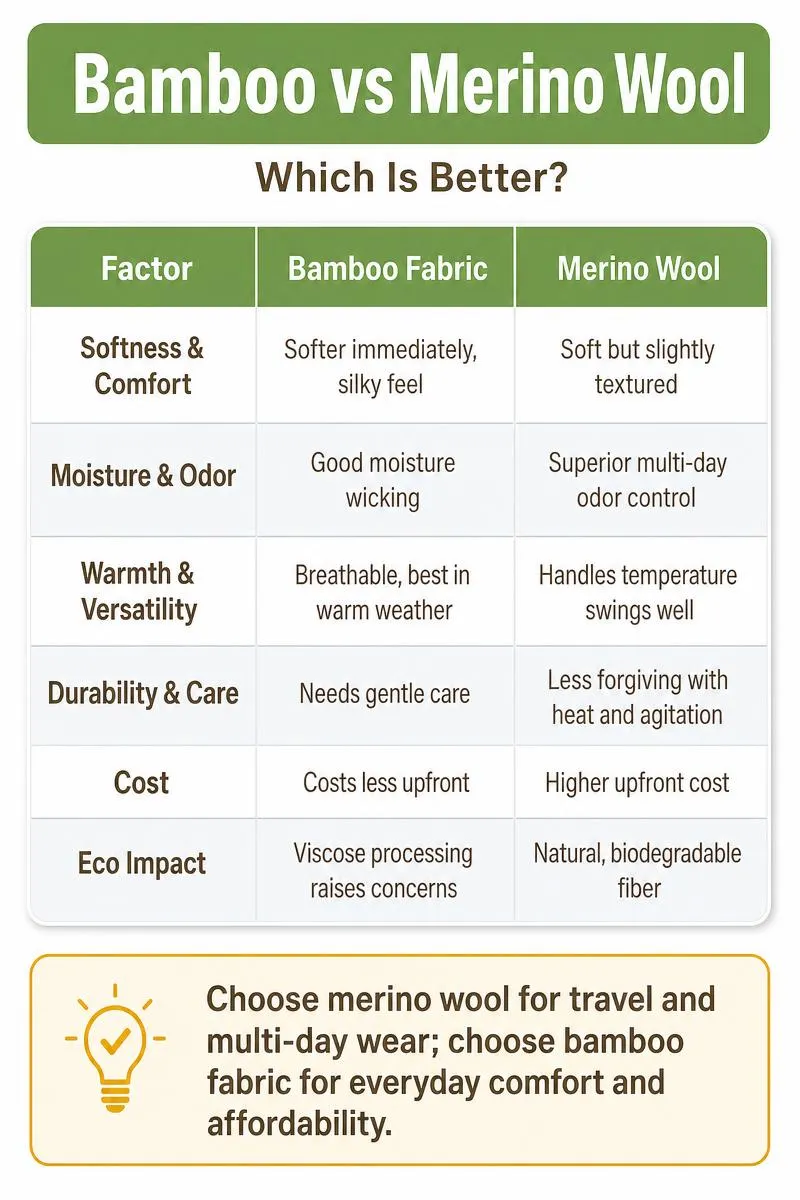
Bamboo Vs Merino Wool Compared
| Factor | Bamboo Fabric | Merino Wool |
|---|---|---|
| Softness & Comfort | Softer, silky feel | Soft, slightly textured |
| Moisture & Odor | Good moisture wicking | Superior multi-day odor control |
| Warmth & Versatility | Breathable; best in warm weather | Handles temperature swings well |
| Durability & Care | Needs gentle care | Less forgiving with heat and agitation |
| Cost | Costs less upfront | Higher upfront cost |
| Eco Impact | Viscose processing raises concerns | Natural, biodegradable fiber |
What Is Bamboo Fabric?
Bamboo fabric is a soft textile made from bamboo cellulose, most often produced through a viscose process that dissolves the plant fibers in chemical solvents and re-extrudes them as thread. The result is a smooth, breathable fabric with a hand-feel that many people compare to silk or high-thread-count cotton.
Best use cases: Daily casual wear, hot or humid climates, and sensitive skin. Bamboo viscose drapes well and doesn’t cling, which helps in sticky weather.
Key strengths: Smooth hand-feel, breathable structure, and strong moisture absorption. Bamboo fabric pulls sweat away from skin effectively and dries reasonably fast.
Key weaknesses: Durability varies by weave and processing – lightweight bamboo viscose can pill or thin out faster than cotton blends. Bamboo fabric also requires gentle washing to maintain its structure over time.
Worth Reading Next
Bamboo vs merino wool underwear
A close comparison of bamboo and merino in underwear, focusing on fit, breathability, and odor control.
What Is Merino Wool?
Merino wool comes from Merino sheep and uses fibers fine enough to wear next to skin without the itch most people associate with wool. Fiber diameter matters here: Merino fibers are fine enough to bend against skin without triggering the scratch reflex that coarser wools cause.
Best use cases: Travel, outdoor base layers, and cold or variable temperatures. Merino wool suits travelers who need one garment to perform across a range of conditions.
Key strengths: Merino wool stays warm when wet – a rare trait among natural fibers. The fiber structure also resists odor buildup across multiple wears, and the crimp in Merino fibers traps insulating air, which helps regulate temperature across seasons.
Key weaknesses: Merino wool is prone to shrinking if washed in hot water or dried with agitation. Merino garments also typically cost more than comparable bamboo fabric pieces.
Bamboo Fabric vs Merino Wool: Softness and Comfort
Softness is where bamboo fabric usually wins the first-impression test. Bamboo viscose has a smooth, almost slick surface that glides against skin – there’s no texture to break in or get used to. Fine-gauge merino comes close, especially in lighter weights, but the wool fiber still has a faint fuzz that some people notice.
Fiber diameter drives the comparison. Bamboo viscose fibers are extruded uniformly, so the fabric surface is consistent. Merino fibers vary slightly in diameter even within a fine grade, which creates subtle texture variation across the fabric.
Fabric construction also matters. A tight bamboo jersey knit feels different from a loose bamboo interlock, and the same holds for merino – a fine-gauge merino base layer feels softer than a heavier merino sweater knit. But if you’re comparing equivalent weights, bamboo fabric wins on immediate hand-feel.
Our winner: Bamboo fabric for immediate hand-feel, though fine-gauge merino is close enough that most people don’t notice after a few wears.
Bamboo Fabric vs Merino Wool: Moisture and Odor Performance
Both materials manage sweat, but they do it differently. Bamboo viscose absorbs moisture into the fiber itself, pulling sweat away from skin and spreading it across the fabric surface for evaporation. Merino wool absorbs moisture inside the fiber structure too, but Merino fibers can hold a significant amount of water before the fabric feels wet to the touch.
Odor resistance is where the gap widens. Merino wool fibers absorb sweat and trap odor molecules inside the fiber structure, which prevents bacteria from multiplying on the fabric surface. That’s why a merino base layer can go multiple days without smelling.
Bamboo fabric doesn’t have the same mechanism – bamboo kun, a compound in the raw plant with mild antibacterial properties, mostly doesn’t survive the viscose process, so the finished fabric lacks that protection.
For high-output activity like hiking or cycling, merino wool keeps performing when you’re sweating heavily. Bamboo fabric handles light daily perspiration well but starts to hold odor after extended activity without washing.
Our winner: Merino wool for odor control and moisture management during high-output use.
Worth Reading Next
A practical pros and cons guide to bamboo socks covering breathability, odor, and suitability compared to wool options.
Bamboo Fabric vs Merino Wool: Warmth and Weather Versatility
Merino wool is built for variable conditions. The crimped fibers trap air that insulates against cold and allows breathability when temperatures rise. Merino base layers work as well on a chilly morning as they do when the afternoon sun warms things up.
Bamboo fabric excels in consistent heat. The breathable structure and moisture absorption make bamboo viscose comfortable in hot, humid weather where wool – even fine merino – can feel warm. For tropical climates or summer wear in sticky conditions, bamboo fabric keeps you cooler.
Is merino wool too hot for summer? Not necessarily. Lightweight merino (finer knits, shorter sleeves) works in moderate summer heat because the fiber breathes and manages sweat. But once humidity climbs, bamboo fabric’s lighter weight and smoother surface give it an edge.
For cold and wet conditions, merino wool is the clear pick. Merino stays warm when wet, which matters if you’re caught in rain or sweating through a base layer in cold weather. Bamboo fabric loses insulating value when soaked and takes longer to dry.
Our winner: Merino wool for cold and variable weather; bamboo fabric for consistent hot or humid climates.
Bamboo Fabric vs Merino Wool: Durability and Care
Neither material is as forgiving as cotton in the wash. Bamboo viscose weakens when exposed to heat and agitation, so cold water on a gentle cycle is the rule. Tumble drying on heat can damage the fiber structure and cause shrinkage or pilling. Air drying or laying flat slows the fiber breakdown that shortens bamboo garment life.
Merino wool is more durable in the fiber itself – the wool fiber is resilient and holds up to repeated wear – but the care requirements are stricter. Hot water causes felting and shrinkage, and agitation in a standard wash cycle can permanently distort the fabric. Most merino garments specify cold water, gentle or wool cycle, and flat drying. Some merino pieces are labeled machine-washable, but that usually means a wool-safe cycle on cold – not a normal wash.
Pilling happens in both materials. Bamboo viscose tends to pill in high-friction areas like inner thighs or underarms, especially in lighter weaves. Merino pills less in finer grades but can develop surface fuzz with repeated wear in rougher knits.
Can you wash 100 percent merino wool at home? Yes, but only on a cold, gentle cycle with wool-safe detergent, and never tumble dry. If your washing machine only has one cycle, hand washing is safer.
Our winner: Bamboo fabric for easier everyday care; merino wool is durable but demands precise laundering.
Which Should You Choose?
The decision splits cleanly by use case.
Daily wear and sensitive skin: Bamboo fabric. The smooth fiber surface reduces friction against skin, and bamboo viscose lacks the lanolin that some people react to in wool.
Travel without laundry: Merino wool. The odor resistance and temperature regulation mean one or two merino pieces can cover a multi-day trip without laundry.
Outdoor activity: Merino wool. Stays warm when wet, handles sweat during high-output activity, and regulates across a wide temperature range.
Hot, humid climates or budgets: Bamboo fabric. Costs less upfront, feels cooler in sticky heat, and breathes well enough for everyday comfort.
For socks: Check the blend and construction. Both materials work for socks, but the right choice depends on activity level. Merino wool socks handle hiking and cold weather better; bamboo socks suit everyday wear and warm conditions. Many sock makers blend either material with synthetic fibers for durability, since pure bamboo or pure merino socks wear out faster at heel and toe.
Worth Reading Next
Compares bamboo viscose to silk for softness and drape, helpful if you’re weighing fabric feel against merino.
FAQs About Bamboo Fabric and Merino Wool
Is bamboo fabric or merino wool better for shirts and base layers?
Depends on what you’re doing in the shirt. For travel, hiking, or variable temperatures, merino wool is the stronger choice. For everyday casual wear in warm weather, bamboo fabric feels better and costs less.
Which is softer, bamboo fabric or merino wool?
Bamboo fabric. Bamboo viscose has a smoother, more uniform surface. Fine-gauge merino is soft enough for next-to-skin wear, but bamboo fabric wins on first-touch hand-feel.
Does bamboo fabric or merino wool resist odor better?
Merino wool, by a wide margin. Merino fibers trap odor molecules inside the fiber structure and prevent bacterial growth on the surface. Bamboo fabric processed through viscose loses most of the bamboo kun that gives the raw plant its antibacterial properties, so the finished fabric doesn’t resist odor the same way.
Which is warmer, bamboo fabric or merino wool?
Merino wool. The crimped fibers trap insulating air pockets, and the fiber retains warmth even when wet. Bamboo fabric provides minimal insulation compared to merino at equivalent weights.
Is merino wool too hot to wear in summer?
Not in lightweight knits. Fine-gauge merino in short-sleeve or sleeveless styles breathes well and manages sweat in moderate summer heat. In high humidity, bamboo fabric will feel cooler.
What are the downsides of bamboo fabric?
Durability varies by weave – lightweight bamboo viscose can pill and thin out faster than cotton. The fabric requires gentle washing and avoids heat drying. Some sources also raise environmental concerns about the chemical solvents used in viscose processing, even though bamboo itself is a fast-growing, low-input crop.
What are the downsides of merino wool?
Cost is the main one – merino garments typically cost more than bamboo equivalents. Care is the other: hot water and agitation cause shrinkage and felting, so merino needs cold, gentle washing and flat drying.
How do you care for bamboo fabric and merino wool clothing?
Both need cold water on a gentle cycle. Bamboo fabric can tolerate air drying or low-heat tumble drying better than merino, which should always dry flat. Use wool-safe detergent for merino. Avoid fabric softeners for both – they coat the fibers and reduce moisture absorption.
Is bamboo fabric more sustainable than merino wool?
Bamboo grows quickly and is widely described as a low-input crop, but the viscose process uses chemical solvents to dissolve the plant fibers. Merino wool comes from a renewable animal source and is biodegradable, but sheep farming requires land, water, and generates methane. If the viscose process uses a closed-loop system that recovers solvents, bamboo fabric’s footprint improves significantly – but not all manufacturers use that method.
Are bamboo or merino wool socks better?
Depends on activity. Merino wool socks are better for hiking, cold weather, and multi-day wear because of odor resistance and insulation. Bamboo socks work well for everyday use in warm conditions. Look at the blend – most performance socks mix either fiber with synthetics like nylon for durability at high-wear areas.
Final Verdict
No single material wins across every category. Merino wool edges ahead for active travel, outdoor use, and variable weather. Bamboo fabric wins for daily comfort in warm climates, sensitive skin, and lower upfront cost.
If you have allergy-prone or very sensitive skin, bamboo fabric’s smooth surface and lack of lanolin make it the safer pick. For extended trips where laundry isn’t an option, merino wool’s odor resistance is hard to beat.
Identify your primary use case and budget, then buy one garment in each material and wear both for a week. The real test isn’t how the fabric feels on day one – it’s how it performs on day three.
External References
- How to care for wool sweaters right to preserve its quality – SOUTHERNWV (.edu)
- Properties, Production, and Recycling of Regenerated … – PMC – NIH (NCBI)
- 7+ Tips: How to Clean a Wool Blanket (Easy!) – ATLANTISUNIVERSITY (.edu)
- Antimicrobial Properties of Bamboo Fibres – Biomedres
- The Science Behind Wool’s Natural Odor-Fighting Powers – Sonomawoolcompany