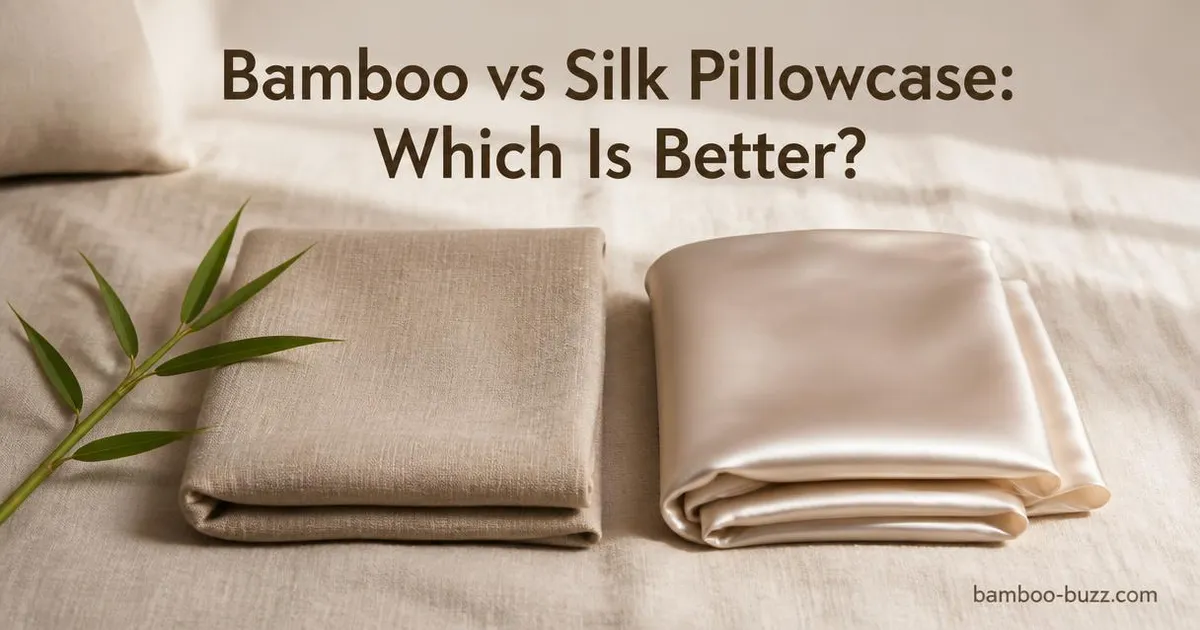
Bamboo vs Silk Pillowcase: Which Is Better?
Both bamboo and silk pillowcases promise gentler treatment for your hair and skin than plain cotton. But they get there through completely different materials, and the gap between them shows up in how they feel, how you wash them, and how they perform overnight.
Bamboo pillowcases are woven from plant-derived fiber that breathes well and tolerates regular machine washing. Silk pillowcases are woven from protein fibers produced by silkworms, and they deliver an exceptionally smooth surface that demands delicate care. The right pick depends on how you sleep and what you actually want from your pillowcase.
Key Takeaways
- Neither fabric wins outright; the right choice depends on whether you prioritize cooling power or friction reduction.
- Bamboo tends to sleep cooler and wick moisture, making it the stronger pick for hot sleepers and anyone prone to sweat or oil buildup.
- Silk offers an exceptionally smooth surface with less drag against hair, though some sources suggest bamboo also performs well for certain hair types.
- Bamboo is generally easier to wash and requires less delicate care than silk.
- If dust mite allergies or sensitive skin are concerns, bamboo’s naturally hypoallergenic properties may offer an advantage.
- Silk is an animal-derived fabric, while standard bamboo pillowcases are plant-based and vegan.
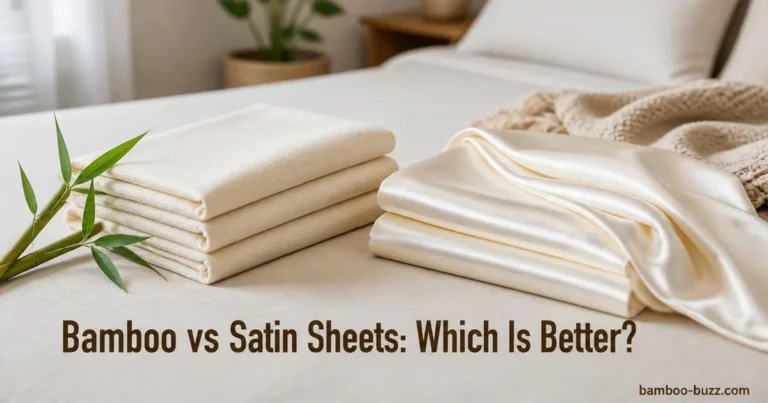
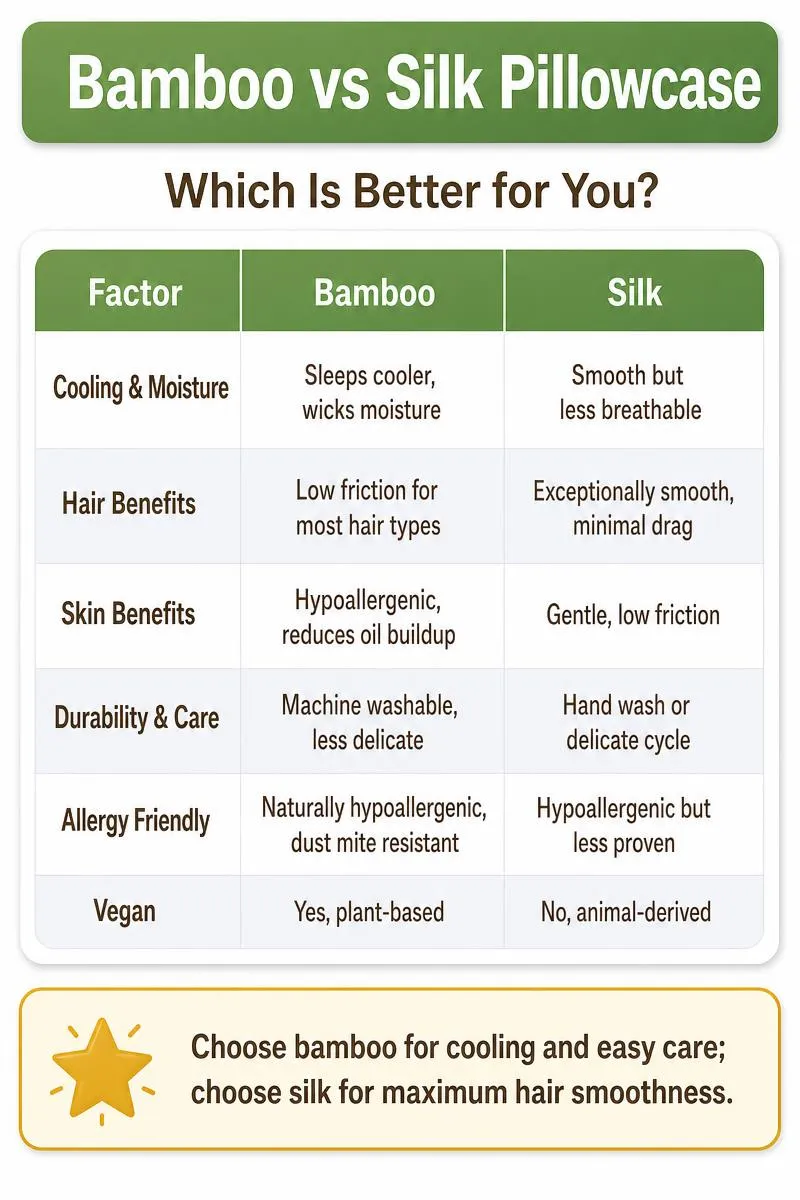
Comparing the Top Bamboo Vs Silk Pillowcase
| Factor | Bamboo | Silk |
|---|---|---|
| Cooling & Moisture | Sleeps cooler, wicks moisture | Smooth but less breathable |
| Hair Benefits | Low friction for most hair types | Exceptionally smooth, minimal drag |
| Skin Benefits | Hypoallergenic, reduces oil buildup | Gentle, low friction |
| Durability & Care | Machine washable, less delicate | Hand wash or delicate cycle |
| Allergy Friendly | Naturally hypoallergenic, dust mite resistant | Hypoallergenic but less proven |
| Vegan | Yes, plant-based | No, animal-derived |
What Is a Bamboo Pillowcase?
A bamboo pillowcase is woven from bamboo-derived fiber, most commonly bamboo viscose or bamboo rayon. Raw bamboo stalks get dissolved in chemical solvents to produce a soft, workable cellulose fiber, which is then spun into yarn and woven into fabric.
Bamboo pillowcases suit hot sleepers, people with allergies, and anyone who wants bedding that tolerates regular machine washing.
The main strengths:
- Breathable and moisture-wicking – pulls sweat away from skin overnight
- Naturally resistant to dust mites and odors – fiber structure doesn’t hold moisture
- Durable with simple care – holds up to repeated machine washing
The main weakness: the chemical processing required to turn raw bamboo into soft viscose fabric involves solvents that some buyers want to know more about before purchasing.
Worth Reading Next
Explains how bamboo is processed into rayon and what that means for feel, breathability, and care.
What Is a Silk Pillowcase?
A silk pillowcase is made from natural silk protein fibers, typically mulberry silk. Silkworms produce the silk threads, which get harvested, spun, and woven into a fine, smooth fabric.
Silk pillowcases suit people seeking minimal friction against hair and skin, and those who prefer a luxury feel.
The main strengths:
- Extremely smooth – very low surface friction against hair and skin
- Naturally temperature regulating – doesn’t trap heat like synthetic fabrics
- Fine, luxurious texture – distinctive feel and appearance
The main weaknesses:
- Requires gentle washing or dry cleaning – delicate structure needs careful handling
- Not vegan – comes from silkworms
- Higher price point – usually costs more than bamboo alternatives
- More prone to pilling, thinning, and tearing – especially with frequent washing
Bamboo Pillowcase vs Silk Pillowcase: Skin and Hair Benefits
The comparison between these two fabrics for skin and hair comes down to surface friction and moisture handling.
Silk produces the lowest surface friction of the two. The smooth protein fibers create very little drag against hair strands, which means less pulling, fewer tangles, and reduced breakage for delicate or breakage-prone hair. Some sources suggest bamboo viscose also performs reasonably well for certain hair types, but silk consistently wins on raw smoothness.
For skin, there’s no clinical consensus on which fabric is better for acne-prone skin. Bamboo viscose is more absorbent than silk, which means it can pull moisture and oils away from your skin rather than letting them pool on the surface. That absorbency may help if your skin tends toward oil buildup overnight.
Silk is less absorbent but smoother, so it may reduce irritation from fabric rubbing against your face.
Silk is the winner for lowest friction. Bamboo is the practical alternative depending on your hair type and whether oil absorbency matters more to you than surface smoothness.
Bamboo Pillowcase vs Silk Pillowcase: Breathability and Temperature Regulation
How each material handles body heat and moisture during sleep is where bamboo pulls ahead clearly. The difference is noticeable if you sleep warm.
Bamboo viscose is actively moisture-wicking. The fiber structure pulls sweat and moisture away from your skin and disperses it through the fabric, which helps the surface feel cooler and drier. If you experience night sweats or tend to run hot, that wicking action keeps the pillowcase from feeling damp or sticky.
Silk’s protein structure is naturally temperature regulating to some degree, meaning it doesn’t trap heat the way some synthetic fabrics do. But silk does not actively wick moisture. It feels cool to the touch initially, and it breathes adequately, but it doesn’t pull moisture away from your skin the way bamboo viscose does.
Bamboo is the winner for hot sleepers and night sweats. Silk performs adequately but doesn’t actively wick, so it won’t keep you as dry if you perspire heavily overnight.
Worth Reading Next
Compares bamboo and satin for cooling performance and moisture-wicking during sleep.
Bamboo Pillowcase vs Silk Pillowcase: Durability and Care
Washing and maintenance requirements differ significantly between these two fabrics. The care routine you’re willing to commit to may be the deciding factor.
Bamboo viscose pillowcases can typically go in the washing machine on a gentle cycle with cool water and a mild detergent. Tumble drying on low or line drying keeps the fiber in good shape. The fabric holds up well to repeated laundering without significant pilling or thinning under normal washing conditions.
Silk requires much more delicate handling. Most silk pillowcases need hand washing or a machine cycle on the most delicate setting, using cool water and a silk-safe detergent. Some silk pillowcases call for dry cleaning instead.
Pilling, thinning, and tearing are all more likely with silk than bamboo, especially if you wash it frequently or use warm water.
Bamboo is the winner for ease of care and longevity under normal washing. If you want a pillowcase you can throw in with your regular laundry, bamboo is the clear choice.
Bamboo Pillowcase vs Silk Pillowcase: Allergies and Hypoallergenic Properties
Both fabrics are generally non-irritating, but their resistance to common allergens differs based on how each material is structured.
Bamboo viscose is naturally resistant to dust mites and mold. The fiber structure doesn’t hold onto moisture the way cotton does, which makes the environment less hospitable for dust mites and mildew growth. For people with dust mite allergies or sensitive skin, that resistance can make a real difference in how well you sleep.
Silk is generally non-irritating against skin because of its smooth protein fibers. But silk does not have the same dust mite resistance as bamboo. The protein-based fiber can still attract dust mites over time, particularly if it’s not washed regularly.
Bamboo is the winner for allergy-prone sleepers. Silk is fine for sensitive skin but doesn’t offer comparable protection against dust mites.
Which Should You Choose?
Your sleeping habits and personal priorities point you toward one fabric over the other.
- You sleep hot or experience night sweats: Choose bamboo. The moisture-wicking fiber keeps the surface cooler and drier than silk.
- You have sensitive skin, dust mite allergies, or chemical sensitivities: Choose bamboo. The fiber’s natural resistance to dust mites and mold gives you a cleaner sleep surface.
- You want the lowest possible friction for delicate or breakage-prone hair: Choose silk. No fabric matches silk’s smooth surface for reducing drag against hair strands.
- You need machine-washable, low-maintenance bedding: Choose bamboo. Toss it in the washer on gentle and you’re done.
- You prefer vegan or plant-based materials: Choose bamboo. Silk is animal-derived, while bamboo viscose comes from plant cellulose.
Explore More
Looks at texture and finish differences to help decide between silk-like sheen and breathable comfort.
FAQs About Bamboo and Silk Pillowcases
What is better for hair, bamboo or silk?
Silk is better for reducing friction and tangles because its protein fibers create an exceptionally smooth surface with very low drag against hair strands. Bamboo viscose also performs reasonably well for some hair types, but if minimizing breakage and tangling is your top priority, silk wins.
Are silk or bamboo pillowcases better for skin?
It depends on your skin type. Bamboo viscose is more absorbent, so it pulls moisture and oils away from the skin rather than letting them sit on the surface, which may help if you’re prone to oil buildup. Silk is smoother, which may reduce irritation from fabric rubbing against your face. There’s no clinical consensus on which is better for acne-prone skin specifically.
What is the downside of bamboo pillowcases?
The main downside is that producing bamboo viscose requires chemical solvents to dissolve raw bamboo into workable fiber. Some buyers want to know how manufacturers handle those solvents before purchasing. Look for brands that disclose their viscose processing methods if that matters to you.
What is the downside of silk pillowcases?
Silk requires delicate washing by hand or on the most gentle machine cycle, sometimes dry cleaning. The fabric is more prone to pilling, thinning, and tearing than bamboo, and silk pillowcases typically cost more. Silk is also not vegan since it comes from silkworms.
Is bamboo or silk better against dust mites?
Bamboo is better against dust mites. Bamboo viscose is naturally resistant to dust mites and mold because the fiber structure doesn’t hold moisture the way other fabrics do. Silk can still attract dust mites over time despite being smooth and non-irritating against skin.
Are bamboo or silk pillowcases easier to wash and care for?
Bamboo is significantly easier to care for. Most bamboo viscose pillowcases go in the washing machine on a gentle cycle with cool water and a mild detergent. Silk typically needs hand washing or a very delicate machine cycle with silk-safe detergent, and some require dry cleaning.
Is bamboo fabric eco-friendly?
Bamboo as a crop typically needs little pesticide or irrigation compared to cotton, which is a genuine environmental advantage. However, turning bamboo stalks into viscose fabric requires chemical solvents, the same process used to make rayon.
Are bamboo pillowcases actually made from bamboo?
Yes, but not directly. Bamboo pillowcases are made from bamboo viscose or rayon, which starts as bamboo cellulose dissolved in chemical solvents and then spun into fiber. The end product is a cellulosic fiber derived from bamboo, but it goes through significant processing to get there.
What is the healthiest material for a pillowcase?
There’s no single healthiest material for everyone. Bamboo viscose suits hot sleepers, allergy sufferers, and people who want an absorbent, breathable surface. Silk suits people who want minimal friction against hair and skin. The healthiest choice depends on your specific concerns: temperature, allergies, skin sensitivity, or hair breakage.
What do dermatologists say about silk pillowcases?
Some dermatologists recommend silk pillowcases for reducing friction against hair and skin, particularly for people concerned about breakage or sleep wrinkles. The smooth surface produces less drag than cotton or bamboo. However, clinical studies specifically comparing silk to other pillowcase materials are limited, so most recommendations are based on the physical properties of the fabric rather than controlled trials.
Final Verdict
For most buyers, bamboo is the better choice. It sleeps cooler, resists dust mites, wicks moisture, and survives regular machine washing without special treatment. If you run hot, have allergies, or simply want bedding you can wash without thinking about it, bamboo viscose covers all of those bases.
Silk is the better choice when your top priority is the smoothest possible surface to minimize friction against hair and skin. If breakage, tangling, or sleep wrinkles are your main concern, silk’s low-friction protein fibers do something bamboo can’t fully match.
One caveat: if chemical processing or supply chain transparency matters to you, look for brands that disclose their viscose manufacturing methods. Some companies use closed-loop systems that capture and reuse solvents, while others don’t share that information.
Start with a bamboo pillowcase if cooling and washing convenience matter most to you. Test silk instead if friction reduction is your primary goal.
External References
- Strategies for Recycling of Viscose Fibres – ResearchGate
- The Dermatologist-Backed Benefits of Sleeping on a Silk … – Myksilk
- Is Bamboo Fabric Sustainable? Processing Truth vs. … – Deadsoxy
- Viscose, Rayon, Modal, Lyocell, Cupro: Decoding Man- … – Earthday
- Is Bamboo Fabric Safe? Viscose vs Lyocell Explained – Fibercheck