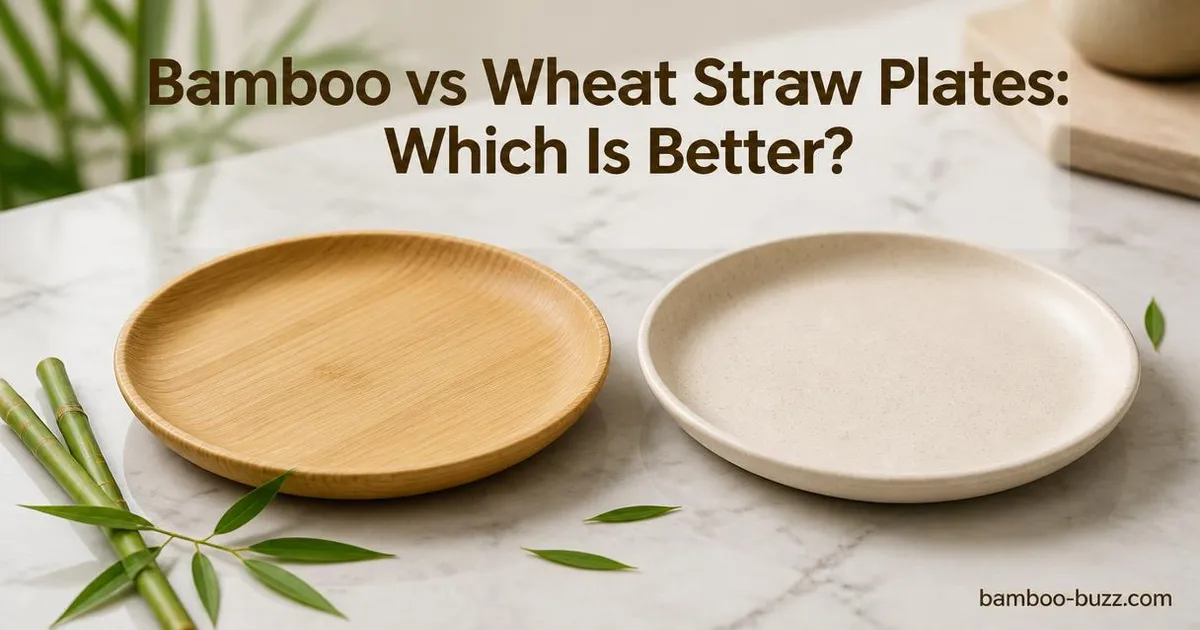
Bamboo vs Wheat Straw Plates: Which Is Better?
Most people assume bamboo plates are the safer, greener pick because bamboo is the poster crop for renewable materials. But wheat straw plates are usually microwave and dishwasher safe, while bamboo plates typically crack under high heat. If your daily routine involves reheating leftovers and running the dishwasher, the renewable-material champion might lose to an agricultural byproduct you’ve never thought twice about.
Both replace plastic at the dinner table, but they behave differently enough that the wrong choice can mean cracked plates or a frustrating hand-wash routine. The decision comes down to what you do with plates day to day: microwave reheating, dishwasher cycles, how much stiffness matters, and what safety certifications you want to verify.
Key Takeaways
- Wheat straw plates are generally microwave and dishwasher safe; bamboo plates usually are not.
- Bamboo offers more natural rigidity; wheat straw is lighter and more drop-resistant.
- Both are biodegradable alternatives to plastic, though composting timelines vary by binder and facility.
- Wheat straw plates typically cost less and are easier to find in family sets.
- Some sources suggest bamboo plate binders have drawn regulatory scrutiny in the UK and EU, while wheat straw plates are marketed as gluten-free and non-toxic.
- The best choice depends on whether you prioritize microwave convenience, structural stiffness, or specific safety certifications.
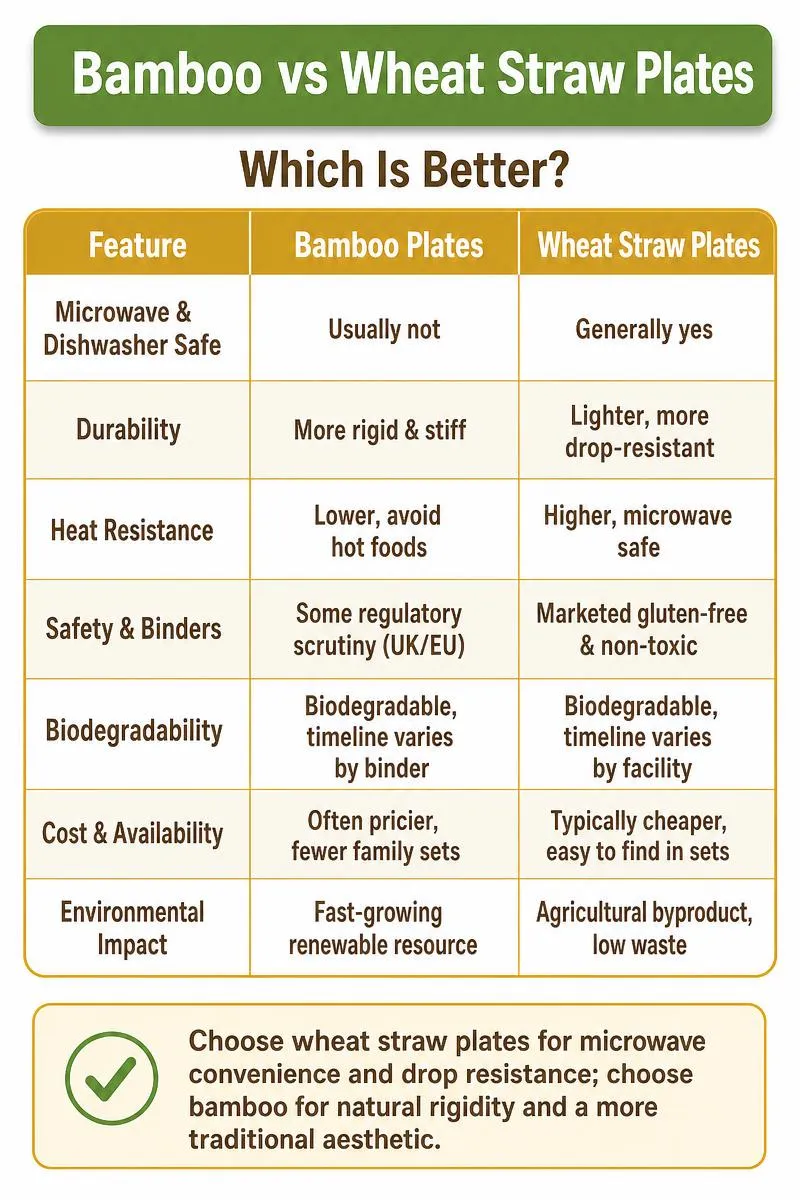
Bamboo Vs Wheat Straw Plates Side-by-Side
| Feature | Bamboo Plates | Wheat Straw Plates |
|---|---|---|
| Microwave & Dishwasher Safe | Usually not | Generally yes |
| Durability | More rigid & stiff | Lighter, drop-resistant |
| Heat Resistance | Lower — avoid hot foods | Higher — microwave safe |
| Safety & Binders | Some regulatory scrutiny (UK/EU) | Marketed gluten-free, non-toxic |
| Biodegradability | Biodegradable; timeline varies by binder | Biodegradable; timeline varies by facility |
| Cost & Availability | Often pricier; fewer family sets | Typically cheaper; easy to find in sets |
| Environmental Impact | Fast-growing renewable resource | Agricultural byproduct; low waste |
What Are Bamboo Plates?
Bamboo plates are made from bamboo fiber or bamboo powder pressed together with binding resins. The bamboo provides the rigid structure; the resin holds the fibers in a plate shape.
These plates work best for eco-conscious households, outdoor dining, and settings where you want stiff, natural-looking tableware. Bamboo grows fast without replanting, making the raw material a rapidly renewable resource.
Strengths:
- Rigid structure that feels solid at the table
- Biodegradable base material
Weaknesses:
- Generally not microwave safe
- Often require hand washing
- Binding agents used in some bamboo food-contact products have drawn regulatory scrutiny in certain markets
Related Reading
A curated buying guide for bamboo napkins that complements eco-friendly dinnerware like bamboo or wheat straw plates.
What Are Wheat Straw Plates?
Wheat straw plates are made from agricultural wheat straw fibers combined with food-safe binders. The wheat straw is what remains after the grain is harvested, so the material repurposes what would otherwise be farm waste.
These plates suit families with kids, daily meals, and anyone who needs microwave-friendly dinnerware. The lightweight construction makes wheat straw plates easy to handle, and the material flexes on impact rather than cracking.
Strengths:
- Microwave and dishwasher safe
- Budget-friendly price
Weaknesses:
- Less rigid than bamboo
- May stain or absorb odors over time with heavy use
Bamboo Plates vs Wheat Straw Plates: Heat Resistance and Kitchen Convenience
Wheat straw plates win this category. Wheat straw tolerates microwave reheating and dishwasher cycles without structural damage. Bamboo can crack or degrade under high heat, which is why bamboo plate care instructions typically call for hand washing and no microwaving.
If your routine depends on microwave use, wheat straw is the practical option. Bamboo works fine for cold or room-temperature food, but reheating lunch on a bamboo plate often means transferring food to a separate microwave-safe container first.
Bamboo Plates vs Wheat Straw Plates: Durability and Lifespan
The winner depends on how you use them and how much rough handling they’ll get.
Bamboo offers superior rigidity, meaning the plate holds its shape firmly under food weight. But bamboo can chip on hard impact, like hitting a countertop edge or tile floor.
Wheat straw flexes on impact and resists breaking if dropped, which makes wheat straw plates better for households with kids or clumsy hands. The tradeoff is that wheat straw is less stiff, so plates may bend slightly under heavy food portions.
You Might Also Like
Pros and cons of bamboo utensils
A pros-and-cons breakdown of bamboo kitchen utensils that helps readers compare performance and care alongside bamboo…
Bamboo Plates vs Wheat Straw Plates: Safety and Chemical Composition
Wheat straw plates win for buyers concerned about binding agents. Wheat straw plates are widely marketed as BPA-free, gluten-free, and non-allergenic, using food-safe binders in the manufacturing process.
Some sources suggest that regulators in the UK and EU have raised questions about the binding agents used in bamboo composite tableware. If safety certifications matter to you, check product labels for third-party testing rather than relying on the bamboo brand name alone.
Bamboo Plates vs Wheat Straw Plates: Environmental Impact and Disposal
Environmental impact is a tie, with conditions.
Wheat straw repurposes agricultural waste that would otherwise be burned or left to decompose. Bamboo regenerates rapidly without replanting, since the root system sends up new shoots after harvesting.
Both materials break down faster than plastic, but home composting success varies by binder type and local composting facilities. A plate made with biodegradable binders will compost more readily than one using synthetic resins, regardless of whether the base fiber is bamboo or wheat straw.
Bamboo Plates vs Wheat Straw Plates: Cost and Accessibility
Wheat straw plates win on cost and availability. Wheat straw sets are typically priced lower, and mainstream retailers sell them in family-sized packs.
Bamboo plates often cost more and appear mainly in specialty eco-stores or online marketplaces. If you want a full set of plates for a family without spending a premium, wheat straw is the more accessible option.
A material comparison focused on cutting boards that offers useful context about durability and maintenance for bamboo…
Which Should You Choose?
For busy families who rely on microwaves and dishwashers, wheat straw plates are the straightforward pick. Wheat straw plates handle reheating, survive dishwasher cycles, and cost less to replace if one breaks.
For outdoor dining and camping where stiffness matters, bamboo plates hold their shape better and feel more solid on uneven surfaces like picnic tables. If you don’t mind hand washing, the rigidity of bamboo is a real advantage.
Buyers on a tight budget should lean toward wheat straw plates. Households worried about binding agent safety should also choose wheat straw, but verify third-party testing on the specific product before ordering.
If repurposing farm waste is your priority, wheat straw plates are the pick. If raw-material renewability is your priority, bamboo is the pick.
FAQs About Bamboo Plates and Wheat Straw Plates
Are wheat straw plates safe?
Yes, wheat straw plates are generally considered safe for food contact. The main safety questions center on the binder rather than the straw fiber itself. Look for products with third-party safety certifications if you want verification beyond manufacturer claims.
Are wheat straw plates microwave and dishwasher safe?
Most wheat straw plates are microwave and dishwasher safe, which is a key advantage over bamboo plates. Check the specific product label, since some wheat straw plates may have temperature limits for microwave use.
Are wheat straw plates safe for people with celiac disease or wheat allergies?
Yes. Wheat straw plates are made from the stalk, not the grain, and are marketed as gluten-free. If you have a severe wheat allergy, verify with the manufacturer that no grain protein residue remains.
Are bamboo plates safe to eat from?
Bamboo plates are safe for most everyday use with cold or room-temperature food. The concern in some markets relates to the binding agents used in the composite, not the bamboo fiber itself. Check for third-party food-safety certifications on the product label.
Are wheat straw plates banned in Europe?
No, wheat straw plates are not banned in Europe. Some sources suggest that bamboo composite tableware has drawn regulatory scrutiny in the UK and EU over binding agents, but wheat straw plates are not subject to the same concerns.
Does wheat straw dinnerware contain microplastics?
Wheat straw dinnerware is not a plastic product, but the binders used in some plates may include synthetic components. If avoiding microplastics is a priority, look for products that specify all-natural or biodegradable binders and list their binder materials on the product label.
Which is better, bamboo or wheat straw plates?
For most households, wheat straw plates are the more practical choice because of microwave safety, dishwasher compatibility, lower cost, and drop resistance. Bamboo plates are better if you prioritize rigidity and natural appearance over kitchen convenience.
What are the disadvantages of wheat straw plates?
Wheat straw plates are less rigid than bamboo, which means the plates can flex under heavy food portions. Wheat straw may also stain or absorb odors over time. Some users find the lighter weight feels less substantial compared to bamboo or ceramic plates.
How long do wheat straw plates last compared to bamboo?
Both materials are durable enough for regular household use, but lifespan depends heavily on care habits. Bamboo plates may last longer if hand washed and kept away from heat, while wheat straw plates can withstand more varied kitchen conditions. Either material has reached the end of its useful life once it cracks, chips, or absorbs odors beyond what washing can fix.
Final Thoughts
Wheat straw plates fit most everyday households because of microwave safety, lower cost, and drop resistance. Bamboo plates suit buyers who want rigid, natural tableware and don’t mind hand washing.
If you need formal rigidity for presentation or outdoor use, bamboo wins, but check product labels for binding agent certifications before ordering.
External References