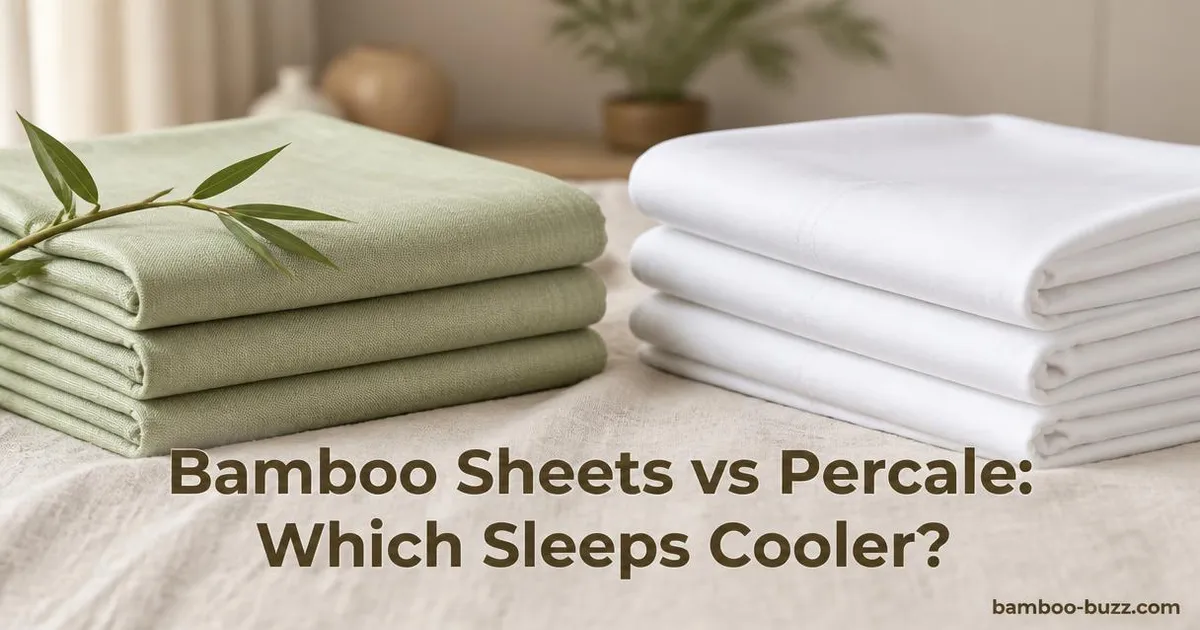
Bamboo Sheets vs Percale: Which Sleeps Cooler?
Both bamboo sheets and percale cotton get marketed to hot sleepers, but they achieve coolness through completely different fabric behavior. One relies on an open weave for dry airflow. The other pulls moisture away from your skin through fiber absorbency. Knowing which mechanism suits your sleeping conditions makes the choice much simpler.
The decision really hinges on four things: how each fabric manages heat, what texture you prefer touching your skin, how much effort you’re willing to put into laundry, and what your budget looks like.
Key Takeaways
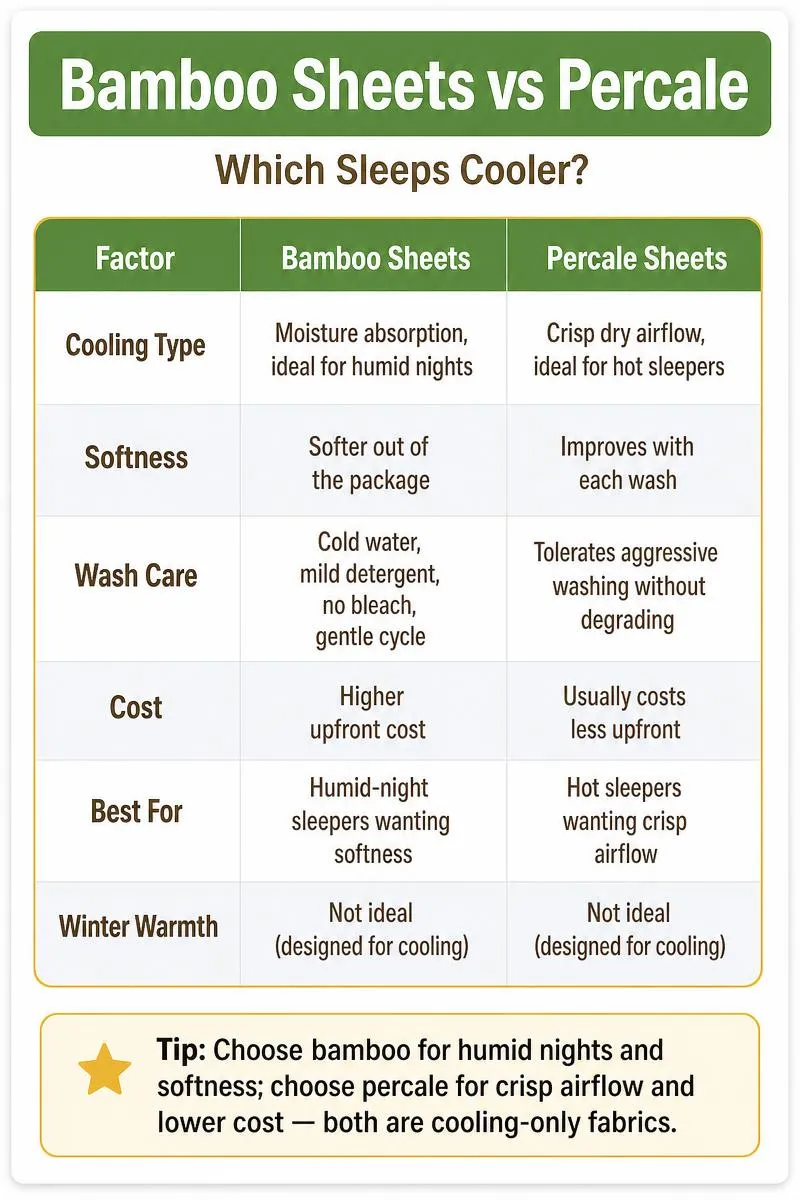
- Bamboo sheets feel softer straight out of the package; some sources suggest percale improves with each wash.
- Percale suits hot sleepers who want crisp, dry airflow; bamboo suits those who want moisture absorption on humid nights.
- Bamboo sheets need gentler wash care – cold water, mild detergent, no bleach.
- Percale usually costs less upfront and tolerates more aggressive washing without degrading.
- Neither fabric is ideal if you want built-in winter warmth – both are designed for cooling.
Bamboo Sheets Vs Percale at a Glance
| Factor | Bamboo Sheets | Percale Sheets |
|---|---|---|
| Cooling Type | Moisture-absorbing (humid nights) | Crisp, dry airflow (hot sleepers) |
| Softness | Soft out of package | Softens with washes |
| Wash Care | Gentle care: cold water, mild detergent, no bleach | Tolerates aggressive washing |
| Cost | Higher upfront cost | Usually lower upfront cost |
| Best For | Humid nights; softness | Hot sleepers; crisp airflow |
| Winter Warmth | Not ideal (designed for cooling) | Not ideal (designed for cooling) |
What Are Bamboo Sheets?
Most bamboo sheets are made from viscose rayon derived from bamboo pulp. The process dissolves bamboo cellulose in chemical solvents, then extrudes the resulting solution into fibers that get woven into fabric. A smaller category called bamboo linen uses mechanical processing instead – crushing the stalk and combing out fibers the way flax linen is made – but bamboo linen feels rougher and costs more, so it shows up far less often.
Bamboo viscose sheets are best for hot sleepers who want immediate softness and moisture absorption without breaking the fabric in first. The viscose fibers absorb water readily, which helps pull perspiration away from your skin during the night.
Strengths: Bamboo sheets are soft out of the package, absorbent, and marketed heavily for cooling. The smooth fiber surface creates low friction against skin, which some sleepers find more comfortable than the slight resistance of cotton.
Weaknesses: Wash care is more complex than standard cotton. Bamboo viscose is prone to pilling when subjected to friction, warm water, or harsh detergents. Labeling can also be misleading – some sets blend bamboo viscose with polyester or cotton while emphasizing the bamboo content on packaging.
You Might Also Like
Bamboo vs cotton mattress protector
Explains how bamboo mattress protectors compare to cotton for breathability and temperature regulation-useful when…
What Are Percale Sheets?
Percale is a plain-weave cotton fabric with a matte, crisp finish. The plain weave crosses one thread over and one thread under in a simple grid pattern, creating an open structure that allows air to pass through freely. Percale requires a minimum thread count of two hundred to carry the name.
Percale sheets suit sleepers who want hotel-style crispness and straightforward care. The fabric tolerates standard washing machines, regular detergents, and warmer water without much fuss.
Strengths: Percale is very breathable thanks to the open plain weave. Cotton fibers relax and soften with repeated washing, so the sheets get more comfortable over time rather than degrading. Percale also tolerates stronger detergents and warmer wash temperatures than bamboo viscose.
Weaknesses: Percale wrinkles easily and can feel stiff when new. The fabric lacks the immediate softness of bamboo viscose – you have to wash percale several times before it reaches peak comfort. Some sleepers find the crisp texture too rough against sensitive skin.
Bamboo Sheets vs Percale Sheets: Cooling and Breathability
Both fabrics target hot sleepers, but the cooling mechanics work differently. Percale cools through airflow. Bamboo viscose cools through absorbency.
Percale wins for dry, airy crispness. The plain weave structure leaves gaps between threads that let air circulate across the sheet surface. If you sleep hot in a dry climate and want air moving across your skin, percale’s open weave delivers that sensation directly.
Bamboo viscose wins for humid-night cooling. The fibers absorb moisture from perspiration and spread it across a wider surface area of the fabric, where it can evaporate more efficiently. On muggy nights when the air already holds a lot of water, this wicking action can feel more cooling than simple airflow alone.
The practical distinction: percale gives you a dry, ventilated feel. Bamboo gives you a dry-skin feel by pulling moisture into the fabric itself. Which one feels cooler depends on whether your heat problem is airflow or humidity.
Bamboo Sheets vs Percale Sheets: Feel and Softness
Bamboo viscose sheets feel softer the first night you sleep on them. The extruded fibers have a smooth, round cross-section that creates a silky hand-feel without any breaking-in period. If you want sheets that feel luxurious straight out of the package, bamboo delivers that immediately.
Percale starts crisp and slightly resistant. Cotton fibers are naturally rougher than extruded viscose fibers, and the tight plain weave adds structure that feels stiffer at first. But percale softens with repeated washing as the cotton fibers relax and the weave loosens slightly.
So the softness comparison depends on your timeline. Bamboo wins on day one. Percale wins long-term if you’re willing to wash and use the sheets enough for the fibers to break in. Bamboo viscose doesn’t improve the same way – its softness is present from the start but may degrade over time with pilling.
You Might Also Like
Compares fabric hand, softness, and moisture-wicking of bamboo vs cotton textiles-helpful for readers assessing the…
Bamboo Sheets vs Percale Sheets: Durability and Care
Percale wins for surviving standard home washing with minimal fuss. Cotton tolerates warm water, regular-strength detergents, and machine drying without significant fiber damage. The plain weave structure also resists snagging better than the smoother surface of bamboo viscose.
Bamboo viscose requires more careful handling. Wash bamboo sheets in cold water using a gentle, pH-neutral detergent. Avoid bleach entirely – chlorine bleach breaks down the regenerated cellulose fibers in viscose rayon, causing permanent damage. Tumble dry on low heat or line dry to limit thermal stress on the fibers.
Pilling is the main durability concern for bamboo sheets. Friction from washing, body movement during sleep, and even rough mattress surfaces can cause small fiber balls to form on the fabric surface. Percale can pill too, but cotton fibers are shorter and more resilient, so pilling tends to be less severe and often improves as loose fibers shed during early washes.
The care gap matters if you share laundry duties or use a laundromat with limited temperature control. Percale forgives mistakes. Bamboo viscose doesn’t.
Bamboo Sheets vs Percale Sheets: Cost and Value
Percale usually wins on lower entry price. Cotton percale sheets are mass-produced with established supply chains, and the plain weave is simple to manufacture. You can find decent percale sets at a fraction of what bamboo viscose sets typically cost.
Bamboo sheets carry a higher upfront cost. The viscose production process – dissolving bamboo pulp, extruding fibers, and weaving the resulting yarn – adds steps that cotton sheeting doesn’t require.
The value calculation should include replacement cycle. Percale lasts longer under normal care because cotton fibers tolerate repeated washing better than regenerated cellulose. Bamboo sheets washed aggressively may need earlier replacement due to pilling and fiber breakdown. Washed carefully, bamboo sheets can last a reasonable span, but the care requirements make accidental damage more likely.
Think about cost per night rather than cost per set. A cheaper percale set that lasts years of regular washing may cost less per use than a bamboo set that pills after a rough wash cycle.
Which Should You Choose?
Dry-climate hot sleeper: Percale. The open plain weave gives you airflow without fabric sticking to your skin, and dry air makes evaporative cooling from airflow effective.
Crisp feel, easy care: Percale. You get hotel-style crispness that softens over time, and you can wash the sheets without special detergent or temperature settings.
Sweat-absorbing softness: Bamboo. The viscose fibers wick moisture into the fabric, and the smooth surface feels soft from night one without a break-in period.
Tight budget, rough washes: Percale. Lower upfront cost plus tolerance for standard washing makes percale the practical choice when laundry conditions aren’t ideal.
Sensitive skin: Bamboo. The round fiber cross-section and low-friction surface reduce irritation against skin that reacts to rougher textures like new percale.
Explore More
Pros and cons of bamboo batting
Covers insulation and breathability trade-offs of bamboo batting, which helps readers weighing warmth versus cooling…
FAQs About Bamboo Sheets and Percale Sheets
Do bamboo sheets stay cooler than percale all night?
Not necessarily – the cooling mechanism differs. Bamboo viscose absorbs moisture and wicks it across the fabric surface, which helps in humid conditions. Percale allows air to pass through the open plain weave, which helps in dry conditions. Which feels cooler depends on your sleeping environment as much as the fabric itself.
Which cotton type feels closest to bamboo sheets?
Cotton sateen comes closest to the smooth, silky hand-feel of bamboo viscose. Sateen uses a different weave than percale – threads cross over multiple warps before going under – which creates a softer surface but reduces airflow compared to percale’s plain weave.
Do bamboo sheets pill, and which resists pilling better?
Bamboo viscose pills more readily than percale cotton. The regenerated cellulose fibers in viscose are smoother but less resilient than cotton fibers, so friction causes small balls to form on the surface. Percale can pill too, but cotton’s shorter, stronger fibers tend to hold up better over repeated washing.
Can I use bleach on bamboo sheets?
No. Chlorine bleach breaks down the regenerated cellulose fibers in bamboo viscose rayon, causing permanent weakening and discoloration. Use oxygen-based stain removers if needed, and always check the care label first.
Are bamboo sheets better for eczema-prone skin than percale?
Possibly, because bamboo viscose has a smoother fiber surface that creates less friction against skin. The low-friction texture may reduce irritation for sensitive skin conditions. Look for OEKO-TEX certification to ensure no residual processing chemicals remain in the fabric, as those can also trigger skin reactions.
How many washes do bamboo sheets last?
There’s no fixed number – lifespan depends entirely on wash method. Cold water, gentle detergent, and low-heat drying extend the usable life significantly. Warm water, harsh detergents, and high-heat drying accelerate pilling and fiber breakdown. Washed carefully, bamboo sheets can serve well for years; washed carelessly, they may degrade noticeably faster.
What laundry detergent should I use for bamboo sheets?
A gentle, pH-neutral detergent without enzymes or brighteners. Enzyme-based detergents can break down cellulose fibers over time, and optical brighteners can deposit on viscose and dull the color. Liquid detergents dissolve better in cold water than powders, which matters since bamboo sheets should be washed cold.
What is the biggest downside to bamboo sheets?
The care requirements. Bamboo viscose needs cold water, gentle detergent, no bleach, and low-heat drying – and even with careful washing, pilling can still develop over time. If you want sheets you can toss in with the rest of your laundry without thinking, bamboo viscose creates friction in your routine.
Which is softer, Egyptian cotton or bamboo sheets?
Bamboo viscose feels softer immediately because its smoother fiber surface. Egyptian cotton – a long-staple cotton – starts firmer but softens over many washes as the long fibers relax. Egyptian cotton may eventually reach a smooth, luxurious feel, but bamboo delivers softness from day one.
Which is healthier to sleep on, bamboo or percale sheets?
Neither has a clear health advantage over the other. Both materials are safe for skin contact when properly manufactured. The main health-related factor is certification: look for OEKO-TEX or similar third-party testing to confirm no harmful chemical residues remain from processing. Bamboo viscose undergoes chemical solvent processing, and cotton may be grown with pesticides, so certification matters for both.
Final Verdict
Choose percale if you want crisp breathability, easier care, and lower upfront cost. The open plain weave, cotton’s wash tolerance, and simpler production make percale the practical default for most hot sleepers – especially in dry climates where airflow does the heavy lifting.
Choose bamboo if immediate softness, moisture absorption, and a smoother hand-feel matter more to you than wash convenience or budget. Bamboo viscose makes sense when humidity is your main nighttime problem and you’re willing to follow the care instructions carefully.
One practical step before buying bamboo sheets: check the label for ‘100% viscose’ or ‘100% rayon from bamboo.’ Blends that sneak in polyester or cotton reduce the properties you’re paying for, and the packaging won’t always make that obvious.
External References
- Emission of fibres from textiles: A critical and systematic … – ScienceDirect
- Study on pilling performance of polyester-cotton blended … – ResearchGate
- Properties, Production, and Recycling of Regenerated … – PMC – NIH (NCBI)
- abstract – NCSU (.edu)
- Brandream Luxury Beach Bedding Set Coastal Sheets 100 … – COLUMBIA (.edu)