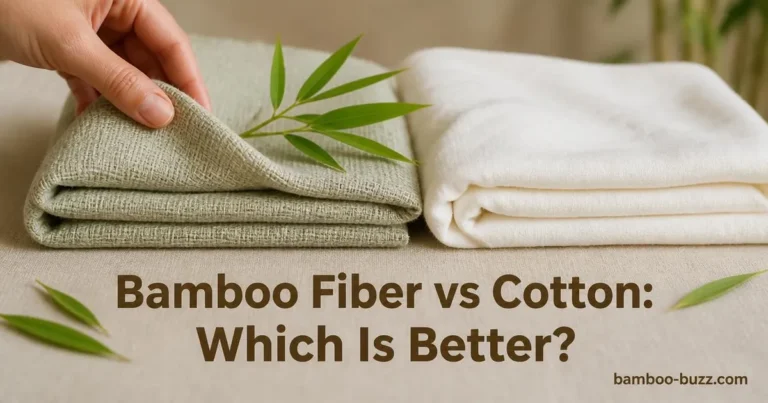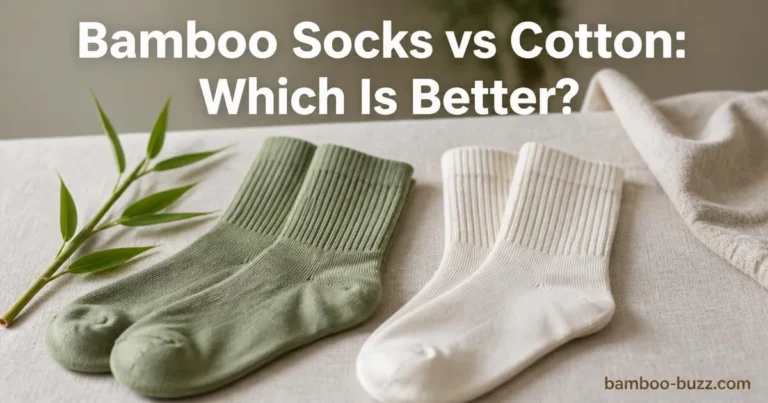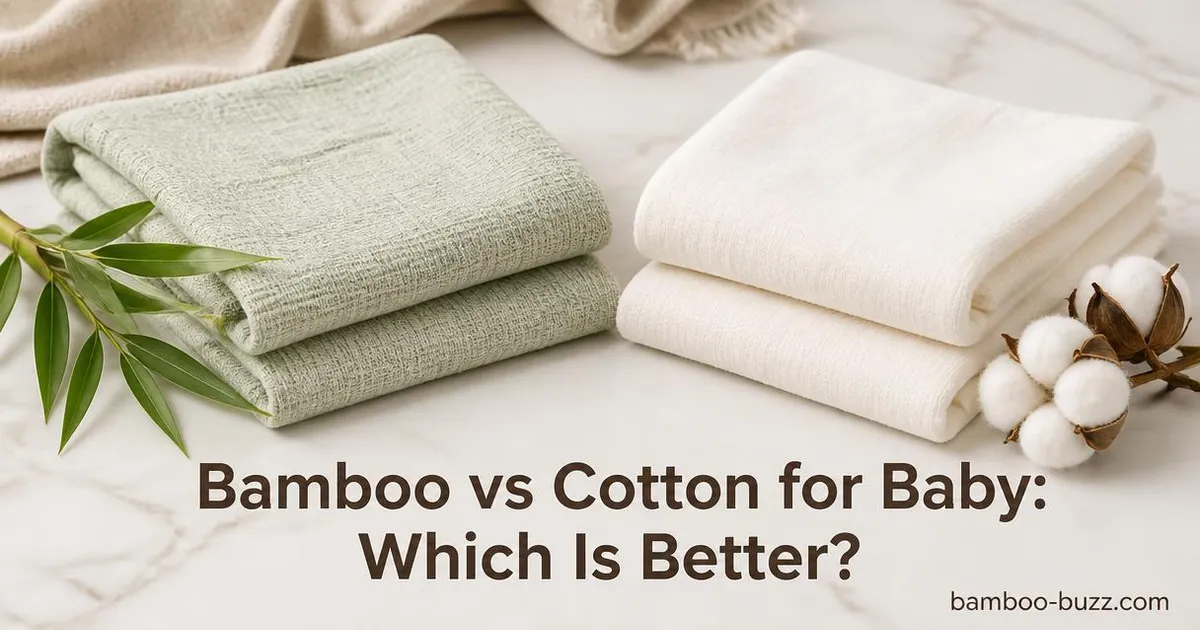
Bamboo vs Cotton for Baby: Which Is Better?
If you’re standing in a baby store holding a bamboo bodysuit in one hand and a cotton one in the other, the labels make it sound like an obvious choice. Bamboo claims cooling and softness. Cotton claims durability and familiarity. Both claim to be gentle on skin and the greener choice. Neither is lying, but neither is telling the whole story either.
The real answer depends on your baby’s skin sensitivity, how hot they sleep, how you do laundry, and what your budget looks like. A baby who runs warm at night has different needs than one who drools through outfit after outfit.
Key Takeaways
- Bamboo viscose tends to feel cooler against the skin, and some sources suggest it wicks moisture better than cotton – useful for hot or damp sleepers.
- Cotton is easier to wash, resists pilling, and holds up through frequent laundering, making it practical for everyday baby clothes.
- Babies with sensitive skin can do well in either fabric. OEKO-TEX certification and organic standards tell you more about chemical safety than the fiber name does.
- Many parents use both – bamboo for sleepwear and swaddles, cotton for daytime basics that get stained and washed constantly.
Comparing the Top Bamboo Vs Cotton For Baby
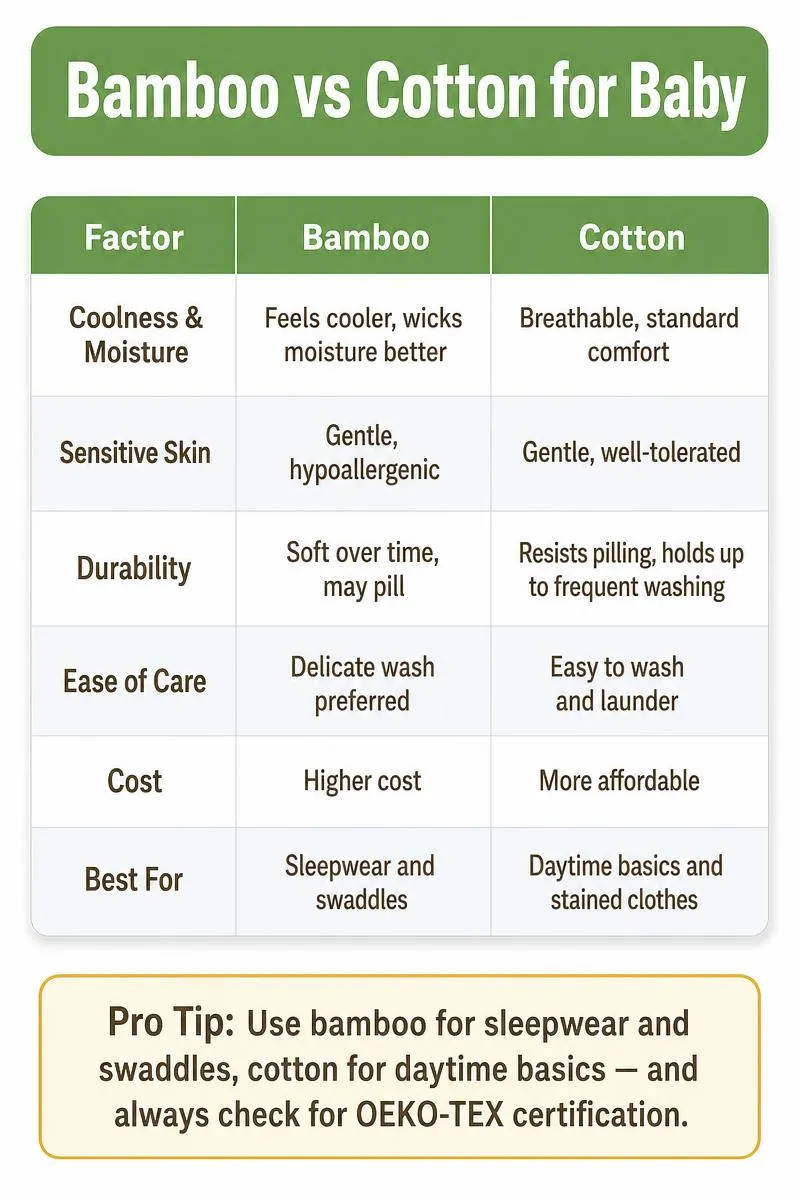
| Factor | Bamboo | Cotton |
|---|---|---|
| Coolness & Moisture | Feels cooler, wicks moisture better | Breathable, standard comfort |
| Sensitive Skin | Gentle, hypoallergenic | Gentle, well-tolerated |
| Durability | Soft over time, may pill | Resists pilling, holds up to frequent washing |
| Ease of Care | Delicate wash preferred | Easy to wash and launder |
| Cost | Higher cost | More affordable |
| Best For | Sleepwear and swaddles | Daytime basics and stained clothes |
What Is Bamboo Fabric for Baby?
Most bamboo baby clothes are made from bamboo viscose – a textile produced by dissolving bamboo pulp in chemical solvents, then extruding it into soft, drapey fibers. The result is a fabric that feels silky and cool against the skin, with a looser, flowier drape than cotton.
Bamboo viscose works best as sleepwear, swaddles, base layers, and anything worn in hot or humid conditions. The cool hand-feel and moisture-wicking reputation make it a go-to for babies who sleep warm or live in damp climates.
Not all manufacturers recover the solvents used in that process. Bamboo viscose also costs more than cotton and typically needs gentler washing – cold water, no tumble-drying – to keep its shape and softness over time.
Best bamboo baby clothes on amazon
A buying guide to top bamboo baby clothing picks, sizes, and fabric notes for parents.
What Is Cotton for Baby?
Cotton is a natural fiber harvested from cotton plants. Organic cotton varieties are grown without synthetic pesticides, and the fiber is then ginned, spun, and woven into fabric. The result is a sturdy, breathable textile that handles repeated washing without falling apart.
Cotton handles everyday bodysuits, play clothes, bibs, and budget staples – anything that will get stained, washed hot, and dried on high. Conventional cotton is widely available and affordable.
The downsides: conventional cotton farming uses significant water and chemical inputs. Cotton fabric can also feel warmer against the skin than bamboo viscose and tends to retain moisture longer, which matters if your baby sleeps hot.
Bamboo vs Cotton: Comfort and Breathability
Both fabrics feel soft, but they get there differently. Bamboo viscose has a silky, slick hand-feel that glides over newborn skin. Cotton has a matte, slightly textured surface that softens further with washing but never quite matches the drape of viscose.
For heat management, the two fabrics diverge noticeably. Bamboo viscose feels cooler on contact and some sources suggest it wicks moisture away from the skin more effectively than cotton. Cotton breathes well but holds onto moisture – a baby who sweats during sleep may stay damp longer in a cotton sleeper than a bamboo one.
Parents in warm nurseries or hot summer climates tend to prefer bamboo for sleepwear and cotton for daytime play clothes, where the extra warmth is less of an issue and the durability matters more.
Bamboo vs Cotton: Sensitive Skin and Hypoallergenic Properties
Babies with eczema-prone or rash-prone skin can do well in either fabric – but the mechanism differs. Bamboo viscose’s smooth surface creates less friction against the skin, and its moisture-wicking behavior helps keep dampness down, which can reduce irritation in babies prone to heat rashes.
Cotton is breathable and widely tolerated, but conventional cotton retains chemical residues from farming and finishing unless it’s certified organic. If your baby reacts to residual processing chemicals rather than the fiber itself, the certification matters more than the plant.
Hypoallergenic performance depends on what’s left in the fabric after manufacturing, not just the fiber name. Bamboo viscose goes through chemical solvents, and cotton goes through pesticides and finishing treatments. Either can irritate sensitive skin if those residues remain – which is exactly what OEKO-TEX certification tests for.
Worth Reading Next
Explains how different bamboo fabric processing methods affect softness, chemicals, and suitability for sensitive baby…
Bamboo vs Cotton: Processing and Certifications
Bamboo viscose starts with bamboo stalks, which are broken down into pulp and dissolved in chemical solvents to create a spinning solution. The fibers are extruded, washed, and woven into fabric. Some manufacturers use closed-loop systems that recover and reuse the solvents; others do not.
Cotton follows a different path. The cotton plant is grown, harvested, ginned to separate the fiber from seeds, spun into yarn, and woven. Organic cotton skips synthetic pesticides during growing and restricts chemical inputs during processing.
OEKO-TEX Standard 100 tests finished fabric for a broad list of harmful substances – heavy metals, formaldehyde, pesticides, and chemical residues – regardless of the fiber type. Organic certification (like GOTS) verifies how the crop was grown and processed. If chemical safety is your priority, either certification tells you more than the word ‘bamboo’ or ‘cotton’ on the label alone.
Bamboo vs Cotton: Care and Durability
Cotton is the easier fabric to live with. It tolerates hot washing, tumble-drying, and frequent stain treatment without losing much structural integrity. Cotton baby clothes tend to hold their shape through frequent washing, and pilling is minimal compared to viscose.
Bamboo viscose needs more attention. Cold or warm washes are recommended, and tumble-drying can shrink or weaken the fibers over time. Line drying preserves the fabric but takes longer. Bamboo viscose also pills more readily than cotton, especially in high-friction areas like underarms and snaps.
If you’re a parent who throws everything in one load and hits start, cotton is more forgiving. If you’re willing to separate a few pieces for gentle washing, bamboo holds up fine – but expect to replace stained or worn pieces sooner than their cotton equivalents.
Bamboo vs Cotton: Cost and Value
Bamboo baby garments typically cost more than comparable cotton pieces. Part of that reflects the viscose manufacturing process, which involves chemical dissolution and extrusion – more complex than spinning cotton fibers directly. Part of it reflects smaller production volumes and a premium market position.
Cotton benefits from massive global supply chains and economies of scale. A basic cotton bodysuit costs noticeably less than a bamboo one of similar weight and construction. Organic cotton sits somewhere in between – pricier than conventional cotton but generally less expensive than bamboo viscose.
Investing in bamboo makes sense for sleepwear and swaddles, where the cooling feel and moisture management matter. For daytime basics that get stained and washed daily, cotton delivers more value per wear.
Explore More
Compares bamboo sheets to cotton percale on breathability, texture, and price – useful when weighing cost and value for…
Which Should You Choose?
- Choose bamboo if your baby sleeps hot, has moisture-prone skin, or you want a soft, drapey fabric for sleepwear and swaddles. The cooling hand-feel and moisture-wicking reputation matter most for overnight sleep.
- Choose cotton if you need durable, easy-care basics that tolerate frequent washing, hot water, and tumble-drying without falling apart. Cotton handles the daily mess of baby life better than bamboo viscose.
- Choose certified organic cotton if avoiding pesticide-heavy farming practices is your top priority.
- Choose OEKO-TEX certified bamboo if you want the cooling and softness of bamboo viscose but need verified low chemical residue in the finished fabric.
- Mix both fabrics if you want bamboo for night and cotton for day. This is what many parents land on after trying both – bamboo sleepers for the cool feel, cotton onesies for the rough and tumble of daytime.
FAQs About Bamboo Fabric and Cotton for Babies
Is bamboo or cotton healthier for baby clothes?
Neither is inherently healthier. Both are safe for most babies, but chemical safety depends on processing. Look for OEKO-TEX Standard 100 certification on either fabric to verify low chemical residue in the finished product.
Is bamboo or cotton better for swaddles, blankets, and everyday outfits?
Bamboo viscose works well for swaddles and blankets because of its soft drape and cool hand-feel. Cotton is better for everyday outfits that get stained and washed frequently, since it tolerates rougher laundry routines.
What are the downsides of bamboo fabric for babies?
Bamboo viscose costs more, pills more easily, and needs gentler washing than cotton. The viscose process also uses chemical solvents, so certification matters if you’re concerned about residues.
Does bamboo fabric contain plastic or release microplastics?
Bamboo viscose is a regenerated cellulose fiber, not a synthetic plastic. It does not shed microplastics the way polyester or nylon do. Cotton also releases microfibers during washing, but these are natural cellulose, not plastic.
Is bamboo more ethical than cotton?
Bamboo typically grows quickly with little irrigation or pesticide input, which gives it an edge at the crop level. But the viscose process uses chemical solvents that not all facilities recover, while conventional cotton farming uses significant water and pesticides. Organic cotton addresses the farming side; closed-loop viscose addresses the manufacturing side. Neither fiber has a clear ethical advantage across the full supply chain.
What is OEKO-TEX certification and why does it matter for baby clothes?
OEKO-TEX Standard 100 tests finished fabric for harmful substances including heavy metals, formaldehyde, and pesticide residues. For baby clothes, it means the fabric you’re putting against your baby’s skin has been tested for chemical safety regardless of whether it’s bamboo or cotton.
Is bamboo viscose safe for babies?
Yes, for most babies. The main concern is residual processing chemicals from the viscose method – if your baby has sensitive skin, look for OEKO-TEX certified bamboo to verify low chemical residue.
Final Verdict
Neither fabric wins across the board. Bamboo viscose runs cooler and feels softer, which helps at bedtime. Cotton washes easier and lasts longer, which helps during the day.
The best setup for most families is cotton for daily basics and bamboo for sleepwear and sensitive-skin moments. When you’re shopping, check the certification labels – OEKO-TEX Standard 100, GOTS organic – rather than relying on the fiber name alone. Those labels tell you what’s actually in the fabric, which matters more than whether it came from a bamboo stalk or a cotton boll.
External References
- OEKO-TEX® STANDARD 100 – OEKO-TEX
- Microfibres from apparel and home textiles: Prospects for … – ScienceDirect
- Is Bamboo Fabric Safe? Viscose vs Lyocell Ranked (2026) – Fibercheck
- GOTS – How the system works Global Standards – Global-standard
- Is Bamboo Fabric Sustainable? Processing Truth vs. … – Deadsoxy
- Influence of Laundering on the Quality of Sewn Cotton and … – ResearchGate