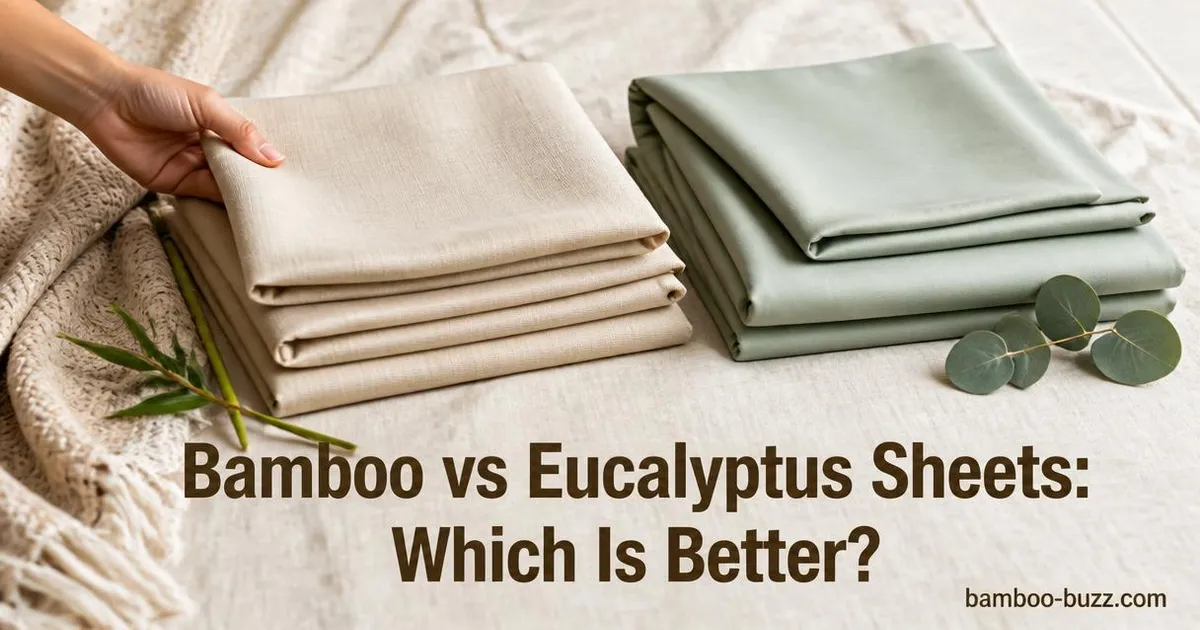
Bamboo vs Eucalyptus Sheets: Which Is Better?
Most people shopping for bamboo or eucalyptus sheets assume they’re comparing two similar eco-fabrics with minor differences. The reality is stranger: both materials start as wood pulp, both usually end up as the same type of fiber, and the biggest gap between them has nothing to do with the plant.
Bamboo sheets are typically made from bamboo cellulose processed into viscose rayon or lyocell. Eucalyptus sheets come from eucalyptus tree pulp, usually processed as Tencel lyocell. Fiber type and weave shape how these sheets feel and perform – more than the plant they come from.
The choice comes down to whether you want silky drape or cool crispness, and how much you care about the details of solvent recycling versus raw material growth speed.
Key Takeaways
- Bamboo sheets typically feel softer and silkier; eucalyptus sheets often feel cooler to the touch and more structured
- Hot sleepers may prefer eucalyptus; those wanting moisture-wicking softness may lean toward bamboo
- Eucalyptus sheets generally resist wrinkles better and can be easier to care for day-to-day
- Some sources suggest eucalyptus lyocell production uses less water and fewer chemicals than conventional bamboo viscose processing
- No clear winner exists; the right choice depends on whether you prioritize drapey softness or cool, crisp performance
Bamboo Vs Eucalyptus Sheets Compared
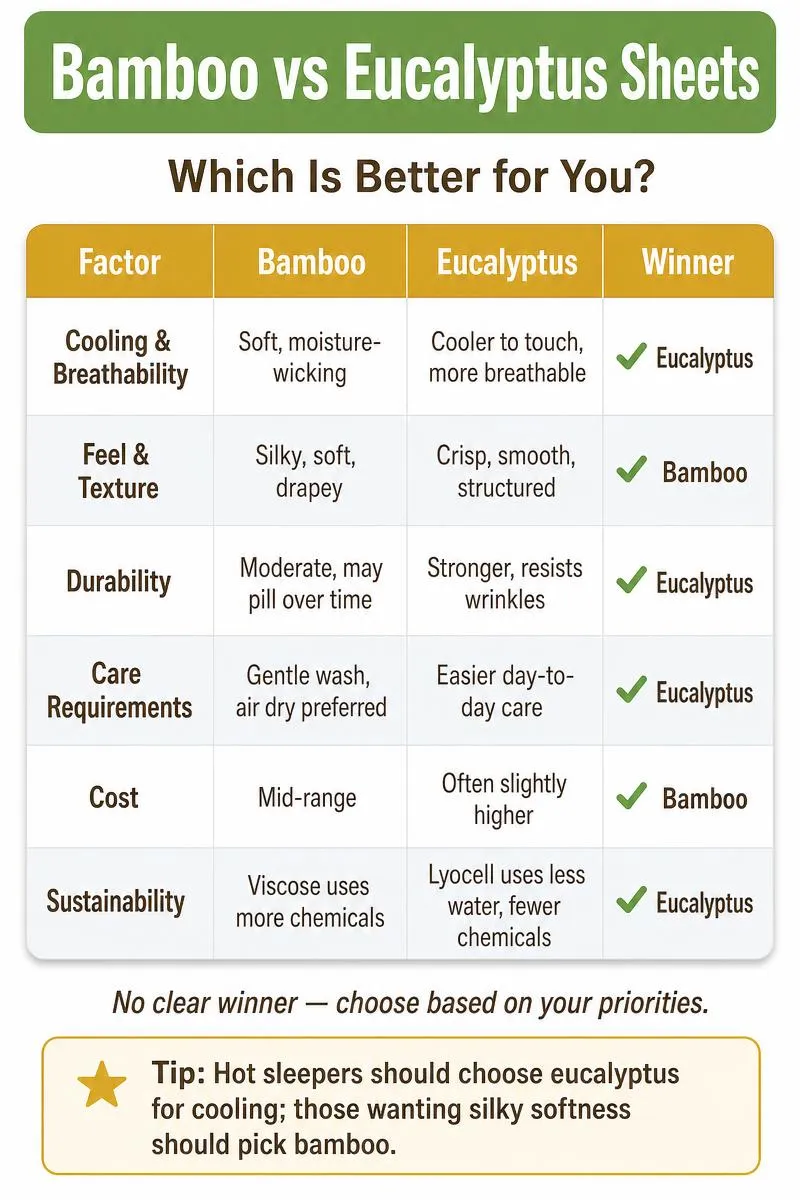
| Factor | Bamboo | Eucalyptus | Winner |
|---|---|---|---|
| Cooling & Breathability | Soft, moisture-wicking | Cooler to touch; more breathable | Eucalyptus ✓ |
| Feel & Texture | Silky, drapey | Crisp, structured | Bamboo ✓ |
| Durability | Moderate; may pill | Stronger; resists wrinkles | Eucalyptus ✓ |
| Care Requirements | Gentle wash; air dry preferred | Easier day-to-day care | Eucalyptus ✓ |
| Cost | Mid-range | Often higher | Bamboo ✓ |
| Sustainability | Viscose—uses more chemicals | Lyocell—less water & chemicals | Eucalyptus ✓ |
What Is Bamboo Sheets?
Bamboo sheets are bedding made from bamboo cellulose, usually processed into bamboo viscose rayon or bamboo lyocell. The bamboo stalk gets broken down into pulp, dissolved with solvents, then extruded through spinnerets to create fibers that are woven into fabric.
Bamboo suits sleepers who want soft, drapey bedding with a silky hand-feel. Bamboo sheets work well for people who like the sensation of fabric gliding against skin rather than crisp structure.
Strengths:
- Silky texture that many people find luxurious
- Moisture-wicking properties that pull sweat away from skin
- Often-hypoallergenic fibers for sleepers sensitive to rough weaves
Weaknesses:
- Care sensitivity since bamboo sheets typically require gentle wash cycles and low heat drying
- Quality varies widely depending on whether the sheets use viscose or lyocell processing
You Might Also Like
Pros and cons of bamboo sheets
A detailed pros and cons breakdown of bamboo sheets covering softness, cooling, durability, and care – perfect for…
What Is Eucalyptus Sheets?
Eucalyptus sheets are bedding made from eucalyptus tree pulp, typically processed as Tencel lyocell or generic lyocell. The pulp undergoes a closed-loop process where wood cellulose dissolves in N-methylmorpholine N-oxide, a solvent less toxic than the carbon disulfide used in conventional viscose, which is then recovered and reused in the closed-loop process.
Eucalyptus suits hot sleepers who want cool, dry bedding with a smooth finish. Eucalyptus sheets suit people who overheat at night or prefer a more structured drape than jersey-like softness.
Strengths:
- Cool-to-the-touch feel from the moment you slide into bed
- Smooth texture that resists pilling better than many bamboo viscose sheets
- Often-cited antimicrobial properties
Weaknesses:
- Texture can feel less plush than bamboo for people who want cozy weight
- Crisp hand-feel may not suit sleepers who prefer drapey softness
Bamboo Sheets vs Eucalyptus Sheets: Cooling and Breathability
How each material manages heat and moisture determines whether you wake up sticky or comfortable.
1. Bamboo Sheets Cooling Performance
Bamboo viscose and bamboo lyocell both wick moisture away from skin through capillary action in the fiber structure. The material pulls sweat into the fabric where it spreads across a larger surface area and evaporates. Bamboo sheets feel breathable over time as moisture moves through the weave, but they don’t always feel cool on initial contact.
2. Eucalyptus Sheets Cooling Performance
Eucalyptus lyocell absorbs moisture quickly due to the fiber’s hydrophilic structure and smooth surface. The material feels cool on contact, not just after you’ve warmed the fabric. Sleepers who experience night sweats often report eucalyptus sheets stay drier against skin than bamboo.
3. Cooling Winner
Eucalyptus wins for immediate cooling sensation and a drier-feeling surface. Bamboo offers sustained moisture control through wicking but doesn’t deliver the same cool-on-contact experience. If you run hot from the moment you get into bed, eucalyptus handles that better.
Bamboo Sheets vs Eucalyptus Sheets: Feel and Texture
The hand-feel difference between these materials is where most people develop a strong preference.
1. Bamboo Sheets Feel
Bamboo sheets feel silky and drapey with a texture closer to jersey knit than crisp percale. The fabric glides against skin with minimal friction. High-quality bamboo lyocell sheets develop a soft, almost buttery hand-feel after a few washes.
The drape flows over the mattress rather than maintaining structured corners.
2. Eucalyptus Sheets Feel
Eucalyptus sheets feel smooth and crisp with more structure than bamboo. The texture resembles high-thread-count cotton sateen but with a cooler touch. Eucalyptus lyocell maintains a consistent surface smoothness that tends to vary less between brands than bamboo viscose.
The drape holds its shape better at mattress corners and resists the fabric pooling you sometimes see with bamboo.
3. Feel Winner
Bamboo wins if you want plush drape and silky glide. Eucalyptus wins if you want structured smoothness and crisp hand-feel. This comes down entirely to personal texture preference rather than objective quality.
Keep Reading
A focused comparison of feel, breathability, and care between bamboo and linen sheets, useful for readers evaluating…
Bamboo Sheets vs Eucalyptus Sheets: Durability and Care
Both materials require similar washing practices but hold up differently over repeated use.
1. Bamboo Sheets Durability
Bamboo viscose can be more delicate depending on weave quality and processing standards, with lower-quality bamboo viscose sheets sometimes developing pilling or thinning after frequent washing. Bamboo lyocell holds up better than bamboo viscose but still requires more careful handling than eucalyptus.
2. Eucalyptus Sheets Durability
Eucalyptus lyocell tends to resist wrinkles and pilling better than bamboo viscose because of the smoother fiber structure and stronger wet strength.
3. Care Requirements
Both materials share the same washing needs:
- Gentle cycle washing in cold or warm water
- Tumble drying on low heat or air drying
- No fabric softeners since the additives coat fibers and reduce moisture absorption
- No bleach since it damages both materials
4. Durability Winner
Eucalyptus wins for easier maintenance and wrinkle resistance. Both materials last years with proper care, but eucalyptus tolerates slight care mistakes better than bamboo viscose.
Bamboo Sheets vs Eucalyptus Sheets: Cost and Sustainability
1. Cost Comparison
Price ranges overlap significantly between bamboo and eucalyptus sheets, with both costing more than basic cotton options. Mid-range bamboo and eucalyptus sheet sets fall into similar price brackets, though premium Tencel-branded eucalyptus sometimes costs more than generic bamboo viscose.
2. Sustainability Comparison
Eucalyptus lyocell often uses the same closed-loop process that recycles solvents, reducing chemical waste. Tencel-branded eucalyptus lyocell from Lenzing carries FSC forestry certification.
Bamboo grows fast, often without pesticides or irrigation, making the raw material renewable. Bamboo viscose processing can be chemical-intensive since it uses carbon disulfide and other harsh solvents, with varying recovery rates depending on manufacturer practices. Bamboo lyocell uses the same closed-loop process as eucalyptus lyocell, making certified bamboo lyocell comparable to eucalyptus for environmental impact.
Look for OEKO-TEX Standard 100 certification for both materials to confirm the finished fabric doesn’t contain harmful chemical residues. FSC certification indicates sustainably managed forests for eucalyptus.
3. Sustainability Winner
Eucalyptus wins for closed-loop processing transparency, especially Tencel-branded options. Bamboo lyocell matches eucalyptus for processing sustainability while offering faster raw material growth. Avoid uncertified bamboo viscose if chemical use matters to you.
Which Should You Choose?
Sleep hot or experience night sweats: Choose eucalyptus sheets for cool-from-the-moment-you-get-in comfort and a drier-feeling surface.
Softest, most drapey feel: Choose bamboo sheets for silky texture and fluid drape against skin.
Low maintenance bedding that resists wrinkles: Choose eucalyptus sheets for easier care and better wrinkle resistance out of the dryer.
Sustainability matters: Choose certified bamboo lyocell or Tencel eucalyptus lyocell, both of which use closed-loop solvent recycling.
Budget is your main concern: Compare specific brands since mid-range options overlap in price. Generic bamboo viscose sometimes costs less than Tencel eucalyptus, but quality varies more.
Related Reading
A direct comparison of bamboo and silk sheet performance (smoothness, temperature regulation, and maintenance) to help…
FAQs About Bamboo and Eucalyptus Sheets
Which is better, eucalyptus or bamboo sheets?
Neither is objectively better. Eucalyptus feels cooler and crisper, resists wrinkles better, and typically uses more sustainable processing. Bamboo feels softer and drapier with a silkier hand-feel. Choose based on whether you prioritize cooling performance or plush texture.
Which is better for hot sleepers, bamboo or eucalyptus sheets?
Eucalyptus sheets work better for most hot sleepers because they feel cool on contact and maintain a drier-feeling surface than bamboo. Bamboo sheets wick moisture well but don’t provide the same immediate cooling sensation when you first get into bed.
What are the downsides of eucalyptus sheets?
Eucalyptus sheets can feel less plush than bamboo for people who want cozy, drapey bedding. Some eucalyptus sheets also wrinkle less dramatically but may still require ironing for a perfectly smooth appearance if that matters to you.
What is the downside to bamboo sheets?
Bamboo sheets require more careful washing and drying than eucalyptus, especially bamboo viscose which can pill or thin with rough handling. Quality varies widely between brands, with cheap bamboo viscose sheets sometimes feeling rough or developing texture issues after washing. Bamboo viscose processing also uses harsh chemicals unless you specifically buy bamboo lyocell.
How long do bamboo sheets last compared to eucalyptus sheets?
Both materials last years with proper care, but eucalyptus lyocell typically holds up better than bamboo viscose through repeated washing. Bamboo lyocell durability comes closer to eucalyptus. Lifespan depends more on washing practices and initial quality than on which plant the cellulose came from.
Can you machine wash bamboo and eucalyptus sheets?
Yes, both materials are machine washable on gentle cycle with cold or warm water. Use low heat for tumble drying or air dry. Skip fabric softeners and bleach for both. Eucalyptus tolerates slight care mistakes better, but both handle machine washing without damage when you follow care instructions.
What thread count should I look for in bamboo or eucalyptus sheets?
Thread count matters less for bamboo and eucalyptus than for cotton. Both materials create soft, smooth fabric at lower thread counts than cotton requires. Focus on fiber type instead: lyocell performs better than viscose for both materials. Avoid sheets that emphasize extremely high thread counts since that often indicates lower-quality viscose trying to compensate with marketing claims.
What is the difference between Tencel and eucalyptus sheets?
Tencel is Lenzing’s branded fiber line; Tencel Lyocell, usually made from eucalyptus pulp, is the version used in sheets. Eucalyptus sheets refer to any sheets made from eucalyptus cellulose, which may or may not be Tencel-branded. Tencel-branded lyocell is certified for solvent recovery and sustainable forestry. Generic eucalyptus lyocell may meet the same standards but won’t carry the Tencel trademark without licensing from Lenzing.
What is the healthiest material for bed sheets?
No single material is healthiest for everyone. Bamboo lyocell and eucalyptus lyocell both avoid harsh chemical residues when properly processed and certified. Look for OEKO-TEX Standard 100 certification regardless of material since that confirms the finished fabric doesn’t contain harmful substances. People with chemical sensitivities should prioritize certified lyocell processing over viscose for both bamboo and eucalyptus.
Why do bamboo and eucalyptus sheets cost more than cotton?
Both materials require specialized processing to convert wood pulp into fiber. Lyocell processing uses expensive solvent recovery systems to recycle chemicals. Even bamboo viscose costs more than basic cotton because of the dissolution and extrusion steps. The raw materials also come from smaller production facilities than large-scale cotton farming, reducing economies of scale.
Final Thoughts
No single winner exists between bamboo and eucalyptus sheets since the right choice depends on your sleep style and values. If you want maximum softness and silky drape, choose bamboo sheets, preferably bamboo lyocell for better durability and processing standards. If you want cooling performance and easy care with wrinkle resistance, choose eucalyptus sheets.
Compare specific certified products in your budget before buying, checking for OEKO-TEX Standard 100 or similar certifications regardless of which material you choose.
External References