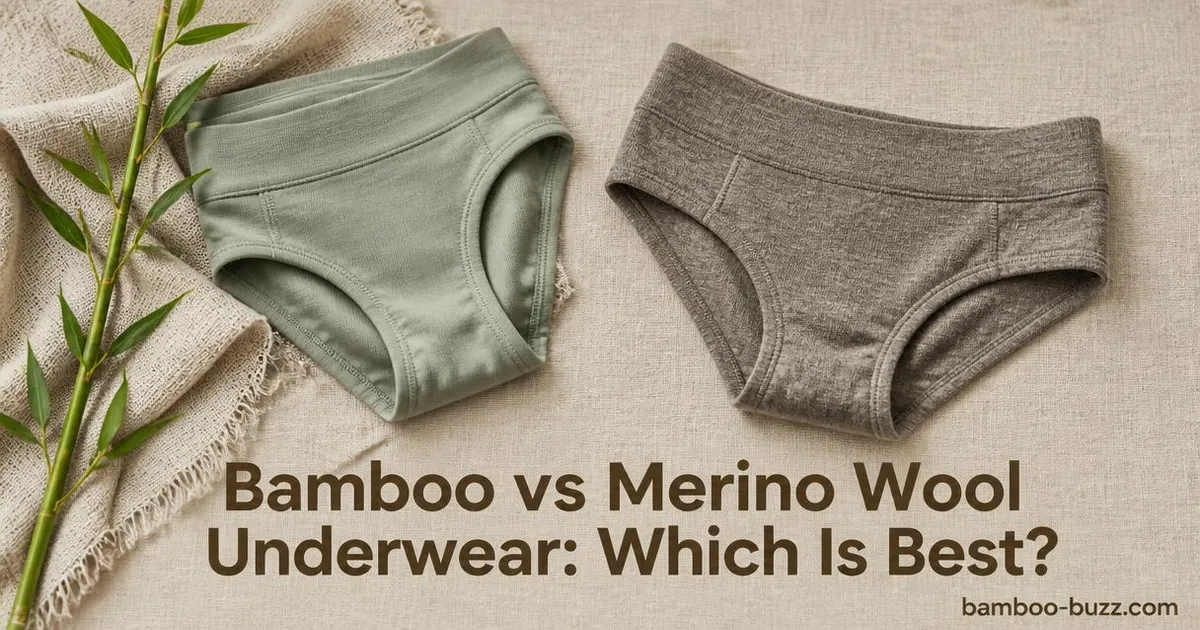
Bamboo vs Merino Wool Underwear: Which Is Best?
Most bamboo underwear you’ll find online comes from the same viscose process used to make rayon, not the mechanical method shoppers often picture when they hear ‘bamboo fabric’. Merino wool, meanwhile, gets praised for natural odor resistance but demands careful washing to avoid shrinking a size down. Both materials handle sweat and temperature regulation better than standard cotton.
A hot commute and a three-day backpacking trip call for different fabrics. Bamboo viscose feels softer immediately but fades faster in odor resistance. Merino wool keeps smell at bay longer but costs more upfront and in ongoing care.
Key Takeaways
- Bamboo underwear tends to feel softer against skin immediately, while merino texture varies by fiber grade
- Merino wool generally resists odor longer between washes, which matters for travel or long days
- Bamboo handles heat and humidity well, though its lifespan depends on weave quality and care
- Some sources suggest most bamboo underwear uses a chemical viscose process rather than the mechanical process many shoppers expect
- Merino wool usually requires gentler laundering to avoid shrinkage and pilling
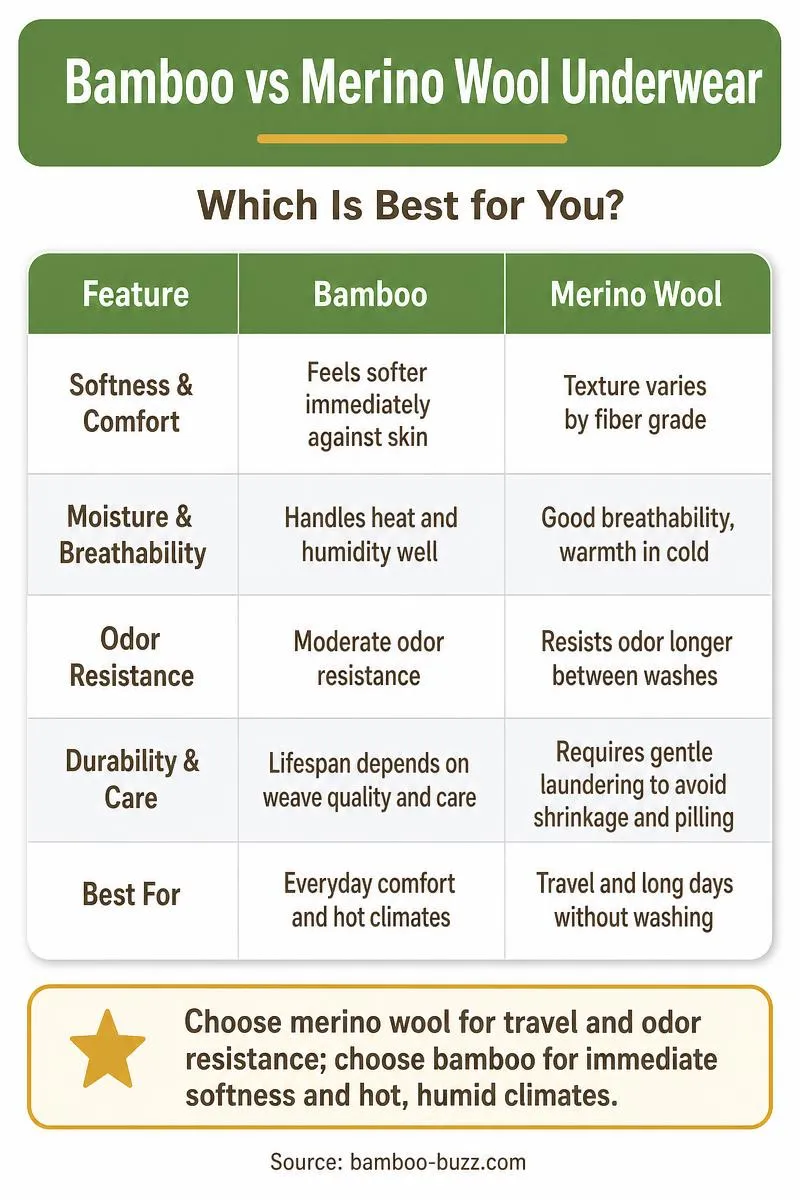
Bamboo Vs Merino Wool Underwear Compared
| Feature | Bamboo | Merino Wool |
|---|---|---|
| Softness & Comfort | Feels softer immediately | Varies by fiber grade |
| Moisture & Breathability | Handles heat and humidity well | Breathable; retains warmth in cold |
| Odor Resistance | Moderate odor resistance | Resists odor longer between washes |
| Durability & Care | Lifespan varies by weave & care | Requires gentle laundering |
| Best For | Everyday comfort; hot climates | Travel and long days without washing |
What Is Bamboo Underwear?
Bamboo underwear starts as bamboo pulp, then gets processed into viscose rayon for textile use. Bamboo grows quickly and is typically grown without pesticides, but turning stalk into fabric usually involves dissolving cellulose in chemical solvents – the same method used for conventional rayon. True mechanical-process bamboo linen exists but remains rare in the underwear market.
Bamboo viscose works well for everyday wear, hot weather, and sensitive skin. The fabric wicks moisture away from the body, breathes easily, and delivers a soft hand feel that many people prefer to cotton or synthetic blends.
Durability varies by construction quality. A tight weave holds up better than a loose one, and care habits matter – high heat in the dryer accelerates breakdown faster than air drying.
Related Reading
A roundup of top bamboo bras for shoppers seeking comfortable, breathable bamboo intimates.
What Is Merino Wool Underwear?
Merino wool underwear uses fine fibers spun from merino sheep, valued for odor resistance and temperature regulation. The fibers are finer than standard wool, which reduces the scratchy texture some people associate with wool garments. Micron grade determines softness – lower micron counts feel softer against skin.
Merino wool works best for travel, outdoor activities, and base layer thermals. Merino manages moisture by pulling sweat away from skin while regulating temperature across a wider range than most plant-based or synthetic fabrics.
The tradeoffs show up in care and cost. Merino wool needs gentle laundering to avoid shrinkage and pilling. Hot water can felt the fibers, and high dryer heat risks damage. Price per pair typically runs higher than bamboo viscose.
Bamboo Underwear vs Merino Wool Underwear: Softness and Comfort
Bamboo viscose tends to feel silkier immediately when you put it on. The fibers create a smooth surface that glides against skin without texture or grip. People with sensitive skin often prefer this instant softness, especially if wool has caused irritation in the past.
Merino wool softness depends on micron grade. Lower micron merino feels softer and less scratchy, but even fine merino has a subtle texture that bamboo viscose doesn’t. Some people like that light natural-fiber feel; others find it distracting.
If you’re choosing based on initial comfort against bare skin, bamboo viscose usually wins. If you prefer a fabric with slight body and texture, merino wool delivers that without the scratchiness of coarser wool.
Bamboo Underwear vs Merino Wool Underwear: Moisture and Breathability
Both fabrics wick sweat away from skin, but they handle moisture differently. Bamboo viscose absorbs moisture into the fiber itself, then releases it through evaporation. This works well in hot, humid conditions where you’re sweating steadily but not soaking through.
Merino wool also absorbs a noticeable amount of moisture into the fiber before it feels damp, while still managing temperature. The fibers pull sweat away from skin and disperse it across the fabric surface. This makes merino effective across variable temperatures, from cool mornings to warm afternoons.
For hot weather daily wear, bamboo viscose breathes easily and dries faster. For layering in changing conditions or activities that swing between exertion and rest, merino wool handles the variability better.
You Might Also Like
An in-depth comparison of bamboo and merino wool across clothing uses, covering performance, comfort, and…
Bamboo Underwear vs Merino Wool Underwear: Odor Resistance
Merino wool resists odor longer between washes. The fiber structure makes it harder for odor-causing bacteria to thrive, so you can wear the same pair multiple days without developing smell. This advantage matters for travel, backpacking, or any situation where laundry access is limited.
Bamboo produces a compound called bamboo kun that has mild antibacterial properties, but most of it doesn’t survive the viscose process. Some finished bamboo viscose fabric still shows modest odor resistance compared to cotton, but it doesn’t match merino wool’s performance over multiple wears.
If you need underwear that stays fresh through a long travel day or a multi-day trip, merino wool wins. If you’re washing after every wear anyway, the difference matters less.
Bamboo Underwear vs Merino Wool Underwear: Durability and Care
Bamboo viscose is easier to launder at home. Most bamboo underwear handles machine washing on a gentle cycle and can air dry quickly. High heat in the dryer weakens fibers over time, but normal home care doesn’t require special attention beyond that.
Merino wool requires gentler care to avoid damage. Hot water can cause shrinkage and felting, so cold or lukewarm water works best. High dryer heat risks shrinking the garment or creating pilling. Many merino wool underwear pieces recommend hand washing or a delicate machine cycle with air drying.
Longevity depends on construction quality and care habits for both fabrics. A well-made bamboo viscose pair with proper care lasts through regular rotation, but the fabric itself is less resilient than merino wool fibers. Merino wool holds up longer if you follow care instructions, but mistakes in the wash can ruin a pair quickly.
Which Should You Choose?
For sensitive skin and a silky feel against the body, bamboo underwear delivers immediate softness without texture.
For travel, multi-day wear, and minimal washing, merino wool underwear performs across variable temperatures and cuts down on laundry stops.
For hot, humid climates and easy laundry care, bamboo underwear tolerates standard home washing without special handling.
For outdoor activities and base layer performance, merino wool underwear manages moisture and temperature across stop-and-go days on the trail.
Also Worth Checking Out
A focused comparison showing how bamboo clothing performs against cotton for softness, moisture control, and…
FAQs About Bamboo Underwear and Merino Wool Underwear
Is bamboo underwear actually better for you?
Bamboo underwear isn’t universally better, but it works well for specific needs. The soft hand feel suits sensitive skin, and the breathability handles hot weather daily wear. Most bamboo underwear uses viscose rayon processing, which involves chemical solvents – if you’re choosing based on manufacturing impact, that processing step matters as much as the fast-growing crop.
What are the downsides of merino wool underwear?
Merino wool underwear costs more upfront and requires gentle care to avoid shrinkage or pilling. Hot water or high dryer heat can damage the fibers, so you’ll need to follow care instructions closely. Some people also find even fine merino has a texture they prefer to avoid against bare skin.
What are the downsides of bamboo underwear?
Bamboo underwear doesn’t resist odor as long as merino wool, so it’s less suitable for multi-day wear without washing. Durability varies by weave quality – a loose weave breaks down faster than a tight one. Most bamboo fabric uses the viscose process, which relies on chemical solvents rather than the mechanical processing some shoppers expect.
Does bamboo fabric release microplastics?
No. Bamboo viscose is a plant-based cellulose fiber, not a synthetic plastic polymer. It biodegrades more readily than polyester or nylon.
Is bamboo fabric basically plastic?
No. Bamboo viscose is rayon made from plant cellulose, not a petroleum-based synthetic. The manufacturing process involves dissolving bamboo pulp in chemical solvents, then regenerating it into fibers. That makes it a semi-synthetic or regenerated cellulose fiber, but not plastic. The fiber structure and biodegradability differ from true synthetics like polyester.
Which is softer, bamboo or merino wool underwear?
Bamboo underwear tends to feel softer immediately. Bamboo viscose has a silky, smooth hand feel without texture. Merino wool softness depends on micron grade – finer merino feels softer, but even high-quality merino has a subtle texture that bamboo viscose lacks.
Which fabric works better in hot weather?
Bamboo underwear handles hot weather daily wear better. The fabric breathes easily, wicks moisture, and dries faster in humid conditions. Merino wool also manages heat and moisture but works best across variable temperatures rather than steady high heat.
Is bamboo underwear more sustainable than merino wool?
It depends on which part of the supply chain you’re evaluating. Bamboo is typically grown without pesticides, but most bamboo fabric uses the viscose process, which involves chemical solvents. Merino wool comes from sheep farming, which has land use and methane considerations, but the fiber itself is natural and biodegradable. Neither option is clearly more sustainable across all measures.
Which is better for travel, bamboo or merino wool underwear?
Merino wool underwear is better for travel. The fabric resists odor longer between washes, so you can wear the same pair multiple days without developing smell. That reduces the number of pairs you need to pack and cuts down on laundry stops. Bamboo underwear works for travel if you have regular laundry access, but it doesn’t stay fresh as long.
Final Verdict
Neither fabric is universally superior. Bamboo viscose feels softer immediately and handles hot weather with easy care, but it loses the odor-resistance battle and requires more frequent washing. Merino wool stays fresh longer and adapts across temperatures, but it costs more and demands gentle laundering.
If you have wool sensitivities, bamboo underwear sidesteps that issue regardless of merino’s performance benefits. Try one pair of each to see which fabric your skin prefers before replacing your entire drawer.
External References
- Antimicrobial Properties of Bamboo Fibres – Biomedres
- Resistance of natural bamboo fiber to microorganisms and … – NCSU (.edu)
- Boiled Wool | Washing Wool Felt – Achildsdream
- Natural Antimicrobial Material : Merino wool – Latelierforte
- How to Wash Merino Wool – Yarnfood
- (PDF) TEXTILE RAW MATERIALS – ACADEMIA (.edu)