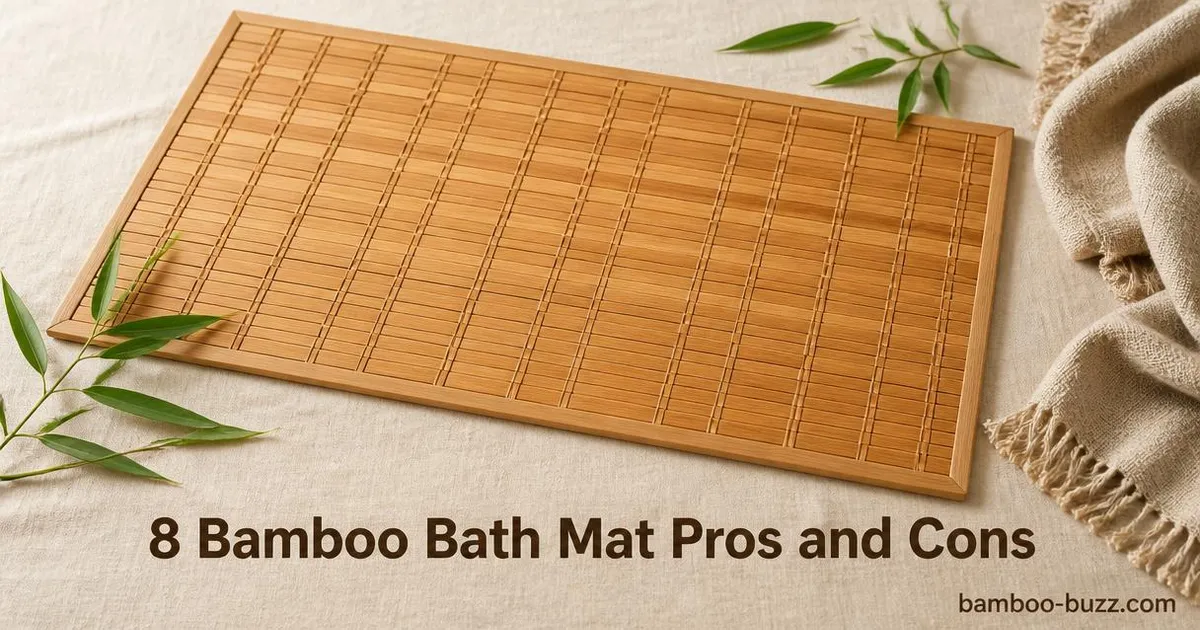
8 Bamboo Bath Mat Pros and Cons
Bamboo bath mats promise a sustainable alternative to fabric, but they also create a puddle problem that can damage your floor. The same slatted design that keeps the surface dry lets water pool underneath, where it sits until you wipe it up or your grout starts complaining.
Whether a bamboo bath mat works for you depends less on the material and more on where you put it, how much you’re willing to bend down with a towel, and whether you need something that absorbs water or just stays dry while water drips past it. The eight tradeoffs below cover water pooling, mold risk, and the slip and shower-placement limits the slatted design creates.
Key Takeaways
- The slatted design keeps the surface dry but lets water pool underneath, which limits where bamboo mats work best.
- While often marketed as antimicrobial, bamboo still carries mold risk if trapped moisture cannot escape.
- They wipe clean easily but are not safe for use inside a shower enclosure with direct water spray.
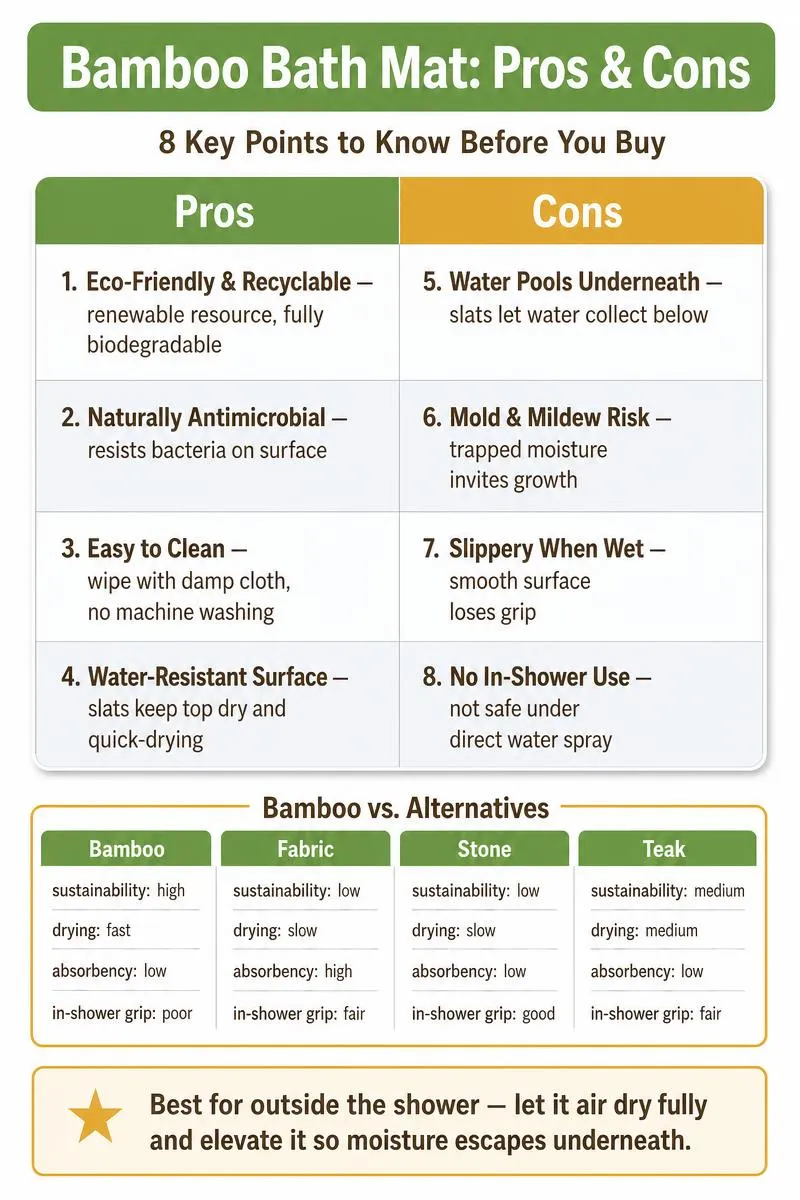
- When compared to fabric, stone, or teak, bamboo wins on sustainability and quick drying but loses on absorbency and in-shower grip.
Worth Reading Next
A direct comparison of bamboo towels and cotton that helps readers decide if bamboo bathroom linens are better for…
Quick Comparison: Bamboo Bath Mat Pros And Cons
| Material | Sustainability | Drying speed | Absorbency | In-shower grip |
|---|---|---|---|---|
| Bamboo | High | Fast | Low | Poor |
| Fabric | Low | Slow | High | Fair |
| Stone | Low | Slow | Low | Good |
| Teak | Medium | Medium | Low | Fair |
8 Pros and Cons of Bamboo Bath Mats
Almost every point below traces back to one design choice: slats raised off the floor.
1. Eco-Friendly and Recyclable
Bamboo mats skip the petroleum-based materials used in rubber-backed fabric mats and synthetic bath rugs. The plant often grows without pesticides or irrigation and regenerates from the same root system after cutting.
Many brands market bamboo bath mats as plastic-free, which is accurate for solid bamboo slat construction. At end-of-life, untreated bamboo can go into municipal yard waste programs or backyard compost bins, though adhesives and finishes complicate that claim.
If the mat uses glue between slats or polyurethane coating, check with your local composting facility before tossing it in the green bin.
2. Naturally Antimicrobial Properties
Bamboo produces a compound called bamboo kun, which some sources credit with mild antimicrobial activity. The claim appears frequently in product descriptions.
That said, antimicrobial properties do not prevent mold if moisture gets trapped. Bamboo kun may slow microbial growth on a dry surface, but standing water under the slats creates conditions where mold thrives regardless of the material.
The antimicrobial benefit matters most when the mat stays dry and aired out between uses.
3. Easy to Clean and Maintain
Bamboo mats wipe clean with a damp cloth or sponge, no machine washing required. For stuck-on residue, a drop of dish soap and warm water handle most buildup without soaking the material.
That low-maintenance routine appeals to households that already juggle laundry loads and prefer to skip washing another bulky item. Fabric bath mats need regular trips through the washer to avoid mildew, while bamboo mats need only a quick wipe and a chance to air dry.
4. Water-Resistant Surface
Bamboo slats repel water instead of absorbing it, so the top surface dries faster than terry cloth or microfiber. Water that lands on the mat drips through the gaps between slats and pools on the floor below, leaving the bamboo itself mostly dry.
This design works well if you step onto the mat after toweling off most of the water from your body. The mat is dry to the touch again quickly, and you avoid the clammy feeling of standing on a soaked fabric mat.
Fast drying also reduces the window of time when mold can establish itself on the surface.
5. Water Pools Underneath the Slats
The gaps that keep the surface dry also funnel water straight to your bathroom floor. If you step onto the mat while dripping wet, water runs through the slats and sits in a puddle until you wipe it up. Competitor reviews consistently name this pooling as the mat’s core flaw.
On tile with sealed grout, this creates a cleanup task. On hardwood, laminate, or poorly sealed tile, standing water can warp flooring, discolor grout, or seep into subfloors.
Some users place a thin towel under the bamboo mat to catch drips, which solves the puddle problem but adds another item to wash and reintroduces the absorbency issue bamboo mats were meant to avoid.
6. Mold and Mildew Risk
Moisture trapped between slats or underneath the mat creates the damp, dark conditions mold prefers. Bathrooms with poor ventilation or high humidity amplify the risk, especially if the mat sits flat against the floor without airflow underneath.
Regular wiping and drying help, but if you forget or skip a few days, black spots can appear along the underside or in the crevices. Once mold establishes itself, bamboo is difficult to deep-clean without saturating the material, which defeats the purpose of choosing a quick-drying mat.
7. Slippery When Wet
Smooth bamboo slats create a slick surface when wet, especially if the finish is polished or coated. Stepping onto a wet bamboo mat can feel like stepping onto wet wood, with little grip to prevent sliding.
Households with young children, elderly adults, or anyone with balance concerns face a real fall risk. Some mats include rubber feet or grip pads on the underside to prevent the mat itself from sliding, but those features do not add traction to the top surface where wet feet make contact.
If slip resistance is a priority, fabric mats with rubber backing or textured stone mats offer more grip.
8. Not Suitable for Use Inside the Shower
Bamboo bath mats work outside the shower where water exposure is brief and incidental. Inside a shower enclosure, constant water spray overwhelms the quick-drying advantage and keeps the bamboo wet for extended periods.
Prolonged saturation causes bamboo to swell, crack, or develop mold faster than occasional drips would. Shower-specific mats use rubber, vinyl, or teak, materials that tolerate direct spray and drain effectively.
Bamboo mats belong on the bathroom floor, not under the showerhead.
How to Care for a Bamboo Bath Mat
- Wipe the mat and the floor underneath after each use to prevent water from sitting. A quick pass with a towel takes seconds and eliminates most of the pooling problem before it damages flooring or feeds mold.
- Lift the mat off the floor daily to let air circulate underneath. Leaning it against the wall or draping it over the tub edge for a few hours gives both the mat and the floor a chance to dry completely. Bathrooms with exhaust fans or windows should use them during and after showers to reduce ambient humidity.
- For deeper cleaning, wipe the slats with a damp cloth and a small amount of mild soap, then rinse with a clean damp cloth. Avoid soaking the mat or submerging it in water, which can weaken adhesive joints or cause the bamboo to warp. If mold appears, scrub the affected area with a mixture of white vinegar and water, then dry the mat thoroughly before returning it to the floor.
Bamboo Bath Mat vs. Fabric, Stone, and Teak
Fabric mats absorb water immediately, keeping your floor dry but leaving the mat itself wet. Bamboo mats dry faster but send water to the floor, which means fabric wins if you need absorbency and bamboo wins if you want a mat that feels dry again shortly after use.
Microfiber and chenille fabric mats also go in the washing machine, while bamboo requires manual wiping.
Stone mats absorb water into porous material, then release it through evaporation. They dry faster than fabric but slower than bamboo, and they weigh significantly more. Stone provides better slip resistance when wet and tolerates direct spray better than bamboo, but stone mats cost more and cannot be composted or recycled as easily.
Teak bath mats share the slatted design and water-resistant surface with bamboo but tolerate prolonged moisture better. Teak contains natural oils that resist rot and mold, making it a safer choice for humid bathrooms or inside shower enclosures.
Bamboo grows faster and costs less, making it the more sustainable pick if your bathroom has good ventilation and you can commit to regular drying. Teak makes sense if you need durability in a high-moisture environment and do not mind the higher price.
Keep Reading
Pros and cons of bamboo flooring
Another pros-and-cons post focusing on a hard-surface bamboo product, useful for readers curious about durability,…
FAQs About Bamboo Bath Mats
Is a bamboo bath mat a good idea?
Yes, if your bathroom floor drains or dries quickly and you are willing to wipe up pooled water after each shower. No, if you need absorbency, have hardwood flooring that cannot tolerate standing water, or want a mat that works inside the shower.
Do bamboo bath mats absorb water?
No. Bamboo slats repel water, which drips through the gaps and pools on the floor underneath. The mat stays dry, but the floor does not.
Do bamboo bathroom mats harbor mold?
They can, especially if water gets trapped between slats or underneath the mat without airflow. Bamboo kun provides some antimicrobial activity, but it does not prevent mold in standing water or poorly ventilated bathrooms.
Are bamboo bath mats naturally antimicrobial?
Bamboo produces bamboo kun, a compound with mild antibacterial properties. The benefit is limited – it may slow microbial growth on dry surfaces but does not replace regular cleaning or drying.
Can bamboo shower mats be recycled?
Untreated bamboo can be composted in some municipal yard waste programs. Mats with adhesives, finishes, or coatings may not qualify, so check the product details and your local composting rules before disposal.
Which is better, a teak or bamboo bath mat?
Teak tolerates moisture better and works inside showers, while bamboo grows faster and costs less. Choose teak for durability in high-humidity environments and bamboo for sustainability in well-ventilated bathrooms.
Is a stone or bamboo bath mat better?
Stone absorbs water and provides better slip resistance when wet, while bamboo dries faster and weighs less. Stone suits households prioritizing safety and in-shower use, bamboo suits those prioritizing quick drying and sustainability.
What is the best material for a bath mat?
Match the material to how wet you are when you step out. Fabric absorbs water, bamboo dries fast, stone offers grip, and teak handles prolonged moisture. If you step out dripping wet and want a dry floor, choose fabric. If you towel off first and want a mat that stays dry, choose bamboo.
Keep Reading
Pros and cons of bamboo fabric
Overview of bamboo fabric performance and care that complements the bath-mat care section and helps readers weigh…
Final Thoughts
Bamboo bath mats suit buyers who want a sustainable, quick-drying floor mat outside the shower and can manage the water pooling downside. If absorbency, in-shower grip, or guaranteed mildew resistance matters more, fabric, rubber, or stone likely serve you better.
Before buying, check that your bathroom floor drains well and that you can commit to regular wiping and drying.
External References
- Compost – what goes in the bin – Portland
- Mandatory Organics Requirements | Brentwood, CA – Brentwoodca
- sustainable products list yale university – YALE (.edu)
- Investigating the Antibacterial Characteristics of Japanese … – NIH (NCBI)
- A Deep Dive into the Superior Hardwood – Nordicteak
- Resistance of natural bamboo fiber to microorganisms and … – NCSU (.edu)