Bamboo Sheets: 8 Trade-offs to Know
Bamboo sheets feel noticeably softer than most cotton sets you’ll find at the same price point, but they also wrinkle more and demand a stricter laundry routine. The real question is whether that tradeoff is worth it for your sleep quality, your laundry habits, and your budget.
Most bamboo bedding is chemically processed into viscose or rayon, so “bamboo” on the label names the source crop, not the manufacturing method.
This article breaks down eight specific pros and cons that actually affect how you sleep and how much effort goes into maintenance. By the end, you’ll know what the label means, what bamboo sheets do well, and where cotton still wins.
Key Takeaways
- Hot sleepers benefit most – bamboo viscose wicks moisture and regulates temperature better than cotton in warm or humid conditions.
- Viscose, not raw bamboo – chemical processing dissolves the stalk and re-spins it into filament.
- Soft but wrinkle-prone – expect a silky hand feel that creases easily out of the dryer and after sleeping.
- Cooling over warmth – the breathable weave that keeps you cool in summer also means a lower warmth floor in cold winter bedrooms.
- Care extends lifespan – following cold-water, low-heat wash instructions extends longevity; cutting corners shortens it significantly.
Keep Reading
Explores texture and luxury trade-offs for readers curious about silky alternatives to bamboo sheets mentioned in the…
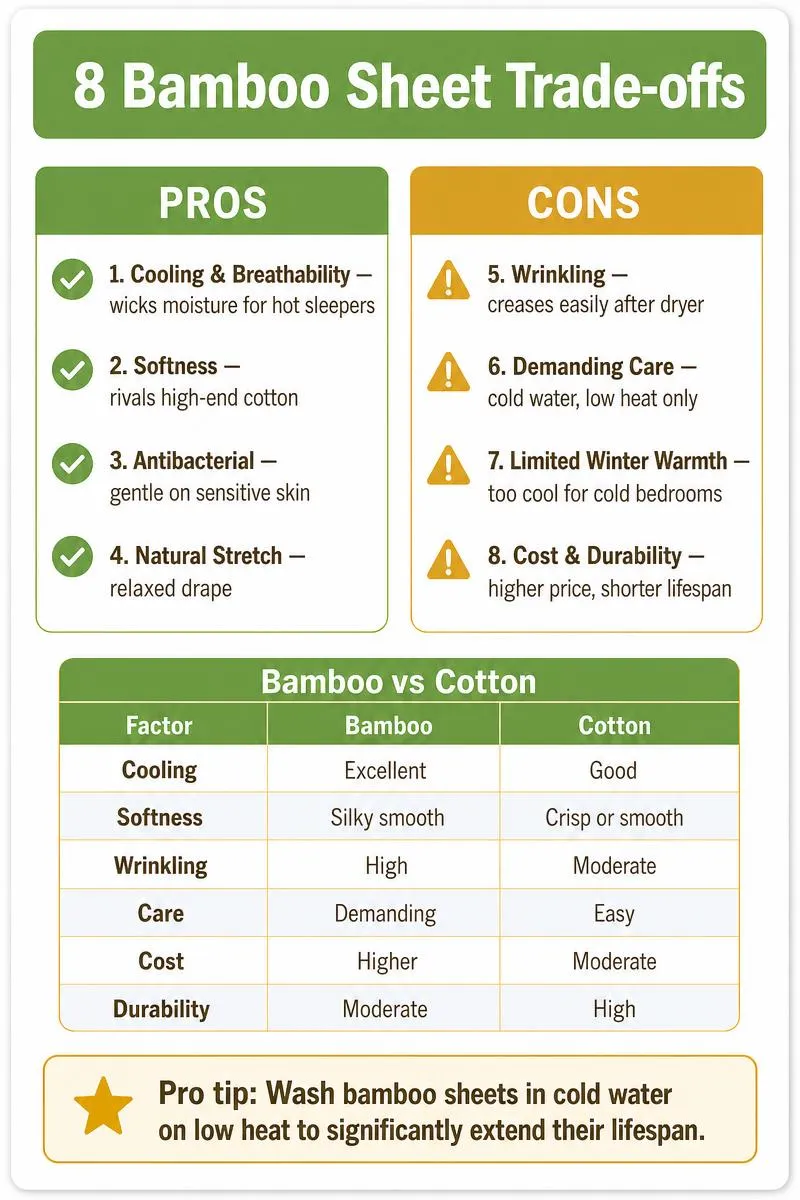
Quick Comparison: Bamboo Sheets Pros And Cons
| Factor | Bamboo | Cotton |
|---|---|---|
| Cooling | Excellent | Good |
| Softness | Silky smooth | Crisp or smooth |
| Wrinkling | High | Moderate |
| Care | Demanding | Easy |
| Cost | Higher | Moderate |
| Durability | Moderate | High |
What Bamboo Sheets Are and How They’re Made
Bamboo sheets are bed linens made from yarn derived from bamboo plants. But almost no bamboo bedding on the market uses raw, unprocessed bamboo fiber spun directly from the stalk. Instead, the bamboo goes through a manufacturing process that transforms it into a soft, spinnable filament.
Viscose and Rayon: The Chemical Process
Most bamboo sheets are made using the viscose process. Manufacturers crush bamboo stalks, dissolve the cellulose in sodium hydroxide and carbon disulfide, then extrude the resulting solution through spinnerets to create continuous filaments.
The finished material is technically a semi-synthetic: the cellulose comes from bamboo, but the chemical processing fundamentally changes its structure. Labels may say ‘bamboo viscose,’ ‘bamboo rayon,’ or simply ‘rayon from bamboo.’
Lyocell: The Closed-Loop Alternative
A smaller number of bamboo sheets use the lyocell process, which dissolves cellulose in a less-toxic solvent (N-methylmorpholine N-oxide) and recovers almost all of its solvent in a closed-loop system. Lyocell produces a similar feel to viscose but with substantially less chemical waste.
If the label says ‘bamboo lyocell,’ you’re looking at a more carefully controlled manufacturing method – and usually a higher price.
Mechanical Processing: Rare but Real
True bamboo linen is made by mechanically crushing bamboo stalks and combing out the natural fibers, then spinning them into yarn. No chemical solvents are involved.
The result is a coarser, linen-like fabric that feels nothing like the silky bamboo sheets most people expect. Mechanical bamboo fiber bedding is uncommon and expensive.
Bamboo Blends and What Labels Mean
Many sheets labeled ‘bamboo’ are actually blends:
- Bamboo-cotton blends pair viscose yarn with cotton to add structure and reduce wrinkling while keeping some of the softness.
- Bamboo-polyester blends and microfiber blends use synthetic fibers to lower cost and improve durability, but they sacrifice the breathability and moisture-wicking that make pure bamboo viscose appealing.
- Label percentages matter – if a label says ‘bamboo blend’ without specifying percentages, assume the bamboo content may be modest.
Keep Reading
A curated buying guide for affordable bamboo sheet options that readers can consult after learning how sheets are made…
8 Pros and Cons of Bamboo Sheets
Four of these are genuine advantages and four are real costs, starting with the cooling that draws most hot sleepers to bamboo in the first place.
1. Cooling and Breathability for Hot Sleepers
Bamboo viscose wicks moisture away from the skin and disperses it across the fabric surface, where it evaporates quickly. This moisture management keeps the sleeping surface noticeably cooler than cotton in warm or humid conditions.
Hot sleepers and people in muggy climates tend to feel the difference most clearly – the sheets don’t trap heat the way tighter cotton weaves can. Air keeps moving through the fabric instead of getting trapped, which is what gives bamboo sheets their reputation for all-night cooling.
If you wake up sweating on cotton in summer, switching to bamboo viscose is the most likely fix.
2. Softness That Rivals High-End Cotton
Bamboo viscose has a silky, smooth hand feel that many people compare to high-thread-count cotton sateen. The fibers themselves are round and smooth at a microscopic level, which is why the fabric drapes against skin without friction.
The softness is present right out of the package and tends to hold up after washing, though repeated hot-water washes can roughen the surface over time. If you prioritize how sheets feel against your skin over a crisp, structured bed, bamboo viscose delivers that silky sensation more consistently than mid-range cotton.
3. Antibacterial Properties and Sensitive-Skin Use
Bamboo produces a bio-agent called bamboo kun that is credited with mild antibacterial properties. Some sources suggest this compound may help reduce odor-causing bacteria and benefit sleepers with sensitive skin or allergies.
The catch: most of the bamboo kun doesn’t survive the viscose chemical process, so the antibacterial effect in finished bamboo sheets is likely reduced compared to raw bamboo fiber.
For eczema-prone skin and allergy-sensitive sleepers, the smooth fiber structure still matters. Bamboo viscose lacks the surface irregularities that can irritate sensitive skin, and the moisture-wicking keeps the sleeping surface drier, which may help with skin conditions that flare in humid conditions. Parents looking at kids’ bedding sometimes choose bamboo for these reasons.
4. Natural Stretch and Relaxed Drape
Bamboo viscose has a natural give that cotton lacks. The fabric stretches slightly when you pull it and conforms to the mattress and your body without the stiffness of a tight percale weave.
This relaxed drape means the sheets don’t feel restrictive when you move around at night. If you dislike the crisp, tightly fitted feel of traditional cotton sheets, bamboo’s looser drape is a genuine comfort difference.
The stretch also makes fitted sheets easier to pull over thick mattresses and mattress toppers without corner popping.
5. Wrinkling Tendency
Bamboo sheets wrinkle. They crease more easily than cotton coming out of the dryer, and they develop sleep wrinkles after a night of use.
The same relaxed drape that makes them comfortable also means the fabric doesn’t hold a crisp surface. If a perfectly smooth, hotel-style bed matters to you, bamboo sheets will frustrate you.
You can reduce wrinkling by removing sheets promptly from the dryer and smoothing them flat immediately, but you can’t eliminate it. Some people accept the wrinkles as the cost of softness; others find them annoying enough to switch back to cotton.
6. Demanding Wash and Care Routine
Bamboo viscose requires cold water, a gentle cycle, and low heat or line drying. Hot water can weaken the fibers and cause shrinkage. Bleach is not recommended – it breaks down viscose fibers and can cause yellowing rather than whitening.
Fabric softeners are also discouraged because they coat the fibers and reduce moisture-wicking performance. If you want a set of sheets you can toss in on a normal cycle with hot water and forget about, bamboo isn’t that product.
The care instructions aren’t optional; they directly affect how long the sheets last.
7. Winter Warmth Limitations
The same breathable weave that keeps bamboo sheets cool in summer works against you in a cold winter bedroom. Bamboo viscose has a lower warmth floor than heavier cotton weaves like flannel or sateen.
The sheets can feel cool against bare skin when temperatures drop. Cold sleepers and people in climates with real winters often need an extra blanket or a flannel set for the coldest months.
Bamboo sheets excel in the warmth-to-weight ratio for moderate temperatures, but they don’t provide the insulation that heavier cotton or flannel does when the bedroom is genuinely cold.
8. Cost Per Night and Long-Term Durability
Bamboo sheets cost more upfront than basic cotton sets. Whether that cost pays off depends almost entirely on how you wash and dry them. Following the cold-water, low-heat care instructions extends the usable lifespan; cutting corners with hot water or aggressive drying shortens it noticeably.
Viscose fibers are softer and smoother than cotton but also more delicate. Pilling can develop if sheets are washed with rough fabrics or in warm water.
When cared for properly, bamboo sheets can stay competitive on cost per night over their lifespan – but that lifespan is conditional, not guaranteed.
Bamboo Sheets vs Cotton Sheets
Side by side, the two fabrics differ most on cooling, feel, laundry routine, and long-term cost.
Cooling
Bamboo viscose stays cooler than cotton in warm and humid conditions because of superior moisture-wicking and airflow through the fiber structure. Cotton breathes well too, but it absorbs moisture rather than dispersing it, which means dampness sits against the skin longer.
For all-night cooling in summer, bamboo has a clear edge.
Softness and Stretch
Bamboo feels silkier and softer than most cotton at comparable prices. The closest cotton equivalent in hand feel is a high-thread-count sateen, which has a smooth, slightly slippery surface.
Cotton percale, by contrast, has a crispness that some people prefer. Bamboo’s stretch and drape are distinctly different from cotton’s structure – bamboo conforms, cotton holds shape.
Care and Wrinkling
Cotton tolerates hot water, regular dryer heat, and even bleach in moderation. Bamboo viscose needs cold water, gentle cycles, and low heat.
Cotton also wrinkles, but it tolerates ironing and steam; bamboo viscose can be damaged by high heat. If you want a low-maintenance laundry routine, cotton is easier to live with.
Cost and Durability Over Time
Cotton has a lower entry price and generally holds up longer under rougher treatment. Bamboo costs more upfront and requires careful handling to reach a competitive lifespan.
If you follow bamboo’s care instructions precisely, cost per night can be reasonable. If you don’t, you’ll likely replace them sooner than a basic cotton set.
When Cotton Wins
Cotton is the better choice for cold sleepers who need winter warmth, for anyone who wants easy-care laundry, and for buyers looking for a lower entry price. Heavier cotton weaves like flannel and sateen provide warmth that bamboo viscose simply doesn’t match in cold conditions.
You Might Also Like
A direct material comparison that helps readers weigh temperature, feel, and durability differences beyond the cotton…
FAQs About Bamboo Sheets
Are bamboo sheets cooler than cotton, and do they stay cooler all night?
Yes, in most cases. Bamboo viscose wicks moisture and allows more airflow than cotton, which keeps the sleeping surface cooler for longer. The effect is most noticeable in warm or humid conditions.
Are bamboo sheets softer than cotton, and which type of cotton feels closest?
Bamboo viscose generally feels softer than mid-range cotton. High-thread-count cotton sateen comes closest to matching the silky hand feel, though the drape and stretch are still different.
Are bamboo sheets stretchy?
Yes. Bamboo viscose has natural give and stretches slightly when pulled, conforming to the mattress and body. Cotton sheets, by comparison, hold their shape with less flex.
Are bamboo sheets warm in winter?
Not particularly. In a cold bedroom that breathable weave works against you – the sheets can feel cool against bare skin. Cold sleepers usually need added layers or a flannel set for winter.
Are bamboo blend sheets or bamboo-cotton blend sheets good?
They can be. Bamboo-cotton blends add structure and reduce wrinkling while keeping some softness. Bamboo-polyester and microfiber blends lower cost but sacrifice breathability. Check the blend ratio on the label.
Do bamboo sheets pill?
They can, especially if washed in warm water or with rough fabrics. Cold-water, gentle-cycle washing minimizes pilling. Proper care significantly reduces the likelihood.
Can I use bleach on bamboo sheets to whiten them?
No. Bleach breaks down viscose fibers and can cause yellowing instead of whitening. Use a mild, bleach-free detergent and cold water instead.
Are bamboo sheets better for eczema-prone skin than cotton?
They may help. The smooth fiber structure lacks surface irregularities that can irritate sensitive skin, and moisture-wicking keeps the surface drier. Bamboo kun is credited with mild antibacterial properties, though most don’t survive viscose processing.
How many times can I wash bamboo sheets before they lose quality?
It depends on how you wash them. Cold water, gentle cycle, and low heat preserve the fibers longest. Hot water and aggressive drying accelerate fiber breakdown and shorten usable life.
Are bamboo sheets worth the hype?
For hot sleepers and people who prioritize softness, yes. For cold sleepers or anyone who wants low-maintenance laundry, cotton is the more practical choice.
Side-by-side pros and cons for two plant-based sheet types useful for readers with FAQ-style questions about eco-impact…
Final Thoughts
Bamboo sheets make the most sense if you sleep hot, live in a humid climate, or value that silky feel enough to handle extra care. If you sleep cold or want sheets you can wash without thinking, cotton or a cotton blend is the smarter call.
Before you buy, read the label – look for viscose, rayon, or lyocell so you know exactly what manufacturing process you’re paying for.
External References
- Antimicrobial Properties of Bamboo Fibres – Biomedres
- Viscose Rayon Is Bad for the Planet. Here Are Eco … – Ecocult
- The Future of Functional Clothing for an Improved Skin and … – NIH (NCBI)
- Human Health Risks from Textile Chemicals: A Critical … – Qeios
- Resistance of natural bamboo fiber to microorganisms and … – NCSU (.edu)